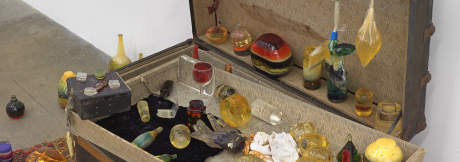
Crafting the Medici, installation


Justus Sustermans, Anna de'MediciAfter Scipione Pulzone, Cristina of Lorraine


Niccolo Cassana, Ferdinando de'Medici Hans Collaert, Pendant Design

Crafting the Medici, installation


In an extraordinary gesture by the world-renowned Uffizi Gallery in Florence, Italy an exhibition of 16th and 17th century paintings from the gallery’s permanent collection will be presented by Bell Gallery at Brown University as part of the Splendor of Florence Festival. The ten paintings in the exhibition are portraits of members of the Medici family - a name synonymous with power and high social standing in Renaissance Europe. Artists who created the paintings include Agnolo Bronzino (1503-1572), Niccolo Cassana (1659-1713), Scipione Pulzone (ca. 1550 - 1598), and Justus Sustermans (1597-1681), the Flemish artist who served as court painter to the Medici.

The exhibition, entitled Crafting the Medici: Patrons and Artisans in Florence, 1537-1737, places portraits of the Medici family in the context of the breadth of Florentine craftsmanship, in media ranging from painting to printmaking, gold- and silversmithing, leatherwork, and textile manufacture all in the service of crafting a public image for the Medici rulers. From the time of the first Grand Duke, Cosimo I–who ruled Florence beginning in 1537–until the last Medici died in 1737, the Medici were absolute rulers of one of the most luxurious and powerful courts in Italy. Made in the years following the establishment of Medici rule in 1537, the extremely formal lineage portraits (some of them of infants and young children) were designed to show dynastic succession and provided painters with "authorized" models from which to make any number of copies whenever needed. The exhibition includes, for example, portraits of Ferdinando I de Medici (a cardinal in Rome who gave up his religious calling to become Grand Duke of Tuscany), his wife Christina of Lorraine, their son Cosimo II (shown in two paintings, as an infant and young man), and the woman he would later marry, Maria Magdalena of Austria.

Florence itself, in large part through the patronage habits of the powerful Medici ancestors of the first Grand Duke, became a center for the production of luxury goods directed toward the formidable expenditures of the court. Artisans competed to find work and make a good living attending to the decoration of ever-larger palaces: the tapestries, rugs, gilded mirrors, painted and inlaid furniture and other objects that made a palace home, as well as the paintings and frescoes which decorated both home and family chapel, were perhaps the best known products of Florentine craftsmanship. However, Florentine artisans also lived well by supplying the Medici and their aristocratic retinue with everything from worked metal buttons and feathers for their hats, to engraved and inlaid swords and armor, embroidery, cut-velvet, brocades and rivers of lace, and the blatantly ostentatious jewels and ropes of precious stones so necessary to the courtly culture of display. These last items, worn on the bodies of the rulers themselves, are as carefully portrayed as the faces in the series of Medici portraits lent by the Uffizi.

Crafting the Medici will also include a selection of pattern and ornament prints lent from the collections of the Metropolitan Museum of Art in New York City, and the Museum of Fine Arts in Boston, and, examples of 16th and 17th century Italian lace, silversmith’s work, jewelry, and edged weaponry lent by the RISD Museum. The prints, models for the crafts of metalwork, decorative framing, jewelry, lace making and embroidery, emphasize the multi-faceted aspects of design in the Cinquecento (16th century). Useful to all types of artisans, these engravings were themselves collectable.

As an additional part of the exhibition, a selection of drawings and objects owned and made by the Gorham Silver Company will be presented. Founded in Providence, R.I. in 1831, Gorham is still in operation in Smithfield, R.I. The Gorham pieces, which are said to be inspired by the Renaissance and the Medici era, demonstrate the continued strength and vitality of the Italian design tradition. Providence’s own history as a center of silver work, textile production, and jewelry design provides a strong link to the portraits of the Medici, powerful patrons of the arts of design.