 Laboratory Primate Newsletter
Laboratory Primate Newsletter
Laboratory Primate Newsletter
VOLUME 36 NUMBER 2 APRIL 1997
Articles and Notes
Colored Light as Environmental Enrichment for Captive Chimpanzees (Pan troglodytes), by J. Fritz, S. M. Howell, & M. L. Schwandt ...... 1
Response of Captive Barbados Green Monkeys (Cercopithecus aethiops sabeus) to a Variety of Enrichment Devices, by L. M. Watson ...... 5
The Composition of Primates' Milk and Its Importance in Selecting Formulas for Hand-Rearing, by E. M. Patino & J. T. Borda ...... 8
The "Bungie Swing" for Chimpanzees: Application of Techniques from Human Occupational Therapy, by E. J. Struthers, Julia Wilbarger, & H. Harvey ...... 13
News, Information, and Announcements
Complete LPN Library ...... 4
Announcements from Publications ...... 7
. . .
Primate Conservation; Emerging Infectious Diseases Advance
Dispatches
News Briefs ...... 10
. . .
Philip Hershkovitz; Monkeys Cloned from Embryos; Ebola Hemorrhagic Fever -
Gabon; Ebola Reston - Philippines; Monkey Dies after Completing Bion Mission;
Zaire Gorilla Park Hit by Fighting; Margot Marsh Biodiversity Foundation;
West Heads Laboratory Animal Sciences Program; Follow-up on Oliver
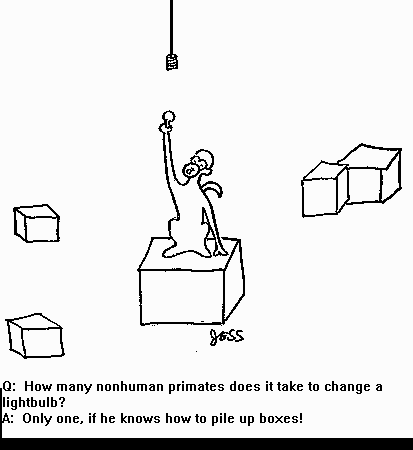
Famous "Lightbulb Joke" ...... 12
Procedures for Accessing Regional Primate Research Centers
...... 16
. . .
AIDS-Related Research at RPRCs
Grants Available ...... 17
. . .
NIMH Small Grants Program; HIV-1 Infection of the Central Nervous System;
Susceptibility to HIV-Associated Pulmonary Disease; Spinal Cord Injury:
Emerging Concepts; Cardiovascular Aging Research; Neuroscience and Biology of
Aging; Innovative Approaches in HIV Vaccine Research
Awards Granted ...... 19
. . .
NSF FastLane Wins National Award; SCAW Harry C. Rowsell Award
Research and Educational Opportunities ...... 20
. . .
Zoo Animal Behavior & Welfare, Edinburgh; The Center for Field Research
and Earthwatch; ISPA Advanced Courses on Ethology 1997; LAMA Foundation
Scholarship for ILAM Marenco Biological Reserve, Costa Rica
Volunteer Opportunities ...... 22
. . .
University Research Expeditions Program; Vet/vet nurse/vet technician,
Thailand; Primate Keeper
Another Famous "Lightbulb Joke" ...... 22
Information Requested or Available ...... 23
. . .
ASKNIH; Compendium of Animal REsources; E-mail Lists of Interest;
More Interesting Web Sites
Resources Wanted: Foraging Data ...... 24
Editors' Notes: Thanks; Our World Wide Web Page; Erratum ...... 24
Workshop Announcements ...... 25
. . .
Animal Care and Use Programs; CELL Conference; 1997 AWIC Workshop Dates
Meeting Announcements ...... 26
Health Notes ...... 28
. . .
Recommendations on Hepatitis A Immunization; Occupational Exposure to NHP
Spumavirus Infections
Travelers' Health Notes: WHO Travel Health Manual, 1997; Chagas' Disease; Bubonic Plague in Zambia ...... 29
Departments
Address Changes ...... 15
Positions Available ...... 21
. . .
Laboratory Animal Medicine Post-Doc, California; Animal Care Manager, Ohio;
Technicians, New York City; Postdoctoral Research, London; Coordinator of
Scientific Research, Cleveland
Recent Books and Articles ...... 30
* * *
J. Fritz, S. M. Howell, and M. L. Schwandt
Primate Foundation of Arizona
Introduction
The effect of color on human behavior and emotion has been studied extensively. Color has been shown to affect human moods, physiological responses, and perceptions of temperature, size, and ambiance (Birren, 1988; Hope & Walch, 1990). Colored light is used to treat some illnesses, and to soothe patients in hospitals and institutions (Torrice, 1990). It has been shown that different colors affect human emotion and behavior in very different ways. Typically the color spectrum has been divided into warm colors (e.g., red and yellow) and cool colors (e.g., blue and green). Studies suggest that warm colors (particularly red) increase human attraction to external stimuli, induce states of excitement (both emotional and motor), produce higher arousal levels (measured by electrodermal conductance level and galvanic skin response), quicken muscular responses, increase grip strength, and are associated with active and exciting moods (Birren, 1961; O'Connell, et al., 1985; Wilson, 1966). In contrast, cool colors (particularly green), lessen susceptibility to external stimuli, reduce anxiety states, and are associated with calm and tranquilizing moods (Birren, 1961; Jacobs & Suess, 1975). A recent study suggests that hue, brightness and saturation also contribute to human emotional and behavioral response to color (Valdez & Mehrabian, 1994).
Few studies have considered the effect of color on the behavior of nonhuman primates. An exception is Barbier's 1985 study of colored chow for orangutans at the Woodland Park Zoo. Barbier found that orangutans ate more monkey chow when it was of varied colors, and one individual showed a preference for red chow (Barbiers, 1985).
The color vision of chimpanzees is comparable to that of humans. Although chimps differ somewhat from humans in their ability to discriminate hues in the yellow and red regions of the spectrum (Grether, 1940a; Riesen, 1970), their visible spectrum is at least as extensive as humans' (Grether, 1940b). Chimpanzees are also known to exhibit "emotional" states comparable to those of humans (Yerkes, 1943; Goodall, 1986; King, 1995). However, so far no one has studied the responses of chimpanzees to color.
This study examines the effect of colored lighting on the behavior of captive chimpanzees (Pan troglodytes). Our goal was to assess the potential of colored lights for environmental enrichment, hoping to increase activity levels, encourage species-typical behaviors, and diminish time spent in abnormal behavior patterns. A pilot study with two adult male subjects indicated that red light intensified activity, including aggression, while blue and green seemed to reduce behaviors associated with anxiety. Because these results were similar to those found for humans, we initiated the present study with a larger number of animals. We focused on two specific questions. First, what are the general effects of colored light on behavior? Second, do different colored lights have different effects on behavior? We hoped that colored lights would increase positive activity, and concomitantly decrease inactive, abnormal, and aggressive behavior.
Methods
Housing and Subjects: The subjects were three male and three female young adult chimpanzees ranging in age from 10 to 15 years. They were housed together in an indoor enclosure (17.3 m2 and 2.77 m high) with a variety of manipulable and stationary furnishings. Stationary furnishings included metal mesh benches placed 1.2 m to 1.5 m above the floor, and intersecting vertical and horizontal poles forming a T-bar apparatus. On alternating weeks, subjects had access to a large outdoor playcage (43.0 m2 and 4.88 m high) that also included stationary and mobile furnishings. Observations were conducted every other week during indoor rotations. The enclosure was illuminated with six 100-watt Energy Miser full-spectrum lights and ambient light from hallway windows.
During experimental phases, colored lights were used along with normal lighting to insure that subjects received sufficient full-spectrum lighting. Two of the six 100-watt Energy Miser bulbs were exchanged with similar bulbs in red, green, yellow, or blue. The colored light was directed into areas the animals used most frequently during the baseline observation period. Hue and saturation were similar for all colored lights used. A light meter was used to make sure the amount of light provided was the same during all experimental phases. Lights were turned on at approximately 6:00 AM and turned off at approximately 5:00 PM daily. The timing of the lights is part of the standard colony procedure.
Data Collection: Data collection included six 4-week data collection phases: a baseline phase of normal lighting (no colored lights), four different color phases (colored lights were provided), and a post-test phase of normal lighting. During each 4-week color phase, one of four different colors was provided each week. Within each 4-week color phase, the weekly order of the colored lights (Table 1) was randomized based on a Latin square design (Sokal and Rohlf, 1981).
-------------------------------------------------
Rotation               Weekly Color Order
                    1        2      3      4
-------------------------------------------------
One   (week 1-4)   Red     Green   Blue   Yellow

Two   (week 5-8)   Blue    Yellow  Red    Green

Three (week 9-12)  Yellow  Blue    Green  Red

Four  (week 13-16) Green   Red     Yellow Blue
-------------------------------------------------
Table
1: Color RotationsA bout-frequency sampling technique was used to record the behavior of each focal animal during 10-minute observation sessions. Each focal was observed twice daily (once in the morning and once in the afternoon), Monday through Friday, for a total of 424.33 hours of observation. Two observers collected the data with 85% inter-observer agreement assessed both prior to and following the experiment.
Behaviors were grouped into six categories. These included activity (knucklewalking, feeding, foraging/ feeding on browse, exploring the cage, exploring and manipulating objects, solitary play, and locomotor play), inactivity (resting and sleeping), abnormal behavior (urophagy, coprophagy, and rocking), anxiety (pacing, rapid/agitated locomotion, avoidance/fear, and self-clinging), aggression (displaying and attacking), and other (solitary and social) behaviors (Fritz, 1996).
Data were summarized by calculating the median rate per observation each day across all subjects. Sample size was too small to allow separation by sex in the final analysis. Median rates were calculated for each behavior category, as well as for each individual behavior.
Analysis: Due to the small number of subjects, our analysis was limited to non-parametric methods. A Fried-man two-way analysis of variance by ranks (Siegel & Castellan, 1988) was used to test for significant differences in behavior between baseline and color phases to address the question "what are the general (main) effects of colored light on behavior?" Tests were performed on the behavior categories (e.g., activity, inactivity, anxiety, aggression, etc.) and on individual behaviors within each behavior category (e.g., grooming, playing, rocking, displaying). For significant results, post-hoc tests were used to determine which specific conditions (e.g., color or phase) were significantly different from baseline to address the question, "do different colored lights have different effects on behavior?" (Siegel & Castellan 1988). Significance was established at p 0.001.
Because the study lasted longer than 16 weeks, we also compared baseline to each successive time phase to evaluate potential effects of time on behavior. Preliminary descriptive analysis indicated a rather consistent decrease in many behaviors during the post-test phase as compared to the experimental phases. Because we could not adequately explain this time effect, tests were performed both with and without the post-test data. We report only those instances where a significant difference was found for both tests.
Results
What are the general effects of colored light on behavior? Table 2 provides the results of the Friedman tests for color effect on behavior categories, and for individual behaviors within each category. There were significant main effects of color in three general behavioral categories: activity, inactivity, and anxiety. The median rates per observation tended to decline in these general behavioral categories during all color phases as compared to the baseline phase. There were significant main effects of color on the individual behaviors knucklewalking, resting, and rocking. Results for pacing and other solitary behaviors approached significance (pacing: p = 0.011; other solitary: p = .006). These behaviors declined with the provision of colored lights.
To address the question of concomitant declines in both activity and inactivity, we focused on the individual behaviors that yielded significant main effects in each behavioral category (knucklewalking and resting). Because we used bout-frequency sampling, the results for knucklewalking and resting may be misleading, in that a decline in the frequency of these behaviors did not necessarily mean the animals were performing them for a shorter amount of time. To overcome this potential problem, we summarized knucklewalking and resting as proportions of total activity by dividing the number of occurrences of each behavior by the total number of occurrences of all behaviors for each observation. Resting showed the same result as when expressed as a rate - it declined in all colors, and the difference was significant. However, results for knucklewalking did not reach significance. Knucklewalking, as a proportion of total activity, did not significantly change across the course of the experiment.
-------------------------------------------------
Behavior         Friedman Test         p
                 Statistic (F)
-------------------------------------------------
Activity            45.942           0.000

Knucklewalking      25.894           0.000
Feeding             10.864           0.054
Foraging/Browsing   44.929           0.000*
Exploring Cage       4.638           0.462
Exploring/Mani-
pulating Object     53.881           0.000*
Solitary Play        5.250           0.386
Locomotor Play       1.130           0.951
-------------------------------------------------
Inactivity          56.127           0.000

Resting             56.170           0.000
Sleeping             0.264           0.998
-------------------------------------------------
Abnormal Beh.       15.630           0.008

Urophagy             0.114           1.000
Coprophagy           0.854           0.973
Rocking             20.262           0.001
-------------------------------------------------
Anxiety             24.652           0.000

Pacing              14.781           0.011
Rapid/Agitated
Locomotion           1.602           0.901
Avoidance/Fear       5.323           0.378
Self-Clinging        1.019           0.961
-------------------------------------------------
Aggression          10.483           0.063

Displaying           8.992           0.109
Attacking            0.848           0.974
-------------------------------------------------
Other                12.783          0.025

Other Solitary       16.249          0.006
Other Social         10.327          0.066
-------------------------------------------------
Values for F and p are from tests including the
post-test data.Table 2:* Friedman test results: Color
Results for activity and inactivity are complicated by the fact that these behavior categories also showed significant time effects (activity: F=64.232, p=0.000; inactivity: F=107.364, p=0.000). The individual behaviors, knucklewalking (F=25.771, p=0.000) and resting (F=117.457, p=0.000) also showed significant time effects. We believe that there may be an interaction between color and time for these variables; however, because we were limited to nonparametric methods, we were unable to test this theory.
Rocking behavior also showed a signficant main effect for time (F=44.161, p=0.000). Rocking increased over baseline levels in the first phase of the experiment, then declined to below baseline levels for all other phases.
Do different colored lights have different effects on behavior? To address this question we conducted post hoc pairwise comparisons for significant main effect results (activity, inactivity, anxiety, knucklewalking, resting, rocking) and results that approached significance (pacing, other solitary). We focused on the general effects of providing colored lights of the warm color spectrum (red, yellow) and the cool color spectrum (green, blue).
Results indicate activity and knucklewalking declined with the provision of warm color spectrum lights (red and yellow, respectively). On the other hand, anxiety, pacing, and rocking all declined with the provision of cool spectrum lights (specifically, green). Less clear is the effect of particular colored lights on inactivity and resting, since results were significant for both warm colors and cool colors. Perhaps results for inactivity and resting were complicated by time effects.
Discussion
While our sample size was limited and further data are needed to comfirm our results, we suggest that colored lights have significant effects on the behavior of captive chimpanzees. Therefore, colored lights may be a useful environmental enrichment tool to alleviate anxiety-related behaviors. While colored lights did not result in increased activity levels, and had little effect on species-typical behaviors, cool spectrum lights (i.e., green colored light) mitigated anxiety, in general, and pacing, in particular.
These results are similar to our pilot study and similar to those presented for human subjects. Jacobs and Suess (1975) reported a significant decrease in anxiety levels for humans with the use of cool colored lights (blue and green). Humans found these lights more pleasing, and green lights made humans less reactive to external stimuli (Valdez & Mehrabian 1994).
The increase in rocking during the first colored light phase may be a "novelty" effect, seen as a response to new environmental stimuli. Following that first phase, rocking declined during the next three colored light phases. Post hoc comparisons also indicated that green lights help mitigate rocking, as this behavior decreased from baseline levels.
Green light may have a calming effect on the behavior of captive chimpanzees, producing a tranquilizing effect similar to that reported for human subjects (Birren, 1961; Jacobs & Suess, 1975). Green light may also create naturalistic environmental lighting.
We found the lights readily available for purchase and simple to install. Thus, they can be easily incorporated into environmental enrichment programs. Green light covers for fluorescent lights can be purchased from local sources. The possible mitigation of anxiety may make colored lights, especially green lights, an important enrichment tool for the psychological well-being of non-human primates, particularly those that may be singly caged for any period of time. However, we suggest our results are preliminary and further studies, with larger subject samples, should be conducted to confirm these results.
References
Barbiers, R. B. (1985). Orangutan's color preference for food items. Zoo Biology, 4, 287-290.
Birren, F. (1961). Color Psychology and Color Therapy: A Factual Study of the Influence of Color on Human Life. New Hyde Park, NY: University Books, Inc.
Birren, F. (1988). Light, Color and Environment. West Chester, PA: Schiffer Publishing.
Fritz, J. (1996). Primate Foundation of Arizona Etho-gram. Unpublished document.
Goodall, J. (1986). The Chimpanzees of Gombe: Patterns of Behavior. Cambridge, MA: Harvard University Press.
Grether, W. F. (1940a). Chimpanzee color vision. I: Hue discrimination at three spectral points. Journal of Comparative Psychology, 29, 167-177.
Grether, W. F. (1940b). Chimpanzee color vision. III: Spectral limits. Journal of Comparative Psychology, 29, 187-192.
Hope, A. & Walch, M. (1990). The Color Compendium. New York: Van Nostrand Reinhold.
Jacobs, K. W. & Suess, J. F. (1975). Effects of four psychological primary colors on anxiety state. Perceptual and Motor Skills, 41, 207-210.
King, J. E. (1995). Personality and happiness in the chimpanzee. Chimpanzoo Conference Proceedings, 1994, 31-40.
O'Connell, B. J., Harper, R. S., & McAndrew, F. T. (1985). Grip strength as a function of exposure to red or green visual stimulation. Perceptual and Motor Skills, 67, 1157-1158.
Riesen, A. H. (1970). Chimpanzee visual perception. In G. H. Bourne (Ed.), The Chimpanzee, Volume 2 (pp. 1-15). Baltimore, MD: University Park Press.
Rosenblum, L. A. & Andrews, M. W. (1995). Environmental enrichment and psychological well-being of nonhuman primates. In B. T. Bennet et al. (Eds.), Nonhuman Primates in Biomedical Research: Biology and Management (pp. 101-112). San Diego, CA: Academic Press.
Siegel, S. & Castellan, N. J. (1988). Nonparametric Statistics for the Behavioral Sciences. New York: McGraw-Hill.
Sokal, R. R. & Rohlf, F. J. (1981). Biometry. New York: W. H. Freeman and Company.
Torrice, A. F. (1990). Color therapy: The body prism. In A. Hope & M. Walch (Eds.), The Colour Compendium (pp. 75-76). New York: Van Nostrand Reinhold.
Valdez, P. & Mehrabian, A. (1994). Effect of color on emotions. Journal of Experimental Psychology, 123, 394-409.
Wilson, G. D. (1966). Arousal properties of red versus green. Perceptual and Motor Skills, 23, 947-949.
Yerkes, R. M. (1943). Chimpanzees: A Laboratory Colony. New Haven, CT: Yale University Press.
------------------------------------------
First author's address: Primate Foundation of Arizona, P.O. Box 20027, Mesa, AZ 85277-0027. We would like to thank Amy Jutte and Aura McLain for their help in data collection and Leanne T. Nash, Ph.D. for her help in data analysis. In addition, we would like to thank Jim Murphy and the PFA Carestaff for their cooperation with this project. The animal data collection portion of this protocol has been reviewed and approved by the Primate Foundation of Arizona's Institutional Animal Care and Use Committee (IACUC). This study was supported by NIH, DRR Grant No. 2U42 RRO 3602-10.
------------------------------------------
* * *
James Derrell Clark is retiring from his position as Director of Animal Resources and Professor of Medical Microbiology at the College of Veterinary Medicine, University of Georgia, Athens. Dr. Clark was one of the first subscribers to the LPN, and he has a complete set of the 35 volumes (plus the first two issues of volume 36, of course). He is generously offering to pay the cost of shipping those volumes of the Newsletter to someone who will "give them a good home." Contact Dr. J. Derrell Clark, Animal Resources, College of Vet. Med., Univ. of Georgia, Athens, GA 30602-7381 [706-542-4173; fax: 706-542-3897; e-mail: [email protected]].
* * *
Lyna M. Watson
Introduction
At the request of Mr. Jean Baulu, Director of the Barbados Primate Research Center and Wildlife Reserve (BPRC and WR), I designed and implemented an environ-mental enrichment program for the psychological well-being of a colony of approximately 500 captive green monkeys (Cercopithecus aethiops sabeus). This included an initial evaluation of the singly and group-housed monkeys (present and proposed housing conditions); inventory of materials and resources (raw materials, hardware, etc.) available for enrichment devices; literature review on the species (Allen, 1911, Poirier, 1972; Baulu, 1982; Horrocks, 1986; Denham, 1987; Chapman et al., 1988), including previous enrichment programs for vervets (C. aethiops pygerythrus: Bramblett, 1989); an assessment of managerial, medical, and caretaking staff needs (Bayne, 1989); and my own acclimation to the subject animals, as well as observations on nearby feral-living conspecifics to compile an ethogram of naturally occurring, species-specific behaviors. The present report focuses on the results obtained from the singly caged monkeys' interactions with a variety of enrichment devices.
History of Study Population
The green monkeys of Barbados are descendants of monkeys brought to the island on slave ships from West Africa beginning in the mid-1600s (Allen, 1911; Poirier, 1972; Horrocks, 1986; Denham, 1987). There are now approximately 14,000 monkeys on the island (Baulu, personal communication). Since their introduction to the island the monkeys have been considered agricultural pests; a bounty of BDS $15 is currently offered by the government. In 1979 Jean Baulu began the Barbados Monkey Crop Damage Control Program, paying farmers BDS $50 for each live, humanely trapped animal (Baulu, 1982; Horrocks & Baulu, 1988). The BPRC furnishes the traps, trains farmers on their use, and sends trained personnel to retrieve any trapped monkeys. The tranquilized monkeys are taken to the BPRC where they are weighed, blood samples taken, and antihelmenthics given.
An average of 700 monkeys are caught each year, screened, and sold for use in the production and testing of polio vaccines. The monkeys are usually individually housed for about six months before being transported off the island. The majority of monkeys at the BPRC are acquired through this program. Additional animals (about 40 per year) are brought to the BPRC by private citizens as rejected pets or orphans and these are kept in quarantine for three months; in addition, 40-80 individuals are born into the colony each year and remain with their natal groups until their first birthday.
Preliminary Observations
Before testing various types of enrichment devices, it was necessary for me to become familiar with species-specific behaviors. The Barbados Wildlife Reserve adjoins the BPRC. The four-acre Reserve is an enclosed, naturalistic, open-air zoological and botanical garden. It houses a group of about 25 green monkeys, along with several other mammalian, avian, and aquatic species. The monkeys are able to climb over the fencing and travel to the nearby magohany forests, which they do daily. Unlike the other monkeys on the island, which are cryptic and generally leery of humans and new foods because of hunting and poisoning (Horrocks & Baulu, 1988), this group is fairly acclimated to humans. I observed and followed this group five days a week for two months. Observations started at 5:30 am, when the monkeys were still in the Reserve. At about 6:15 (depending on the weather) they usually jumped the fence. I followed them into the nearby forests, watching them forage until about 7:30 am.
This species is frugivorous; some of the Reserve group's favorite foods were mangoes, mahogany tree flowers and leaves, and the leaves of angelica shrubs (Angelica archangelica araioa), all of which are found in and around the Reserve and its neighboring Grenade Hall(1) and mahogany forests. Occasionally the monkeys were observed eating the remnants of recently harvested sugar cane (stalks) and yams in nearby cultivated areas.
Materials and Methods
Sixty wild-caught, singly caged adult monkeys of various ages were used to test enrichment devices. Cages measured 3'l" x 2' x 3'. Each monkey was fed 4-4.5 percent of its body weight per day with a combination of commercial feed in early morning, fresh fruit and vegetables at mid-morning, and cracked corn in late afternoon. Water was available ad libitum.
-----------------------------------------------------------------
                           Behaviors
Device   Treats Visual  Tactile Olfactory Extract Play Rest Totals
                Explore Explore Explore   Food         Head/
                                                       Hand
-----------------------------------------------------------------
Bottle   Present  45      66      22       24      24    0    181
on floor Absent   13      26       9        0      16    6     70
-----------------------------------------------------------------
Bottle,  Present  46      34       6        1       0    0     87
hanging  Absent   27      12       0        0       5   27     71
-----------------------------------------------------------------
 PVC     Present  46     188     115      156       8   35    548
feeder   Absent   12      64      13        0       0   33    122
-----------------------------------------------------------------
Bamboo   Present 125     197     173      167      33  109    804
feeder   Absent   15      55      26        0      14   52    162
-----------------------------------------------------------------
Kong     Present   7      10       2        0       0    0     19
 toy     Absent   57       9      11        0       0    0     77
-----------------------------------------------------------------
Table 1: Subjects' raw frequencies of interactions with enrichment
devices (t = 1.27, df = 9).
Observations were made twice a day, six days a week for two weeks and were recorded by hand on checksheets. Each observation was 10 minutes long and contained 10-second intervals (total of 240 minutes/individual or 1440 intervals/two weeks/indi-vidual).
Seven items were tested; one of them, a clear plastic soda bottle, was modified in several different ways. Devices tested with and without treats present were as follows: * 8" x 1.5" PVC piping treat-feeders; * 8" x 1.5" bamboo piping treat-feeders (both attached to front of cage); * Kongreg. toy (placed inside cage on floor); * soda bottle, capped, drilled with 3/4" holes for removal of peanuts, either suspended inside cage or placed on cage floor (two "devices"). Each of these five devices was tested (an equal amount of time with and without peanuts, sunflower seeds, or kernel corn) with six different adult animals (a total of 30 animals; see Table 1). One other food device, a 6" x 1/2" clear plastic tray (placed on top of cage) was tested, but no statistical analysis was performed because of the low frequency of interaction with it.
-----------------------------------------------------------------
                           Behaviors
Device Treats Visual  Tactile Olfactory Extract Play Rest Totals
              Explore Explore Explore   Food         Head/
                                                     Hand
-----------------------------------------------------------------
Bottle  Absent
w.pebbles
on floor         8       14      3        0      0     0     25
-----------------------------------------------------------------
Empty  Absent
bottle
on floor        17       18      6        0      0     0     41
-----------------------------------------------------------------
Table 2: Subjects' raw frequencies of interactions with nonfood
devices (2 = .66, df = 5).Additional devices, not designed for the addition of treats, were placed inside cages and tested on another 30 animals (again six subjects per device). These were: * tennis ball; * plastic "dental ball" (2) * soda bottle, cap removed; * soda bottle, capped, with a few pebbles inside; * empty soda bottle, capped. Only the plastic bottles with caps intact, one containing pebbles and the other empty, were used by the animals frequently enough to warrant statistical analysis (see Table 2). The monkeys' interactions with these two devices were tested using a chi square contingency table separate from the food treat devices listed above. The latter were tested using a two-way analysis of variance. The SYSDAT program was used for statistical analysis and the level of significance was set at p <.05.
Twenty-six behaviors were observed, of which six involved the devices (visual exploration, tactile exploration, olfactory exploration, playing, resting head or hand on it for a minimum of 5 seconds, and extracting food from it). Observations of the other behaviors will be presented in a subsequent report.
Results
Table 1 presents the results of the animals' interactions with the devices capable of holding treats. The statistically significant results (t = 1.27, df = 9) indicate that the monkeys used all the items, but showed a preference for the two feeders (bamboo or PVC). Of the two feeders, the natural substance, bamboo, was more frequently used than the PVC one, with or without treats. The plastic soda bottle, either as a hanging or floor toy, was favored over the Kongreg. toy when food was present. However, the animals' handling of the three devices were nearly equal when food was absent.
Table 2 presents the animals' interactions with two non-food-containing devices (capped soda bottles with and without pebbles, as floor toys). According to the raw frequencies obtained, the monkeys preferred interacting with an empty bottle to one containing pebbles. However, these results were not significant (2 = .66; see Table 2). Further, comparing Table 1 to Table 2 shows that an open empty bottle (potentially a food holder) was used more frequently, and in more ways, than the closed empty one.
Discussion
Bramblett's 1989 report on enrichment techniques for vervets did not include quantified data. However, several of his ideas were implemented in the present work with green monkeys. Bramblett's recommendation of providing the monkeys with natural, rather than manufactured, devices is confirmed by our monkeys' statistically significant preference for the bamboo feeder over the PVC piping one, whether treats were present or absent. They did extract treats from both types, but their significantly higher frequency of interactions with the bamboo feeder, especially as a hand/head rest, implies that natural materials, rather than manufactured ones, were preferred by these monkeys when treats were absent. Further, the subject monkeys exhibited a preference for soda bottles as floor toys, rather than hanging ones. The observation that the subjects interacted more frequently with items which are transparent (i.e., clear soda bottle vs. opaque Kongreg. toys) may indicate a direction for future research. Also, individuals of different ages prefer different items. The adults in the present study showed a statistically insignificant preference for empty soda bottles, rather than ones containing pebbles (see Table 2). However, preliminary findings on juvenile monkeys' interactions with similar devices indicate just the opposite.
The expense and difficulty of importing raw materials and/or finished products led the author to become innovative in the modification of everyday devices (clear soda bottles), and also led to the use of natural material (bamboo), as well as PVC piping for treat holders. Observations of the monkeys eating angelica and mahogany leaves, but not stems or branches, supported their classification as leaf-eaters (Allen, 1911). Two areas, possible behavioral differences across age-groups and the animals' preference for certain plant parts, should be considered in future research on this species' enrichment in captivity.
References
Allen, G. (1911). Mammals of the West Indies. Bulletin of the Museum of Comparative Zoology, 54[6].
Baulu, J. (1982). Monkey Crop Damage Control in Barbados. Bridgetown, Barbados: Caribbean Agricultural Research and Development Institute.
Bayne, K. (1989). Resolving issues of psychological well-being and management of laboratory non-human primates. In E. Segal (Ed.), Housing, Care and Psychological Well-being of Captive and Laboratory Primates (pp. 27-39). Park Ridge, NY: Noyes Publications.
Bramblett, C. (1989). Enrichment options for guenons in the laboratory. American Journal of Primatology, Supplement 1, 59-63.
Chapman, C., Fedigan, L. M. & Fedigan, L. (1988). Ecological and demographic influences on the pattern of association in St. Kitts vervets. Primates, 29, 417-421.
Denham, W. (1987). West Indian Green Monkeys: Problems in Historical Biogeography. Contributions to Primatology, Number 24. F. Szalay (Ed.). Basel: Karger Press.
Horrocks, J. (1986). Life-history characteristics of a wild population of vervets (Cercopithecus aethiops sabaecus) in Barbados, West Indies. International Journal of Primatology 7, 31-47.
Horrocks, J. & Baulu, J. (1988). Effects of trapping on the vervet (Cercopithecus aethiops sabaecus) population in Barbados. American Journal of Primatology 15, 223-233.
Poirier, F. (1972). The St. Kitts green monkey (Cercopithecus aethiops sabaecus): Ecology, population dynamics and selected behavioral traits. Folia Primatologica 17, 20-55.
------------------------------------------
Author's address: 3 Howe Lane, Northboro, MA 01532.
The author wishes to thank Mr. Jean Baulu, the entire staff at the Barbados Primate Research Center and Wildlife Reserve, and Dr. Julia Horrocks for their input, assistance and cooperation during this study.
1 Grenade Hall is a renovated structure, originally one of several towers used to send messages by light signals between distant plantations. Today it is another ecotourism project of the BPRC and WR.
2 A dog toy manufactured by R. C. Steele Co.
------------------------------------------
* * *
Primate Conservation
Russell A. Mittermeier, Chairman of the IUCN/SSC Primate Specialist Group, and Anthony B. Rylands, Editor of Primate Conservation and African Primates, have announced that Primate Conservation: The Journal of the IUCN/SSC Primate Specialist Group has been brought up to date and is current for the first time in about six years. Number 12-13 covers 1991-1992, number 14-15 covers 1993-1994, and number 16 covers 1995. With number 17 for 1996 already in preparation, the publishers are now confident that they can produce the Journal on an annual basis. Primate Conservation is produced and circulated courtesy of Conservation International and the Department of Anatomical Sciences of the State University of New York at Stony Brook.
Emerging Infectious Diseases Advance Dispatches
To expedite publication of urgent information, the editors of Emerging Infectious Diseases post the journal's dispatches (updates on trends in infectious diseases or infectious disease research) on the Internet (at www.cdc.gov/ncidod/EID/advance.htm) as soon as they are cleared and edited. When the full issue is completed, these dispatches become part of the issue.
Suggested citation for dispatches made available electronically before the full issue of the journal is published: [Authors. Title. Emerging Infectious Diseases 199x; V(n). Date posted on the Internet: 199x Month day].
* * *
Exequiel M. Patiño and Juan T. Borda
Universidad Nacional del Nordeste
Introduction
Very little is known about the composition of primates' milk. Of the approximately 166 species of primates in existence, the milks of only 19 have been studied, and those only incompletely (Oftedal, 1984). The milk of humans is the only one that has been analyzed with the frequency necessary to establish an average composition that is trustworthy (Packard, 1982). In nonhuman primates, milk composition has been studied in the great apes (e.g. Ben Shaul, 1962; Tailor & Tomkinson, 1975); Old World monkeys (e.g., Buss, 1968; Buss & Cooper, 1970); New World monkeys (e.g. Buss, 1970; Patiño & Ruiz, 1993); and prosimians (e.g., Buss et al., 1976).
Milk composition is known for only four of the 76 known species of New World monkeys (Mittermeier et al., 1988): Saimiri sp. (Buss, 1970; Buss & Cooper, 1972; Patino & Ruiz, 1993); Leontopithecus rosalia (Buss, 1975); Saguinus oedipus (Glass & Jenness, 1971); and Callithrix jacchus (Turton et al., 1978).
In general, milk of the order Primates, compared with that of other orders, is characterized by moderate amounts of solids and fats, low levels of proteins, and high levels of sugar (Oftedal, 1980). Knowing the composition of primates' milk is of fundamental importance in selecting formulas for feeding infants that are being raised by hand.
Composition of Primates' Milk
Primate milks contain on the average 13% solids, of which 6.5% is lactose, 3.8% lipids, 2.4% proteins, and 0.2% ash. Lactose is the largest component of the solids, and protein is a lesser one (Table 1). The milks of humans and Old World monkeys have the highest percentages of sugar (an average of 6.9%), while those of New World monkeys have the highest content of solids in general and also of proteins and lipids. Comparing the milk of humans with those of nonhuman primates, we see that they have similar proportions of solids, but the former is richer in sugar and lipids, the latter richer in proteins (Table 2). In fact, human milk has the lowest concentration of proteins (1.0%) of all the species of primates.
-----------------------------------------------------
Primates     Total Solids Protein  Fat  Sugar  Ash
                 (%)        (%)    (%)   (%)   (%)
-----------------------------------------------------
Human (1)       12.5        1.0    4.4   6.9   0.2
-----------------------------------------------------
Great
Apes (2)        11.5        2.8    3.0   5.5   0.2
-----------------------------------------------------
Old World
Monkeys (3)     12.8        1.7    4.0   6.9   0.2
-----------------------------------------------------
New World
Monkeys (4)     17.1        4.6    5.4   6.6   0.5
-----------------------------------------------------
Prosimians (5)  11.2        1.9    2.3   6.7   0.3
-----------------------------------------------------
Mean            13.0        2.4    3.8   6.5   0.2
-----------------------------------------------------
Table 1: The composition of primate milks. (1) Homo sapiens, Packard, 1982; (2) Pongo pygmaeus, Pan troglodytes, Ben Shaul, 1962; Gorilla gorilla, Tailor & Tomkinson, 1975; (3) Cercopithecus talapoin, Buss & Cooper, 1970; Papio anubis, Papio cynocephalus & Papio papio, Buss, 1968; (4) Saimiri sciureus, Buss & Cooper, 1972; Leontopithecus rosalia, Buss, 1975; (5) Lemur spp., Buss et al., 1976.
-----------------------------------------------------
Order        Total Solids Protein  Fat  Sugar  Ash
                 (%)        (%)    (%)   (%)   (%)
-----------------------------------------------------
Primates
(Human)(1)      12.5        1.0    6.9   4.4   0.2
-----------------------------------------------------
Primates
(nonhuman)
(2,3,4,5)       13.0        6.4    2.7   3.6   0.3
-----------------------------------------------------
Artiodactyla
(Cow) (6)       12.2        3.2    3.7   4.6   0.7
-----------------------------------------------------
Table 2: The composition of primate and cow milks. (1-5) as in Table 1; (6) Bos taurus, Oftedal, 1984.
Milk Formulas for Hand Rearing
Selecting an appropriate milk formula is one of the most important aspects of hand rearing primates. Most systems of hand feeding use formulas for humans, which are based on cows' milk, the composition of which has been modified to make it as similar as possible to human milk. Although both primate and bovine milks have approximately the same percentage of solids, primate milk has more lactose, a similar amount of lipids, and smaller amounts of proteins and ash (Table 2).
The low protein content of primates' milk is correlated with infants' very slow rate of postnatal growth and long periods of dependence on their mothers' milk (Stathatos & Kirkwood, 1988).
The proteins of human milk have an average ratio of 40/60 of casein to whey protein (Kunz & Lonnerdal, 1990), a ratio very different from that of cows' milk, which is 82/18 (Tomarelli & Bernhart, 1962). The former ratio permits correct digestion in the human infant, since casein, when exposed to gastric acids and enzymes, precipitates in the stomach and forms a curd, the solidity of which depends on the proportion of casein in the ingested milk. Cows' milk, which has a high proportion of casein, produces firm, hard curds which are digested relatively slowly. Whey proteins, in contrast, pass rapidly through the stomach. This is why the casein/whey proteins ratio of milk is of fundamental importance in the nutrition of many nonhuman primates, and why Oftedal (1980) affirms that it is preferable to use those formulas which are modified to make them similar to human milk.
Kunz & Lonnerdal (1993) have found that the casein/whey protein ratio in the milk of Macaca mulutta is very similar to that of human milk.
The milk formula S26reg. fortified with iron from Wyeth Laboratory has been successfully used for hand feeding, during their first weeks of life, infants of the species Saimiri boliviensis (Patiño et al., 1995) and Cebus apella (Patiño et al., 1996). The proteins in this formula have a ratio 40/60 of casein to lactalbumin, similar to that in human milk, and very different from their proportions in bovine milk (Table 2).
Conclusions
Of all the species comprising the Order Primates, milk composition is known for only 11%; and of New World monkeys, for only 5%. One has to take into account that there are variations in milk composition due to the few samples obtained from each species, the methods of analysis used, and the state of lactation in which they were obtained. Therefore these results should only be regarded as preliminary. Better knowledge of milks' compositions, together with studies of lactation in nonhuman primates, are of vital importance for developing hand-rearing programs, which play a very important role in propagating both species in captivity and those in danger of extinction when the life of the neonate is threatened.
References
Ben Shaul, D. M. (1962). The composition of the milk of wild animals. International Zoo Yearbook, 4, 333-342.
Buss, D. H. (1968). Gross composition and variation of the components of baboon milk during natural lactation. Journal of Nutrition, 96, 421-426.
Buss, D. H. (1970). The carbohydrates of squirrel monkey milk. Laboratory Primate Newsletter, 9[2], 1-2.
Buss, D. H. (1975). Composition of milk from a golden lion marmoset. Laboratory Primate Newsletter 14[1], 17-18.
Buss, D. H. & Cooper, R. W. (1970). Composition of milk from talapoin monkeys. Folia Primatologica, 13, 196-206.
Buss, D. H. & Cooper, R. W. (1972). Composition of squirrel monkey milk. Folia Primatologica, 17, 285-291.
Buss, D. H., Cooper, R. W., & Wallen, K. (1976). Composition of lemur milk. Folia Primatologica, 26, 301-305.
Glass, R. L., & Jenness, R. (1971) Comparative biochemical studies of milks. VI. Constituent fatty acids of milk fats of additional species. Comparative Biochemistry and Physiology, 38, 353-359.
Kunz, C. & Lonnerdal, B. (1990). Human milk proteins: Analysis of casein and casein subunits by anion-exchange chromatography, gel electrophoresis, and specific staining methods. American Journal of Clinical Nutrition, 51, 37-46.
Kunz, C. & Lonnerdal, B. (1993). Protein composition of rhesus monkey milk: Comparison to human milk. Comparative Biochemistry and Physiology, 104 A, 793-797.
Mittermeier, R. A., Rylands, A. B., & Coimbra-Filho, A. F. (1988). Systematics: Species and subspecies - an update. In R. A. Mittermeier, A. B. Rylands, A. Coimbra-Filho, & G. A. B. Fonseca (Eds.), Ecology and Behavior of Neotropical Primates (Volume 2, pp. 13-75). Rio de Janeiro: Academia Brasileira de Ciencias.
Oftedal, O. T. (1980). Milk composition and formula selection for hand-rearing young mammals. In E. R. Maschgan, M. E. Allen & L. E. Fisher (Eds.). Dr. Scholl Nutrition Conference. A Conference on Nutrition of Captive Wild Animals (pp. 67-83). Chicago: Lincoln Park Zool. Gardens.
Oftedal, O. T. (1984). Milk composition, milk yield and energy output at peak lactation: A comparative review. Symposia of the Zoological Society of London, 51, 33-85.
Packard, V. S. (1982). Human Milk and Infant Formula. New York: Academic Press
Patiño, E. M., de Oliveira, R. C., Zetterman, C. C. D., Borda, J. T., & Ruiz, J. C. (1996). Crianza manual de Cebus apella (Primate). Actas Tomo II de la Reunión de Comisiones Científicas y Técnológicas, Universidad Nacional del Nordeste, 4, 8-11.
Patiño, E. M. & Ruiz, J. C. (1993). Leche de Saimiri boliviensis (Primate): Obtención de muestras y composición del suero lácteo. Boletín Primatológica Latina, 4, 5-8.
Patiño, E. M., Ruiz, J. C. & Borda, J. T. (1995). Hand-rearing of squirrel monkeys (Saimiri boliviensis) in CAPRIM. Laboratory Primate Newsletter, 34[3], 1-3.
Stathatos, K. & Kirkwood, J. (1988). Milk replacers for hand-rearing mammals. In R. Colley (Ed.), The Hand-rearing of Wild Animals: Proceedings of the 13th Symposium of the Association of British Wild Animal Keepers (pp. 27-46).
Tailor, J. A. & Tomkinson, M. (1975). A comparative study of primate breast milk. Reports of the Jersey Wildlife Preservation Trust, 12, 76-77.
Tomarelli, R. M. & Bernhart, F. W. (1962). Biological assay of milk and whey protein composition for infant feeding. Journal of Nutrition, 78, 44.
Turton, J. A., Ford, D. J., Bebly, J., Hall, B. M., & Whiting, R. (1978). Composition of the milk of the common marmoset (Callithrix jacchus) and milk substitutes used in hand-rearing programmes, with special reference to fatty acids. Folia Primatologica, 29, 64-79.
------------------------------------------
Authors' address: Grupo de Investigactiones Primatológicas, Proyecto P.I. SECyT - (UNNE), Fac. de Ciencias Veterinarias, Univ. Nacional del Nordeste (UNNE), Sgto. Cabral 2139, (3400) Corrientes, Argentina [[email protected]]
The authors would like to thank Elva Mathiesen and her sister, Juanita Watt, for translating this paper from Spanish.
------------------------------------------
* * *
Philip Hershkovitz
Philip Hershkovitz, 87, died Saturday, February 15, 1997 after a distinguished career. At the time of his death he was emeritus Curator of Mammals at the Field Museum. He was named Curator in the Department of Zoology in 1956 after serving as Associate Curator and having been on staff since 1947. Mr. Hershkovitz retired in 1971 but continued doing research and writing. He wrote more than 300 scientific, popular and encyclopedia articles as well as the classic Living New World Monkeys (Platyrrhini). As late as 1992 he was doing field work in Brazil.
From 1947 to 1952, he was part of the museum's zoological expedition to Colombia, one of the longest continuous collecting operations in its history. Mr. Hershkovitz is credited with finding 75 new species and subspecies of mammals in South America, including monkeys, marsupials, rodents, and tapir. About a dozen species have been named for him.
Born in Pittsburgh, he had a bachelor's degree in zoology from the University of Pittsburgh and a master's in mammalogy from the University of Michigan. His research in 1963 saved hundred of lives in the Amazon region of Bolivia by helping end an epidemic there of hemorrhagic fever carried by a species of field mice.
Mr. Hershkovitz, who worked almost until his death, had four manuscripts of monographs and a book review in press when he entered the hospital in January. - Composed from obituaries in the Chicago Sun Times and the Chicago Tribune, which were posted to Primate-Talk
Monkeys Cloned from Embryos
Scientists at the Oregon RPRC have produced monkeys from cloned embryos, the first time a species so closely related to humans has been cloned, researchers told the Washington Post. The paper reported that scientists had used a technique similar to the one Scottish researchers used to clone sheep - the first time an adult animal had been successfully cloned.
The two monkeys, born in August, were cloned from cells taken from embryos - not an adult animal, like the sheep Dolly. The cloned primates are not genetically identical to any adult monkey, the newspaper reported, quoting interviews with the researchers.
Lead researcher Don Wolf, a senior scientist at the Oregon Regional Primate Research Center in Beaverton, and director of the Human In Vitro Fertilization Laboratory at Oregon Health Services University in Portland, told the paper that researchers do not plan to produce clones from adult monkeys.
"This is really an effort to see if we can create genetically identical monkeys for research," he told the paper. Far fewer of these carbon-copy animals would be needed for drug experiments because their sameness would eliminate much of the genetic variability that confounds such experiments, he said.
The two monkeys are not identical to each other because they were cloned from different embryos, but researchers said the technique could be used to create eight or more identical monkeys from a single embryo. - From a March 2 Reuters report, posted to Primate-Talk
Ebola Hemorrhagic Fever - Gabon
The Ministry of Health of Gabon issued a press release on 19 December giving the latest information on the outbreak of Ebola hemorrhagic fever and describing the measures being taken to control it [See also the January, 1997 issue of the LPN]. The outbreak was originally declared on 10 October 1996, with cases occurring in the region of Booue. Measures were taken immediately to control the spread of infection both in the villages and hospitals with the assistance of a WHO team. Health personnel received training and a public information campaign was launched. It appeared initially that the outbreak was being brought under control. However, at the beginning of December another outbreak occurred in the Booue region, causing eight deaths. Despite advice to the contrary, some contacts left the region and travelled to Lastourville, where one case was admitted to hospital, and to Libreville, where two cases have died. The cases in Libreville were children who accompanied their father to attend the burial ceremony of a deceased Ebola patient in Booue.
The Ministry of Health has made every effort to trace all persons who have been in contact with Ebola patients and to instruct the public on the imperative need to cooperate with the control efforts organized by the government. The Ministry is now satisfied that all contacts have been traced and placed under medical supervision. Obligatory seminars and training courses are being held for all personnel involved in the control operation.
In Booue district to date there have been approximately 40 cases with 30 deaths since the start of the epidemic. Nine cases are presently convalescing. In the past few days there have been four new cases with one death on 23 December. -- From WHO's Outbreak Page, December 24, 1996: www.outbreak.org/
Ebola Reston - Philippines
The Philippine Department of Environment and Natural Resources (DENR) has ordered that 645 remaining monkeys at Ferlite Scientific Research should be put to death. The monkey breeding farm was closed by the government officials after its farming and collector's permit was cancelled. A joint team of the DENR and the Department of Health will kill the monkeys in order to prevent the virus from spreading.
"The infected monkeys will first be put to sleep and then disposed of through lethal injection. The carcasses will be incinerated," said Antonio La Vina, Environment Undersecretary. Environment Secretary Victor Ramos said in a separate statement that even if the possibility that the virus would infect human beings is remote, the government cannot take the risk.
Alex Lina, the President of Ferlite, said his firm would comply with the closure order, but he regretted the killing of all monkeys at the breeding farm. "Although I am still appealing not to kill the animals, I cannot do anything about it. They said (the facility) was a health hazard. No one has died, no monkey has died here," said Lina. - Source: Reuter, Manila, Philippines, January 24, 1996.
Monkey Dies after Completing Bion Mission
A rhesus monkey, one of two just returned to Earth after the Russian Bion 11 flight, died Jan. 8, 1997, after all post-mission tests were completed at the Institute for Biomedical Problems in Moscow. The cause of the animal's death is unknown at this time. The death will be investigated by both the Russian Space Agency and NASA. Ronald Merrell, M.D., Chairman of the Department of Surgery, Yale University, and Chair of the NASA Bion Task Force, will determine a process for an independent investigation of the incident.
The Bion program is a cooperative space venture among the U.S., Russian, and French space agencies for the conduct of biomedical research using Russian-owned rhesus monkeys. The 14-day Bion 11 mission, carrying two rhesus monkeys, began on Dec. 24, 1996, with its launch from Russia's Plesetsk launch site. The mission landed in Kazakhstan on Jan. 7. The monkeys "were alert, active, and knew the people who were there to greet them," according to Dr. Joseph Bielitzki, NASA's Chief Veterinary Officer, who observed the landing.
The monkeys were then transported to the Institute for Biomedical Problems where postflight testing was conducted. The data collected are still being analyzed and will help the investigators understand how space flight affects the musculoskeletal system, as well as animal behavior and physiology. Following the recovery period, the remaining monkey will be retired to the Institute of Medical Primatology (Russian Primate Center) at Sochi/Adler. - From a NASA press release, 9 Jan 1997.
This official explanation, however, received skeptical reactions from animals rights groups, who have criticized the $34 million experiment as cruel, scientifically dubious and poorly managed. "It's highly unlikely that he died from general anesthesia," said Mary Beth Sweetland of People for the Ethical Treatment of Animals. "It is, however, highly likely that he died as a result of the immense stress he experienced during the last two weeks in orbit."
Whatever the cause - and whoever is at fault - the monkey's death could not have come at a worse time for NASA. In addition to criticism from animal rights groups, the Bion project has also come under fire from taxpayers' groups and Congress's fiscal conservatives, who call the project a boondoggle. They say such research is redundant, given the decades of data from previous human and animal space flights, along with ongoing research by the shuttle program and Russia's Mir space station. - From a report by Paul Roberts, MSNBC News
Zaire Gorilla Park Hit by Fighting
A mission to check up on Zaire's mountain gorillas found that all the national park infrastructure was destroyed and a number of park guards had been killed, the International Gorilla Conservation Program (IGCP) said on December 12. Most of the gorillas had been found living normally. The gorillas are in the Virunga National Park on the Rwandan and Ugandan borders, close to the fighting in October between rebels and Zairean government troops. The park, once a valuable source of revenue from tourists, contains about 200 of the world's 300 mountain gorillas. The rest are across the border in Rwanda and Uganda.
The IGCP said that it took part in the evaluation mission in the park from Nov. 28 to 30, along with personnel from the Zairean Institute for Nature Conservation (IZCN).
"Of the habituated gorilla groups, all but one have been located and are unharmed. The trackers have been unable to locate the Luwawa group... The other two habituated families do not appear to have changed their normal ranging patterns," it said. The mission found that somebody had destroyed the park offices, staff houses, tourist centers and communications systems and stolen the vehicles and office files and books.
"Not all field-based staff have been able to resume their posts due to confusion and insecurity in the area... Tragically IGCP and IZCN have to report the death of a number of park guards," the statement said. The conservation group said the pressure on the natural resources of the park had fallen with the departure of the Rwandan refugees who had been camped nearby, but poaching and the presence of rebels remained a problem.
The 750,000 refugees who had lived in the area used to go into the park to collect firewood and materials for building huts. From a Reuter's report, posted to Primate-Talk, December 12, 1996. Note: First-hand reports from Zaire, Rwanda, and Uganda are available at www.kilimanjaro.com/gorilla/brd/, the Web site of "Mountain Gorilla and Rainforest Direct Aid"
Margot Marsh Biodiversity Foundation
Russell A. Mittermeier, Chairman of the IUCN/SSC Primate Specialist Group, and Anthony B. Rylands, Editor of Primate Conservation and African Primates, announced the creation of a new foundation for primate conservation, the Margot Marsh Biodiversity Foundation. It was created by the late Margot Marsh of La Jolla, California, a long-time supporter of the activities of the Primate Specialist Group, as well as a wide variety of other primate conservation activities. She had a strong personal commitment to global biodiversity conservation issues and a special fondness for primates. When she died in May 1995, she left special provision in her will for the creation of this new foundation dedicated exclusively to global primate conservation.
West Heads Laboratory Animal Sciences Program
Dr. Neal West recently joined The National Center for Research Resources, NIH, as Program Director for the Laboratory Animal Sciences Program (LASP) in the Comparative Medicine Area. LASP supports research and resource grants to improve the health care and environment of laboratory animals and to establish special animal colonies for research. Dr. West came to NIH in 1990 from the Oregon Regional Primate Research Center, where he had studied the mechanisms of steroid hormone action in the reproductive tract of nonhuman primates. -- from the NCRR Reporter, November/December 1996
Follow-up on Oliver
In the October, 1996 issue of the LPN (v. 35, no. 4, p. 11), we mentioned that the unusual-looking and -behaving chimpanzee named Oliver was to be genetically tested. The results: "He's not a human-chimp hybrid. His chromosome number is 48, which is a normal chimp karyotype," said Dr. David Ledbetter, a geneticist at the University of Chicago who analyzed Oliver's chromosomes. - From The Associated Press, posted to Primate-Talk
* * *
Elaine Jean Struthers(1), Julia Wilbarger(2), and Holly Harvey(1)
The Coulston Foundation(1) and Avanti Educational Programs(2)
The Behavioral Sciences and Environmental Enrichment Division at the Coulston Foundation biomedical research facility uses occupational therapy (OT) techniques as the basis of overall enrichment as well as treatment for behavioral problems of our nonhuman primates (Davenport, 1979; Mace, et al., 1992; Cooper, Struthers, & Parra, 1992). These techniques were developed for the treatment of children with various developmental and injury-related disabilities. We have constructed a multi-faceted "sensory diet" enrichment approach (gustatory, olfactory, visual, vestibular, auditory, and tactile), using a multi-sensory array of media (Daems, 1994; Henderson, et al., 1974; Wilbarger, 1995). With this approach, a more holistic program of husbandry management and psychological well-being has been established to address the needs of the more than 500 chimpanzees and 500 macaques under our care.
Sensory needs include somatosensory and vestibular senses. Somatosensory refers to proprioceptive (deep tissue sensation of muscles and input to joints) and tactile (including light touch and skin surface) stimulation. Vestibular refers to large body movement, balance, and motion through space. All of these modes are critical to arousal of affective state (the limbic system) and neural activity (Montague, 1971). Different types of sensory stimulation directed to specific behavioral and developmental needs involving these senses can be designed into enrichment media (Ayres & Tickle, 1980; Grandin, 1992).
In a recent collaboration between our enrichment division and an occupational therapist specializing in sensory integration theory (J. W.), we developed a device that would provide naturalistic activity and multiple-level sensory stimuli (Wilbarger & Wilbarger, 1987; Wilbarger & Wilbarger, 1991). The result was the "Bungie Swing". Prototypes for the Bungie Swing were the many swings used in OT which have a short bungee cord near the apex of the swing hanger. The elasticity provided by the cord adds a vestibular and proprioceptive stimulating aspect to an ordinary swing experience (Schneider et al., 1991). The Bungie Swing simulates the natural activity provided to nonhuman primates in an arboreal habitat by tree branches (Goodall, 1986). While a normal swing provides the opportunity for large body movement through space, the Bungie Swing adds a dimension of resistance and balance, making it especially suited to challenging chimpanzees of any age, and in particular adolescents.
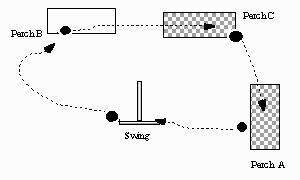
Daily observations of six chimpanzees (ages 8-14) over a six-month period disclosed the development of a play routine integrating the swing and other stationary fixtures in the enclosure (Figure 1). The bungee cord allows the swing to stretch down when the subject jumps on it, much as a tree limb might, and then bounce up. The routine included leaping from a perch (Perch A) onto the swing and then jumping from the swing to the floor at the lowest point in the downward stretch. The subject then ran and jumped up onto the next perch (Perch B), leaped from there to a third perch (Perch C), and finally back onto the first perch (Perch A). Meanwhile, the swing had just arrived back at the original perch in the return arc generated by the momentum of the first jump. Much like the timing of a trapeze artist, the subject then leaped upon the swing and repeated the whole routine. This demonstrates the potential for the Bungie Swing to add a dynamic element to an otherwise stationary environment. It also promotes hand-eye coordination, timing ability, and proprioceptive and vestibular functioning.
Figure 1: Integrated Bungie Swing Activity Routine
Our Bungie Swing's design had to be modified from the type used for children. Because all enrichment devices for captive chimpanzees must be considered dispensable, they must be well-constructed but not so hardy as to be hazardous. Additionally, because all materials will receive intensive oral exploration, it is imperative that no potentially harmful loose fragments or fibers be easily accessible for ingestion. This meant that the bungee cord could not be exposed, since it consists of a bundle of rubbery threads that could wreak havoc in a gut. The swing's surface had to be impervious (as far as possible) to chimpanzee teeth and curious hands. The swing had to be strategically placed so as not to come in contact with walls, perches, or other surfaces upon which it could be hammered and smashed.
Figure 2: Exterior view of Bungie Swing construction.
The relatively impervious material we chose was schedule 40 white PVC pipe. We chose a 4" width to allow a large surface area for adolescent and adult chimpanzees to sit on. Smaller size pipe (2" width) and swing dimensions were used for infant chimps and macaques. From the OT clinic at Denver Children's Hospital we adopted the idea of an upside down T-configuration to allow sitting, standing, and hanging (Figure 2). The swing dimensions were 36" (stem height) and 36" (bar width). The wide hollow pipe also allowed sufficient internal space to enclose the bungee cord and chain attachment we designed to create a controlled stretch while maintaining the inaccessibility of the bungee cord (Figure 3).
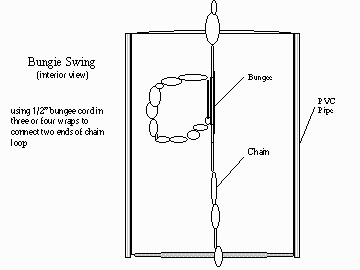
For the chain/bungee attachment we used 5/16" Hi-Test chain (non-corrosive to prevent rust) to create a loop inside the pipe (approximately 24"). The two ends of the chain loop were then attached with three or four strands of bungee cord (one continuous piece) that was tied upon itself using a self-tightening knot. This allowed the swing to bounce only to the extent of the length of the chain loop, preventing the bungee cord from extending beyond the end of the pipe where it would be exposed (Figure 3).
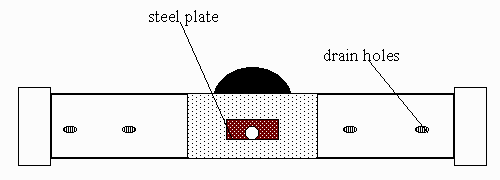
The chain was one continuous piece that was bolted through the bottom of the swing where the T-bar crossed the T-stem. The T-bar and T-stem were attached together using a 3-way PVC pipe joiner and PVC pipe cement (Figure 2). Where the bolt head was tightened on the outside of the T-bar, a small plate of 1/4" steel was placed so as not to crack the PVC pipe (Figure 4). The open ends of the pipe were covered by PVC pipe caps (the most expensive and brittle piece of the construction). The cap at the end of the upright T-bar had a large hole (11/2") drilled in it to allow the up-and-down movement of the chain during stretch. The chain was tailor-cut to the particular cage and attached to the cage top using simply a long bolt and large washers. The bottom of the swing (T-bar) has several holes (1/2") drilled in it to prevent accumulation of water, feces, or other materials that could allow the growth of bacteria (Figure 4).
Figure 3: Cutaway view of Bungie Swing construction.
The length of the chain determines the distance of the swing's arc. The chain length and arc must be determined for each individual enclosure (Figure 1) so as to prevent collision between the swing and walls, perches, or other cage fixtures. The finished product is heavy - each swing weighs approximately 52 lbs. The cost of materials was approximately $50 per swing. Our swings have lasted between 6 and 8 months without requiring significant repairs. When they are broken they can often be repaired and, when not repairable, most materials are salvageable for other projects. The PVC pipe is the only portion we have seen break; the bungee cord does not appear to break or lose its tension to any significant degree.
Figure 4: Bottom of Bungie Swing T-bar showing 1/2" drain holes and 1/4" steel plate located over pipe and 3-way joiner for anchor bolt.
The Bungie Swing forms a successful and essential part of our enrichment program for captive chimpanzees. It is only one component of a larger program that seeks to provide naturalistic occupational activities in order to facilitate sensorimotor integration. Our efforts toward enrichment are based upon a sensory diet concept (Wilbarger, 1984 and 1995) designed to maximize the dimensions of environments that, by the very definition of being "captive", are extremely restrictive. Traditionally the cage has been viewed as a necessary way to contain the captive. But over many years we have discerned that the cage also defines the world of the captive and serves to lock out unwelcome guests, often humans (Erwin & Deni, 1979). The world inside the enclosure can be viewed creatively as a work of art in motion for which we as managers provide the raw materials, allowing a full array of sensorimotor expression.
References
Ayres A. J. & Tickle L. S. (1980). Hyperresponsivity to touch and vestibular stimuli as a predictor of positive response to sensory integration procedures by autistic children. American Journal of Occupational Therapy, 34, 375-381.
Cooper, P. L., Struthers, E. J., & Para, R. R. (1992). Sensory approach to enrichment design increases use of cage space and activity in research monkeys. Contemporary Topics, 31[4], 7.
Daems, J. (Ed.) (1994). Reviews of Research in Sensory Integration, Sensory Integration International. Ravensdale, WA: Idyll Arbor, Inc.
Davenport R. K. (1979). Some behavioral disturbances of great apes in captivity. In D. A. Hamburg & E. R. McCown (Eds.), The Great Apes (pp. 341-357). Menlo Park: The Benjamin/Cummings Publishing Company.
Erwin J. & Deni R. (1979). Strangers in a strange land: Abnormal behaviors or abnormal environments? In J. Erwin, T. L. Maple & G. Mitchell (Eds.), Captivity and Behavior: Primates in Breeding Colonies, Laboratories, and Zoos (pp. 1-28). New York: Van Nostrand Reinhold.
Goodall, J. (1986). Chimpanzees of Gombe. Cambridge, MA: Belknap Press.
Grandin, T. (1992). Calming effects of deep touch pressure in patients with autistic disorder, college students, and animals, Journal of Child and Adolescent Psychophar-macology, 2[1], 63-71.
Henderson, A., Llorens, L., Gilfoyle, E., Myers, C., & Prevel, S. (Eds.) (1974). The Development of Sensory Integrative Theory and Practice: A Collection of the Works of A. Jean Ayres. Dubuque, IA: Kendall/Hunt Publishing Company,.
Mace, F. C., Lalli, J. S., & Shea, M. C. (1992). Functional analysis and treatment of self-injury. In J. K. Luiselli, J. L. Matson, & N. N. Singh (Eds.), Self-Injurious Behavior: Analysis, Assessment, and Treatment (pp. 122-152). New York: Springer-Verlag.
Montague, A. (1971). Touching: The Human Significance of Skin. New York: Columbia University.
Schneider, M. L., Kraemer, G. W., & Suomi, S. J. (1991). The effects of vestibular-proprioceptive stimulation on motor maturation and response to challenge in rhesus monkey infants. Occupational Therapy Journal of Research, 11, 135-154.
Wilbarger J. & Wilbarger, P. (1987). Avanti...Camp Cachuma: Intensive sensory integrative summer camp environment. Sensory Integration: Special Interest Section Newsletter, American Occupational Therapy Association, Inc., 10[4].
Wilbarger P. (1995). The sensory diet: Activity programs based on sensory processing theory, Sensory Integration: Special Interest Section Newsletter, American Occupational Therapy Association, Inc., 18[2].
Wilbarger P. (1984). Planning an adequate sensory diet: application of sensory processing theory during the first year of life. Zero to Three, 5[1].
Wilbarger P. & Wilbarger J. L. (1991). Sensory Defensiveness in Children Ages 2-12: An Intervention Guide for Parents and Other Caretakers. Santa Barbara, CA: Avanti Educational Programs.
------------------------------------------
First author's address: Box 1027, Holloman AFB, NM, 88330.
We would like to thank the maintenance crew at Coulston Foundation, who build many toys and devices, sometimes from very abstract verbal descriptions.
Editor's Note: We spoke to the President of the Bungee Intl. Mfr. Co, asking if the name should be capitalized and if there was any problem with using "Bungie" as the name of the swing. He said: "Just don't manufacture and sell `Bungee Cords'!"
------------------------------------------
* * *
Thomas L. Ferrell, Team Leader, Lab. Animal Med., Chrysalis Preclinical Services - North America, 100 Discovery Dr., Olyphant, PA 18447.
Joshua S. Rodefer, Dept of Psychology, UNC-Chapel Hill, Davie Hall, CB# 3270, Chapel Hill, NC 27599.
Charles Sedgwick, Los Angeles Zoo, Dept of Recreation & Parks, 5333 Zoo Dr., Los Angeles, CA 90027.
Southwest Foundation for Biomedical Research, P.O. Box 760549, San Antonio, TX 78245-0549.
Kerry Stevens, 105 Forest Cove, Hilton Head Island, SC 29928.
* * *
The National Center for Research Resources (NCRR) has published standardized procedures and criteria for utilizing the resources available through the seven Regional Primate Research Centers (RPRCs) in order to conduct research relevant to the missions of the National Institutes of Health (NIH). The RPRCs, each of which is closely affiliated with an academic institution, are a national network of nonhuman primate research and resource centers for biomedical and behavioral investigations. These centers provide the appropriate environment and resources for the development and study of nonhuman primate models essential for clinical and basic research on human health problems and disease processes. Through support from the NCRR, the centers provide specialized research facilities, nonhuman primate resources, professional and scientific staff, equipment, and technological expertise that enable studies to be done by scientists who use these resources. The facilities and resources are thus shared by RPRC staff scientists, as well as with investigators from other institutions across the country. The centers' specialized resources are intended to assist investigators who receive their primary research funding from NIH, but the centers may also host investigators who are funded by other federal, state and local agencies, as well as by research foundations and the private sector. There are over 19,000 animals, mostly macaques, representing over 30 different species of nonhuman primates at these centers.
Each of the RPRCs has a Visiting Scientist Program, which allows advanced training and research in nonhuman primate biology. In addition, collaborative arrangements between investigators and Center scientific staff are encouraged and can be developed on studies related to major human diseases, subject to the availability of resources and Center staff time. Further, nonhuman primate blood samples, organs, and biological fluids are available through the RPRCs.
For information about the Visiting Scientist Program and resources available at a specific Center, including applying to utilize a Center's resources, contact the Center director noted below:
* Andrew G. Hendrickx, Ph.D., Director, California RPRC, Univ. of California, Davis, CA 95616 [916-752-0420; fax: 916-752-8201; URL: www.primate.ucdavis.edu/crprc/homepage.html]
* Ronald D. Hunt, D.V.M., Director, New England RPRC, One Pine Hill Dr., Southborough, MA 01772 [508- 624-8002; fax: 508-460-0612]
* M. Susan Smith, Ph.D., Director, Oregon RPRC, 505 N.W. 185th Ave, Beaverton, OR 97006 [503-645-1141; FAX: 503-690-5532; URL: www.teleport.com/~orprc]
* Peter J. Gerone, Sc.D., Director, Tulane RPRC, 18703 Three Rivers Rd, Covington, LA 70433 [504-892-2040; fax: 504-893-1352; URL: www.tpc.tulane.edu]
* William R. Morton, V.M.D., Director, Washington RPRC, P.O. Box 357330, University of Washington, Seattle, WA 98195-7330 [206-543-0440; fax: 206-685-0305]
* Joseph W. Kemnitz, Ph.D., Interim Director, Wisconsin RPRC, University of Wisconsin, 1220 Capitol Ct, Madison, WI 53715-1299 [608-263-3500; fax: 608-263-4031; URL: www.primate.wisc.edu]
* Thomas R. Insel, M.D., Director, Yerkes RPRC, Emory University, 954 Gatewood Rd, N.E., Atlanta, GA 30329 [404-727-7707 & 727-7721; fax: 404-727-0623; URL: www.cc.emory.edu/YERKES/ ]
Inquiries regarding the Regional Primate Research Center Program may be directed to: Jerry A. Robinson, Director, Regional Primate Research Centers and AIDS Animal Models Program, Comparative Medicine, NCRR, 6705 Rockledge Dr., Suite 6030, MSC 7965, Bethesda, MD 20892-7965 [301-435-0744; fax: 301-480-3819; e-mail: [email protected]]. -- From the NIH GUIDE, January 17, 1997, 26[2]
AIDS-Related Research at RPRCs
It is recognized that nonhuman primate research resources may not be readily available to all investigators who wish to use them in AIDS-related research. The National Center for Research Resources (NCRR) thereby invites investigator-initiated research grant and First Independent Research Support and Transition Grant applications for AIDS-related research which utilizes nonhuman primates and other research resources at the seven Regional Primate Research Centers (RPRCs). The overall objectives of this initiative are 1) to promote cutting-edge scientific research to identify basic pathogenic mechanisms of HIV/SIV infections and therapy which are oriented toward the prevention and treatment of AIDS and related diseases; 2) to enhance utilization of nonhuman primates and other resources within the RPRCs; and 3) to promote coordinated research efforts with Center staff scientists at the seven RPRCs.
The proposed research must be conducted at one of the seven Regional Primate Research Centers (RPRCs), in collaboration with one or more RPRC staff scientists.
Application receipt dates will be May 1, September 1, and January 2. Direct inquires to Jerry A. Robinson or the Center Directors at the addresses above.
* * *
NIMH Small Grants Program
The National Institute of Mental Health (NIMH) Small Grants Program provides research support of up to $50,000 per year (direct costs) for up to two years for new research projects relevant to the mission of the NIMH. This award is not renewable. Applications for small research grants may be submitted by any public or private, for-profit or nonprofit institution such as: a university, college, hospital, or laboratory; units of state or local government; and authorized units of federal government. Foreign institutions are not eligible for this Program,
Small grant support may not be used to supplement research projects already being supported or to provide interim support of projects under review by the Public Health Service. Simultaneous submissions of both a small and regular research grant application on the same topic will not be accepted. Small grant support may not be requested for thesis or dissertation research.
Funding decisions will be based on scientific merit as determined by peer review, with priority given to applications in any of the following four categories: 1. Newer, less experienced investigators. 2. Investigators at institutions without well-developed research traditions and resources. 3. More experienced investigators, for exploratory studies that represent significant change in research direction for them. 4. More experienced investigators, for testing new methods or techniques.
Applications may be made for support of research in any scientific area relevant to mental health. While applications may involve a wide variety of biomedical, behavioral, or clinical disciplines, relevance to the mission of the NIMH must be clear. Of interest to primatologists, the Division of Neuroscience and Behavioral Science directs, plans, supports, and conducts programs of research, research demonstrations, research training, and resource development to further understand the etiology and pathophysiology of mental disorders with a focus on: behavioral and social sciences, cognitive sciences, and neurosciences, including neuroimaging, neurophysiology, neuropsychopharmacology, and cellular and molecular neurobiology.
Direct inquiries to Henry Khachaturian, Ph.D., Div. of Neuroscience and Behavioral Science, NIMH, 5600 Fishers Lane, Rm 11-103, Rockville, MD 20857 [301-443-8033; fax: 301-443-1731; e-mail: [email protected]].
HIV-1 Infection of the Central Nervous System
The National Institute of Mental Health (NIMH), the National Institute of Neurological Disorders and Stroke (NINDS), the National Institute on Drug Abuse (NIDA), and the National Institute of Child Health and Human Development (NICHD) invite research grant applications to support research focused on determining the pathogenic mechanisms involved in HIV-1-associated neurobehavioral and neurological dysfunction in adults and children. The objective of this cooperative effort is to foster investigations that will provide the foundation for the rapid development of therapeutic interventions to prevent and treat the effects of HIV-1 on the central nervous system (CNS). Applications ranging from basic research to clinical diagnosis and treatment studies are being solicited. Multidisciplinary research teams and collaborative alliances are encouraged but not required.
Direct inquiries to: Walter L. Goldschmidts, Ph.D., Office on AIDS, NIMH, Parklawn Bldg, Rm 10-75, Bethesda, MD 20857 [301-443-7281; fax: 301-443-9719; e-mail: [email protected]]; A. P. Kerza-Kwiatecki, Ph.D., Div. of Convulsive, Infectious and Immune Disorders, NINDS, 7550 Wisconsin Ave, Rm 804, Bethesda, MD 20892 [301-496-1431; fax: 301-402-2060; e-mail: [email protected]]; or Lynda Erinoff, Ph.D., Office on AIDS, NIDA, Parklawn Bldg, Rm 9A30, Bethesda, MD 20857 [301-443-6046; fax: 301-443-4100; e-mail: [email protected]].
Susceptibility to HIV-Associated Pulmonary Disease
The National Heart, Lung, and Blood Institute (NHLBI) invites research grant applications for support of research on the cellular and molecular mechanisms that influence host susceptibility to HIV-associated lung diseases, including tuberculosis, histoplasmosis, coccidioidomycosis, blastomycosis, Pneumocystis carinii pneumonia, and pulmonary Kaposi's sarcoma. The host factors could include inherited traits, acquired immune responses, and environmental influences. Research could be directed at understanding normal host defenses as a framework for understanding abnormal defenses.
This initiative will not address mechanisms of activation of HIV in the lung. This was the subject of another announcement, "Regulation of HIV Activation in the Lung." However, studies involving the influence of HIV in either a latent or active state, pro-viral components, dysfunctional virus, or viral products, on the progression of HIV-associated lung diseases would be appropriate.
Direct inquiries regarding programmatic issues to Hannah H. Peavy, M.D., Div. of Lung Diseases, NHLBI, 6701 Rockledge Dr., Suite 10018, MSC 7952, Bethesda, MD 20892-7952 [301-435-0222; fax: 301-480-3557; e-mail: [email protected]]. Application receipt date is April 30, 1997.
Spinal Cord Injury: Emerging Concepts
The National Institute of Neurological Disorders and Stroke (NINDS), National Eye Institute (NEI), National Institute of Child Health and Human Development (NICHD), and National Institute of Nursing Research (NINR) invite applications for support of research that will increase our knowledge of the mechanisms that underlie processes of injury and repair in the central nervous system (CNS), including optic nerve and other CNS tracts, and that will provide strategies for therapeutic intervention in spinal cord injury.
Receipt dates for new research grant applications are February 1, June 1, and October 1. For further information, contact Dr. Mary Ellen Cheung, Div. of Stroke, Trauma, and Neurodegenerative Disorders, NINDS, Federal Bldg, Rm 8A13, Bethesda, MD 20892 [301-496-4226; fax: 301-480-1080; e-mail: [email protected]]; Dr. Michael D. Oberdorfer, Strabismus, Amblyopia, and Visual Process Branch, NEI, 6120 Executive Blvd, Suite 350, MSC 7164, Bethesda, MD 20892-7164 [301-496-5301; fax: 301-496-0528; e-mail: [email protected]]; or Dr. Danuta Krotoski, National Center for Medical Rehabilitation Research, NICHHD, Bldg 6100, Rm 2A03, MSC 7510, Bethesda, MD 20892 [301-402-2242; fax: 301-402-0832; e-mail: [email protected]].
Cardiovascular Aging Research
Eight areas of research opportunities have been highlighted by the National Institute on Aging (NIA) Cardiovascular Aging Advisory Panel. NIA, the National Heart, Lung, and Blood Institute (NHLBI), and the National Institute of Nursing Research (NINR) encourage submission of Investigator-initiated Research Project Grant and First Independent Research Support and Transition award applications for research that will enhance our understanding of age-associated changes in the cardiovascular system and show how these normal changes increase susceptibility to cardiovascular disease.
The following eight research areas are neither prioritized nor meant to be restrictive. A detailed description of the research recommendations has been published in the September 1996 issue (Vol. 44, No. 9, pp.1114-1117) of the Journal of the American Geriatrics Society.
* New research incorporating the advances made in cellular, structural, and molecular biology in the study of function in whole animals and humans.
* Research on cardiovascular-renal interactions in aging...this systems physiology approach to aging research is not restricted to cardiovascular-renal interactions and may include other relevant systems.
* New methodologies to measure blood vessel wall stiffening and support new studies which will enhance our understanding of vascular stiffening in aging and its link (if any) in promoting atherosclerosis.
* Examination of the effects of aging on cardiac diastolic function including the relationship between systolic and diastolic function; e.g., adaptation, remodeling, and/or dysfunction during aging.
* Examination of the importance of gender differences in the aging cardiovascular system..
* Examination of the role of social and behavioral factors in promoting cardiovascular health.
* Research on the clinical pharmacology of cardiovascular drugs in older individuals, including pharmacodynamic and pharmacokinetic studies.
* Development of appropriate large animal models for clinically-related cardiovascular aging research (in vivo) which mimic human age-related changes and conditions.
Direct inquiries regarding programmatic issues to: Dr. Andre J. Premen, Geriatrics Program, NIA, 7201 Wisconsin Ave, Suite 3E327, MSC 9205, Bethesda, MD 20892-9205 [301-496-6761; fax: 301-402-1784; e-mail: [email protected]]; or Dr. David Robinson, Div. of Heart and Vascular Diseases, NHLBI, 6701 Rockledge Dr., Suite 10193, MSC 7956, Bethesda, MD 20892-7956 [301-435-0545; fax: 301-480-2849; e-mail: [email protected]].
Neuroscience and Biology of Aging
The National Institute on Aging (NIA) is seeking small grant (R03) applications to: (1) stimulate and facilitate the entry of promising new investigators into the neuroscience and biology of aging and (2) encourage established investigators to enter newly targeted, high-priority areas in these research fields. To be eligible for this award as a new investigator in aging, the proposed Principal Investigator (PI) should be an independent investigator at the beginning of her/his career. If the applicant is in the final stages of training, it is permissible to apply for an R03 but awards cannot be made to anyone still in training status at the time of award. Established investigators proposing research unrelated to a currently funded research program are also eligible to apply for these grants.
For 1997, investigators may apply for a small grant to support research on one of the following topics relevant to aging research: * Age-related factors in HIV infection, latency, progression, and severity; and the susceptibility of the aging nervous system to HIV infection and AIDS-associated opportunistic infections. * Immunobiology of aging including cellular and molecular approaches, as well as neural and neuroendocrine mechanisms and pathways modulating the aging immune system. * Molecular mechanisms regulating age-related alterations in gene expression including transcriptional, post-transcriptional, and translational processes and protein structural or conformational changes in either neural or non-neural tissues. * Development of novel biological resources for aging research (e.g., animal models, other models, molecular reagents and probes). * Basic underlying mechanisms of musculoskeletal aging (muscle, bone, cartilage). * Molecular basis of cardiovascular aging. * Nutritional factors and aging. * Biology of age-related prostate growth. * Mechanisms underlying changes in sleep and circadian processes in older organisms. * Neural mechanisms of age-related changes in attention and frontal lobe executive processes. * Mechanisms underlying changes in sensory and motor processing in the aging nervous system. * Novel tract-tracing procedures to identify age-related changes in neuronal connections and degeneration in post-mortem tissues. * Investigations into neuroglia function in aging that examine cellular and molecular factors controlling glial cell activation, death, neurotransmitter receptor and transport functions, and mitochondrial and other abnormalities leading to neuronal oxidative damage.
Direct inquiries regarding programmatic issues to Dr. David B. Finkelstein, Biology of Aging Program, [301-496-6402; fax: 301-402-0010; e-mail: BAPquery@ gw.nia.nih.gov]; or Dr. Judy Finkelstein, Neuroscience & Neuropsychology of Aging Program [301-496-9350; fax: 301-496-1494; e-mail: [email protected]]. The address and general e-mail address is NIA, Gateway Bldg, Suite 2C212, 7201 Wisconsin Ave, MSC 9205, Bethesda, MD 20892 [e-mail: [email protected]]. Application receipt dates are July 17 and November 17, 1997.
Innovative Approaches in HIV Vaccine Research
The National Institute of Allergy and Infectious Diseases (NIAID), on the recommendation of the AIDS Vaccine Research Committee (AVRC), seeks to implement a new program aimed at rapidly exploiting new scientific opportunities to broaden the base of scientific inquiry in areas related to vaccine discovery and development. The NIAID invites applications, including those from researchers previously outside the field of AIDS research, for research projects that involve a high degree of innovation, risk and novelty - as well as a clear promise of helping to improve vaccine design or evaluation - in the following three general areas: 1) the structure/function of HIV envelope protein; 2) creation/improvement of animal models for vaccine evaluation and pathogenesis studies; and 3) mechanisms of directing antigen processing in vivo. This Innovation Grant Program utilizes a grant mechanism which provides the resources to carry out preliminary tests of feasibility for new research hypotheses, and a rapid and streamlined review and award process. This approach will be evaluated by the AVRC for suitability and responsiveness following this initial offering. If successful, other announcements may be made in the future.
Direct inquiries to Carole A. Heilman., Ph.D., Division of AIDS, NIAID, Solar Bldg, Rm 2A16, MSC 7620, 6003 Executive Blvd, Bethesda, MD 20892-7610 [301-496-0545; fax: 301-402-1505; e-mail: [email protected]]. Application receipt date is May 23, 1997.
* * *
NSF FastLane Wins National Award
The National Science Foundation's (NSF) FastLane has been chosen the first federal government project to win a National Information Infrastructure (NII) Award. FastLane is an electronic system of administering scientific research grants, educational fellowships and a host of other interactive functions. FastLane was a winner in the Government category, one of ten awards in different categories given for programs and organizations nationwide.
Started in 1995, the NII Awards recognize extraordinary achievements on the information superhighway, including innovative uses of the Internet and related communications technologies. The NII awards are supported by a mix of private, public and grass roots organizations.
FastLane is an interactive, real-time system to conduct a variety of communications and business over the Internet. Its best uses to date involve NSF's complicated proposal and review process for scientific research grants and applications for graduate fellowships.
Since February, 1995, organizers have worked to establish and refine a process of totally electronic communication for proposal submissions, updates, reviews, reports and awards for research. Sixteen universities helped to design FastLane in this experimental phase. -- from an NSF Press Release
SCAW Harry C. Rowsell Award
The Scientists Center for Animal Welfare has chosen Dr. Leo K. Bustad to receive the 1996 Harry C. Rowsell Award. Dr. Bustad, Professor and former Dean of the College of Veterinary Medicine at Washington State University in Pullman, WA, has been a leader in promoting the use of animals to help people, especially people who are elderly and/or disabled.
* * *
Zoo Animal Behaviour & Welfare, Edinburgh
The third International Summer School in Zoo Animal Behaviour & Welfare will take place July 7-18, 1997, in Edinburgh, Scotland, sponsored by the University of Edinburgh and the Edinburgh Zoo. The ten-day course "will enable students to learn about up-to-date scientific theory and how that theory can be used to improve the husbandry, management, and welfare of animals in zoos."
Topics to be presented include: the study of animal behavior; animal welfare; environmental enrichment; and the global context of zoos.
For detailed information, contact Hamish Macandrew, UnivEd Technologies Ltd, UnivEd Training & Conference Centre, 11 South College St, Edinburgh, EH8 9AA, Scotland, UK [fax: +44(0)131 650 9019; e-mail: [email protected]].
The Center for Field Research and Earthwatch
The Center for Field Research (CRF) is a private nonprofit organization, served by an international advisory board of scientists and humanists, which encourages and evaluates research proposals from scholars and scientists. After peer review, proposals are presented to Earthwatch for funding. Earthwatch supports field sciences by "participant funding," i.e., most funds contributed to projects come from the donations of Earthwatch members, who enlist for the opportunity to join scientists in the field and assist them with their data collection and other research tasks.
CRF will consider proposals for field research in any discipline that can "gainfully employ nonspecialists in the implementation of a carefully constructed pure or applied research project. We encourage proposals that are interdisciplinary and/or transnational." For a copy of the CRF's Proposal Guidelines, contact them at 680 Mount Auburn St, Box 9104, Watertown, MA 02272 [617-926-8200; fax: 617-926-8532; e-mail: [email protected]]. There is also a web page at www.earthwatch.org
Earthwatch also offers scholarships for students and teachers who wish to participate. College credit is available. Current projects include monkey, chimpanzee, and lemur behavior, in Argentina, Sri Lanka, Ellensburg, WA, and Madagascar. For information, contact Rachel Nixon at the address above.
ISPA Advanced Courses on Ethology 1997
The Institute of Applied Psychology (ISPA; Lisbon, Portugal) will hold advanced seminars given by leading researchers on different topics of ethology, and open to post-graduate students (M.Sc. and Ph.D) in Animal Behavior and related areas. One of the courses already set for this summer is Animal Communication Systems: Developments and Controversies, by Peter K. McGregor of the University of Nottingham, on 11, 12 & 14 July, 1997.
For further information on these courses, contact Rui F. Oliveira, Instituto Superior de Psicologia Aplicada, R. Jardim do Tabaco 44, 1100 Lisboa, Portugal [351-1-8863184; fax: 351-1-8860954l; e-mail: [email protected]].
LAMA Foundation Scholarship for ILAM
The Laboratory Animal Management Association (LAMA) announces a scholarship award for the May 1998 American Association for Laboratory Animal Science's Institute for Laboratory Animal Management (ILAM) program. The LAMA Foundation recently changed the eligibility requirements with the hopes of increasing its ability to support more individuals for the ILAM program. In the past this scholarship was available to second year ILAM students only. The scholarship is still available to second year students, but those wishing to enter the ILAM program for a first year are also eligible and encouraged to apply.
The scholarship, which will be awarded in September 1997, will support travel and tuition expenses. The deadline for application is August 15, 1997. For more information about the scholarship and the ILAM program, contact Kirk M. Boehm, LAMA Foundation Committee Chair, WRPRC, 1220 Capitol Ct, Madison, WI 53715 [608-263-3560; e-mail: [email protected]].
Marenco Biological Reserve, Costa Rica
The Marenco Biological Reserve in Costa Rica is interested in developing its potential as a center for scientific studies and education or even pleasure eco-trips. Several groups from different institutions, such as universities and biologists' groups, have already taken advantage of the facilities. A variety of endangered species, including Cebus capucinus, Ateles geoffroyi, and Alouatta, can be found within the 1200-hectare reserve, which has a great diversity of habitats, such as primary rain forest, swamp, mangroves, cloud forest, tropical jungle, and rivers. The facilities that this reserve offers are: 25 bungalows with private bath, restaurant, reception (with phone, fax, and e-mail), electric generator, marine transportation, and a web of trails, with signs, that covers the entire reserve.
For information, contact Eng. Nelson Vega J., Marenco Beach and Rainforest Lodge, P.O. Box 4025-1000, Costa Rica [1-800-2339101 (USA); 1-305-2339101 (Europe); 506 221 1594 (C.R.); Fax: 506 255 13 46; www.elparaiso.com/cr/marenco.htm].
* * *
Laboratory Animal Medicine Post-Doc, California
The Scripps Research Institute (TSRI) Department of Animal Resources invites applications for a post-doctoral veterinary training position in laboratory animal medicine. Review of applications will begin immediately and will continue until the position is filled, with the earliest planned start to be July 1, 1997. The three-year program is designed to support preparation toward ACLAM board certification, to provide a good foundation for ability to manage a program of laboratory animal care and research support, and to develop and/or increase research aptitude. Areas of training include laboratory animal clinical medicine, comparative pathology, methods and practice of biomedical research, and animal resource and facilities management. The position furnishes opportunities to work with a wide variety of animal species in an accredited, respected animal care and use program, as well as opportunities to work with established research scientists in a sophisticated research environment to attain the necessary skills to plan and conduct research and to contribute to the scientific literature.
Candidates for this position should have a DVM/VMD or equivalent degree. The salary range is $28,000 to $30,500 plus benefits. For further information and a program brochure, contact Dr. Kent Osborn. Interested applicants should forward a curriculum vitae, statement of goals and interests, and three letters of recommendation to Dr. Kent Osborn, Department of Animal Resources, MB-18, The Scripps Research Institute, 10550 North Torrey Pines Road, La Jolla, CA 92037 [619.784-2260; fax: 619-784-09864; e-mail: [email protected]]. The Scripps Research Institute is an affirmative action/equal opportunity employer.
Animal Care Manager, Ohio
The Ohio State University Laboratory Animal Resources (ULAR) is seeking a Manager for animal care operations. Principal responsibilities include: management of an AAALAC-accredited campus-wide program comprised of 15 animal facilities with over 160,000 sq ft, providing leadership and direction for a staff of more than 35 animal care personnel, coordinating operations with investigators' needs, monitoring compliance under federal statutes and regulations, and maintaining high standards of animal care for a diverse population of laboratory animals. Candidates should have a B.S.-level education, AALAS certification at the technologist level, and significant experience in facility management, personnel management, and the care and management of laboratory animals. Interested persons should send their resume to: ULAR Personnel Officer, Rm 313 OSURF Bldg, 1960 Kenny Rd, Columbus, OH 43210. Applications will be accepted until the position is filled. The Ohio State University is an Equal Opportunity, Affirmative Action Employer. Women, minorities, Vietnam-era veterans, disabled veterans, and individuals with disabilities are encouraged to apply.
Technicians, New York City
The Research Animal Resource Center (RARC) at the Cornell University Medical College (CUMC) in New York City has immediate openings for two technicians.
The first opening is for a Veterinary Technician. This person will provide technical assistance and clinical support in the animal facilities; provide general laboratory and animal nursing services to investigators; and provide training to students, research technicians, animal caretakers and investigators in laboratory animal techniques. The technician will be expected to participate actively in interdepartmental training and continuing education seminars. The candidate must have an Associate's Degree in Veterinary Science Technology, AALAS certification at Laboratory Animal Technician (LAT) level, and/or demonstrated equivalent experience; excellent written and verbal skills; and superb, detail-oriented organization skills. The individual must be capable of functioning independently with minimal supervision.
The second opening is for a Surgery/Veterinary Technician. This person will coordinate the scheduling and general operation of the RARC surgical facilities; provide technical assistance and nursing support in the surgical facilities; provide clinical support in the animal facilities; and provide general laboratory and animal nursing services to investigators. The technician will be expected to participate actively in interdepartmental training and continuing education seminars. The candidate must have an Associate's Degree in Veterinary Science Technology, AALAS certification at Laboratory Animal Technician (LAT) level and/or demonstrated equivalent experience; three to five years experience in animal research or related experience which should encompass knowledge of anesthesia and surgery, animal health related issues, and knowledge of regulations governing the use of animals in research; excellent written and verbal skills; and superb, detail-oriented organization skills. This individual must be capable of functioning independently with minimal supervision.
CUMC offers a competitive salary and an outstanding benefits package which includes pension, health, dental, and tuition plans. CUMC is an EEO/AA/M/F/O/V.
Persons interested in either position should send their resume to: S. P. Brown, Cornell University Medical College, Personnel Department, Olin Hall, Room 211, 445 E. 69th Street, New York, NY 10021. For more information, contact Scott E. Perkins, V.M.D., M.P.H., Dipl. ACLAM, Assistant Director, Research Animal Resource Center, Memorial Sloan-Kettering Cancer Center and Cornell University Medical College [212-746-1043; fax: 212-746-8847; e-mail: [email protected]].
Postdoctoral Research, London
University College, London, Department of Anatomy and Developmental Biology announces a position for a postdoctoral research assistant to work on the comparative anatomy and histology of sexually dimorphic hominoid canine teeth. Applicants should have a good background in human evolution and primate comparative anatomy, be skilled in basic histological and microscopical techniques appropriate for hard tissue preparation and examination, and be familiar with imaging techniques such as CT and micro CT. Applications should be made to Professor Christopher Dean, Department of Anatomy and Developmental Biology, University College London, Rockefeller Building, Gower Street, London WC1E 6BT, U.K. [e-mail: [email protected]].
Coordinator of Scientific Research, Cleveland
Cleveland MetroParks Zoo is seeking a Coordinator of Scientific Research. Required credentials include a Ph.D. in Biology (or Ph.D. candidate in 1997) with emphasis on behavior, experience conducting research in a zoological park, and grant development and scientific publication experience. Submit resumes to P.O. Box 360411, Strongsville, OH 44136 [fax: 216-572-5676; e-mail [email protected]].
* * *
University Research Expeditions Program
The University of California operates the University Research Expeditions Program, sending participants on field research projects around the world. Participants "share the costs and lend a helping hand" to faculty and graduate student researchers on projects in biology, anthropology, environmental studies, and other sciences. Students and teachers can receive academic credit for participation, and there are a limited number of scholarships available. The 1997 catalog does not list any studies that focus on primates or primatology, but previous catalogs have. For a catalog, contact UREP, University of California, Berkeley, CA 94720-7050 [510-642-6586; fax: 510-642-6791; e-mail: [email protected]].
Vet/vet nurse/vet technician, Thailand
The Wild Animal Rescue Foundation of Thailand, Krabok Koo, Sanam Chaiket, Chachoengsao Province, Thailand is looking for a veterinarian, veterinary nurse, vet technician, or capable person with related experience, such as a zoologist with medical experience.
There is no salary or funding, but we will support any private funding, and try to help with funding. Meals and on-site accommodation will be provided. We would prefer a commitment of a minimum of 6 months.
This position will primarily be at our sanctuary in Sanam Chaiket, but the volunteer will be asked to go to several other projects we are involved with, when necessary. The position is mainly working with primates (gibbons and monkeys), but also 20 bears and some leopards on the Krabok Koo site. Other projects may include bears, large cats, and many other animals.
Contact Raewyn Langslow, Wild Animal Rescue Foundation of Thailand, 29/2 Sukhumvit 33, Bangkok 10110, Thailand [662-662-4396/7; fax: 662-662 4398; e-mail: [email protected]].
Primate Keeper
The International Center for Gibbon Studies, P. O. Box 800249, Santa Clarita, CA, is looking for a volunteer to collect and enter behavioral data on captive gibbons and serve as a keeper.
* * *
ASKNIH
ASKNIH is a service of the Division of Extramural Outreach and Information Resources, Office of Extramural Research, Office of the Director, NIH. ASKNIH is the point of contact for obtaining general information about NIH extramural research and research training programs, requesting publications, and accessing the NIH Guide and other information on the NIH web site. ASKNIH is also the contact from which to request application kits and forms. Contact ASKNIH at 301-435-0714; fax: 301-480-0525; e-mail: [email protected].
Compendium of Animal REsources CD-ROM
The Compendium of Animal REsources CD-ROM (CARE) is a CD-ROM developed by the U.S. Departments of Agriculture and of Health and Human Services to provide quick and easy access to more than 160 documents relating to animal care and use. Prepared primarily for the biomedical research community, veterinarians, animal care regulators, and IACUC members, CARE contains Federal legislation and regulations, policies and guidelines of professional scientific societies, bibliographies, and full text articles and monographs. It is particularly useful in education and research settings.
Some of the documents included are: * Title 9 Code of Federal Regulations, Subchapter A, Animal Welfare (1995) * Guide for the Care and Use of Laboratory Animals (1996)* Public Health Service Policy on Humane Care and Use of Laboratory Animals (1996) * Environmental Protection Agency and Food and Drug Administration regulations for animal testing * Professional organization guidelines and statements including euthanasia, blood removal, transit of animals, care and breeding of nonhuman primates, and health monitoring * Books, manuals, and conference proceedings on animal care and use in behavioral research, neuroscience experiments, reptile and amphibian studies, education and training manuals for laboratory personnel * 35 bibliographies, resource guides, and fact sheets produced by the Animal Welfare Information Center at the National Agricultural Library * 6 volumes of Animal Welfare Information Center Newsletter * 18 zoo animal bibliographies and resource guides from the Smithsonian Institution Libraries. The disk is current through July 1996. It contains ReferenceBook and Adobe Acrobat software making it easily word and boolean searchable. CARE CD operates in DOS, Mac, Windows, and Windows 95 environments.
Care CD was funded and developed by the following organizations: * U.S. Department of Agriculture * Agricultural Research Service, National Agricultural Library, AWIC * Animal and Plant Health Inspection Service, Animal Care * US DHHS, NIH, OPRR, Division of Animal Welfare, Office of Animal Care and Use, Interagency Research Animal Care Committee.
The price of the disk is $35. Orders (for stock # 001-000-04634-9) may be faxed, mailed, or phoned in to the Superintendent of Documents (P.O. Box 371954, Pittsburgh PA 15250-7954 [202-512-1800; fax: 202-512-2250]). For further information, contact: Michael Kreger, Animal Welfare Information Center, [301-504-6212; fax: 301-504-7125, e-mail: [email protected]].
E-mail Lists of Interest
* David Seelig is starting an e-mail forum and Web site, the Primate Enrichment Forum, focusing on laboratory primates. Write to him at [email protected] for information or to contribute.
* The Australasian Wildlife Management Society. Discussions about wildlife management issues affecting the Australasian region. To subscribe, send e-mail to: [email protected] with the following line in the body of the message: "subscribe awms <your e-mail address>."
* Those interested in an e-mail discussion group specifically about gorillas are invited to send their names and e-addresses to [email protected] "for further instructions".
More Interesting Web Sites
American Psychological Assn Science Directorate: www.apa.org/science
* Frans de Waal's research on altruism: www.nsf.gov/od/lpa/news/publicat/frontier/1-97/1morals.htm
Abstracts of Second EUPREN/EMRG Workshop: "The Implications of Housing and Husbandry for Scientific Quality and Well-Being of Non-Human Primates," Rome, 27-27 September,1996: www.dpz.gwdg.de/eupren.htm
CONSULTANT - a Veterinary Diagnostic Support Program: www.vet.cornell.edu/consultant/consult.asp
* APHIS press releases: www.aphis.usda.gov
* The Physician's Desk Reference: www.pdrnet.com
* University of Minnesota Research Animal Resources: www.ahc.umn.edu/rar/INDEX.HTML
* Animal Behavior Web Site: www.cisab.indiana.edu/animal_behavior.html
* Great Ape Project - International: www.envirolink.org/orgs/gap/
* Lab Animal Magazine: www.labanimal.com
* ABSnet, electronic newsletter of the Animal Behavior Society: www.clarku.edu/~rking/abs.html
* Nature reserve in Vietnam: coombs.anu.edu.au/~vern/binh-chau/phuoc-buu.html
* * *
Lael Schooler, a postdoctoral fellow in psychology at Indiana University, is looking for data on the foraging behavior of primates. His work, in collaboration with John Anderson at Carnegie Mellon University, tries to understand human memory as an optimal database retrieval system. That is, the memory system must retrieve relevant information from a vast library of facts and experiences. Basic to the theory is the hypothesis that human memory has evolved to cope with the patterns with which stimuli occur and reoccur in the environment. Anderson showed that a Bayesian estimation procedure in combination with a plausible environmental model could explain many results in the memory literature. However, Anderson's original analysis was under-constrained by a lack of data about the informational demands that the environment makes.
Schooler has proposed that it should be possible to provide some of the necessary constraints by characterizing the informational demands that environments place on people. His results substantially modified Anderson's original analysis by: (1) providing empirical constraint to the environmental model; and (2) demonstrating that the explanatory power of the rational analysis of memory was not, as some had claimed, the result of assumptions buried in the environmental model.
A limitation of these analyses is that the environmental data result from human behavior, and therefore are potentially influenced by human memory. Second, these analyses fail to address Anderson's claim that the human is "optimized to its environment by evolution". (Subsequent to the original work, Schooler has learned that the idea that evolution will tend to optimize is somewhat naive.) The analyses required the assumption that memory appears to be optimized to these contemporary environments, because they share properties in common with natural environments.
Exploring these issues requires examining environmental databases which are (1) uncontaminated by human memory, and/or (2) representative of the environments that are likely to have shaped memory. Katherine Milton, an anthropologist at UC Berkeley, argues that studying large primates (i.e., howler monkeys) in modern tropical forests provides an analog to the foraging behavior of proto-humans. She has generously agreed to provide her data to Schooler. The basic idea is that every plant that a foraging howler encounters represents a demand on memory to retrieve information (e.g., is it edible?).
However, the analyses Schooler wants to do require much more data than Milton's. Ideally, he would like to have detailed records of a primate's movement through some natural environment. If you have foraging data that you are willing to share, please contact Lael Schooler, Ph.D., Department of Psychology, Indiana University, Bloomington, IN 47405 [[email protected]]. Schooler will be happy to give coauthorship on any resulting papers.
* * *
Thanks
We are pleased to acknowledge a donation from Charles River BRF, of Houston, TX, which will help us continue to send the LPN free to foreign schools, libraries, and laboratories that cannot afford mailing charges.
Our World Wide Web Page
We have completed the second phase of work on our Web page (URL: www.brown.edu/Research/Primate). The most recent volumes, 25 to 36, from 1984 to the present, are there, with all their graphics as well as text. We also have complete indexes for all the issues, from 1962 to the present. The indexes for volumes 25-36 have links to the articles for immediate reading or printing.
We have decided not to add any more back issues to the Web. Anyone who wants to read the older issues can buy them from us (at the new, low price of $2 each) or read them at a library. David Seelig, who created our excellent Index to Enrichment Articles (which is now up-to-date with volumes 25-36), is going over the older issues and may suggest that we scan in and put on the Web a few especially interesting or important articles. We will also consider requests from readers. However, we hope that most of the "creation" of the Web page is completed, and all that remains is to keep adding the new issues.
Erratum
The publication date of The Information Continuum: Evolution of Social Information Transfer in Monkeys, Apes and Hominids, by B. J. King, was given incorrectly in the "Recent Books and Articles" section of the July, 1996 issue of the LPN. The correct publication date is 1994. We apologize to Dr. King.
* * *
Animal Care and Use Programs
The NIH Office for Protection from Research Risks (OPRR) sponsors workshops on implementing the Public Health Service Policy on Humane Care and Use of Laboratory Animals. The workshops are open to institutional administrators, members of Institutional Animal Care and Use Committees, laboratory animal veterinarians, investigators, and other institutional staff who have responsibility for high-quality management of sound institutional animal care and use programs. Ample opportunities will be provided to exchange ideas and interests through question-and-answer sessions and information discussions.
A workshop titled "Development of Institutional Disaster Plans" will be held May 15-16, 1997 in Cleveland, OH, cosponsored by the Case Western Reserve University School of Medicine and the Ohio Scientific Education & Research Association. The workshop will explore steps institutions may take in preparation for, and in response to, a variety of natural disasters (hurricanes, floods, snow emergencies, etc.) and human activities (vandalism, arson, etc.). There is a $150 registration fee.
For registration, contact Ms. Joann Bauer, Senior Conference Coordinator, Continuing Med. Education Office, Univ. of Colorado Health Sci. Center, Campus Box C295, 4200 East Ninth Ave, Denver, CO 80262 [303-372-9054; 1-800-882-9153; fax: 303-372-9065].
For information concerning future NIH/OPRR Animal Welfare Education Workshops, contact Ms. Darlene M. Ross, OPRR, NIH, 6100 Executive Blvd, Suite 3B01, MSC 7507, Rockville, MD 20892-7507 [301-496-8101, Ext. 233; fax: 301-402-0527].
CELL Conference
AALAS will again be conducting the Continuing Education Lectures and Laboratory (CELL) conference on May 18-20 in Olive Branch, MS. This year's topic is Managing Quality Standards. There will be lectures and discussions on such topics as Reengineering Organizations, Informatics, Principle Centered Leadership, Training and Retraining Employees, and Laboratory Animal Science and Medicine in the 21st century. For information contact AALAS [901-754-8620] or the CELL chair, Fred Douglas [317-494-7591]. CELL provides opportunity for individuals involved in any aspect of laboratory animal management to attend a conference dealing with issues and problems peculiar to their work setting. CEU's may be earned for the continuing education registry.
1997 AWIC Workshop Dates
The Animal Welfare Information Center (AWIC) of the U.S. Department of Agriculture, National Agricultural Library (NAL) has developed a one-and-a-half-day workshop, "Meeting the Information Requirements of the Animal Welfare Act", for individuals who are responsible for providing information to meet the requirements of the Animal Welfare Act.
The regulations of the act require that investigators provide Institutional Animal Care and Use Committees (IACUCs) with documentation demonstrating that alternatives to procedures that may cause more than momentary pain or distress to the animals have been considered and that activities do not unnecessarily duplicate previous experiments. A thorough literature search regarding alternatives meets this federal mandate. An alternative is any procedure which results in the reduction in the numbers of animals used, refinement of techniques, or replacement of animals.
The objectives of the workshop are to provide: * an overview of the Animal Welfare Act and the information requirements of the Act * a review of the alternatives concept * a comprehensive introduction to NAL, AWIC and other organizations * instruction on the use of existing information databases/networks * on-line database searching experience.
This workshop is targeted for principal investigators, members of IACUCs, information providers, administrators of animal use programs, and veterinarians. All participants will receive a resource manual. Workshops will be held on April 17-18, July 10-11, and October 16-17, 1997. Each workshop will be limited to 20 persons.
The workshop registration form, lodging information, and map to AWIC are posted on the AWIC homepage at: www.nal.usda.gov/awic/news/newsinfo.htm For more information, contact AWIC, NAL, 10301 Baltimore Boulevard, Beltsville, MD 20705-2351 [301-504-6212; fax: 301-504-7125; e-mail: [email protected]].
* * *
The Iberoamerican Congress for Biodiversity and Vertebrate Zoology (VIII) will be held 22-25 April, 1997, at the Universidad de Concepción, Chile. Researchers from Spain, Portugal and Latin America will discuss issues relating to bioidiversity, conservation and zoology of vertebrates. Contact Dr. Juan Carlos Ortiz, Dept of Zoology, Univ. de Concepción, Casilla 2407, Chile [56 41 234985, x 2157 or 4152; fax: 56 41 243379; e-mail: [email protected]].
The 1997 American College of Laboratory Animal Medicine (ACLAM) Forum will be on the topics of human resource issues in management of research animal resources and the design of laboratory animal facilities. The human resource/management topics include Interpersonal Skills, Negotiation, Communication and Dialogue, Quality Assurance, and Cost Management. The animal facility design topics include HVAC Design, Construction Issues, Computer-aided Airflow Models, Transgenic Facility Design, and Aquatic Animal Facility Design. There will be formal presentations, breakout discussion groups, roundtable discussions, and time for social/recreational activities and informal discussions. The Forum will be held May 11-14, 1997 at the Perdido Beach Resort on the Alabama Gulf Coast. You do not have to be a member of ACLAM to attend. Interested scientific and professional people are welcome. For more information contact Dr. Charles McPherson, Executive Director, ACLAM, 200 Summerwinds Dr., Cary, NC 27511 [fax: 919-851-3126; e-mail: [email protected]].
The 27th Annual Symposium of the Scandinavian Society for Laboratory Animal Science will take place in Elsinore, Denmark (Hamlet's home town), May 22-24, 1997. The focus will be on "The implication of welfare in laboratory animal science." For information and registration, contact Axel Kornerup Hansen, Asst. Director, D.M.V., Dept of Exp. Med., Univ. of Copenhagen/National Univ. Hospital, Panum Inst., Blegdamsvej 3B DK-2200 Copenhagen N, Denmark [45 35 32 73 63 (direct); fax: +45 35 32 73 99; e-mail: [email protected]; oslovet.veths.no/scandlas97.html]
The first Meeting of the Society for Behavioral Neuroendocrinology will be held 28-31 May, 1997, in Baltimore, MD, in conjunction with the 29th Annual Conference on Reproductive Behavior. The focus will be on hormonal regulation of diverse behaviors, including aggression, affiliation, ingestion, learning and memory, and reproductive activities. Included in the program will be a session entitled "Sexual Differentiation of Brain and Behavior: A Special Tribute to Robert Goy," organized by Michael Baum. Contact: Gregory Ball, Dept of Psychology Johns Hopkins Univ., Baltimore, MD 21218 [410-516-7910; fax: 410-516-6205; e-mail: [email protected]]; Margaret McCarthy [e-mail: [email protected]]; or Randy Nelson [e-mail: [email protected]].
The Animal Behavior Society's annual meeting will be 21-26 June, 1997, at the Univ. of Maryland. Contact ABS 1997, Conference & Vistor Services, 0101 Annapolis Hall, College Park, MD 20742-9122 [Fax: 1-301-314-6693; www.cisab.indiana.edu/animal_behavior.html].
The Care and Management of Captive Chimpanzees Workshop: Facility Design will be held 27 June, 1997, in conjunction with the American Society of Primatologists meeting in San Diego, CA. There will be presentations by architects, behavioral scientists, and colony managers highlighting design features and the incorporation of behavioral opportunities into chimpanzee habitats. For information and preregistration, contact Linda Brent, Workshop Organizer, P.O. Box 760549, San Antonio, TX 78245 [210-674-1410; e-mail: [email protected]].
The Association for the Study of Animal Behaviour's Summer Meeting will be held 2-4 July, 1997, at the University of St. Andrews, Scotland. The focus will be on biological aspects of learning. One main lecture will be by Andrew Whitten on "Imitation and social learning in primates". Contact Professor Peter Slater, School of Biological and Medical Sciences, University of St. Andrews, Bute Medical Building, St. Andrews KY16 9TS, UK [44 (0)171 839 5561; fax: 44 (0)171 2170].
The 36th Annual Conference of the Canadian Association for Laboratory Animal Science / L'association canadienne pour la science des animaux de laboratoire (CALAS/ACSAL) will be held 7-9 July, 1997, at the Hotel du Parc, Montreal, Quebec. The theme of the Conference is: Reduce, Refine, Replace; The Road to the Future / Reduire, Raffiner, Remplacer; La Voie Vers L'Avenir. The program includes workshops, scientific sessions in laboratory animal science, a poster session, and an autotutorial section. French translation will be provided for scientific sessions, and most of the workshops will be given in both English and French. The scientific sessions will include a Seminar on Transgenics (CALAM sponsored), and an Ethics/Regulation Forum. Scheduled workshops include: Introduction and Use of the Internet; Cost Accounting and Rate Setting for An Animal Facility; Macaque Facility Tour; Basic Techniques in Animal Use Methodology; Pain Management for the Research Animal Model; Dealing with Death and Euthanasia; the Care and Use of Plastic Cages. Contact Dr. Don McKay, CALAS/ ACSAL National Office, Biosciences Animal Service, CW 401 Biological Sciences Bldg, Univ. of Alberta, Edmonton, Alberta, Canada T6G 2E9 [403-492-5193; fax: 403-492-7257; e-mail: [email protected]; www.utoronto.ca/calas/].
Biological Diversity: From Population Differentiation to Speciation will be held 9-10 July, 1997, sponsored by the Royal Society, at The Royal Society, Carlton House Terrace, London. Contact The Science Promotion Section, The Royal Society, 6 Carlton House Terrace, London SW1Y 5AG [44 (0)171 838 5561; fax: 44 (0)171 930 2170].
International Congress of Vertebrate Morphology (V) will be held 12-17 July, 1997, at the University of Bristol, England, sponsored by the International Society of Vertebrate Morphologists. Contact Professor J. M. V. Rayner, School of Biological Sciences, University of Bristol, Woodland Road, Bristol BS8 1UG, UK [fax: 44 (0)117 925 7374; e-mail: [email protected]; www.bio.bris.ac.uk/icvm.html].
Congresso Brasileiro de Primatologia (VIII) will be held 10-15 August, 1997, in Pessoa, Paraba, Brazil. Contact Carmen Alonso, Sociedade Brasileira de Primatologia, Depart. de Sistem. e Ecolog. - CCEN, Universidade Federal da Paraba, 58059-9000 Pessoa, Paraba, Brazil [55 (0)83 216 7471; fax: 55 (0)83 216 7464; e-mail: [email protected]].
American Psychological Association Convention, 15-19 August, 1997, in Chicago, Illinois. Contact: APA Convention Office, 750 First St, NE, Washington, DC 20002 [202-336-6020; e-mail: [email protected]].
The Scientists Center for Animal Welfare; Washington University, St. Louis; and the Office for Protection from Research Risks at NIH will co-sponsor a conference on September 25-26, 1997, at the Eric P. Newman Conference Center, Washington University. The conference will focus on new technologies: electronic media and applications for animal research and IACUCS; designing and remodeling facilities with computers; and special IACUC use of computer tracking and record keeping. For more information, contact SCAW, 7833 Walker Drive, Suite 340, Greenbelt, MD 20770 [301-345-3500; fax: 301-345-3503; e-mail: [email protected]].
German Primatological Society (Fifth Congress), 1-5 October, 1997, in Berlin, Germany. Contact Prof. Carsten Niemitz, Freie Univ. Berlin, FB 23,WE 5, Fabeckstr. 15, 14195 Berlin [49 (0) 30-838-2900; fax: 49 (0) 30-838-6556; e-mail: [email protected]]. (Note: There will be a meeting of the Council of the European Federation for Primatology on the 5th of October.)
Wildlife Management in Amazonia (Third International Conference), 3-7 December, 1997, in Santa Cruz, Bolivia, sponsored by the School of Agricultural Science, Universidad Autonoma and the Tropical Conservation & Development Program, University of Florida. The conference will host a variety of symposia and workshops including several IUCN/SSC Specialist Group Meetings to evaluate community-based wildlife management in Amazonia. Contact: phone/fax: (591) 336-6574. (in Bolivia); phone: 1-352-373-3186; fax: 1-352-392-0085 (international); e-mail: [email protected]; www.tcd.ufl.edu/tcd/congres3].
Association for the Study of Animal Behaviour, 4-5 December, 1997, at the Zoological Society of London, Meetings Rooms, London Zoo, Regent's Park, London. Focus: Behaviour and conservation. Contact Professor Morris Gosling, Inst. of Zoology, Zoological Soc. of London, Regent's Park, London, NW1 4RY, UK [44 (0)171-449-6600 fax: 44 90)171-586-2870; e-mail: [email protected]] or Mark Avery [e-mail: bird@rspb demon.co.uk.].
The Third International Conference on Great Apes of the World will be held in Kuching, in the Malaysian state of Sarawak, from July 3-6, 1998, organized by the Orangutan Foundation International, with co-sponsorship from the Malaysia Tourism Promotion Board, the Sarawak Tourism Board, and Malaysia Airlines. Pre- and post-conference tours are being planned to biologically and culturally diverse areas of Malaysia and Indonesia. The conference has been timed to coincide with the biennial meeting of the Borneo Research Council, which will meet in Palangka Raya, Kalimantan Tengah, Indonesia, approximately a week after the Kuching conference concludes. This announcement should be considered as a call for papers. Following the conference, OFI plans to publish the proceedings of the conference. The conference will be open to the public. Contact Gary Shapiro, Orangutan Foundation International, 822 S. Wellesley Ave., Los Angeles, CA 90049 [(310) 207-1655; fax: (310) 207-1556; [email protected]; www.ns.net/orangutan ]
International Congress of Ecology (VII) - "New Tasks for Ecologists after Rio `92," 19-25 July, 1998. Location: Centro Affari & Palazzo Internazionale Congressi, Florence, Italy. Contact: Almo Farina, Vice-President INTERCOL, Secretariat VII International Congress of Ecology, Lunigliana Museum of Natural History, Fortezza della Brunella, 54011 Aulla, Italy. [39-187-400252; fax: 39 187 420727 e-mail: [email protected]; www.tamnet.it/intercol.98].
The NYCEP/New York Regional Primatology Colloquium Spring Schedule: On April 24th Michael Platt (Center for Neural Sciences, NYU) will speak on "Neural Basis of Spatial Representations in Primates." On May 1st Alan Walker (Dept of Anthropology, Pennsylvania State U.) will present a talk. On May 8th Ryne Palombit (Dept of Biology, Swarthmore College) will speak on "Infanticide and the Evolution of Pair Bonds in Monkeys and Apes." All talks begin at 8:00 in Room 206, Main Bldg, New York University (Washington Square and Waverly Place). Those interested in meeting for dinner with the speaker before the talk should contact Wendy Dirks [212-998-3809; e-mail: [email protected]] or Cliff Jolly at [212-998-8574; e-mail: [email protected]].
Wisconsin Regional Primate Research Center Seminars Spring Schedule: * Apr. 11, Todd Allen (Ph.D student): "Characterization of MHC Class I binding motifs in the rhesus monkey;" * Apr. 18, Toni Ziegler (Dept. of Psychology and WRPRC): "Endocrine influences on parental behavior in a cooperatively breeding primate, the cotton-top tamarin;" * Apr. 25, Julie Urvater (Ph.D student): "MHC Class I-associated spondyloarthropathies in primates;" * May 2, Theresa Duello (Dept. of Obstet./Gynecol.): "Placental GnRH in primates and non-primates: What's new?" * May 9, Igor Slukvin (WRPRC): "Expression of Mamu-AG in the placenta at implantation and during embryo development." Seminars take place Fridays at noon in the Primate Center Conference Room, 1220 Capitol Ct. For information contact Leslie Knapp (265-3381, [email protected]) or Wendy Saltzman (263-3563, [email protected]).
* * *
Recommendations on Hepatitis A Immunization
The CDC released a new Recommendation and Report entitled "Prevention of Hepatitis A through Active or Passive Immunization: Recommendations of the Advisory Committee on Immunization Practices (ACIP)" on December 27, 1996 (Vol 45, No RR-15). The following exerpts should be of interest to those of us working with nonhuman primates:
The following groups [some not included here] are at increased risk for hepatitis A: "Persons Working with Nonhuman Primates. Outbreaks of hepatitis A have been reported among persons working with nonhuman primates that are susceptible to hepatitis A virus (HAV) infection, including several Old World and New World species. Primates that were infected were those that had been born in the wild, not those that had been born and raised in captivity."
Recommendations include vaccination of populations who are at increased risk of infection, including: "Persons who have occupational risk for infection. Persons who work with HAV-infected primates or with HAV in a research laboratory setting should be vaccinated. No other groups have been shown to be at increased risk for HAV infection because of occupational exposure."
Since most of us do not know if our wild-caught primates are infected or chronic shedders, it might be worthwhile to consider vaccination of employees working with nonhuman primates as part of your occupational health program. The vaccination requires two doses, an initial one and a second, 6 to 12 months later. Length of protection is unknown but may last more than 20 years. - Posted to Comp-Med by Rick Huneke of Washington University
Occupational Exposure to NHP Spumavirus Infections
Nonhuman primate (NHP) species used in biomedical research may be infected with a variety of retroviruses including simian immunodeficiency virus (SIV), simian spumaviruses (i.e., simian foamy viruses [SFV]), simian T-lymphotrophic viruses (STLV), and/or simian type D retroviruses. All of these retroviruses cause life-long infections in NHPs, and some are transmissible through sexual contact, blood, or breastfeeding. Following the detection of SIV infection in a worker with occupational exposure to SIV, in 1993 CDC and the National Institutes of Health conducted an anonymous serosurvey using stored specimens collected from U.S. workers with similar exposures. SIV seroreactivity was present in three (0.6%) of 427 stored serum samples. As a result of this finding, in 1993 CDC implemented a voluntary testing and counseling surveillance program to link specific exposures or health outcomes with the SIV serostatus of persons with potential occupational exposure to SIV. In 1995, the linked surveillance program was expanded to include voluntary testing and counseling for exposure to SFV, STLV, and simian type D retroviruses. As of November 20, 1996, samples from 231 of the participating volunteer workers had been tested for SFV; infection was documented in three (1.3%). Laboratory findings and case descriptions of these three infections, which indicate that SFV from NHPs can persistently infect exposed humans and may or may not cause disease or be transmitted among humans, are given in Morbidity and Mortality Weekly Report, February 14, 1997, 46[06].
* * *
WHO Travel Health Manual, 1997
The 1997 edition of International Travel and Health has just been published in English and French. This booklet is addressed to national health administrations and to the practicing physicians, tourist agencies, shipping companies, airline operators, and other bodies who are called upon to give health advice to travellers. In addition to summarizing the vaccination requirements of individual countries, the booklet indicates the main areas where malaria transmission occurs and where Plasmodium falciparum is resistant to drugs. The recommended chemoprophylactic regimen is also given for each country with malarious areas.
Other chapters cover certain health hazards to which the traveller may be exposed, and indicate the areas in which these hazards are most likely to occur. The booklet also recommends a number of precautions that the wise traveller should take when visiting unfamiliar places. Order from the World Health Organization, 20, Ave Appia, 1211 Geneva 27, Switzerland. Price: Sw. fr. 17.96; US $15.30 (in developing countries: Sw. fr. 11.90). Mention order No. 1189700. Or contact Jacqueline Rossel [[email protected]].
Chagas' Disease
Progress is being made against the deadly "kissing bug" which carries Chagas' Disease and kills over 43,000 people a year in the Americas. In areas ranging from Mexico in the north to Argentina in the South, organized programs to control the disease are advancing, said Dr. Gabriel Schmunis, coordinator of the Pan American Health Organization's (PAHO) Communicable Diseases Program. They have cut house infestation by the bug in Agentina by 75 percent, reduced infestation in Brazil from 711 municipalities to 83, and reduced infestation in Chile and Uruguay by 90 percent. House spraying is also underway in Bolivia, Paraguay and other countries.
The "kissing bug", or triatomine, is a small winged insect that carries the Trypanosoma cruzi parasite. The bug makes its home in the crevices of dirt walls in rural dwellings, and drops on the faces of its victims, attracted by carbon dioxide. The insect feeds on victims' blood, leaving feces or urine contaminated with the T. Cruzi parasites on its host's skin. When the victim scratches the bite, the parasite enters the blood stream. The insect is also called the "assassin bug" in some areas.
PAHO estimates that 16 to 18 million Latin Americans have been infected. Two to three million have already developed chronic complications and about 43,000 will die this year. Most people are unaware they are infected until 10 or even 20 years later, when they develop incurable lesions in the heart, intestine or nervous system.
"In very rare cases there is an acute stage of the disease which appears shortly after infection," said Dr. Fabio Zicker, an epidemiologist with PAHO's Communicable Disease Program. During this early stage, the drugs nifurtimox or nitroimidazole can kill the parasite in the blood, according to a study he co-authored. PAHO is coordinating a Chagas' Disease eradication program, which began with the Southern Cone countries of Argentina, Brazil, Chile, Uruguay, Paraguay, and Bolivia in 1991. Some $207 million have been invested in control of the disease, with insecticide spraying and improved housing proving effective in reducing its incidence. Chagas is not new to Latin America. The disease was first identified in 1909 by Brazilian doctor Carlos Chagas.
For more information contact: Daniel Epstein, Office of Public Information, 525 23rd St., NW, Washington D.C. 20037 [202-974-3459; fax: 202-974-3143; URL: www.paho.org] -- From a January 13, 1997 PAHO News Release
Bubonic Plague in Zambia
Between 13 December 1996 and 27 January 1996, 90 cases of plague with 22 deaths were reported in Namwala District in the Southern Province of Zambia. Fifteen cases have been isolated. The diagnosis is at present based on clinical presentation; laboratory diagnosis is expected imminently when a medical team returns from the area. The outbreak could be linked to heavy rain and flooding causing rats to invade inhabited areas. Fleas are also abundant. The first human cases presented with inguinal, axillary and cervical abscesses in December and deaths began to occur in early January. Control measures now include control of fleas and rodents and treating and isolating patients.
Comment: Plague is endemic in many countries in southern Africa where natural foci still exist, such as in neighbouring Angola, Malawi, Mozambique, Tanzania and Zimbabwe, but also in Madagascar, Namibia and South Africa. The cases reported in Zambia are bubonic plague, which is not an airborne infection like the pulmonary form of plague. There are no restrictions for travellers visiting Zambia or in transit in airports in the country. -- From EMC Disease News, 31 January 1997
Note: News on disease outbreaks received in the WHO's Division of Emerging and other Communicable Diseases (EMC), are posted on EMC's World Wide Web home page: www.who.ch/programmes/emc/news.htm
* * *
(Addresses are those of first authors)
Books
* IUCN Red List of Threatened Animals. Covelo, CA: Island Press,
1996. [Price: $40 plus $4.75 shipping].
. . .
Ninety-six primate species are now considered threatened. Gorillas,
considered as one unit, are listed as "Endangered" as are chimpanzees and
bonobos. Orangutans are only considered as "vulnerable." Several taxa listed
in 1994 were removed entirely from the 1996 list, including 10 lemur species
and 13 New World monkeys, including woolly and spider monkeys.
Booklets
* WHO International Travel and Health Vaccination Requirements
and Health Advice. Geneva: World Health Organization, 1997. 106 pp.
(available in English and French) [Price: Sw.fr. 17; US$15.30; in developing
countries: Sw.fr. 11.90]
. . .
This booklet is addressed to national health administrations and to the
practising physicians, tourist agencies, shipping companies, airline operators,
and others who are called upon to give health advice to travellers.
Magazines and Newsletters
* Boletín de la Asociación Primatológica Española, Mayo-Septiembre 1996, 3[2-3]. [Área de Psicobiología, Dpcho. 31 Univ. Autónoma de Madrid, 28049, Madrid, Spain]
* CCC Update, Fall/Winter 1996, 7[2]. [Community Conservation Consultants, Howlers Forever, Inc., RD 1, Box 96, Gays Mills, WI 54631]
* The Gibbon's Voice, November, 1996, 1[1]. [International Center
for Gibbon Studies, P.O. Box 800249, Santa Clarita, CA 91380]
. . .
Includes "A captive management note for the pileated gibbon," by A. Mootnick.
* Gorilla Gazette, December, 1996, 10[2]. [Columbus Zoological
Park Assn, 9990 Riverside Dr., Box 400, Powell, OH 43065-0400]
. . .
Includes an article on the recent brain surgery done on a gorilla at
Brookfield Zoo, and several articles on husbandry and enrichment.
* Johns Hopkins Center for Alternatives to Animal Testing, 1997, 14[2]. [111 Market Pl., Suite 840, Baltimore, MD 21202-6709]
* Neotropical Primates: A Newsletter of the Neotropical Section of the
IUCN/SSC Primate Specialist Group, 1996, 4[4]. [Conservation
International, Ave. Antônio Abrahão Caram 820/302, 31275-000, Belo
Horizonte, Minas Gerais, Brazil]
. . .
Includes the articles, Callitrichids at Belfast Zoological Gardens, Northern
Ireland, by H. M. Buchanan-Smith, S. M. Hardie, M. Prescott, J. Stronge, &
M. Challis; Predictability of plant food resources for mantled howler monkeys
at Hacienda La Pacífica, Costa Rica: Glander's dissertation revisited,
by C. B. Jones; Notes on a distributional river bountary and southern range
extension for two species of Amazonian primate, by R. B. Wallace, R. L. E.
Painter, A. B. Taber, and J. M. Ayres; as well as an index of Volume 4, news,
and announcements.
* Neotropical Primates: A Newsletter of the Neotropical Section of the
IUCN/SSC Primate Specialist Group, 1996, Supplement 4.
. . .
Contents: Editorial, by E. Rodríguez-Luna, R. A. Mittermeier, &
A. B. Rylands; Taller de conservación, análisis y manejo
planificado para primates Mexicanos, by E. Rodríguez-Luna, L.
Cortés-Ortiz, S. Ellis, & E. MacCance; Hacia un plan de
acción para los primates Meso-americanos, by E. Rodríguez-Luna,
L. Cortés-Ortiz, R. A. Mittermeier, A. B. Rylands, G. Wong-Reyes, E.
Carrillo, Y. Matamoros, F. Nuñez, & J. Motta-Gill; and
Análisis de viabilidad de poblaciones y de hábitat para
Alouatta palliata mexicana, by L. Cortés-Ortiz, E.
Rodríguez-Luna, & P. Miller.
* The Newsletter, 1997, 8[3]. [Primate Foundation of Arizona, P.O.
Box 20027, Mesa, AZ 85277-0027]
. . .
Includes the articles, "Abnormal behavior in a captive chimpanzee colony," by
A. Warniment & L. Brent; and "Translating good ideas into a working
environmental enrichment," by S. Howell & J. Fritz.
* OWM TAG Newsletter, Winter, 1996, 3[2]. [Zoo. Soc. of San Diego, P.O. Box 551, San Diego, CA 92112-0551]
* Positively Primates, 1996, 2[3 and 4]. [DuMond Conservancy, 14805 S.W. 216 St, Miami, FL 33170]
* Primate Conservation: The Journal of the IUCN/SSC Primate
Specialist Group, 1991-1992, No. 12-13.
. . .
Contents: Neotropical Region: Patterns of primate mortality in a drowning
forest: Lessons from the Tucurui Dam, Brazilian Amazonia, by C. A. Peres &
A. D. Johns; Primates of the Pando, Bolivia, by R. Cameron & H.
Buchanan-Smith; Distribution and status of the golden-headed lion tamarin,
Leontopithecus chrysomelas, in the Atlantic forest of southern Bahia,
Brazil, by A. B. Rylands, I. B. Santos & R. A. Mittermeier; The
distribution and status of the buff-headed capuchin monkey, Cebus
xanthosternos, in the Atlantic forest region of eastern Brazil, by A. F.
Coimbra-Filho, A. B. Rylands, A. Pissinatti & I. B. Santos; Asia: Hoolock
gibbons (Hylo-bates hoolock) in Arunachal Pradesh, Northeast India: The
Lohit district, by R. P. Mukherjee, S. Chaudhuri, & A. Murmu; Captive
gibbons in Thailand and the option of reintroduction to the wild, by A. A.
Eudey.
* Primate Conservation: The Journal of the IUCN/SSC Primate
Specialist Group, 1993-1994, Nos. 14-15.
. . .
Contents: Africa: Status and conservation of chimpanzee and gorilla in
Cameroon, by J. Prescott, W. A. Rapley & M. M. Joseph; Madagascar: Survey
of the lemurs of Ambatovaky Special Reserve, Madagascar, by M. I. Evans, P. M.
Thompson, & A. Wilson; Conservation of lemurs in Ambohitantely Special
Reserve, Madagascar, by P. J. Stephenson, N. Rakotoarison & H.
Randriamahazo; Special Section: The Proceedings of the Primate Population
Viability Analysis Symposium, XV Congress of the International Primatological
Society, Bali, August, 1994 (guest editor: Robert Lacy): What is population
(and habitat) viability analysis? by R. C. Lacy; Population viability analyses
and the conservation of the lion tamarins, Leontopithecus, of south-east
Brazil, by A. B. Rylands; Viability analyses of an isolated population of
muriqui monkeys (Brachyteles arachnoides): Implications for primate
conservation and demography, by K. B. Strier; Estimation of parameters in
population viability analysis: A case study of the Tana River crested mangabey,
by M. F. Kinnaird & T. O'Brien; PHVA Workshop: Learning to help the
gibbons of Thailand, by W. Y. Brockelman.
* Primate Conservation: The Journal of the IUCN/SSC Primate Specialist
Group, 1995, No. 16.
. . .
Contents: Neotropical Region: Long-term studies of primates at La Macarena,
Columbia, by A. Nishimura, K. Izawa & K. Kimura; Observations of two
threatened primates in the Peruvian Andes, by S. H. M. Butchart, R. Barnes, C.
W. N. Davies, M. Fernandez & N. Seddon; Africa: A survey of the
geographical range, habitats and conservation of the pygmy chimpanzee (Pan
paniscus): An ecological perspective, by A. Kortlandt; The only way to
determine the conservation status of the pygmy chimpanzee is to conduct a
survey in the Zaire basin: A reply to Dr. Kortlandt, by R. L. Susman;
Taxonomic status of the gorillas of the Bwindi-lmpenetrable Forest, Uganda, by
E. E. Sarmiento, T. M. Butynski & Jan Kalina; Madagascar: Veterinary
evaluation of ruffed lemurs (Varecia variegata) in Madagascar, by R. E.
Junge and D. Garell; Past and present lemur fauna at Ankarana, North
Madagascar, by J. M. Wilson, L. R. Godfrey, E. L. Simons, P. D. Stewart &
M. Vuillaume-Randriamanantena; Asia: A study on the management and
conservation of small mammals in fragmented rain forests in the Western Ghats,
South India: A preliminary report, by A. Kumar, G. Umapathy & A. Prabhakar;
Survey of Primates in Mizoram, North-East India, by T. R. Shankar Raman, C.
Mishra & A. J. T. Johnsingh; Population survey of the crested black
macaque (Macaca nigra) at Manembonembo Nature Reserve in North Sulawesi,
Indonesia, by R. J. Lee; Remarks on the occurrence of gibbons in Central Java,
by V. Nijman; Presbytis fredericae (Sody, 1930), An endangered colobine
species endemic to Central Java, Indonesia, by D. Brandon-Jones.
* PrimeApes, Fall 1996, 2[2]. [Center for Orangutan & Chimpanzee Conservation, 11000 SW 57th Ave, Miami, FL 33156]
* Traffic USA, 1996, 15[4]. [Traffic USA, 1250 Twenty-Fourth St NW, Washington, DC 20037]
Proceedings
* The Well-being of Animals in Zoo and Aquarium Sponsored Research.
Burghardt, G. M., Bielitzki, J. T., Boyce, J. R., & Schaeffer, D. O.
(Eds.). [Price: $50, from SCAW, 7833 Walker Dr., Suite 340, Greenbelt, MD
20770]
. . .
Proceedings of a conference sponsored by the Scientists Center for
Animal Welfare and the American Veterinary Medical Association in New Orleans,
LA on May 8-9, 1995. The chapters are titled: How are research concerns
different in zoos and aquariums? Ethical considerations for conservation
research; Trends in environmental enrichment in zoos and aquariums; The role
of the Institutional Animal Care and Use Committee at zoos and aquariums; and
The veterinarian's role in protocol review at zoos and aquariums.
Special Journal Issues
* International Journal of Primatology, 1996, 17[6].
. . .
Contains the Proceedings of the XVIth Congress of the International
Primatological Society and its Membership List.
* Buyers' Guide & Editorial Index. Lab Animal, December 1996, 25[11].
* Current Primate Field Studies. Primate Eye, February, 1996, No. 58 (supplement).
Anatomy & Physiology
* Neuroanatomy of the monkey entorhinal, perirhinal and parahippocampal
cortices: Organization of cortical inputs and interconnections with amygdala
and striatum. Suzuki, W. A. (Lab. of Neuropsych., NIMH, Bethesda, MD 20892).
Seminars in the Neurosciences, 1996, 8, 3-12.
. . .
A review of recent studies shows that the ventromedial temporal areas each
receive distinctive kinds of cortical inputs, and that these areas also have
substantial interconnections with other systems important for nondeclarative
forms of memory.
* CBC and serum chemistry differences between Indian-derived and
Chinese-Indian hybrid rhesus monkey infants. Champoux, M., Kriete, M. F.,
Higley, J. D., & Suomi, S. J. (NIH Animal Center, P. O. Box 529,
Poolesville, MD 20837). American Journal of Primatology, 1996, 39,
79-84.
. . .
Analysis of blood samples from 29 Indian-derived and 13 Chinese-Indian hybrid
nursery-reared rhesus infants showed total protein, mean corpuscular hemoglobin
concentration, mean corpuscular hemoglobin, erythrocyte count, hemoglobin, and
hematocrit were all higher in the hybrid infants.
* Sensitivity to platelet aggregation appears related to the lipoprotein profile
and atherosclerosis risk in humans and across species. Hayes, K. C. &
Pronczuk, A. (Foster Biomed. Res. Lab., Brandeis Univ., Waltham, MA 02254).
Comparative Biochemistry and Physiology, 1996, 113B, 349-353.
. . .
Platelet aggregation sensitivity was assessed in 9 species of animals,
including humans and rhesus and cebus monkeys. Species platelet aggregation
sensitivity correlated well with relative susceptibility to atherosclerosis.
* Long-term effects of chronic social stress on serotonergic indices in the
prefrontal cortex of adult male cynomolgus macaques. Fontenot, M. B., Kaplan,
J. R., Manuck, S. B., Arango, V., & Mann, J. J. (Dept of Comp. Med., Bowman
Gray School of Med., Wake Forest Univ., Medical Center Blvd, Winston-Salem, NC
27157-1040). Brain Research, 1995, 705, 105-108.
. . .
Seventy-five macaques were housed in 5-member social groups for 28 months and
were exposed to 3 experimental conditions: "no stress" (stable groups), "past
stress" (groups reorganized during first but not second half of study), and
"recent-stress" (groups reorganized only during last half of study).
Prefrontal cortex (PFC) was analyzed at necropsy, with results suggesting that
exposure to chronic social stress is associated with long-term selective
reductions in serotonergic activity in the PFC.
* Excessive mortality in young free-ranging male nonhuman primates with low
cerebrospinal fluid 5-hydroxyin-doleacetic acid concentrations. Higley, J. D.,
Mehlman, P. T., Higley, S. B., Fernald, B., Vickers, J., Lindell, S. G., Taub,
D. M., Suomi, S. J., Linnoila, M. (NIH Animal Center, Bldg 112, P.O. Box 529,
Poolesville, MD 20837). Archives of General Psychiatry, 1996, 53,
537-543.
. . .
A longitudinal study (over 4 years) of 49 2-year-old male rhesus monkeys
living in a free-ranging, food-provisioned colony on a South Carolina sea
island. At the end, 6 subjects were known to be dead and an additional 5 had
been missing for more than 2 years and were presumed dead. CSF 5-HIAA
concentrations (measured at the beginning) were predictive of which subjects
died, with 46% of the subjects with low concentrations dead or presumed dead.
Direct observations of aggressive behavior showed that dead or missing subjects
had initiated escalated aggression at a higher rate than others. Low CSF
5-HIAA concentrations quantified early in life appear to be a powerful
biological predictor of future excessive aggression, risk taking, and premature
death among nonhuman primate males.
* Stability of interindividual differences in serotonin function and its
relationship to severe aggression and competent social behavior in rhesus
macaque females. Higley, J. D., King, S. T., Jr., Hasert, M. F., Champoux, M.,
Suomi, S. J., & Linnoila, M. (Address same as above).
Neuropsychopharmacology, 1996, 14, 67-76.
. . .
Females with low CSF 5-HIAA exhibited higher rates of spontaneous aggressive
wounding, and were more likely than others to be removed from their social
groups for aggressive wounding and/or treatment of injuries. CSF
norepinephrine (NE) concentrations also were negatively correlated with rates
of spontaneous aggression. In contrast, noninjurious aggression used to
maintain social dominance ranking was not correlated with CSF 5-HIAA or NE.
Findings suggest a role for serotonin in controlling impulses that regulate
aggression, and that competent social behavior among nonhuman primates may
require average or above average serotonin functioning.
Animal Models
* A nonhuman primate model of type II excessive alcohol consumption? Part
1. Low cerebrospinal fluid 5-hydroxyindoleacetic acid concentrations and
diminished social competence correlate with excessive alcohol consumption.
Higley, J. D., Suomi, S. J., & Linnoila, M. (Address same as above).
Alcoholism: Clinical and Experimental Research, 1996, 20,
629-650.
. . .
Twenty-nine rhesus monkeys were reared for their first 6 months either with
their mothers or without adults in peer-only conditions. When they reached 50
months of age, the monkeys were provided free access to a palatable alcohol
solution daily for 1-hr periods before, during, and after the social
separations. At 6 and 50 months of age, each subject underwent a series of four
4-day social separations. Before and after the 50-month separation, data were
collected on all types of social behavior in the home-cage. Peer-reared
subjects consumed more alcohol than mother-reared during baseline conditions,
but mother-reared subjects increased their rates of consumption to equal
peer-reared rates during the social separation stressor. High rates of alcohol
consumption was also observed in subjects with less competent social
behaviors.
* Time course of cellular proliferation, intimal hyperplasia, and
remodeling following angioplasty in monkeys with established atherosclerosis: A
nonhuman primate model of restenosis. Geary, R. L., Williams, J. K., Golden,
D., Brown, D. G., Benjamin, M. E., & Adams, M. R. (Div. of Surg. Sci.,
Bowman Gray School of Med., Wake Forest Univ., Medical Center Blvd,
Winston-Salem, NC 27157-1095). Arteriosclerosis, Thrombosis, and Vascular
Biology, 1996, 16, 34-43.
. . .
The response to angioplasty in atherosclerotic monkeys appears to closely
resemble that in humans. Plaque fracture, delayed recoil, intimal hyperplasia,
and remodeling may be important in determining late lumen caliber.
* What have ablation studies told us about the neural substrates of
stimulus memory? Murray, E. A. (Lab. of Neuropsychology, NIMH, Bethesda, MD
20892). The Neurosciences, 1996, 8, 13-22.
. . .
Recent studies examining the neural substrates of stimulus memory in monkeys
have found that the "rhinal" cortex (the entorhinal and perirhinal cortex)
makes a pivotal contribution to memory, and appears to be the only critical
medial temporal lobe structure for stimulus recognition and certain kinds of
associative memory as well. Thus, the mnemonic contributions of certain medial
temporal structures should be reconsidered.
* Polymyositis, arthritis, and uveitis in a macaque experimentally
infected with human T lymphotropic virus type I. Beilke, M. A., Traina-Dorge,
V., England, J. D., & Blanchard, J. L. (Sect. of Infect. Diseases, Box
SL-87, Tulane Univ. Med. School, 1430 Tulane Ave, New Orleans, LA 70112).
Arthritis & Rheumatism, 1996, 39, 610-615.
. . .
Two 2-year-old rhesus monkeys were infected with irradiated HTLV-I-producing
cells. One was also simultaneously inoculated with a cell-free suspension of
SIV. Both monkeys became persistently infected, but the dually inoculated
animal remained clinically healthy, despite high levels of SIV and HTLV-I virus
expression and loss of HTLV-I-specific antibodies.
* Virus-induced immunosuppression is linked to rapidly fatal disease in
infant rhesus macaques infected with simian immunodeficiency virus. Otsyula,
M. G., Miller, C. J., Marthas, M. L., van Rompay, K. K. A., Collins, J. R.,
Pedersen, N. C., & McChesney, M. B. (M. B. McC., CRPRC, Univ. of
California, Davis, CA 95616-8542). Pediatric Research, 1996, 39,
630-635.
. . .
Virulent SIVmac infection induced a rapid immunosuppression that was both
SIV-specific and nonspecific in nature. The observation that virulent strains
of SIV can rapidly induce a global immunosuppression provides one explanation
for the rapid disease course in some HIV-infected children and supports the
strategy of early and vigorous antiviral drug therapy to alter the disease
course even if this does not prevent infection.
* Cellular targets of infection and route of viral dissemination after an
intravaginal inoculation of simian immunodeficiency virus into rhesus macaques.
Spira, A. I., Marx, P. A., Patterson, B. K., Mahoney, J., Koup, R. A.,
Wolinsky, S. M., & Ho, D. D. (D. D. H., Aaron Diamond AIDS Res. Center, NYU
School of Med., 455 First Ave, New York, NY 10016). Journal of Experimental
Medicine, 1996, 183, 215-225.
. . .
Four female rhesus were inoculated intravaginally with SIVmac251. A technique
that detected polymerase chain reaction-amplified SIV in situ showed that the
first cellular targets for SIV were in the lamina propria of the cervicovaginal
mucosa, immediately subjacent to the epithelium. Within 2 days of inoculation,
infected cells were identified in the paracortex and subcapsular sinus of the
draining internal iliac lymph nodes. Culturable virus was detectable in the
blood by day 5.
* Infection and AIDS in adult macaques after nontraumatic oral exposure to
cell-free SIV. Baba, T. W., Trichel, A. M., An, L., Liska, V., Martin, L. N.,
Murphey-Corb, M., & Ruprecht, R. M. (R. M. R., Dept of Med., Harvard Med.
School, Boston, MA 02115). Science, 1996, 272, 1486-1489.
. . .
The minimal virus dose needed to achieve systemic infection after oral
exposure of rhesus monkeys was 6000 times lower than the minimal dose required
to achieve systemic infection after rectal exosure.
* Antigenic variation of SIV: Mutations in V4 alter the neutralization
profile. Kinsey, N. E., Anderson, M. G., Unangst, T. J., Joag, S. V., Narayan,
O., Zink, M. C., & Clements, J. E. (J. E. C., Dept of Comp. Med., Johns
Hopkins Univ. School of Med., 720 Rutland Ave, Traylor G-60, Baltimore, MD
21205). Virology, 1996, 221, 14-21.
. . .
Serum taken from an SIVmac239-infected macaque at 30 weeks postinoculation was
found to neutralize the input virus and an isolate obtained at 10 weeks p.i.,
but did not neutralize two other isolates obtained at 20 and 52 weeks,
respectively. A small number of specific animo acid changes in the V4 region
of the SIV envelope glycoprotein can alter antibody recognition and
neutralization and these phenotypic changes may be associated with altered
glycosylation of the envelope.
* Rapid mobilization of hematopoietic progenitor cells in rhesus monkeys
by a single intravenous injection of interleukin-8. Laterveer, L., Lindley, I.
J. D., Heemskerk, D. P. M., Camps, J. A. J., Pauwels, E. K. J., Willemze, R.,
& Fibbe, W. E. (W. E. F., Dept of Hematology, University Hospital Leiden,
Bldg-1, C2R, P.O. Box 9600, 2300 RC Leiden, Netherlands). Blood, 1996,
87, 781-788.
. . .
A single injection of IL-8 induces instant mobilization of hematopoietic
progenitor cells in a reproducible fashion. Side effects may be very limited
because IL-8 is a cytokine at the end of the acute-phase cascade and has been
shown not to induce release of other acute-phase proteins in vivo.
* Virus-specific cytotoxic T cell responses are associated with immunity
of the cottontop tamarin to Epstein-Barr virus (EBV). Wilson, A. D.,
Shooshstari, M., Finerty, S., Watkins, P., & Morgan, A. J. (Dept of
Pathology & Microbiology, Univ. of Bristol, School of Med. Sciences,
University Walk, Bristol BS8 1TD, UK). Clinical Experimental Immunology,
1996, 103, 199-205.
. . .
Cytotoxic responses capable of inhibiting growth of lymphoblastoid cell lines
in vitro correlate with in vivo immunity in the tamarin model and
provide a basis for understanding the mechanism of vaccine-induced immune
protection.
* Cross-reactive immunity against different strains of the hepatitis E
virus transferable by simian and human sera. Pillot, J., Türkoglu, S.,
Dubreuil, P., Cosson, A., Lemaigre, G., Meng, J., & Lazizi, Y. (Inst.
Pasteur, 75724 Paris Cedex 15, France). Comptes rendus de l'Academie des
science. Sciences de la vie, 1995, 318, 1059-1064. (French
abstracts)
. . .
Cynomolgus monkey infection with hepatitis E virus induces protection against
the homologous strain as well as heterologous strains isolated from Asian and
African countries. This immunity is incomplete since only the clinical disease
seems to be prevented, while the virus is still excreted in stools and can even
appear in blood.
* An array of murine leukemia virus-related elements is transmitted and
expressed in a primate recipient of retroviral gene transfer. Purcell, D. F.
J., Broscius, C. M., Vanin, E. F., Buckler, C. E., Nienhuis, A. W., &
Martin, M. A. (M. A. M., Lab. of Molecular Microbiology, Bldg 4, Rm 315, NIH,
Bethesda, MD 20892). Journal of Virology, 1996, 70, 887-897.
. . .
The unanticipated presence of an array of murine leukemia virus-related
structures in a primate gene transfer recipient reinforces the need for
ever-vigilant scrutiny for the existence of transmissible retroviral elements
and replication-competent viruses possessing altered tropic or growth
properties in packaging cells that produce retroviral vectors.
* Long-lasting retinal degeneration in rhesus monkeys fed a taurine-free
human infant formula from birth. Imaki, H., Neuringer, M., & Sturman, J.
A. (Dept of Developmental Biochem., Inst. for Basic Research, 1050 Forest Hill
Rd, Staten Island, NY 10314). In S. Kato, N. N. Osborne, & M. Tamai (Eds.),
Retinal Degeneration and Regeneration, Proceedings of an International
Symposium, Kanazawa, Japan, July 8-9, 1995 (pp. 55-63). Amsterdam: Kugler
Publ., 1996.
. . .
An examination of the effect of dietary taurine deprivation on the structural
development of the retina in rhesus monkeys, which shares many characteristics
with, and thus serves as a good model to evaluate the situation in, humans.
* A prospective study of the epidemiology of colitis and colon cancer in
cotton-top tamarins (Saguinus oedipus). Johnson, L. D., Ausman, L. M.,
Sehgal, P. K., & King, N. W., Jr. (P.O. Box 9102, Southborough, MA
01772-9102). Gastroenterology, 1996, 110, 102-115.
. . .
Newborn tamarins were assigned to three groups reared in 1) a colony in which
colitis was highly prevalent and fed a standard diet; 2) an isolation unit and
fed a standard diet or one of two semipurified diets; and 3) a multispecies
nursery, returned to the colony, and fed the same semipurified diets. Acute
colitis and chronic mucosal changes were significantly higher in the colony
than in the isolation unit. Chronic mucosal changes, but not acute colitis,
were affected by diet.
* Soybean isoflavones improve cardiovascular risk factors without affecting the
reproductive system of peripubertal rhesus monkeys. Anthony, M. S., Clarkson,
T. B., Hughes, C. L., Jr., Morgan, T. M., & Burke, G. L. (Comp. Med.
Clinical Res. Ctr, Bowman Gray School of Med., Wake Forest Univ., Medical
Center Blvd, Winston-Salem, NC 27157). Journal of Nutrition, 1996,
126, 43-50.
. . .
Twenty-seven peripubertal male and female rhesus monkeys were fed moderately
atherogenic diets in which the source of dietary protein was a soy isolate
either containing phytoestrogens (isoflavones) or with the phytoestrogens
removed.
* Aerosol-mediated delivery of recombinant adenovirus to the airways of nonhuman primates. Sené, C., Bout, A., Imler, J.-L., Schultz, H., Willemot, J.-M., Hennebel, V., Zurcher, C., Valerio, D., Lamy, D., & Pavirani, A. (A. P., Transgene S. A., 11 rue de Molsheim, 67082 Strasbourg Cedex, France). Human Gene Therapy, 1995, 6, 1587-1593.v Results obtained in vitro and in rhesus monkeys suggest that delivery of recombinant adenovirus as an aerosol is feasible and is not associated with severe toxicity after single or double administration.
* Antibody facilitation of multiple sclerosis-like lesions in a nonhuman
primate. Genain, C. P., Nguyen, M.-H., Letvin, N. L., Pearl, R., Davis, R. L.,
Adelman, M., Lees, M. B., Linington, C., & Hauser, S. L. (Dept of
Neurology, S 258, Univ. of California, San Francisco, CA 94143-0435).
Journal of Clinical Investigation, 1995, 96, 2966-2974.
. . .
It is shown that the MS-like lesion can be reproduced in the common marmoset
by immunization against the extracellular domain of a single myelin protein,
myelin/oligodendroctye glycoprotein.
* Transgene expression in the rhesus cervix mediated by an adenovirus
expressing ß-galactosidase. Mitchell, M. F., Hamada, K., Sastry, K. J.,
Sarkar, A., Tortolero-Luna, G., Wharton, J. T., & Roth, J. A. (UTMDA Cancer
Ctr, Dept of Gynecologic Oncology, Box 67, 1515 Holcombe, Houston, TX 77030).
American Journal of Obstetrics and Gynecology, 1996, 174,
1094-1101.
. . .
High transduction efficiency by use of adenoviral vectors can be achieved in
the cervix. Reversing the effects of human papillomavirus and p53 mutations
with gene therapy may become a novel therapy for invasive and preinvasive
cervical cancer.
* Effects of adrenal medulla transplantation into the third ventricle on
the onset of puberty in female rhesus monkeys. Gore, A. C., Saitoh, Y., &
Terasawa, E. (Fishberg Res. Ctr for Neurobiology, Box 1065, Mt. Sinai Med. Ctr,
New York, NY 10029). Experimental Neurology, 1996, 140,
172-183.
. . .
Adrenal medulla transplantation into the third ventricle accelerates the age
of first ovulation, likely due to neuroactive substances from the graft tissue.
Grafted adrenal medulla tissue can survive for at least 30 months. However,
the age of menarche was not accelerated by this grafting, suggesting that an
additional mechanism may be necessary for the onset of puberty.
Behavior
* A comparative study of the variety and complexity of object
manipulation in captive chimpanzees (Pan troglodytes) and bonobos
(Pan paniscus). Takeshita, H. & Walraven, V. (Dept of Life Style
Studies, Univ. of Shiga Perfecture, Hassaka-cho 2500, Hikone, Shiga 522,
Japan). Primates, 1996, 37, 423-441.
. . .
Four types of objects, wooden spoons, metal bowls, plastic boxes, and cotton
towels, were introduced in a similar setting to two captive groups of different
species of the genus Pan. Chimpanzees preferred to use only one hand
during manipulation of both single and multiple objects; chimpanzees performed
more orienting manipulations in single-object manipulations than did bonobos,
whereas the reverse was true in multiple-object manipulations; and chimpanzees'
object manipulations were more substrate-oriented than were bonobos'.
Conservation
* Miracle babies. Hirshberg, C. & Balog, J. Life, March, 1997,
30-42.
. . .
A photo-essay about SSPs.
Development
* Development of the brain in staged embryos of the long-tailed monkey
(Macaca fascicularis). Makori, N., Rodriguez, C. G., Cukierski, M. A.,
& Hendrickx, A. G. Dept of Vet. Anatomy, Univ. of Nairobi, P.O. Box 30197,
Nairobi, Kenya). Primates, 1996, 37, 351-361.
. . .
External characteristics and successive morphological changes of the brain and
its derivatives were studied in 69 embryos representing developmental stages 8
through 16. This morphogenesis follows a similar pattern to those of the
rhesus, baboon, and human, but minor differences must be taken into account in
any embryological and teratological studies.
Disease
* A case of pulmonary cestodiasis in a simian immunodeficiency
virus-infected pigtailed macaque (Macaca nemestrina) in which
virus-infected leukocytes are present within the lesion. Sasseville, V. G.,
Pauley, D. R., Young, H. L., MacKey, J. J., Simon, M. A., Desrosiers, R. C.,
& Lackner, A A. (NERPRC, Harvard Med. School, Southborough, MA 01772-9102).
Journal of Medical Primatology, 1996, 25, 251-256.
. . .
Description of a rare parasitic disease in pigtailed macaques, demonstrating
that lentivirus-infected leukocytes can be associated with inflammatory sites
during acute infection.
* Induction of lymphocyte proliferation and severe gastrointestinal
disease in macaques by a nef gene variant of SIVmac239. Sasseville, V. G., Du,
Z., Chalifoux, L. V., Pauley, D. R., Young, H. L., Sehgal, P. K., Desrosiers,
R. C., & Lackner, A. A. (Address same as above). American Journal of
Pathology, 1996, 149, 163-176.
. . .
Data indicate that the acute disease syndrome induced by SIVmac239/YEnef is
not simply related to increased viral replication in the gastrointestinal
tract, but is likely due to inappropriate virus-induced T lymphocyte activation
and proliferation in gut-associated lymphoid tissue and subsequent mucosal
destruction.
* Gastric infarction in cynomolgus monkeys (Macaca fascicularis).
Fikes, J. D., O'Sullivan, M. G., Bain, F. T., Jayo, M. J., Harber, E. S.,
& Carlson, C. S. (M. G. O'S., Dept of Comp. Med., Bowman Gray School of
Med., Medical Center Blvd, Winston-Salem, NC 27157-1040). Veterinary
Pathology, 1996, 33, 171-175.
. . .
Five cases of gastric infarction were observed during 169 necropsies of
cynomolgus monkeys over 20 months. All of the animals had acute clinical
episodes with substantial tissue damage resulting from a variety of causes,
including trauma, pancreatitis, necrotizing cystitis, and intestinal
intussusception. Cynomolgus monkeys may be predisposed to developing gastric
infarction under conditions of severe systemic insult that predispose to
disseminated intravascular coagulation.
* Myeloencephalitis associated with a viridans group
Streptococcus in a colony of Japanese macaques (Macaca fuscata).
Lair, S., Chapais, B., Higgins, R., Mirkovic, R., & Martineau, D. (D. M.,
Dept Pathol. & Microbio., Fac. med. vét., Univ. de Montréal,
P.O. Box 5000, Saint-Hyacinthe, PQ J2S 7C6, Canada). Veterinary Pathology,
1996, 33, 99-103.
. . .
Five immature Japanese macaques, bred in captivity, showed nervous signs over
a year. Hemorrhagic cerebral infarcts with vasculitis were detected in four
necropsied animals. A Streptococcus was recovered from the cerebral
lesions of three of the four. Dental pulpitis, present in two of the macaques,
probably served as the entry for the bacterium. Treatment with enrofloxacin
improved the clinical condition of the surviving affected animal.
* Lethal experimental infection of rhesus monkeys with Ebola-Zaire (Mayinga)
virus by the oral and conjunctival route of exposure. Jaax, N. K., Davis, K.
J., Geisbert, T. J., Vogel, P., Jaax, G. P., Topper, M., & Jahrling, P. B.
(Pathology Div., USAMRIID, Ft Detrick, MD 21702-5011). Archives of Pathology
and Laboratory Medicine, 1996, 120, 140-155.
. . .
Four of four monkeys exposed by the conjunctival route, three of four exposed
by the oral route, and one intramuscularly inoculated positive control animal
were successfully infected with Ebola-Zaire (Mayinga).
* Poly ICLC inhibits Plasmodium cynomolgi B malaria infection in
rhesus monkeys. Puri, S. K., Dutta, G. P., Levy, H. B., & Maheshwari, R. K.
(R. K. M., Dept of Pathology, USUHS, 4301 Jones Bridge Rd, Bethesda, MD
20814-4799). Journal of Interferon and Cytokine Research, 1996, 16,
49-52.
. . .
Polylysine and carboxymethylcellulose, a potent interferon inducer and immune
enhancer, can effectively protect rhesus monkeys from infection with P.
cynomolgi. The response was dose dependent.
Facilities
* Establishing specific pathogen-free (SPF) nonhuman primate colonies.
Buchl, S. J., Keeling, M. E., & Voss, W. R. (UTMDA Cancer Center, Dept of
Vet. Sci., Bastrop, TX 78602). ILAR Journal, 1997, 38[1],
22-27.
. . .
Detailed description of the program to eliminate SIV, simian retroviruses 1-5,
simian T lymphotropic virus, and herpes B in animals at one of the six
institutions participating in the national project to develop these SPF
breeding colonies.
* Space requirement stipulations for caged non-human primates in the
United States: A critical review. Reinhardt, V., Liss, C., & Stevens, C.
(4605 Crescent Rd, Madison, WI 53711). Animal Welfare, 1996, 5,
361-372.
. . .
Cage space requirements for nonhuman primates in the U.S. are less than those
in European countries. Explicitly stipulating that all cages have to be
equipped with properly installed, elevated structures appropriate to each
species and age category would make the U.S. standards more adequate.
Instruments & Techniques
* Lack of detection of negative-strand hepatitis C virus RNA in
peripheral blood mononuclear cells and other extrahepatic tissues by the highly
strand-specific rTth reverse transcriptase PRC. Lanford, R. E., Chavez, D.,
Chisari, F. V., & Sureau, C. (Dept of Virology & Immunology, Southwest
Fnd for Biomed. Res., 7620 N. W. Loop 410, San Antonio, TX 78228). Journal
of Virology, 1995, 69, 8079-8083.
. . .
Data from HCV-infected chimpanzees and humans demonstrate that within the
limits of sensitivity of this highly strand-specific method, no extrahepatic
replication of HCV was detected.
Reproduction
* Maturity and fertility of rhesus monkey oocytes collected at different
intervals after an ovulatory stimulus (human chorionic gonadotropin) in in
vitro fertilization cycles. Wolf, D. P., Alexander, M., Zelinski-Wooten, M.,
& Stouffer, R. L. (Div. of Reproductive Sci., ORPRC, 505 NW 185th Ave,
Beaverton, OR 97006). Molecular Reproduction and Development, 1996,
43, 76-81.
. . .
Relatively short (27-32 hour) preovulation maturation times are most
compatible with the goal of achieving high yields of fertile oocytes and
embryos following gonadotropin stimulation in rhesus monkeys.
Xenotransplantation
* Pediatric cardiac xenograft growth in a rhesus monkey-to-baboon
transplantation model. Matsumiya, G., Gundry, S. R., Fukushima, N., Kawauchi,
M., Zuppan, C. W., & Bailey, L. L. (S. R. G., Div. of Cardiothoracic
Surgery, Loma Linda Univ. Med. Center, 11234 Anderson St, Loma Linda, CA
92354). Xenotransplantation, 1996, 3, 76-80.
. . .
Data from 8 baboons who survived show that a cardiac xenograft from a
rhesus monkey can successfully grow and support normal growth of a juvenile
baboon, but whether a recipient can grow beyond the donor size is yet
unknown.
------------------------------------------
In many cases, the original source of references in this section has been the Current Primate References prepared by The Primate Information Center, Primate Information Center, UW RPRC Westlake Facility 1101 Westlake Avenue North, Seattle, WA 98109-3527. Because of this excellent source of references, the present section is devoted primarily to presentation of abstracts of articles of practical or of general interest.
------------------------------------------
* * *
All correspondence concerning the Newsletter should be addressed to:
Judith E. Schrier, Psychology Department, Box 1853, Brown University
Providence, Rhode Island 02912. [401-863-2511; FAX: 401-863-1300]
Judith_Schrier@brown.edu
Current and back issues of the Newsletter are available on the
World Wide Web at
http://www.brown.edu/Research/Primate
The Newsletter is supported by U. S. Public Health Service Grant RR-00419 from the Comparative Medicine Program, National Center for Research Resources, N.I.H.
Cover illustration of a cotton-top tamarin (Saguinus oedipus oedipus) father carrying twin infants, by Anne M.Richardson
Copyright (c) 1997 by Brown University
Copy Editor: Elva Mathiesen