 Laboratory Primate Newsletter
Laboratory Primate Newsletter VOLUME 39 NUMBER 3 JULY 2000
Wooden Objects for Enrichment: A Discussion......1
Female Reproductive Advertisement and Social Factors Affecting the Sexual Behavior of Captive Spider Monkeys, by R. Pastor-Nieto......5
Report from the Nairobi CITES Conference, April 10-20, 2000, by S. McGreal......10
Recognition and Alleviation of Pain and Distress in Laboratory Animals, by the American Association for Laboratory Animal Science (AALAS)......11
News, Information, and Announcements
Addendum to the Directory of Graduate Programs in Primatology and Primate Research......10
Announcements from Publications......12
...
Reviewers for Journal of Comparative Psychology;
Society & Animals; Science and Animal Care; The
Infectious Disease Review
Travelers' Health Notes......13
...
Imported Dengue - United States, 1997 and 1998; Yellow
Fever from Venezuela, 1999; International Assn for
Medical Assistance to Travelers
Information Requested and Available......15
...
De Brazza's Monkeys; Primate Enrichment Database;
TechTips Database; Topics in Primate Conservation;
More Interesting Web Sites
Meeting Announcements......16
News Briefs......17
...
Sherry Washburn Dies at 88; Nim, Sign Language Chimp,
Dies at Age 26; Michael Gorilla Dies; Nikko Says, "Don't
Feed the Monkeys"; Office Status for Division of Animal
Welfare; New Monkey Species Discovered; Paranthropus
robustus Skull Found; Texas Snow Monkey Sanctuary Joins
API; NIH Takes Charge of Coulston Chimps; Changes at ILAR;
Delta Airlines Will No Longer Ship Nonhuman Primates
Grants Available......19
...
Mountain Gorilla Veterinary Project Pre-Proposals; NIMH
Exploratory/Developmental Grants; New Grants in Medical
Research
Research and Educational Opportunities......20
...
Fieldwork on Endangered Species; Postdoctoral Fellowship:
Baboons; Postdoc Residency - Pennsylvania
Positions Available......21
...
Clinical Laboratory Animal Veterinarian - Maryland; Clinical
Veterinarian - Tulane RPRC; Primate Technicians - Georgia;
Animal Program Director - Baltimore; Oread, Connecticut;
Laboratory Animal Veterinarian - Pittsburgh; Chimpanzee Care
Supervisor - California; Primate Clinical Veterinarian - Oregon;
Caribbean Primate Research Center
Awards Granted......24
...
AZA President's Award to Don Lindburg; APA Award for
Mastripieri; 1999 "Breakthrough of the Year"
Workshop Announcements......25
...
Sedation, Immobilization, and Anesthesia; Ethology and
Conservation
Resources Wanted and Available......26
...
Artist/Primatologist; Books Available; Establishment of a
Tumor Register at the DPZ; Palm Prints; Ethologists for the
Ethical Treatment of Animals
Volunteer Opportunities......36
...
Chimpanzee Caregiver - California; Field Assistants -
Thailand
Departments
Address Changes......25
Primates de las Américas...La Página......27
Recent Books and Articles......28
Katie Eckert, University of San Francisco:
We do not currently use wood with our Old World monkeys. The vets gave the following reasons: *difficult to sanitize and keep clean *risk of splinters, choking, or other harm *wooden perches can't be used in squeeze cages (we use folding perches from BioEnvironmental Modifiers). We do use manzanita branches in the cages for our common marmosets and squirrel monkeys. They get constant, heavy use as perches, and the marmosets gouge mercilessly on the branches for scent marking.
We also use pine/oak dowels in sections on 2-ft stainless steel threaded rods as gum feeders (originally purchased from K.L.A.S.S., but now manufactured in-house). Each dowel section has five holes drilled in to it close to the surface which are filled monthly with acacia gum purchased from Bioserv. The marmosets use these for perching and scent-marking as well as chewing through the �bark� to access the gum, and I would say that it's by far the most successful and heavily used enrichment we have for them. None of these wood products have ever caused health problems or clogged drains that I am aware of.
Carol Niemeyer, Oregon RPRC:
We give some of our rhesus macaques pieces (about 6� long and 1� to 1�� in diameter) of cherry wood and/or vine maple. It is perhaps their favorite toy. Most accept it immediately, and begin peeling the bark. It can plug our smaller, older drains, so in those areas we place a screen under the monkey's cage. Screening is cut to approximately the size of the bottom of the cage, and the edges are dipped in �Plastidip�, a type of paint, to cover the sharp edges and prevent injuries to staff or animals. Wood dropped on the screen is dumped into the trash.
Rather than risk plugged drains by giving wood to many animals in one area, we usually provide wood to those monkeys who would benefit most from the extra enrichment, e.g., overgroomers. I also give pieces of wood to each monkey during pairings in which the monkeys being paired are especially tense, so that they can redirect their tension. In those cases, I recommend against placing screens under the cage during the pairing, to avoid further frightening the monkeys, and suggest cleaning up the dropped wood by hand later.
There has not been a problem noted with mold. The monkeys peel or chew the wood down to small bits pretty quickly, and any leftovers are removed when a new piece is given, usually within a month.
One concern: very rarely a monkey will actually swallow bits of wood, as is possible with many chewable toys. It is important to watch for pieces of wood in the feces, and discontinue giving wood to that monkey. I have only seen this once in maybe four years, however.
We do not use wooden perches, because of the drains and the concern about keeping a larger piece of wood sanitary enough to avoid transmission of bacteria.
I feel that wood is one of the favorite enrichment items of the monkeys, perhaps due to its naturalness. If you want to receive a sample of cherry wood or vine maple to try with your monkeys, contact the person who supplies ours: Mike Cook, e-mail address: <[email protected]>>.
Anonymous:
I worked in a lab in England which had wooden perches and swings for the rhesus macaques. The monkeys constantly chewed on the perches until they were completely destroyed and had to be replaced. Then the destruction process would start all over again. The monkeys never lost interest in the perches. The only trouble we had was that as the monkeys chewed the wood away the nails holding the perch together were exposed. We had to keep a careful eye out for this and remove the nails before the monkeys could. We made swings out of both branches and wooden planks. The monkeys used to chew on those as well, but not as much as the perches.
We never had any health problems as a result of the wood nor was sanitation a problem. However, we had only four monkeys. We could keep very good watch on what was happening with the swings and perches. I would recommend using wooden objects for enrichment only on a small scale and in carefully monitored environments.
Rachel W. Rogers, Parrot Jungle and Gardens:
In many of the zoos I have worked in, wood is used in the form of live plants and cut branches for perching. Apes, prosimians, New World and Old World species all receive wooden toys and branch segments.
The types of trees used are pine, eucalyptus (cut branches only � not growing trees), oak, ficus sp., walnut, pecan, and Indian laurel trees, to name a few. Also store-bought untreated timbers, plywood, and various sized wood planks.
With respect to health problems for the animals, it is wise to consult with the vet staff about disinfection protocols, particularly for species that scent-mark their environment. Any chemicals remaining on the wood may be harmful.
Some prosimians would not only scent-mark the wood, but also use their teeth to mark grooves. They would also perch on the wood more than on metal objects in their enclosures. This may have been for comfort � metal or cement conduct heat and cold more than wood does.
Some animals lost interest in the wooden objects. At first they were very busy removing bark. Some of the branches would have insects, which the primates ate. It seemed their interest would decline after all the bark was removed.
We recommend this kind of enrichment, but if using food with the wooden objects, it is important to consider how to clean food off the wood. Cleaning gum from a gum feeder is different than cleaning a raisin board.
Jurgen Seier, Experimental Biology Programme Primate Unit, South Africa:
We have been using wood extensively in our vervet monkey facility (about 300 monkeys, indoors), and in our communal cages we make climbing apparatus from wood. Wood perches for resting were also installed but they use the metal perches equally. The vervets use the wood as described for other species, gnawing, stripping the bark and climbing. They eventually reduce smaller and medium branches to a single pole. We find this destruction desirable since it keeps them occupied for hours. We install some branches horizontally so that they can still move a bit. The vervets do not lose interest in the wood as they do in other inanimate objects which we have tried. Particularly the adults have not been all that keen to �fiddle� with various loose objects which we have placed inside the cages. There is obviously the problem of sanitation but we replace the wood regularly and autoclave it before we place it inside the cage (luckily we have a very large autoclave). Neither clogging of drains nor mold has occurred; nor have injuries. We also drill holes into short stubs of wood, fill them with soft food items and give them to individuals which have to be singly caged for a time (in projects). When they finish poking the food out, they gnaw the wood. However, not all use this with the same amount of interest. The stubs are autoclaved regularly and eventually discarded and replaced. We consider wood our most important enrichment tool.
Bob Ingersoll and Linda Barklay, Mindy's Memory Primate Sanctuary:
Here at the Sanctuary (see <Mindysmem.org>) we use apple, peach, and maple branches as much as our trees permit. We also use some native blackjack oak. The monkeys don't eat the wood, but do strip the bark off. The maple holds up quite well. We also use bamboo when we can and the monkeys seem to enjoy it. We use lumber from the local hardware store as necessary for perches and runs above ground that we construct inside our enclosures. We also use plywood for constructing above-ground platforms and outside warming houses. The monkeys do not chew on the plywood. We also use landscape timbers to construct climbing structures.
Cobie Brinkman, Australian National University:
For socially housed juvenile Macaca nemestrina and adult male M. fascicularis, we use wooden objects for enrichment, as well as wooden perches made from hardwood. The latter may be solid but the animals prefer seats made of two or three 2� slats spaced 2-3� apart, with rounded edges to the top surface, since these allow the animals to sit more comfortably, and in a more natural position (especially fascicularis, which tend to sit with rounded back when relaxed; they �rest� their ischial callosities against the rear edge of one slat, with the tail hanging down in the space in between). Using round poles might be even more comfortable, as this shape was preferred in our steel perches but round wooden poles are not only expensive but also hard to fix.
We give our animals wooden toys, made of a medium-soft wood, red cedar, since (untreated) pine was too soft. For no particular reason, our workshop made these toys in the shape of a barbell, with 4� diameter, 2� thick discs at each end. The discs taper into a 4� long, 1-1.5� thick central handhold (grip). The animals manipulate them, carry them, and chew them, pulling off slivers of wood (why pine was too soft!), but were never observed to ingest wood. Note though that cedar may cause changes in liver enzymes if ingested! My monkeys, who had many enrichments available, used to love the wooden toys and spent a lot of time with them, reducing them to kindling slivers in little more than a week, a much more intensive use then that reported by Reinhardt for his �gnawing sticks�. Differences include shape, type of wood, and availability, with our animals receiving these toys irregularly. Other animals, given hard wood blocks (4x4x6�) would only use them to sit on, with an occasional chew at the (rounded) edges. These blocks were rather too heavy and chunky for easy �transport� and manipulation.
Our animals occasionally receive willow or poplar branch segments as browse. However, in all our social cages, hardwood branches are used to provide climbing opportunities. Branches are attached to the cage walls and to each other with loops of metal wire; some to thick chains which themselves are clipped onto the cage walls. By moving the clips and chains, the environmental structure can be changed easily to provide new challenges. Some horizontal branches on chains are suspended with a strong coil spring between chain and clip. Such branches bounce when animals jump on them and I like to think this mimics real forest life! Adult males use these trampoline branches in dominance displays.
The animals' �woodchipping� activities with their toys left a lot of debris. First sweeping and removing debris from the floor, then covering the drain with a mesh when hosing prevented serious clogging of the drains. Since cleaning was daily, there never was mold; nor did mold develop on �left over� toy bits, or on wooden cage fixtures. We have not observed any health problems, but note the caveat on use of cedar if doing metabolic studies.
Our animals only lost interest after the barbells had been just about reduced to a small lump! Given intermittently, they were of continued interest, and used, over several years.
Our macaques certainly seemed to enjoy the wood as toys, but I don't know if they are superior to other toys. Large plastic bottles could be given every day, with food items sometimes in them, and never clog drains; you only have to pick up the pieces. As to the slat-like perches, there is probably no advantage over steel fittings, design being more important than material. However, having a �natural� climbing frame with odd angles that changed, and different shapes and diameters, plus bounce, seems to improve and enhance locomotion. In addition, branch forks were favored perching sites. Little or no gnawing was done on these branches (rock hard! mostly sundried redgum used here for termite-proof, just about everlasting, fence posts and railway sleepers [�ties� in the U.S. Thanks to Track Maintenance Equipment Ltd, of Surrey, for clearing this up for us� Ed.]).
Sophie Oliver, Auckland Zoo:
We use wood a lot for enrichment at the Zoo, partly because it is readily available and cheap, and also because it is natural, so it works well in naturalistic exhibits.
Gibbons, orangutans, chimps, squirrel monkeys, macaques, and spider monkeys get logs with holes drilled out and packed with small fruit pieces, rice, popcorn, or a müseli-type mixture. For the smaller species (lemurs, tamarins, and squirrel monkeys), bamboo pipes can be suspended in the enclosure for artificial gum feeders and food dispensers (also good for dispensing insects such as mealworms). This works well for using fingers and tools to extract the food. Perhaps plugs are necessary for the chimps and orangutans now that they are pretty efficient at removing the contents.
All our primates have wooden perches, trees, or branching and climbing apparatus made from wood.
We give rotten logs with grubs in them to the siamangs, macaques, chimps, orangutans, and lemurs. They are investigated and ripped apart even if the contents aren't always eaten. Large branches for browse are put into all enclosures and even unused/unsold Christmas trees have been given to the chimps to investigate.
Any wood that is nontoxic is fine; our horticultural team helps with this. We get untreated scrap wood from carpenters or from trees which must be removed from the grounds. Wooden perches are cleaned daily with a low-hazardous cleaner. When necessary they are water-blasted or cleaned with a stronger disinfectant. Swinging branches work well, mainly for spider monkeys and siamangs, but have not been used extensively at the Zoo.
Having lots of branches available makes it easy for us to spear whole fruits onto them and to hide food in bark creases, etc., providing more interest and increased activity within the exhibits, e.g., for lemurs, squirrel monkeys, and tamarins.
Of course the animals would lose interest in the objects if they were left in the enclosures for good (just as a human child would). So it is important for the items to be rotated and modified to encourage use. We generally provide wooden toys and remove them within 24 hours, so they can be cleaned and filled for someone else!
The only problem we have had with any wooden item is that the chimps have a habit of throwing hefty objects about, and so we give them loose wooden objects only when they are in their inside dens.
I cannot see any reason why well-chosen wooden objects should not be used as part of an enrichment scheme. They can be cleaned like any other item and we have not experienced hygiene or behavioral problems as a result. One thing to ensure is that there are enough enrichments for all of the animals in an exhibit � if there is not much else for the animals to do, competition might result.
Cindy Buckmaster, SUNY, Stony Brook:
We've been giving our colony Wisconsin Gnawing Sticks (red oak branches) for months. They adore them and spend quite a bit of time biting and peeling them. We replace them every three months and have had no problems with health or clogged drains. They've also been given to other monkeys in our facility that were chronically exhibiting self-injurious behavior, and the sticks seem to have helped. As for my boys, they love them.
Lisa Knowles, Wisconsin RPRC:
All of the rhesus macaques housed at the WRPRC (approximately 1300) have full-time access to wood on a regular basis. We use sections of red oak, which are very popular with the monkeys and cause almost no drain problems and no health problems. We are however, careful about presenting wood to animals who have pre-existing health conditions that might be exacerbated. Our monkeys make the most use of the wood in the first few days after they receive a new piece (we change wood every three months, or sooner if necessary). After the first few days the animals still make use of the wood as cage furniture, toys to manipulate, or part of aggression displays.
Chris Pyle, Johns Hopkins School of Medicine:
Since our baboons are in single cages, and not grouped or free ranging, our environment differs from most in this discussion. We were experimentally confined by our research procedures. Since we were recording minute-by-minute interaction data, we modified the wooden �logs� � the logs weren't just tree branches, but more along the line of wooden �devices�, made from cherry wood branch sections (from my backyard), that were seasoned for a year after being cut.
Because our general research is on the study of audition, it was necessary to put our �enrichment� animals into another research area since they created so much noise with the logs, raking them across bars. Due to this tendency of our baboons to make noise with whatever object is in their cage, we cannot use logs as general enrichment devices. I do however, believe that wooden branch material is well received by baboons and, when experimental procedures allow, that they can be used for enrichment. We now leave the �logs� in the cages that we put animals into while their home cages are being sterilized. This �play� cage is equipped with several enrichment devices � log, kong toy, chain.
In our original study of short-term use of wooden logs, the animals showed much greater interest in the logs over the kong and the swing toys (Hienz et al., 1998, this Newsletter, 37[3], 6-10).
The animals rolled the log, picked at it, raked it over the bars, and clutched it. We had no health or sewer problems, but animals at times rolled the logs over fecal matter or urinated over the logs. We would remove the logs once weekly to read the recording devices hidden within them, and we �cleaned� the logs off, but did not sanitize them. Each log would thus be personalized with an animal's scent, and be thrown out at the end of the study.
We studied the question of animals losing interest in logs over a long period in our second paper (Hienz et al., 2000, this Newsletter, 39[2], 1-3). Interestingly enough, some animals became disinterested while others became more and more interested over extended periods of time. As with all our other findings with enrichment devices, interest frequently waxes and wanes with individual animals. I think that a fresh log, given once a month or once every two months, would be a good device to use for large primates that are individually housed. Interest in the logs, of course, began immediately with the removal of the bark, and frequently declined afterwards. Due to this �false positive� beginning, we removed the bark prior to our experiments, but in a general lab setting, I think the animals find a lot of gratification in removing the bark.
And Viktor added: It seems that there is a general con-sensus that wooden objects provide *inexpensive, *safe, *long-term and *effective stimulation for the expression of non-injurious, species-typical behaviors such as perching, gnawing, gouging, manipulating and playing. It is my understanding that routine use of wooden objects is no obstacle to AAALAC International accreditation. Using common sense for the cleaning and replacing of wooden material, as needed, is certainly a prerequisite.
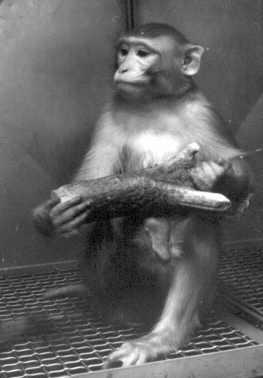
Figure 1: Bobby, the rhesus monkey, with branch segment.
Material of the following trees may be �chewy� for the animals but the critters manage to tear off long strips of bark and wood. Inevitably, this clogs drains in an animal room if many monkeys are simultaneously engrossed in shredding branch material, particularly when it is fresh. If this is a problem in your facility, don't use the following tree species for your enrichment program: *box elder (Acer negundo), *silver maple (Acer saccharinum), *black cherry (Prunus serotina), *white oak (Quercus alba), *black locust (Robinia pseudoaccacia), *white elm (Ulmus americana), *weeping willow (Salix babylonica), and other species which disintegrate into strips.
Red oak (Quercus rubra) branches � cut from dead and relatively dry trees � are not shredded when gnawed, but gradually wear into flakes of bark and wood, so small that even large quantities pass through drains. See <www.brown.edu/Research/Primate/lpn31-2.html#branch>). The study by Line & Morgan (Laboratory Animal Science, 1991, 41, 365-369) suggests that almond tree wood is equally suitable.
When I attempted to install branch-perches in more than 700 cages, I soon ran out of material. Before capitulating, however, I conducted a choice experiment (see this Newsletter, 1990, 29[1], 13-14) which, to my surprise, made it clear that rhesus macaques spend an equal amount of time on a branch � in one section of the double cage � and on a PVC pipe (same diameter; in the other section of the double cage). Obviously the animals showed no preference for branches. This made it very easy for me: all cages were equipped with PVC perches within less than a month.
Introduction
The transmission of messages about the reproductive condition of females is extremely widespread among mammals. Female urogenital signals, particularly those arising during estrus, play the most important role in the chemical signaling of many primate species. Genital scent-marking behavior by females, sniffing and mouthing of female genitalia by males, and even tasting of female urine and vaginal discharges are preludes to sexual arousal by male primates (Epple et al., 1993). As with other chemical signals, female urogenital signals derive from many sources. Besides urine there are specific secretions of the reproductive tract and the accessory sex organs which may be modified by the action of microorganisms inhabiting the vagina. Many species also possess well developed skin glands in the anogenital region (e.g., labial gland, circumgenital glands) which further contribute to the chemical ambience of the genital region of female primates. Five chemical signaling materials have been identified in the female: (1) Urine components. (2) Materials from the upper reproductive tract, such as oviducal, endometrial, and cervical mucus. There are cyclic changes in the cervical lipids (hydrocarbons, glycerides, cholesteryl esters, free fatty acids and phospholipids [Singh et al., 1972]). (3) Materials from the vaginal walls. The vagina is rich in glands and receives exfoliated cells from its surface and transudates of blood plasma. It is also rich in glucose that is transformed into glycogen by enzymes which are stimulated by high estrogen levels (Singh et al, 1972). (4) Secretions of the vulval glands (also called Bartholin's glands). The functions of these secretions are unknown. (5) Materials from the activity of resident vaginal microflora. In human females, lactobacilli and facultative and strict anaerobes have been identified in the vaginal tract. These bacteria are known to use glycogen as a substrate, producing a wide variety of volatile fatty acids such as acetic acid. In the rhesus monkey, acetic and isovaleric acids are known to dominate female vaginal odor (Michael et al., 1972; Larsen et al., 1977).
The effects of vaginal secretions as monitored by male Macaca mulatta were first studied by Michael & Keverne (1968). In platyrrhines, anogenital inspection by males has been described in the dusky titi (Callicebus moloch, Moynihan, 1966), the night monkey (Aotus trivirgatus, Moynihan, 1976), spider monkeys (Ateles geoffroyi and A. belzebuth, Klein, 1971; Eisenberg & Kuehn, 1990; Chapman & Chapman, 1990) and the woolly spider monkey (Brachyteles arachnoides, Milton, 1985).
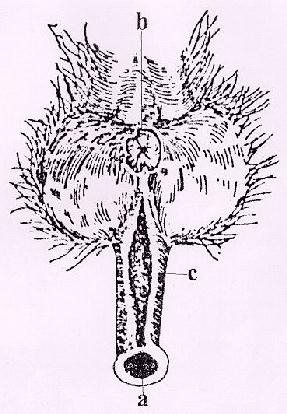
Figure 1: External genitalia of female Ateles geoffroyi illustrating the a) glans clitoridis, b) anus and c) sulcus retroglandis adapted from Hill (1963)
The clitoris of the female spider monkey has been a subject of curiosity due to its enormous length (Figure 1; Hill, 1963). This structure is a soft flabby structure more or less resembling the penis but longer (4.7 cm in Ateles belzebuth). Hill (1963) made a detailed description of the clitoris, emphasising its sulcus retroglandis and the pigmented horseshoe-shaped glans clitoridis located at its caudal tip. No studies have been able to explain the evolutionary mechanisms that have favored such a large clitoris in female spider monkeys. Some authors suggest that, because the frugivorous genus Ateles tends to forage individually, females use small quantities of urine retained in the perineal groove (sulcus retroglandis) of the clitoris to leave scent traces in the trees to advertise their reproductive condition (Klein, 1971). Milton (1985) suggests that females travel more when receptive, depositing urine in various places. There is a lack of information concerning the vaginal components that could serve as pheromones in spider monkeys. Hodges et al. (1981) identified estriol, estradiol, and estrone in female spider monkey urine, with estrone in the highest concentrations.
No studies have been carried out to evaluate the influence of familiarity upon the reproductive performance of spider monkeys in captivity, although they are a very common species of primate in Mexican zoos. Also, the effect of length of the external genitalia of females has not yet been evaluated in the sociosexual context.
Objectives
The aims of this paper are to evaluate (1) the role of olfactory inspection (clitoris grasping and sipping urine) of female spider monkey external genitalia as precopulatory sexual behavior by the adult male; (2) the effect of clitoris size upon female sexual attractiveness; and (3) the effect of familiarity between group members on the occurrence of sexual behavior.
Because of the small male sample size (N=2 males), comparisons of male behavior were not possible; therefore, statistical differences were only evaluated among females (as receivers of male sexual behavior).
Materials and Methods
Subjects: Observational data were collected for 15 months from two groups of nine captive black-handed spider monkeys (Ateles geoffroyi; N = 18) housed at the Centenario Zoo at Mérida, Yucatán, Mexico. The study subjects belong to the subspecies A. g. yucatanensis (Dubach, personal communication). Spider monkeys of this species are found in forest patches and in protected rain forest natural reserves of the Yucatan Peninsula.
The two groups studied have different histories. One was a newly formed group, composed of nine wild-caught, unrelated animals of various ages which had been kept as pets since infancy. They had been confiscated by wildlife officials and given to the Zoo. They were kept in individual quarantine before being incorporated into a group. This study began five months later.
The other group studied was an established group, composed of nine captive-born animals that are currently breeding. Unfortunately, there are no records on how long the animals have been together, birth dates, or general reproductive profiles. Paternity tests were performed by the Department of Genetics of the Chicago Zoological Society to determine the group's kinship.
Each group was composed of seven females, one adult male, and one juvenile male. This coincidental similarity between the two groups made it possible to control for group composition.
Because birth dates were not known, age was determined by correlating individuals' eye skin pigmentation (ESP) with age categories. The skin that surrounds the eyes lacks pigmentation in newborns and infants (Eisenberg, 1976). According to Eisenberg, this lack of pigmentation persists until over 14 months of age in Ateles geoffroyi. As the juvenile matures, the face gradually becomes pigmented, except for the skin around the eyes, which can still be pink at 19 months of age. Further development sees the accumulation of more melanin in the dermis and epidermis of the skin surrounding the eyes, forming more and more dark brown freckles.
Each animal was assigned to an age class based on this criterion. Using ESP as a method to approximate age has several possibilities for error including individual variation, size range of age categories, and observational error. However, in the absence of birth records, this indirect measure of approximate age was useful.
Subject environment: During this study the monkeys were housed in basic, temporary accommodations away from the public. Animals from the established group were housed together and never mixed with unfamiliar animals.
Housing: The two groups of black-handed spider monkeys lived in two neighboring enclosures (each 34.8 m2 � or 4.35 m2 per animal), separated by wire mesh. These enclosures are furnished throughout with ropes and tree trunks that enable the monkeys to move in a three-dimensional environment. The sand floors of the cages are renewed every 3-6 months and perches and walls are disinfected every month. Due to the tropical climate of the Yucatan Peninsula, which has an average temperature of 25�C, the animals do not require night enclosures. If isolation of an animal is required, the feeding section is adapted to this purpose. The cages are provided with shelters just above the main perch, where the monkeys normally cluster together hiding from the rain.
Husbandry: As mentioned above, feeding takes place in a special section of the enclosures. This 5 m2 feeding section has a cement floor, over which the keepers disperse fruit. This cement floor is routinely washed prior to feeding. Water is provided here in a bowl.
Food is provided twice a day and consists of a variety of fruits and vegetables (bananas, oranges, papaya, watermelon, carrots, tomatoes, lettuce). Twice a week the animals are provided with freshly cut Brosimum alicastrum, a natural food resource for Ateles in Yucatan. In the evening, commercial dog food or cooked rice or oats is supplied, sometimes with honey or milk and vitamins added. Pregnant and lactating females are supplied with vitamin and mineral supplements; and, as a preventive measure, all monkeys are dewormed every six months with Albendazol (Zentel).
Methods of behavioral sampling: Four sampling methods were utilized: focal animal sampling, scan sampling, ad libitum sampling, and continuous sampling (Altmann, 1974). Focal samples were used for adult females and males. This enabled us to quantify social relationships and compute frequencies of behavior (Dunbar, 1975). The daily data for each individual was collected randomly to avoid bias.
Sexual behavior was recorded using focal and ad libitum sampling. Animals were followed for 30 focal minutes. When a male was observed inspecting females' genitals and/or animals were observed attempting copulation (leg lock or female sitting on male's lap), I left the focal subject and changed to ad libitum continuous sampling, to record as many instances of sexual behavior as possible.
Behaviors sampled: The sexual behaviors recorded were defined as follows:
a) Inspecting behaviors
grasp: Male approaches female, manipulates her clitoris, squeezes the glans clitoridis, and smells his hand.
sip: Male sips the urine of a female shortly after she has urinated.
b) Copulatory behaviors
lap sit: Receptive female approaches male and initiates mounting by sitting on the male's lap.
leg lock: Male places his hind legs over the female's thighs. Usually both animals are sitting down.
thrust: Intromission.
Because the animals were inactive during the middle of the day when temperatures were highest, sampling was restricted to the periods between 08:00-12:00 and 16:00-17:00, when the animals were most active.
A total of 208 hours of focal observations were taken from the newly formed group and 242 hours from the established group. Four instances of complete copulation and one copulation attempt by a male were recorded through ad libitum sampling in the established group. No complete or incomplete copulation was recorded in the newly formed group.
Two males were not included in the focal samples (Bart and Marcos). Marcos was a juvenile and Bart an infant when I started this study. Their participation in the social network was very limited, and they spent most of the time playing. Bart was still very dependent on his mother and clinging to her at the time I started to collect the focal samples.
Evaluating the relationship between genital grasping as a form of genital inspection and copulation: Frequencies (events/min) of males actively grasping the external genitals of females and mounting were correlated using Spearman Rank coefficients.
Evaluating the relationship between clitoris size, age, and female sexual attractiveness: While the animals were anesthetized for blood collection (for DNA fingerprinting), they were weighed and measured and female clitoris lengths were obtained.
To test for the relationship between clitoris size and sexual attractiveness (measured by the number of times the males grasped females' genitals and/or sipped females' urine), the residual of clitoris length, regressed on body weight, was correlated with ESP and frequency with which males performed these behaviors. The purpose of using these residuals was to control for body weight (body weight in kg regressed against clitoris length in cm).
In the newly-formed group, Doris was excluded from the sample, as her clitoris size seemed to differ greatly from the Ateles geoffroyi average length reported in the literature (4.7 cm). Doris's clitoris was smaller than those of the rest of the females; we thought she belonged to another species of Ateles. However, the karyotype profiles revealed that Doris, like the rest of the animals studied, belongs to Ateles geoffroyi yucatanensis (Dubach, personal communication). The reason for the small size of her clitoris remains unknown.
Results
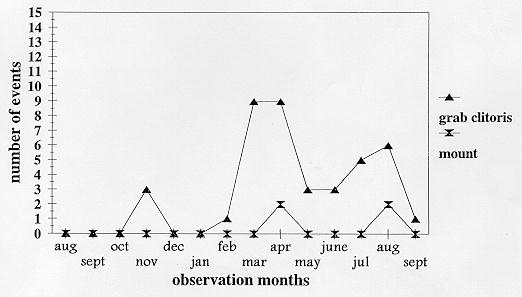
a) Inspection and sexual behavior: In this study, only the adult male from the established group (Loco) actively manipulated the clitorises of females. This behavior was also accompanied by sniffing his hand after the manipulation. Figure 2 shows two peaks of clitoris inspection by Loco in a period of 14 months. These peaks coincided with incidents of mounting, in April and in August, suggesting that female genital inspection by males precedes copulation. Loco also sipped the urine of females. Damian, the adult male in the new group, neither grasped the clitoris of females nor copulated with them, but he did sip the urine of one female (Vicky) shortly after she deposited urine. I included this form of genital inspection when correlating age with sexual performance, as pheromones from the sulcus retroglandis can be flushed out with urine.
Figure 2: Female genital manipulation and mounting by Loco (Established group).
This difference in grasping by males between the two groups (Mann-Whitney-U Test, Z=-2.44, 2-tailed p= 0.01, N=13) suggests that the social environment might have an important effect upon females' sexual attractiveness. Another possible reason for this is that there may be differences in sexual interest between the males, and elusive behavior by females, as adapting to the entirely new social context could have been very stressful for the animals of the newly formed group.
------------------------------------------------------------
Females     Absolute    Clitoris       Male          *Age
            clitoris    residual      grasps       category
           length (cm)             (events/min.)     (ESP)
------------------------------------------------------------
Newly
formed
group
------------------------------------------------------------
Quita         4.5        1.21           0              1
Mona          6          0.08           0              1
Gringa        5         -1.32           0              2
Gorda         6          0.37           0              2
Vicky         5.1        0.51           0              1
Susi          5.3        1.45           0              1
------------------------------------------------------------
Established
group
------------------------------------------------------------
Guera         4         -0.62           0.002          2
Flaca         5          0.41           0.001          2
Lucrecia      4         -0.62           0              0
Faby          4.1       -0.46           0.1            2
Lisa          4         -0.58           0.0005         1
China         4.2       -0.68           0.01           2
Emma          5          0.39           0.001          2
------------------------------------------------------------
Table 1: Variables utilized to evaluate female sexual attractiveness. * 0= not pigmented, 1= partially pigmented, 2= pigmented
The clitorises of three females in the established group (Guera, Emma, and China) were almost always grasped preceding copulation. Another female, Flaca, gave birth in August, 1995. Prior to the birth of her infant, Loco (the adult male) was seen grasping her genitals on two occasions; once in January, eight months prior to delivery, and once in April. Considering that the gestation period of Ateles is 226 days (Robinson & Janson, 1987), an unobserved copulation must have taken place sometime at the end of January of that same year. This suggests that her genitals were also grasped close to when copulation took place.
Another female worth commenting on is Faby. Loco grasped her clitoris at a very high rate. Two frequency peaks of grasping were observed, in April and in July, the periods when Loco copulated with the other females. But even though Loco grasped her genitals frequently, he was never seen attempting to copulate with her.
Lisa and Lucrecia, who had not reached sexual maturity when this study was carried out, were never observed being inspected or mounted by Loco.
b) Clitoris size, age category (ESP) And female attractiveness: To evaluate the relationships between: (1) age and clitoris size, (2) age and frequency with which females are inspected by males, and (3) clitoris size and genital grasping, the residuals of the regression between clitoris length and body weight, and absolute clitoris length were correlated with ESP and frequency of clitoris grasping by a male (see Table 1).
Age and clitoris size: The results suggest that age category of the females, based upon eye skin pigmentation, is not significantly correlated to clitoris length/body weight residual (rs=.06, p=0.84, N=13). Absolute clitoris size was also not significantly correlated with frequency of genital inspection (rs= -.04, p=0.89, N=13). These results suggest that clitoris size is not a function of female age.
Age and genital inspection: For the male of the established group there was a non-significant relationship between total frequency (events/minute) of both sipping and grasping and age of females (ESP) (rs=1.65, 2-tailed p=0.61), and a non-significant relationship between just frequency of sipping and age (rs=0.49, 2-tailed p= 0.61). However, there was a significant relationship between frequency of grasping and age (rs=1.94, 2-tailed p=0.04). Presumably Loco is obtaining chemical signals related to the reproductive condition of adult females through this grasping. Damian showed a non-significant relationship between frequency of sipping and age, (rs=0.49, 2-tailed p= 0.04),suggesting that he is not obtaining chemical information on her reproductive condition.
Clitoris size and genital inspection: Neither clitoris length/body weight residual nor absolute clitoris length was significantly correlated with genital inspection (clitoris length/body weight residual with genital inspection: rs=.-10, p=0.72, N=13, absolute clitoris length and genital inspection: rs= -.22, p=0.46, N=13).
Discussion
The females of the established group were inspected more by a male than the females of the newly-formed group. One of the reasons for this is that the females of the established group seemed to be advertising their reproductive cycles, and therefore to be more attractive to the male. Older females were inspected more than younger females, suggesting that the difference in clitoris grasping by the male is a function of the females' age. Also, the results obtained seem to suggest that an increase in frequency of female genital grasping by the male precedes copulation.
The differences between groups, in males actively grasping the genitals of females, could be explained by the fact that it was stressful for the animals of the recently convened group to be in a new situation, surrounded by unfamiliar animals, in their own and the established group. It might be that the adult females of the newly formed group were reproductively suppressed due to that social stress, and therefore were not advertising reproductive cycles (Dunbar, 1980).
Another possible explanation is that learning might be a factor for the development of pre-copulatory behaviors in male spider monkeys. In wild conditions sub-adults join all-male bands (MacFarland 1990), and probably learn how to approach and inspect females as they wander within their natal group's range. In this study the male of the newly formed group, Damian, approached a certain female, probably attracted by her scent. He then indirectly inspected this female by sipping the urine she had deposited. The lack of familiarity among the members of this group may explain why Damian was reluctant to directly inspect the genitals of females. It is also possible that, at the same time, the females were reluctant to be directly inspected by a relatively unfamiliar conspecific.
Because clitoris size did not seem to be related to female sexual attractiveness, the function of such a large structure remains unknown.
References
Abbott, D. H., McNeilly, A. S., Lunn, S. F., Hulme, M. J., & Burden, I. J. (1981). Inhibition of ovarian function in subordinate female marmoset monkeys (Callithrix jacchus jacchus). Journal of Reproductive Fertility, 63, 335-345.
Altmann, J. (1974). Observational study of behaviour: Sampling methods. Behaviour, 49, 227-266.
Chapman, C. A., & Chapman, L. J. (1990). Reproductive biology of captive and free-ranging spider monkeys. Zoo Biology, 9, 1-9.
Dunbar, R. I. M. (1975). Some aspects of research design and their implications in the observational study of behaviour. Behaviour 58, 78-95.
Dunbar, R. I. M. (1980). Determinants and evolutionary consequences among female gelada baboons. Behavioral Ecology and Sociobiology, 7, 253-265.
Eisenberg, J. F. & Kuehn, R. E. (1966). The behaviour of Ateles geoffroyi and related species. Smithsonian Miscellaneous Collections, 151.
Eisenberg, J. F. (1976). Communication mechanisms and social integration in the black spider monkey Ateles fusciceps robustus and related species. Smithsonian Contributions to Zoology. No. 213.
Epple, G., Belcher, A. M., Kuderling, I., Zeller, U., Scolnick, L., Greenfield, K. L., & Smith, A. B. (1993). Making sense out of scents: Species differences in scent glands, scent-marking behaviour, and scent mark composition in the Callithrichinae. In: A. B. Rylands (Ed.), Marmosets and Tamarins: Systematics, Behaviour and Ecology (pp: 123-163). Oxford University Press.
Hill, W. C. O. (1963). Primates: Comparative anatomy and taxonomy. Vol. 5: Cebidae, parts A and B. New York: Wiley Interscience.
Hodges, J. K., Gulick, B. A., Czekala, N., & Lasley, B. L. (1981). Comparison of urinary estrogen secretion in South American primates. Journal of Reproduction and Fertility, 61, 83-90.
Klein, L. L. (1971). Observations on copulation and seasonal reproduction of two species of spider monkeys, Ateles belzebuth and Ateles geoffroyi. Folia Primatologia, 15, 253-218.
Larsen, B., Markovets, A. J., & Galask, R. P. (1977). Role of estrogen controlling the genital microflora of female rats. Applied and Environmental Microbiology, 34, 128-138.
MacFarland, M. S. (1990). Fission-fussion social structures in Ateles and Pan. International Journal of Primatology, 11, 47-61.
Michael, R. P., Zumpe, D., Keverne, E. B., & Bonsall, R. N. (1972). Neuroendocrine factors in the control of primate behaviour. Recent Progress in Hormone Research, 28, 665-706.
Michael, R. P. & Keverne, E. B. (1968). Pheromones in the communication of sexual status in primates. Nature 218, 746-749.
Milton, K. (1985). Mating patterns of woolly spider monkeys Brachyteles arachnoides: Implications for female choice. Behavioral Ecology and Sociobiology, 17, 53-59.
Moynihan, M. (1966). Communication in the titi monkeys, 2: Saguinus geoffroyi and other tamarins. Journal of the Zoological Society of London, 150, 77-127.
Moynihan, M. (1976). The New World primates: Adaptive radiation and the evolution of social behavior, languages, and intelligence. Princeton, NJ: Princeton University Press.
Pastor-Nieto, R. (In review). Familiarity and post-conflict behaviour in captive spider monkeys.
Robinson, J. G. & Janson, C. H. (1987). Capuchins, squirrel monkeys, and Atelines: Socioecological convergence with Old World primates. In B. B. Smuts, D. L. Cheney, R. M. Seyfarth, R. W. Wrangham, & T. T. Struhsaker (Eds.), Primate Societies. Chicago: University of Chicago Press.
Singh, E. J., Swartwout, J. R., & Boss, S. (1972). Hydrocarbons in human cervical mucus and the effect of oral contraception. Journal of Reproductive Medicine, 8, 128-132.
------------------------------------------
Author's address: Ecology and Epidemiology Group, Dept. of Biological Sciences, University of Warwick, Coventry, CV4 7AL, U.K. [e-mail: <[email protected]>].
Special thanks to my husband, Francisco Sales, for all his support. I would also like to thank Biol. Nancy Ayora for giving permission to conduct this study and Alonso Vera Mart�nez for his support during the collection of data at the Centenario Zoo in M�rida, Yucat�n, Mexico. Many special thanks to Dr. Jean Dubach at Brookfield Zoo, Illinois, for carrying out the paternity tests to determine relatedness, and Dimitris Tsvilis for helping me with the scanning of figures. I would also like to thank Prof. Robin Dunbar for providing valuable comments on the early drafts of this manuscript. This research was supported by the National Council of Science and Technology of Mexico (CONACYT; Grant number 19489).
------------------------------------------
Two issues of relevance to primates were raised at the Convention on International Trade in Endangered Species (CITES) conference held in Nairobi from April 10-20, 2000. IPPL was represented at this meeting by Shirley McGreal and Dianne Taylor-Snow. IPPL also sponsored the attendance of representatives of the Indonesian non-governmental organization (NGO), KSBK (Animal Conservation for Life).
Document 11.45.1, proposed by Switzerland, Germany, and the United Kingdom, was headed �Concerning diagnostic samples, samples for identification, research and taxonomic purposes, and cell cultures and serum for biomedical research.� The proposers contended that issuance of CITES documents for transporting cell cultures and serum, even for commercial purposes, is a burden and �an impediment to research and legitimate trade.�
Many national delegations and NGOs raised questions about the draft resolution. Mexico and several other nations objected on the grounds that genetic materials could be patented and used for commercial purposes. IPPL raised questions about the potential harm that could be caused by efforts to obtain serum from free-living primates since it would be impossible for national authorities to monitor the ground operations of capture/release teams, possibly resulting in injuries or fatalities to the CITES-protected primates, as well as a potential for captors to infect free-living animals.
Zoo associations supported the resolution as they want to be able to identify species and diagnose illness in animals living overseas. Law enforcement agencies want to be able to move samples rapidly for identification. Because there was insufficient support for the resolution to pass, due to the broadness of the exemptions, the proposal was referred to an inter-session working group. It is likely that a more restrictive resolution will be proposed at the next Conference of the Parties, to be held in two and one-half years.
The �bushmeat problem,� the trade in the meat of protected animals, which has increased in recent years, was addressed. Several meetings on the subject were held, attended by government representatives and observers. Only a small proportion of the bushmeat trade is intercontinental in scope but there is cross-border regional trade in Africa. The basis of discussions was a British document (Document 11.44). A working group was formed which will initially concentrate on the Central African nations. A first meeting may be held as early as this summer. The U.K. offered to provide funds. African delegates expressed their concern at the situation. Delegates from several nations which are torn apart by civil strife reported that they had the will, but lacked the ability, funds, and staff, to address the problem.
African CITES-protected primate species involved in the bushmeat trade listed on Document 11.4 are: *Appendix I (the most restrictive category): Diana guenon, gorilla, drill, mandrill, bonobo, and chimpanzee. *Appendix II: moustached monkey, red bellied guenon, red-eared guenon, owl-faced monkey, De Brazza's monkey, greater white-nosed monkey, crowned guenon, Preuss' guenon, Sclater's guenon, sun-tailed guenon, black colobus, king colobus, and grey-cheeked mangabey.
-----------------------------------------------------------------------
(Author's address: IPPL, P.O. Box 766, Summerville, SC 29484 [e-mail: <[email protected]>].
This report was originally posted to the e-mail list Alloprimate, April 27, 2000.
-----------------------------------------------------------------------
* * *
* * *
Background
The Animal Welfare Act mandates that Institutional Animal Care and Use Committees (IACUCs) oversee the care and use of animals covered by the Act. IACUCs are composed of scientists, veterinarians, and at least one public member. They must assess warm-blooded animal research protocols to determine if (1) proposed animal use is essential for achieving relevant scientific goals, (2) the appropriate species have been selected, (3) the number of animals requested is properly justified, (4) the care of animals is appropriate, (5) provision for alleviating pain or distress is appropriate, and (6) alternatives to studies that might cause pain or distress have been sought. The Public Health Service (PHS) Policy on Humane Care and Use of Laboratory Animals (which implements the Health Research Extension Act of 1985 and the U.S. Government Principles for the Utilization and Care of Vertebrate Animals used in Testing, Research, and Training) adopts a similar position that is applicable to all vertebrate animal research protocols.
The Animal Welfare Act is administered by the U.S. Department of Agriculture (USDA), while the PHS Policy is administered and coordinated by the Office of Laboratory Animal Welfare (formerly the Office for Protection from Research Risks). These agencies; the laws and policies they administer; highly respected voluntary programs, such as the Association for Assessment and Accreditation of Laboratory Animal Care (AAALAC) International; and local IACUCs provide effective, comprehensive assessment and monitoring to assure humane animal care and use.
A significant provision of the Animal Welfare Act requires that institutions provide an annual report indicating the number of covered species used in the following categories:
Category C � animals in which procedures caused no pain or distress;
Category D � animals in which pain and distress during procedures was appropriately relieved by pain- or distress-relieving drugs;
Category E � animals involved in procedures which cause pain or distress that was not relieved by drugs for scientific reasons.
Animal use reported in Category E must be accompanied by an explanation and justification as to why drugs to relieve pain and distress were withheld. This information is readily accessible to the public through the Freedom of Information Act.
The current USDA reporting categories have been in use for many years and would benefit from revision and expansion to improve their utility. Many IACUCs have recognized that the USDA system is outdated and have developed categories pertaining to the extent of pain and distress that are more accurate and informative. The USDA is currently reviewing policy pertaining to the annual report, which is a welcome initiative. However, it appears that potential revisions may not address the major limitation of the current categories: inadequate discrimination regarding the intensity or duration of pain or distress. In fact, they may further reduce the accuracy of reporting by increasing assignment to Category E of animals that experience mild or questionable pain or distress. It will be unfortunate if the policy revision misses the opportunity to improve reporting categories.
Issues
The evaluation of potential pain or distress is complex because thresholds and manifestations of pain and distress vary among species and among individuals within a species.
The determination of what constitutes pain or distress in animals is further complicated by the fact that there are no universally agreed-upon criteria for assessing or determining what is, or is not, painful or distressful to an animal.
*The alleviation of pain and distress is often a diverse task that may require drugs, adjustments to environmental enrichment, modifications in research protocols, and other appropriate and humane strategies.
*Pain and distress, and the methods used to alleviate them, may interfere with research results.
*The USDA's categories for reporting pain and distress and measures to alleviate them are not optimally informative and potential policy changes may make them even less so.
Positions
*Laboratory animal veterinarians and other animal caregivers have a legal and moral obligation to alleviate pain and distress in laboratory animals.
*The complex nature of modern animal experimentation implies the need to report animal use accurately. Therefore, current USDA categories should be revised and expanded to facilitate more precise and informative reporting. Furthermore, annual reporting of animal use should be the responsibility of the IACUC in conjunction with assessment and monitoring by a qualified veterinarian.
*Alternatives to animal use in biomedical research should be sought. However, once a request to use animals has been made and approved, experiments should be performed as humanely as possible and with as few animals as possible.
*IACUCs must ensure that all personnel involved in the care and use of animals are adequately trained. Training should include concepts and methods to recognize pain and distress in laboratory animals and to alleviate them or seek assistance in doing so. This process will raise staff awareness regarding humane treatment and will improve the quality and documentation of monitoring.
*Qualified veterinarians should be involved in the design, monitoring and documentation of experiments that have the potential to cause more than momentary pain and distress to laboratory animals. The anticipated pain or distress level should be categorized and assigned during IACUC protocol review and monitored prospectively. The assignment should be reviewed at appropriate intervals and changes may be recommended after additional observation and prior to submission of the USDA Annual Report.
*Conditioning and monitoring of research animals should
be designed prospectively. The corresponding schedules should indicate the frequency of observation and responsibilities of monitoring and laboratory personnel. In addition, correct doses of appropriate anesthetics, analgesics and tranquilizers should be selected preemptively by the principal investigator in consultation with the veterinarian. Possible outcomes (endpoints) should be discussed among the veterinarian, the investigator, and other laboratory personnel listed in a given protocol.
*Potentially painful or distressful procedures should be closely monitored by the animal health care staff and appropriate treatment instituted. New or novel procedures that may be painful should initially be performed under veterinary surveillance or supervision. Analgesics should be administered preemptively for known potentially painful procedures.
*Death should be avoided as an endpoint for animal experiments. Alternatives such as behavioral changes, fluctuations in body temperature, body condition, and weight-loss patterns should be sought and implemented.
*More research is needed on the assessment and alleviation of pain and distress to optimize the humane treatment of laboratory animals. The scientific and moral priorities inherent to animal research emphasize why such research is essential.
The Journal of Comparative Psychology publishes original empirical and theoretical research from a comparative perspective on the behavior, cognition, perception, and social relationships of diverse species. Studies can be descriptive or experimental and can be conducted in the field or in captivity. Papers in areas such as behavioral genetics, behavioral rhythms, communication, comparative cognition, behavioral biology of conservation and of animal welfare, development, endocrine-behavior interactions, evolutionary psychology, methodology, phylogenetic comparisons, orientation and navigation, sensory and perceptual processes, social behavior, and social cognition are especially welcome. Both regular articles and brief communications will be considered.
If you are interested in becoming a reviewer, please contact Susan U. Linville, assistant editor at: J.C.P., Department of Psychology, Indiana University, 1101 East 10th St, Bloomington, IN 47405 [812-855-5014; e-mail: <[email protected]>]. � posted in ABSnet, 2000, 6[3]
Society & Animals
Society & Animals: Journal of Human-Animal Relations, the PSYeta publication, is now published by Brill Academic Publishers, 112 Water St, Suite 400, Boston, MA 02109 [e-mail: <[email protected]>].
Science and Animal Care
Our Animal WARDS seeks authors for its publication, Science and Animal Care (SAC). Pieces run about 1200-1500 words and must deal with a 3R topic or general animal welfare issues of interest to the scientific community.
SAC is distributed to more than 1000 science and animal professionals. As a charitable organization, we can only offer $150 per article and exposure for one's work. Interested parties should contact Ken Byrer, 8150 Leesburg Pike, Suite 512, Vienna, VA 22182-2714 [e-mail: <[email protected]>].
The Infectious Disease Review
The Infectious Disease Review is concerned with the microbes of man, animals and the environment. The journal will consider material on any aspect of infectious disease: for example, epidemiology; diagnosis; case reports; laboratory science; molecular biology; immunology of infection; vaccines; treatment and control policies for individuals and populations; microbiology of animals (wild, laboratory, food, companion) including mammals, birds, reptiles, amphibians and fish; and the microbiology of the environment including rainforest, desert, river, ocean and polar regions. Beginning with volume 1 (1999), the complete contents are available in pdf format at <www.idreview.co.uk/>.
Dengue is a mosquito-transmitted acute viral disease caused by one of four dengue virus serotypes. Dengue is endemic in most tropical areas of the world and has occurred in U.S. residents returning from travel to such areas. This report summarizes information about imported dengue cases among U.S. residents for 1997 and 1998, which indicates that most persons with a known travel history probably acquired infection in the Caribbean islands or Asia.
Serum samples from 349 persons who had suspected dengue based on clinical presentation and onset of symptoms in 1997 and 1998 were submitted to the Centers for Disease Control and Prevention (CDC). From these samples, 38% were laboratory diagnosed as dengue. Dengue diagnosis was negative in 37% and indeterminate in 22% because convalescent samples for serologic testing were unavailable.
Travel histories within the two weeks before illness, available for 122 persons, indicated that infections probably were acquired in the Caribbean islands (61 cases), Asia (30), Central America (23), South America (four), Africa (three), and the Pacific islands (one). In 1998, 90 laboratory-diagnosed cases were reported, a 70% increase from the 53 cases reported in 1997.
Commonly reported symptoms were fever (94%), headache (69%), myalgia (53%), rash (53%), arthralgia (32%), retro-orbital pain (27%), nausea or vomiting (25%), chills (24%), diarrhea (19%), and petechiae or ecchymoses (15%). At least seven patients were hospitalized, and one patient died.
The principal vector of dengue is the mosquito Aedes aegypti, which has a wide distribution in most tropical and subtropical areas. In the United States, Ae. aegypti can be found during summer months in many states. Most U.S. residents with dengue become infected during travel to tropical areas, although local transmission of dengue was documented in Texas in 1999.
The incubation period of dengue is 4-7 days (range: 3-14 days). Dengue virus infection can be asymptomatic or cause illnesses ranging from mild undifferentiated fever to severe disease, including hemorrhage and shock. Persons traveling to areas where dengue is endemic should avoid exposure to mosquitoes by using repellents, wearing protective clothing, and remaining in well-screened or air-conditioned areas. No vaccine is available for preventing dengue infection. The Ae. aegypti mosquito is well adapted to urban environments and can be found in or near human dwellings, where it can be found in closets, bathrooms, behind curtains, and under beds. The species usually bites during the early morning and late afternoon, but may feed at any time during the day when indoors or during overcast periods.
With an increase in traveling to and from endemic areas, more cases of imported dengue may be expected and health-care providers should consider dengue in the differential diagnosis of illness for all patients who have fever and a history of travel to tropical areas within two weeks before the onset of symptoms. Supportive measures should be given, and only acetaminophen is recommended for management of pain and fever. Aspirin and other nonsteroidal anti-inflammatory agents are contraindicated because of their anticoagulant properties. Acute-phase and convalescent-phase serum samples should be obtained for viral isolation and diagnosis and sent for confirmation through state or territorial health departments to CDC's Dengue Branch, Division of Vector-Borne Infectious Diseases, National Center for Infectious Diseases, 2 Calle Casia, San Juan, PR 00921-3200 [787-766-5181; fax: 787-766-6596]. Serum samples should be accompanied by a summary of clinical and epidemiologic information, including date of onset of disease, date of collection of sample, and a detailed recent travel history. � From Morbidity and Mortality Weekly Report, 2000, 49, 248-253
Yellow Fever from Venezuela, 1999
On September 28, 1999, a previously healthy 48-year-old man from California sought care at a local emergency department and was hospitalized with a two-day history of fever (102� F), chills, headache, photophobia, diffuse myalgias, joint pains, nausea, vomiting, constipation, upper abdominal discomfort, and general weakness. On September 26, he had returned from a 10-day trip to Venezuela. On September 29, his illness was reported to the California Department of Health Services (CDHS) as a suspected case of viral hemorrhagic fever.
On admission to the hospital, physical examination revealed icteric sclerae and tenderness in the upper abdomen. Multiple red papular lesions with excoriations consistent with recent mosquito bites were seen on his lower legs and feet. No hepatosplenomegaly or lymphadenopathy was noted. Laboratory results indicated markedly elevated serum bilirubin and liver enzymes, leukopenia, thrombocytopenia, and evidence of acute renal failure.
A preliminary diagnosis of hemorrhagic fever syndrome was made, and the patient was placed on doxycycline and ceftriaxone. Cultures of blood and urine were negative for bacterial pathogens. Blood smears for malaria were negative. On October 1, the patient developed general seizures and upper respiratory obstruction. He was placed on mechanical ventilation and transferred to the intensive care unit. His condition deteriorated rapidly, with severe coagulopathy and cardiac arrhythmias. He died on October 4.
On October 7, an autopsy was performed; YF viral antigens and YF virus-specific nucleic acids were found. Other tests were negative for dengue virus, leptospira, New World arenaviruses, spotted fever group rickettsiae, and hantavirus. The patient's serum was tested; no antibody to YF virus (17D) was detected in serum drawn September 28, but an IgG titer of 1:128 and an IgM titer of >1:80 were detected in serum drawn October 1.
During September 16-25, the patient had traveled with six companions to rainforests in southern Venezuela (Amazonas State). He experienced multiple mosquito bites during his visit despite using DEET-based repellents. Before his trip, the patient had received tetanus toxoid, typhoid vaccine, hepatitis A vaccine, and malaria prophylaxis, but not YF vaccine. The travel companions were contacted by the California Department of Health Services about their health and vaccination status; none had become ill during or following the trip. Five had received YF vaccine before travel. The unvaccinated traveler's serum was negative for YF virus antibody.
This was the second case of imported fatal YF in a U.S. resident returning from South America since 1996. Neither patient had received YF vaccine before travel. In 1996, a Tennessee resident returned from a 9-day trip to Brazil with fever, headache, and myalgias. He died 10 days after onset of symptoms, and YF virus was identified from tissue culture.
YF occurs in at least seven tropical South American countries (Bolivia, Brazil, Colombia, Ecuador, French Guiana, Peru, and Venezuela) and much of sub-Saharan Africa. The sylvatic cycle involves nonhuman primates and mosquitoes that breed in tree holes. Persons living or working in proximity to such jungle or forest habitats who are bitten by infected mosquitoes can develop �jungle YF.� Another cycle exists between humans and Aedes aegypti mosquitoes. Ae. aegypti mosquitoes are present in most urban centers of South and Central America, the Caribbean, and parts of the southern United States; persons in these areas are at risk for urban YF infection. YF has not been reported from India or other parts of Asia despite the presence of Ae. aegypti.
World Health Organization (WHO) data suggest that YF transmission is increasing. WHO estimates that approximately 200,000 YF cases occur each year, most in sub-Saharan Africa. Along with increased YF transmission, the number of travelers from the United States to South America and Africa has more than doubled since 1988. These travelers may be at risk for YF unless precautions are taken, including receipt of YF vaccine.
YF is one of three diseases (the others are plague and cholera) subject to international quarantine regulations. CDC is required to notify WHO of all YF cases in the United States within 24 hours. Accordingly, all suspected and confirmed cases should be reported immediately through local and state health departments to CDC's National Center for Infectious Diseases, Division of Quarantine [404-639-8100]; acute and convalescent-phase serum should be collected and sent for viral isolation and diagnosis to CDC's National Center for Infectious Diseases, Division of Vector-borne Infectious Diseases [970-221-6400]. The location of certified U.S. YF vaccination centers is available from local and state health departments. If YF vaccine is medically contraindicated, health-care providers should supply persons with a letter listing reasons for not vaccinating, and persons should carry this with them when traveling. Details of vaccine recommendations and requirements of individual countries are available from <www.cdc.gov/travel>.
CDC recommends YF vaccination for travelers to countries reporting YF. Vaccination also is recommended for travel outside urban areas of countries that officially do not report the disease but are in the YF-enzootic zone. Travelers should also take protective measures to reduce contact with mosquitoes; these include wearing clothes that cover most of the body, staying in well-screened areas, using insect repellent (containing DEET at a concentration of <35%) on exposed skin and clothing, and sleeping under bed nets treated with permethrin or deltamethrin insecticides. � From Morbidity and Mortality Weekly Report, 2000, 49, 303-305
International Assn for Medical Assistance to Travelers
The International Association for Medical Assistance to Travelers (IAMAT), a volunteer group, compiles an annual list of doctors around the world who meet the organization's criteria, who speak English or another second language, and who agree to charge a specific fee. The 2000 Directory lists the current schedule of fees as US$55 for an office visit, US$75 for a house (or hotel) call, and US$95 for night, Sunday, and holiday calls. These fees do not include consultants, laboratory procedures, hospitalization, or other expenses. The 72-page listing of doctors and centers includes 122 countries. IAMAT also publishes and provides to its members pamphlets on immunization and on malaria. For information, contact IAMAT, 40 Regal Rd, Guelph, Ontario, N1K 1B5, Canada [519-836-0102]; 417 Center St, Lewiston, NY 14092, U.S.A. [716-754-4883]; P.O. Box 5049, Christchurch, N.Z.; or 57 Voirets, 1212 Grand-Lancy-Geneva, Switzerland; or see <www.sentex.net/~iamat> [e-mail: <[email protected]>].
Dr. Lynn Kramer, Director of Biological Programs at the Denver Zoo, is interested in knowing if anyone has De Brazza's monkeys in a laboratory colony. If you, or someone you know, has De Brazza's monkeys, please contact Dr. Kramer, 2900 E. 23rd Ave, Denver, CO 80205 [e-mail: <[email protected]>]. � Posted to Primate-Science
Primate Enrichment Database
The Primate Enrichment Database is accessible again. Presently, 285 of the 1541 entries are available as full text documents � that is, you can print original articles, including photos, directly at your computer. If you use this Database, PLEASE let us know if you miss any articles/abstracts/chapters. Write, or send a reprint or copy of the paper, to Annie and Viktor Reinhardt, 15507 Lakeside Dr., Weed, CA 96094 [e-mail: <[email protected]>].
TechTips Database
The University of Texas at Austin Animal Resources Center has established the TechTips Database for the use of the laboratory animal community. Users are invited to search the database for solutions provided by their colleagues, or to create a record of a tip, technique, or solution to a problem you have experienced in your lab or facility. See <128.83.207.160/ttips1/>.
Topics in Primate Conservation
Primate-Science has announced a new monthly series on primate conservation. The Coordinators welcome brief reports on the following and related topics: *Conservation organization programs *Habitat preservation *Field work *Species survival plans *Managing wild populations *Maintaining viable genetic populations *Captive breeding *Projects supported by zoos *Reintroduction/Rehabilitation * Ecotourism *Field techniques and equipment *Field veterinarianship *Legislation *Bushmeat trade.
Topics in Primate Conservation will include reports from the published literature as well as original submissions. Reports should be kept to a reasonable length. Topics in this series will be archived on the News and Publications page of Primate Info Net <www.primate.wisc.edu/pin/newspt.html>.
Please send conservation reports or suggested topics to Dean Anderson [e-mail: [email protected]] or Nancy Ruggeri [e-mail: <[email protected]>], Dept of Zoology, Univ. of Wisconsin, Madison, WI 53715.
More Interesting Web Sites
*APHIS report, Strategic Direction for the Animal Care Program, January 2000: <www.aphis.usda.gov/ac/strategicplan.html>
*Bushmeat Crisis Task Force: <www.bushmeat.org>
*Centro de Rehabilitación y Rescate de Primates: <www.macacos.cl>
*Chimpanzee Rescue Center, Sierra Leone: <www.ecovolunteer.org/pro/pro22/pro1_22.htm>
*Chimp Haven: <www.chimphaven.org>
*Encyclop�dia Britannica: <www.britannica.com>
*Foundation for Biomedical Research: <www.fbresearch.org>
*Free medical journals site: <www.freemedicaljournals.com/>
*Gibbon Rehabilitation Center: <www.ecovolunteer.org/pro/pro20/pro1_20.htm>
*Great Ape Project: <www.greatapeproject.org>
*Harcourt International, publisher: <www.harcourt-international.com/vet>
*Hardin Meta Directory of Internet Health Sources: <www.lib.uiowa.edu/hardin/md/>
*Hardin Meta Directory's Electronic Journal Showcase: <www.lib.uiowa.edu/hardin/md/ej.html>
*HighWire Press, archive of free science journals: <highwire.stanford.edu/lists/freeart.dtl>
*IACUC (Institutional Animal Care and Use Committee) Information: <www.iacuc.org>
*International Primate Sanctuary Panama: <fsu.edu/~cppanama/ipsp>
*Lancet Electronic Research Archive: <www.thelancet.com/newlancet/eprint/index.html>
*Primate Enrichment Forum: <www.egroups.com/list/pef-list>
*Samsung Biomedical Research Institute, Korea: <www.sbri.or.kr/users/lar>
*Sepilok Orang Utan Rehabilitation Center: <www.jaring.my/sabah/sepilok.htm>
*Surajmukhi: An organization for Nature Education & Conservation: <www.surajmukhi.cjb.net>
*Tierschutz bei Tierversuchen (Humane Research): <www.uni-giessen.de/tierschutz>
*Tropical Diseases Image Library:
<www-nt.who.int/tropical_diseases/databases/imagelib.pl>
*Wanariset Orangutan Reintroduction Project: <www.redcube.nl/bos>
*Wild Animal Orphanage: <www.primatesanctuarynsrrp.org>
*Wildlife Waystation: <www.waystation.org>
*Zoo News (English and German): <www.zoonews.ws>
An international symposium-workshop, Frugivores and Seed Dispersal: Biodiversity and Conservation Perspectives, will be held August 6-11 in S�o Pedro, S�o Paulo, Brazil. Contact: Museu de Historia Natural, Instituto de Biologia, UNICAMP, Caixa Postal 6109, 13083-970 Campinas, S�o Paulo, Brazil [fax: 019-289-3214; e-mail: <[email protected]>]; or see <www.unicamp.br/ib/f2000>.
The Chicago Academy of Sciences, the Living Links Center of Emory University, and the Jane Goodall Institute have organized a conference entitled �Animal Social Complexity and Intelligence�, to be held at the Peggy Notebaert Nature Museum in Chicago, August 23-26, 2000. For more information and on-line registration see <www.animalsocialcomplexity.org>.
The Fourth World Congress of Veterinary Dermatology will be held August 30 to September 2, 2000, in San Francisco, California. For information or registration, see <www.meetingmakers.com/wcvd/>; or contact Fourth World Congress of Veterinary Dermatology, c/o MeetingMakers, 100 Commerce Way, Woburn, MA 01801 [e-mail: <[email protected]>].
Registration and program information for the World Congress of Veterinary Anesthesia, to be held September 20-23, 2000, in Berne, Switzerland, are at <www.aveta.org.uk/wcva1.htm>.
The XIVth Associazione Primatologica Italiana Congress will be held October 4-6, 2000, at the Pisa-Museo di Calci, Pisa. Contact: Prof. Silvana Borgognini Tarli, Dipartimento di Etologia, Ecologia, Evoluzione, Via Volta, 4-56126 Pisa [050/24613, 050/44484; fax: 050/24653; e-mail: <[email protected]>]; or see <www.unipv.it/webbio/api/cong14/14con.htm>.
An International Conference on Health Research for Development, jointly organized by WHO, the World Bank, the Global Forum for Health Research, and the Council on Health Research for Development, will be held October 10-13, 2000, in Bangkok. Contact Conference 2000 Secretariat, COHRED c/o UNDP, Palais des Nations, CH-1211 Geneva 10 Switzerland [(41 22) 917 8554; fax: (41 22) 917 8015; e-mail: <[email protected]>]; or see <www.conference2000.ch>.
The Jane Goodall Foundation will hold the Chimpanzoo Annual Conference, October 18-22, 2000, in Tucson, Arizona. For information contact Virginia Landau, Chimpanzoo Director, The Jane Goodall Institute, Geronimo Bldg. #308, 800 E. University Blvd., Tucson, AZ 85721 [520-621-4785; fax: 520-621-2230; e-mail: <[email protected]>]; or see <u.arizona.edu/~vlandau/home.htm>.
The Association of Primate Veterinarians will meet November 3-5, 2000, in San Diego, California. Contact: Christine Parks, Research Animal Resources Center, University of Wisconsin, 396 Enzyme Institute, 1710 University Ave, Madison, WI 53705-4098 [608-262-1238; e-mail: <[email protected]>].
Primates in Biomedical Research: Diseases and Pathology, an international symposium, will be held in G�ttingen, Germany, November 8-9, 2000, sponsored by the German Primate Centre (DPZ). The program will focus on progress in the broad field of spontaneous and induced primate pathology, and there will be a special congress topic, Tumor Pathology. For information, contact Ingrid Rossbach, DPZ, Dept of Vet. Med. And Primate Husbandry, Kellnerweg 4, 37077 G�ttingen, Germany [++49-(0)551-3851 119; fax: ++49-(0)441-3851 277; e-mail: [email protected]]; or see <www.dpz.gwdg.de>.
The annual General Meeting of the Australasian Primate Society will be held in January, 2001, during the IPS Congress in Adelaide. The next APS Conference will be held in late 2001 at a venue to be determined. Contact Graeme Crook [e-mail: <[email protected]>].
The 27th International Ethological Conference will be sponsored by the International Council of Ethologists and the Ethologische Gesellschaft e.V., August 22-29, 2001, in Tübingen, Germany. The conference is open to all ethologists and scientists working in related fields. For registration and further information see
Dr. Sherwood Larned Washburn, an anthropologist and pioneering primatologist who linked the evolution of human behavior traits to the actions of apes and monkeys, died on Sunday at a hospital near his home in Berkeley, California. Sherry was an emeritus professor of anthropology at the University of California at Berkeley, where he taught and worked from 1958 to 1978. He helped the University become a leader in primatology during his tenure, with his study of baboon colonies in Kenya.
His work also took him to remote areas of Sri Lanka, Thailand, Borneo, and South Africa. On campus, Washburn's lectures inspired standing ovations from his students. His books included Human Evolution: Biosocial Perspectives and Ape Into Human: A Study of Human Evolution. The Fourth International Congress of Primatology in 1972 was dedicated to him. � From the New York Times, posted to Primate-Science, April 19
Nim, Sign Language Chimp, Dies at Age 26
The Fund for Animals announced the passing of Nim, who died of heart failure on March 10 at the Fund's Black Beauty Ranch in Murchison, Texas. He was 26 years old. Nim was the subject of the book Nim: A Chimpanzee Who Learned Sign Language, by Herbert S. Terrace. � Posted to AlloPrimate, March 10, 2000
Michael Gorilla Dies
One of just two gorillas in the world who are said by handlers to have learned human language has died. The lowland gorilla known as Michael was 27 and, according to his handlers, knew about 500 gestures in American Sign Language at the time of his death on April 19, at the Gorilla Foundation's preserve 25 miles south of San Francisco. �He had a great facility with gestural communication and was a talented artist. His work has been displayed in galleries around the country,� said Francine Patterson, the Foundation's president. Michael came to the foundation in 1976 at the age of 3� years.
Although gorillas are prone to heart disease, it is unclear what killed Michael, and an autopsy will be performed, said Gillian Ladd, an assistant to Patterson. Gorillas can live into their 50s. � From the Associated Press, posted to Primate-Science April 20, 2000
Nikko Says, �Don't Feed the Monkeys�
The central Japanese tourist town of Nikko is fed up with monkey-feeding tourists. �Don't feed the monkeys,� warns a first-of-its-kind ordinance submitted to Nikko's assembly Monday. Troops of wild macaques are among the area's best-known attractions, along with a 318-foot waterfall and a shrine that is the burial place of the 16th century shogun who unified Japan. The Toshogu shrine features three of the world's famous monkeys: statues of the see-no-evil, hear-no-evil, speak-no-evil trio.
But Nikko's real-life simians are causing their share of evil � damaging property and occasionally biting people while scavenging for food. Government officials blame doting tourists for teaching the monkeys to accept handouts. Every year, 30 to 40 people are hospitalized with bites, he said.
In November, officials abandoned a campaign to jolt aggressive macaques with electrified prods after residents criticized the tactic as cruel. So Nikko decided to teach humans a lesson instead. The ordinance is expected to pass during the assembly session ending this month. It carries no penalty except allowing names of deliberate offenders to be published, although officials acknowledged they are uncertain how much that will discourage tourists. � From an Associated Press article by Gary Schaefer, posted to Alloprimate, March 6, 2000
Office Status for Division of Animal Welfare
The Office for Protection from Research Risks' (OPRR) Division of Animal Welfare has now been officially named the Office of Laboratory Animal Welfare (OLAW) by the National Institutes of Health. Nelson Garnett is the Director of OLAW, reporting to Wendy Baldwin, Deputy Director of NIH for extramural research. OLAW will continue to be responsible for all of the animal-related functions of the OPRR, including implementing and interpreting the Public Health Service (PHS) Policy on Humane Care and Use of Laboratory Animals, administering an educational program for PHS-supported institutions and investigators, negotiating Animal Welfare Assurances, and evaluating compliance with the PHS Policy. OLAW will remain at NIH when OPPR moves to the Office of the Secretary of the Department of Health and Human Services. OLAW has a Web site at <grants.nih.gov/grants/olaw/olaw.htm>.
New Monkey Species Discovered
Two new species of marmoset were found by Marc Von Roosmalen in a remote corner of Brazil's Amazon rain forest, about 190 miles from Manaus, where local residents kept them as pets. One of the new monkeys is the Callithrix manicorensis, or Manicore marmoset. It has a silvery white upper body, a light gray cap on its head, yellow to orange underparts and a black tail. The other, Callithrix acariensis, or Acari marmoset, has a snowy white upper body and underparts, a gray back with a stripe running to the knee and a black tail with a bright orange tip. An average adult of both species measures nine inches with a 15-inch tail, and weighs around 12 ounces. The monkeys are named after the Manicore and Acari rivers � tributaries of the Amazon. The discovery was reported by Conservation International.
Roosmalen, a Dutch primatologist at Brazil's Amazon National Research Institute, says he has found 17 more monkeys he believes are new to science, as well as five new birds and two plants. Formal scientific descriptions of the new monkeys are to be published in the scientific journal Neotropical Primates in the next few weeks, the Associated Press reports. � Reported on April 24 on Alloprimate
Paranthropus robustus Skull Found
Johannesburg � Paleontologists have announced the discovery of the most complete ape-man skull ever excavated, a 1.5-million- to 2-million-year-old skull of a female Paranthropus robustus, a cousin of early man. The fossil was found beside the lower jaw of a male in �one of the most extraordinary finds that any paleoanthropologist has ever seen,� said Lee Berger, director of paleoanthropology at the University of Witwatersrand.
The finds give researchers their best opportunity to compare the differences between males and females of the species, said Andre Keyser, the paleontologist in charge of the site where the fossils were found.
Paranthropus robustus, a hominid that lived between 1.5 million and 2 million years ago, was a vegetarian that may have used rudimentary bone tools, Keyser said. It became extinct about a million years ago, probably because of the domination of early man, he said. �They represent a creature that was in direct competition with our earliest ancestors.�
The fossils were discovered in October, 1994, at the Drimolen site 20 miles northwest of Johannesburg in an excavation area nicknamed �The Cradle of Humankind�. Paleontologists have uncovered 80 hominid specimens at Drimolen since it was discovered in 1992. The remains were found in a prehistoric cave filled with bones dumped there by flash floods more than a million years ago.
The nearly complete skull will give paleontologists research opportunities they never had with the disparate fragments previously discovered, Berger said. � From the Chicago Tribune, April 27, 2000 (A.P.), posted to Primate-Science
Texas Snow Monkey Sanctuary Joins API
On March 2 the Animal Protection Institute (API), a national non-profit animal advocacy organization based in Sacramento, California, announced that the Texas Snow Monkey Sanctuary (TSMS) of Dilley, Texas, is now operating as a division of API, which has approximately 85,000 members nationwide. The Sanctuary's mission to provide a free-ranging environment for primates in need remains unchanged, with API providing managerial support. � From an Animal Protection Institute Press Release, March 2, posted to Alloprimate
NIH Takes Charge of Coulston Chimps
The National Institutes of Health (NIH) has assumed responsibility for 288 chimpanzees currently housed at the Coulston Foundation in Alamogordo, New Mexico. The Coulston Foundation has been under scrutiny for financial troubles and violations of the Animal Welfare Act. Now that NIH has taken over responsibility for the chimpanzees, which have been used for HIV and hepatitis C research, the bidding process for contracts to care for the animals can begin. According to Nature magazine, bids will begin in June and will undergo peer review. Coulston can participate in the bidding process. � From the National Association for Biomedical Research Update, May 25, 21[11]
Changes at ILAR
The National Academies have named Joanne Zurlo, PhD, to be the Associate Director of the Institute for Laboratory Animal Research (ILAR) for the next six months. It is anticipated that she will then become ILAR's Director. Current ILAR Director Ralph Dell will remain as Associate Director for six months into 2001 to complete the transition of ILAR's leadership. He is looking forward to spending more time with his family and doing some consulting.
Joanne is currently the Associate Director of the Johns Hopkins Center for Alternatives to Animal Testing, which she joined in 1993. � An announcement by Americans for Medical Progress
Delta Airlines Will No Longer Ship Nonhuman Primates
As of June 1, Atlanta-based Delta Airlines will no longer transport nonhuman primates including lemurs, monkeys, orangutans, gorillas, and chimpanzees. According to Delta spokesperson Cindi Kurczewski, the decision was made by the airline's air logistics group to �provide the safest workplace environment possible for Delta employees.� �The animals were normally shipped as air cargo,� Kurczewski said, �and because we don't have protective gear and such for our cargo employees we implemented the policy to ensure their safety.� When asked to be more specific regarding safety concerns, Kurczewski said she could not comment.
In related news, a number of U.S. airlines recently announced a summer ban on animal cargo. Delta Airlines will not allow animals to be checked as baggage in June, July, and August. United and American Airlines announced similar bans through September, and Continental Airlines has permanently stopped accepting animals as checked baggage. In most instances small pets can still be carried aboard the airline and most companies have cargo instructions posted on-line. These restrictions come on the heels of new federal rules requiring airlines to report the number of animals killed or injured on flights � National Association for Biomedical Research Update, 21[5]
The Mountain Gorilla Veterinary Project (MGVP) is operated by Morris Animal Foundation, a public, nonprofit foundation. The primary objective of the project is to provide a comprehensive veterinary program consisting of health care and scientific investigations that will contribute to the long-term survival of the highly endangered mountain gorillas (Gorilla gorilla beringei) found in the national parks of Uganda, Rwanda, and the Democratic Republic of the Congo (formerly Zaire.) The Project is based in Kigali, Rwanda, and at Makerere University in Uganda. The Project has a Project Director in America and three field veterinarians. At the present time, the Project is responsible for medical interventions for life threatening man-made situations, and postmortems of animals that die. We have access on a regular basis to hair, urine, fecal samples, and food items from identified individuals, as well as groups. During interventions, we have access to non-invasive sampling of mountain gorillas which includes, but it not limited to, skin samples, blood samples, and culture samples.
The Mountain Gorilla Veterinary Project has CITES permits to legally export these samples to the United States. The MGVP is seeking pre-proposals in the areas listed below, although consideration will be given to pre-proposals from other areas. Comparative work with captive gorillas that will shed enlightenment on the management or well-being of the mountain gorillas, or techniques useful in the field, will be given consideration. Priority for funding will be given in the following categories: *Population health threats with respect to infectious disease and ecotourism to the mountain gorillas via humans (tourists, researchers and guides, and local populations), livestock, and wildlife *Pathology *Nutrition *Parasitology *Genetics *Reproduction *Geographical Information Systems modeling with respect to disease in mountain gorilla populations.
Projects may be one to three years in duration. The deadline for pre-proposals is November 1, 2000. For more information, contact the Mountain Gorilla Veterinary Project, Attn: Dr. Mike Cranfield, Project Director, c/o Baltimore Zoo, Druid Hill Park, Baltimore, MD 21217 [410-396-0070; fax: 410-396-0300]; or see <www.MorrisAnimalFoundation.org/MGVPgrants.html>>. Morris Animal Foundation is a 501(c)(3) nonprofit organization.
NIMH Exploratory/Developmental Grants
The Division of Neuroscience and Basic Behavioral Science and the Division of Services and Intervention Research of the National Institute of Mental Health (NIMH) invites applications for Exploratory/Devel-opmental Grants that fall within their research interests. The objective is to encourage applications for one-time grants to support: 1) innovative research directions requiring preliminary testing or development; 2) exploration of the use of approaches and concepts new to a particular substantive area; 3) research and development of new technologies, techniques or methods; or 4) initial research and development of a body of data upon which significant future research may be built, i.e., the data should have a high level of impact on the field. Applicants may request direct costs of up to $100,000 per year for up to two years. Competitive renewals of grants awarded under this program announcement will not be accepted.
The Division of Neuroscience and Basic Behavioral Science provides extramural support of basic and clinical neuroscience research, genetics research, development of therapeutics, basic behavioral science research, research training and career development, and research and development of scientific technologies relevant to any of these substantive areas. The overarching goal of research supported in this Division is to increase understanding of basic behavioral mechanisms and the neural basis of normal and disordered mental function. The branches, offices and programs comprising the Division are described in more detail at
For more information, contact: Mary Ellen Oliveri, Behavioral Science Research Branch, Rm 7220, MSC 9651 [301-443-9400; fax: 301-443-9876; e-mail: <[email protected]>]; Kevin J. Quinn, Behavioral and Integrative Neuroscience Research Branch, Rm 7168, MSC 9637 [301-43-1576; fax: 301-443-4822; e-mail: <[email protected]>]; or Steven O. Moldin, Genetics Research Branch, Rm 7189, MSC 9643 [301-443-9869; fax: 301-443-9890; e-mail: <[email protected]>]; all in the Division of Neuroscience and Basic Behavioral Science, NIMH, Neuroscience Center, 6001 Executive Blvd., Bethesda, MD 20892-9643.
New Grants in Medical Research
The Howard Hughes Medical Institute will award $16.25 million in new grants to support the research of biomedical scientists in Canada and five Latin American Countries � Argentina, Brazil, Chile, Mexico, and Venezuela. The five-year initiative will support the research of outstanding scientists in fields such as genetics, epidemiology, bioinformatics, virology, and neuroscience. Recipients must hold a full-time appointment at a nonprofit scientific institution, have made significant contributions to biomedical research, and have a significant publication history in international, English-language, peer-reviewed journals. Each grant is for five years and will range between $50,000 and $90,000 annually. For information, contact the Howard Hughes Medical Institute, Office of Grants and Special Programs, International Program, 4000 Jones Bridge Rd, Chevy Chase, MD 20815-6789 [301-215-8873; fax: 301-215-8888; e-mail: <[email protected]>]; or see
The Zoological Society of San Diego announces its Millennium Field Program in Conservation Science. Twelve post-doctoral positions are available (to be filled between 2000-2002) for fieldwork on endangered species (mammals, birds, reptiles, and amphibians) and ecosystems. Projects may be carried out in any part of the world, but attention will focus on five geographical regions: Southwestern U.S.A., South America, Caribbean Islands, Pacific Islands, and China, as well as on additional areas/species of particular interest to the Society (e.g., primates and rainforest herpetofauna of Cameroon). It is envisaged that postdoctoral fellows will carry out field projects in collaboration with staff at the Center for Reproduction of Endangered Species (CRES) as well as with the Society's Curatorial, Veterinary, and Educational Departments. The CRES laboratories, with a total of 70 scientists and technical staff, offer expertise in the fields of behavior, ecology and applied conservation, endocrinology, genetics, pathology, reproductive physiology, virology/ immunology and analytical chemistry. Funds for travel, equipment and field expenses will be included in each fellowship. Appointments will be for three years, with the possibility of extension to five years (maximum). Newly qualified PhDs, and those with up to three years postdoctoral experience, are encouraged to apply.
Also available is a Conservation Education Fellowship for postgraduate students which will support the Zoological Society of San Diego's conservation and research projects through community outreach and awareness programs.
Stipends will begin at $32,700, with adjustments according to experience. Applications, to include a CV, reprints of up to three publications, and names and addresses of three referees should be addressed to: The Zoological Society of San Diego, Department of Human Resources (Millennium Fellowship Program), P.O. Box 120551, San Diego, CA 92112-0551. For more details, see
<www.sandiegozoo.org/special/employment/index.html>. � From ABSnet
Postdoctoral Fellowship: Baboons
�We are looking for a postdoctoral fellow to join our study of social behavior and communication of baboons, based at the University of Pennsylvania and in the Moremi Game Reserve, Okavango Delta, Botswana. Candidates should have extensive field experience, ideally in remote areas and including the design and execution of playback experiments. They should have completed the PhD and be ready to begin research any time after October 1, 2000, but in no case later than May 1, 2001. Once started, the fellowship is for three years. Because the field site is fairly remote and two people are often needed to conduct experiments, applications from couples are particularly encouraged.� Applicants should send a letter and CV, together with the names of two or three people willing to write on their behalf, to Dorothy Cheney and Robert Seyfarth, Dept. of Biology, Univ. of Pennsylvania, Philadelphia, PA 19104 [e-mail: <[email protected]>]. � From ABSnet
Postdoctoral Residency � Pennsylvania
The University of Pennsylvania is offering a position for a postdoctoral resident in laboratory animal medicine. This ACLAM-recognized program is designed to develop competence in biomedical research and laboratory animal medicine, and prepare candidates for ACLAM Board certification and a career in biomedical research. Clinical training includes rotations throughout the University, which has leading medical, veterinary, and dental schools all on one campus. Additional experience and training at nearby pharmaceutical companies and the Philadelphia Zoo can be arranged for interested candidates. Graduate-level coursework is part of the program and may be applied to a MS or PhD degree with specialization in any of a wide range of biomedical specialties. Applicants must hold a DVM/VMD or equivalent degree. The level of stipend support ranges from $26,256 to $41,268 and depends upon qualifications and experience. Review of applications will begin immediately and will continue until the position is filled. Candidates should apply by letter and submit an academic transcript, GRE scores, and curriculum vitae with names of three references to Harry Rozmiarek, Program Director, Professor and Chief, Laboratory Animal Medicine, University Veterinarian, University of Pennsylvania, Medical School Mailroom, Mail Code 6014, Philadelphia, PA 19104 [215-898-9026; fax: 215-573-9998]. The University of Pennsylvania provides equal opportunities in education and employment.
BIOQUAL, Inc. seeks a clinical veterinarian to join two ACLAM board-certified veterinarians within their Department of Laboratory Animal Medicine (DLAM). BIOQUAL is an established contract research laboratory with a national reputation in infectious disease and related research, using a variety of laboratory animal species with an emphasis on nonhuman primates. Our AAALAC International-accredited facilities are located in Rockville, Maryland, along the I-270 Research Corridor, conveniently situated between the National Institutes of Health and the Frederick Cancer Research and Development Center.
The position reports to the Vice President of the Division of Primate Biology and Medicine/Director, DLAM, and is responsible for enhancements to, and expansion of, the animal care and use program. Responsibilities include provision of clinical care, surgical support, and preventive medicine programs for approximately 600 nonhuman primates in addition to rabbits and rodents; consultation and collaboration with NIH scientists for animal model and protocol development in support of vaccine and discovery research; membership on the BIOQUAL ACUC; and development and training for technical staff.
Minimal qualifications for this position are a DVM/VMD degree and license to practice veterinary medicine in at least one state, completion of an ACLAM-recognized residency/postdoctoral training program in laboratory animal medicine, and either board certification by ACLAM or eligibility to take the ACLAM certifying examination in 2001. Strong interpersonal and communication skills are essential, and experience with nonhuman primates is preferred.
BIOQUAL is located in the Maryland suburbs of the Washington D.C., metropolitan area with easy access to rural areas as well as the city, with its varied cultural and entertainment opportunities. Many colleges and universities, the NIH, and military laboratories contribute to a dynamic environment for laboratory animal professionals. Opportunities exist for collaborative research, and a local ACLAM board-preparation study group is available for interested candidates. New laboratory animal medicine residency graduates are encouraged to apply.
BIOQUAL offers a competitive compensation and benefits package, and is an Equal Opportunity Employer. Individuals interested in this position should submit a letter of application, a CV, and the names, telephone numbers, and addresses of three professional references to: Erica James, Director of Human Resources, BIOQUAL, Inc., 9600 Medical Center Dr., Rockville, MD 20850 [301-251-2801; e-mail: <[email protected]>].
Clinical Veterinarian � Tulane RPRC
The Department of Veterinary Medicine at Tulane Regional Primate Research Center (TRPRC) is adding a fifth veterinarian to its clinical staff. TRPRC is one of eight regional primate research centers in the U.S. TRPRC is an AAALAC-accredited facility housing 5000 nonhuman primates of nine different species on 600 acres 40 miles north of New Orleans. Our research program focuses on infectious diseases such as AIDS, malaria, Lyme disease, and tuberculosis, but also includes studies on gene therapy, alcohol consumption, and assisted reproductive technologies.
Primary responsibilities for this position include general medical and surgical care of breeding colony and research animals, provision of research support, and training of investigators, laboratory animal residents, veterinary students, and technicians. Opportunities exist for independent and collaborative clinical research involving nonhuman primate medicine and surgery.
The candidate must hold a DVM/VMD degree from an AVMA-accredited college of veterinary medicine and be licensed to practice veterinary medicine in one of the fifty states. The candidate must have good written and verbal communication skills and be well-suited for close collaboration with our investigators. Two or more years of clinical practice with companion or lab animals is required. Primate experience or board eligibility in laboratory animal medicine or a clinical specialty is desirable.
Interested individuals should submit a cover letter, curriculum vitae, and three references to James L. Blanchard, Head, Department of Veterinary Medicine, Tulane Regional Primate Research Center, 18703 Three Rivers Road, Covington, LA 70433 [504-871-6285; fax: 504-871-6389; e-mail: <[email protected]>].
Primate Technicians � Georgia
Charles River Laboratories (CRL), a subcontractor for the Center for Disease Control, provides animal care support staff at Lawrenceville and Chamblee, Georgia. CRL is seeking to hire primate technicians, who will provide animal care support for researchers and be responsible for the care and maintenance of nonhuman primates and other research models, as well as equipment and facilities. This position requires ALAT certification and one or more years experience working with nonhuman primates. CRL offers a comprehensive benefit package including: medical, dental, vision, life, AD&D, short-term disability, supplemental life, flexible spending account, and 401(K) plan.
Please send a resume and cover letter with wage requirements to Charles River Laboratories, Attn: Human Resources, Dorsey Hall Dr., Suite # 102, Ellicott City, MD 21042-7824 [fax: 410-772-8364; e-mail: <[email protected]>]. Charles River Laboratories is an affirmative action, equal opportunity employer.
Animal Program Director � Baltimore
The National Institute on Drug Abuse (NIDA), National Institutes of Health, invites applications for a laboratory animal veterinarian to serve as Animal Program Director of an AAALAC International-accredited animal care and use program. The program includes primates, rodents and other species and is located at NIDA's Intramural Research Program, on the Johns Hopkins Bayview Campus in Baltimore, Maryland.
The successful candidate will oversee the staff of the current animal resources service of NIDA, and will provide expert supervision in laboratory animal medicine, routine diagnostics, surgical support for the research program, and training of animal program staff. The selectee must possess experience with supervision of a transgenic animal breeding program. The supervisory and regulatory responsibilities of this position require the applicant to hold a veterinary degree (DVM, VMD, or equivalent degree). The well-qualified candidate must also have experience in a supervisory and management role with oversight and maintenance of an AAALAC International-accredited research animal program. Also desirable is experience in design of a state-of-the-art animal facility. Prior experience with a variety of nonhuman primates (Macaca mulatta, Saimiri sciureus) and possession of or eligibility for board certification in laboratory animal medicine are highly desirable.
The starting salary is commensurate with qualifications and experience, and includes a full federal benefits package. Relocation expenses may be paid.
Applicants should send a curriculum vitae with bibliography of publications and three letters of reference (at least two from non-collaborators) to Morgan DuBrow, Chief, Human Resources Management Section, Building C, Room 247, NIH/NIDA/IRP, 5500 Nathan Shock Dr., Baltimore, MD 21224 [410-550-1638; e-mail: <[email protected]>]. NIDA is an Equal Opportunity Employer. Applications from minorities and women are encouraged.
Oread, Connecticut
Oread, a leader in contract drug discovery and development, has an immediate opening for a Lab Animal Veterinarian at its Biosafety Center in Farmington, Connecticut. We are looking for candidates who are seeking a career opportunity in a fast-paced, entrepreneurial environment.
The mission of the Laboratory Animal Veterinarian is the promotion of quality research and the humane care of animals (nonhuman primates, swine, dogs, cats, rabbits, and rodents) used or intended for use in research, testing and training. Principal responsibilities include the oversight of the animal program including: *animal nutrition and husbandry * veterinary care * health monitoring and surveillance * animal surgery and post-surgical care. Additional responsibilities include: * assisting scientists on animal techniques, appropriate animal models, use and selection of anesthesia and analgesia, and surgical development * supporting studies with veterinary services including quarantine release, physical, ophthalmological, and special examinations * serving as a member of the Institutional Animal Care and Use Committee * ensuring compliance with regulatory agencies and AAALAC International.
Qualifications include a DVM degree from an AVMA-accredited veterinary school and experience with oversight and maintenance of an AAALAC International-accredited program. Possession of or eligibility for board certification in laboratory animal medicine is highly desirable. Familiarity with the fields of toxicology and pharmacology in a contract research organization and expertise in ophthalmology and cardiology are ideal.
Oread is also seeking Laboratory Animal Technicians. Successful applicants will provide the necessary husbandry and environmental enrichment for common laboratory animals including rodents, rabbits, dogs and nonhuman primates. The successful candidate will perform technical aspects of study protocols including animal restraint and handling, test article administration and sample collection using standard laboratory equipment. Candidates should possess excellent attention to detail, strong communication and interpersonal skills and an ability to work equally well independently or as part of a project team.
Minimal educational requirements include an Associate degree in Animal Science or related science or relative experience. AALAS certification is highly desirable. Experience working with rodents, dogs and nonhuman primates is ideal. Knowledge of GLPs, Microsoft Word, and spreadsheet programs is useful.
Oread offers a competitive salary and benefits package including 401(K). For consideration in this dynamic high growth company, please send resume and salary requirements to Oread Biosafety Center, 400 Farmington Ave., Farmington, CT 06032-1959, Attn: Human Resources Dept [fax: 860-676-9443]. Or see <www.oread.com>.
Laboratory Animal Veterinarian � Pittsburgh
The University of Pittsburgh Division of Laboratory Animal Resources is seeking a full-time clinical veterinarian to expand an existing staff of four veterinarians and five veterinary technicians. Responsibilities of this non-tenure-track Instructor position will include sharing the general clinical, administrative, regulatory, training, and research oversight of a large AAALAC-accredited animal program that is a significant component of the overall research effort at the University of Pittsburgh, currently ranked 9th nationally in NIH funding. Included in the multiple facilities are two large primate centers with about 400 primates, including a large colony involved in an SIV study.
The candidate should have a DVM/VMD degree from an AVMA-accredited veterinary school, licensure to practice in the United States and a strong background and interest in laboratory animal medicine. Preference will be given to those who have finished a formal residency-training program in laboratory animal medicine, although individuals with clinical training and interest in other subspecialty areas such as surgery or molecular biology as they relate to laboratory animal science will also be considered. Subsequent to hire, he or she will be expected to sit for the ACLAM or other appropriate specialty board examination when eligible; preparation time and assistance in this process will be provided. Additionally, opportunities exist to function collaboratively with existing research projects and obtain academic appointments within the medical center.
Salary will be commensurate with the applicant's experience and qualifications. The University of Pittsburgh provides excellent tuition benefits for employees and dependents and attractive medical benefits and retirement packages. Interested persons should submit a letter of interest, CV, and the names, addresses and phone numbers of three references to: Dr. Edwin Klein, Interim Director, Division of Laboratory Animal Resources, University of Pittsburgh, S1040 BioScience Tower, 3500 Terrace St, Pittsburgh, PA 15261 The University of Pittsburgh is an affirmative action/equal opportunity employer.
Chimpanzee Care Supervisor � California
The Wildlife Waystation is seeking a Supervisor Level Chimpanzee Caregiver. This person will be in charge of the living quarters of 31 chimps (age 3-11 years) in nine social groups. Duties include supervision and management of living quarters; training caregivers; health monitoring; and managing daily tasks such as record keeping, cleaning cages and peripheral areas, enclosure maintenance, feeding, medicating, and enrichment. At least five years of experience with multiple chimps is required; supervisory experience is preferred. This person must be healthy, fit and ready to work outside for hours, able to lift and carry 35 pounds, as well as being flexible and resourceful.
Salary is negotiable. If you are interested, please send your resume and a reference to Dean Seymour, Wildlife Waystation, 14831 Little Tujunga Canyon Rd, San Fernando, CA 91342. For further information, please contact Dean Seymour [e-mail: <[email protected]>] or Asami Kabasawa [e-mail: <[email protected]>].
Primate Clinical Veterinarian � Oregon
The Division of Animal Resources at the Oregon Regional Primate Research Center (ORPRC) is seeking a clinical veterinarian. Principal responsibilities include clinical veterinary care of a large colony of nonhuman primates and other laboratory animal species, management of health surveillance and preventive medicine programs, providing professional veterinary support to research programs, protocol review, and providing emergency veterinary care on a rotating on-call schedule. The candidate must be a graduate veterinarian with a DVM/VMD degree from a veterinary school accredited by the American Veterinary Medical Association or equivalent professional training. Previous nonhuman primate or laboratory animal medicine experience is desirable, but not required. Emphasis is on the ability to provide quality clinical care. An Oregon Veterinary Practice License or eligibility is desirable upon employment. A service-oriented outlook, diplomacy, and strong written and verbal communication skills are essential. ORPRC is located about nine miles west of Portland, Oregon, and is affiliated with Oregon Health Science University. Interested individuals should send a letter containing their career goals, CV, and the names and telephone numbers of three references who may be contacted to: J. Connor, Personnel Administrator, Oregon RPRC, Oregon Health Science University, 505 NW 185th Ave., Beaverton, OR 97006. We are an AA/EEO employer.
Caribbean Primate Research Center
The Division of Comparative Medicine, University of Puerto Rico, Medical Sciences Campus, invites applications for five positions at the Caribbean Primate Research Center (CPRC), an AAALAC-accredited, multifaceted facility providing nonhuman primate research resources to the scientific and academic communities for over 60 years. All positions require: doctoral level degree (MD or PhD) appropriate to the specific position; computer literacy; and fluency in English. A working knowledge of Spanish and U.S. citizenship (or permanent resident status) is highly desirable.
Director: oversees the operational, financial, scientific and research resources and services of the CPRC and is responsible to the Director of the Division of Comparative Medicine. Emphasis is placed on the ability of the applicant to provide effective leadership, increase external funding, and develop programs to meet the future needs of the scientific community for research, training, and education. The CPRC Director interacts with diverse institutional, university, local, national, and international agencies involved in operating a nonhuman primate research facility. Applicants must have a minimum of 10 years of experience and a proven record in a relevant area of nonhuman primate research as well as evidence of effective skills in administration and personal communication.
Clinical/Research Veterinarian(s): based at the Sabana Seca Field Station but also oversees the well-being of the nonhuman primates on Cayo Santiago. Must be familiar with USDA, NIH, and other regulations governing animal welfare/care and has the primary responsibility for retaining full AAALAC accreditation for the CPRC. In addition to clinical and colony management responsibilities, veterinarians assist researchers utilizing the resources of the CPRC and must develop their own research programs either individually or in conjunction with other researchers. A DVM from an AVMA-accredited college of veterinary medicine is required, as is a veterinary license from a state or territory of the U.S.A. A Puerto Rican veterinary license must be obtained before the end of the first year of employment. Experience in research and nonhuman primate clinical care, husbandry and research is highly desirable.
Veterinary Pathologist: based at the Sabana Seca Field Station and responsible for all pathological studies at the CPRC. In addition to pathological evaluations, the Veterinary Pathologist must develop an independent research program and may also be asked to assist the clinical veterinarians and researchers utilizing the resources of the CPRC. Applicants must be board-eligible or board-certified by the ACVP and a PhD is highly desirable. A DVM from an AVMA-accredited college of veterinary medicine is required, as is a veterinary license from a state or territory of the U.S.A. A Puerto Rican veterinary license must be obtained before the end of the first year of employment. Experience with nonhuman primates or exotic animals is highly desirable.
Virologist: based at Sabana Seca Field Station with laboratory facilities at the Medical Sciences Campus. Responsible for monitoring the viral pathogen status of all animals at the CPRC and will contribute to the development of a Specific Pathogen Free colony. The virologist (PhD required) is expected to provide assistance to researchers utilizing the CPRC resources as well as to develop an independent research program.
Scientist-in-Charge, Cayo Santiago Colony: based in Punta Santiago, a town in southeastern Puerto Rico near the island of Cayo Santiago. Oversees and coordinates all administrative, management and scientific activities in the Cayo Santiago Colony of rhesus macaques, including oversight of visiting researchers and students. Responsible for the maintenance of the CPRC computerized demographic database which extends back to 1956. Must develop an independent research program on Cayo Santiago, as well as participate in the design and implementation of the overall scientific program at the CPRC. Applicants must have a PhD, experience in nonhuman primate research, evidence of understanding nonhuman primate behavior, evidence of skills in administration, and ability to work in the field and to collaborate with scientists in a variety of disciplines.
For more information contact: Caribbean Primate Research Center, P.O. Box 1053, Sabana Seca, Puerto Rico 00952-1053. [787-753-8656; e-mail: <[email protected]>]. Send applications (including a cover letter, CV, 1-2 page research statement, and three letters of reference) and/or names of nominees for the positions to: CPRC Search Committee, c/o Dean of Academic Affairs, University of Puerto Rico, Medical Sciences Campus, P.O. Box 365067, San Juan, PR 00936-5067. The University of Puerto Rico is an Affirmative Action / Equal Employment Opportunity Employer.
Donald G. Lindburg, a founder and former president of the American Society of Primatologists, was awarded the American Zoo and Aquarium Association's President's Award. Lindburg is especially well-known for his work over 30 years on macaques, but has also studied cheetahs, lemurs, condors, rhinoceroses, drills, and golden monkeys. He was the editor of Zoo Biology, and is species co-ordinator for the giant panda. � From the ASP Bulletin, 1999, 23[2]
APA Award for Maestripieri
Dario Maestripieri, of the University of Chicago, will receive the American Psychological Association's Award for Distinguished Scientific Early Career Contribution to Psychology (Animal Learning and Behavior, Comparative), at the August meeting of the Association. The citation reads: �Dario Maestripieri, of the University of Chicago, is recognized for his contributions in the area of the psychobiology of primate infant development and maternal behavior. He has been able to elucidate the role hormones play in maternal interest in infants in rhesus monkeys. Understanding the mechanism of this hormonal influence will be valuable in understanding the complexity of mother-infant attachment.� During his studies of mother-infant interactions, Maestripieri noted that some mothers neglected or abused their infants. Using the Yerkes Primate Center's historical records he was able to investigate the consistency of this abuse; he demonstrated in two primate species that this abuse ran in families and was not randomly distributed across the social groups. He further found that neglect and abuse were not the same thing, as neglect occurred with first babies, where abuse occurred repeatedly across many births. This research promises to have important implications for understanding those human mothers who abuse their infants. � From <www.apa.org/monitor/awards.html>
1999 �Breakthrough of the Year�
The weekly journal Science selected advances in stem cell research and technologies as 1999's �Breakthrough of the Year.� Recent innovations in stem cell research were catalyzed in part by the pioneering studies of Dr. James Thomson, a scientist at the Wisconsin RPRC. In 1995, Dr. Thomson and his colleagues succeeded in isolating and culturing embryonic stem cells from monkeys; they later applied their findings to the isolation of human embryonic stem cells, which are capable of differentiating into several types of tissues. � From the NCRR Reporter, Winter 2000, XXIV[1]
Safe-Capture International, Inc. announces a seminar on �Sedation, Immobilization, and Anesthesia of Nonhuman Primates,� to be held July 31-August 1, at the University of California, Berkeley; and August 14-15, at the Hotel Arlington Park, Chicago, Illinois. This program consists of a four-hour �hands on� workshop and 12 hours of multi-media lecture presentations, presented by Dr. Keith Amass (Safe-Capture International, Inc.); Dr. Jan Ramer (Indianapolis Zoo); Dr. Carol Emerson (Wisconsin RPRC); and Dr. Joanne Paul-Murphy (University of Wisconsin, College of Veterinary Medicine).
Topics will include (for captive and free-ranging conditions): * Humane capture: How to minimize stress *Training and conditioning: What's possible without drugs * Oral medications * Remote drug delivery methods: The latest in equipment and technology *Pharmacology for immobilization * The use of analgesics *Species-specific immobilization dosage regimens and protocols *Anesthetic monitoring for captive and field procedures *Capture-related medical emergencies: Recognizing, treating, and preventing problems *Personnel safety protocols * The effects of immobilizing agents on hematology, blood chemistry, and hormonal studies * Zoonotic disease implications with chemical immobilization *Developing ethical Institutional Animal Care and Use Committee protocols *Protocols for handling escaped animals.
Each participant will receive a 110-page training manual, including immobilization protocols for over 50 species of nonhuman primates.
For information, contact Safe-Capture International, P.O. Box 206, Mt. Horeb, WI, 53572 [608-767-3071; fax: 608-767-3072; e-mail: <[email protected]>]; or see <www.safecapture.com>.
Ethology and Conservation
A Workshop in Ethology and Conservation will be held at the International School of Ethology in Erice, Sicily, November 4-7, 2000. Topics will include predation, migration, feeding behavior, mating systems, social organization, population dynamics and modeling, population genetics, habitat fragmentation, hunting, and �non-consumptive� uses of wildlife. For information, contact Prof. Danilo Mainardi, Dipartimento Scienze Ambientali, Universit� di Venezia, Campo della Celestia 2737/B, Castello, 30122 Venice, Italy [e-mail: <[email protected]>]. Deadline for applications is September 15, 2000. The cost will be approximately US$ 500, including lectures, room, board, field trip, and transportation to and from the Palermo airport. A 50% discount is available for full-time students.
Primate Information Center, Regional Primate Research Center, University of Washington, Box 357330, Seattle, WA 98195-7330.
Annie and Viktor Reinhardt, 15507 Lakeside Dr., Weed, CA 96094.
Robert M. George, of the Department of Biology, Florida International University, who drew the poignant ruffed lemur on the cover of this year's LPN (he also was responsible for the handsome drill on the 1991 issues), has let it be known that he can create portraits or caricatures from photographs for a modest fee. You can contact him at 14441 SW 124th Place, Miami, FL 33186 [3305-233-7192; e-mail <[email protected]>].
Books Available
Books From Bree is offering the following books for sale. Contact Shoshona Edwards, [503-644-7218; fax: 503-641-2701; e-mail: <[email protected]>] or see their Web site <www.auldbooks.com/bree/>.
Establishment of a Tumor Register at the DPZ
For several years, the German Primate Center (DPZ) has been collecting a database on the occurrence of tumors in primates. This �Tumor Register� aims to provide a comprehensive record of the incidence of tumors in different primate species in order to facilitate research on this topic. The tumor register is a computer-based database which includes information on our own cases as well as archival material from the Instituts für Zoo- und Wildtierforschung Berlin and other primate-keeping institutions. The register, including individual animal data and materials (tissue samples, pictures, etc.) will be available on the DPZ Internet homepage.
As part of this project, we have collated an extensive reference collection on spontaneously occurring neoplasia in primates. The collection contains over 600 complete, up-to-date literature references and is now available via the DPZ homepage. The literature base is fully searchable (eg. by authors, titles or key words) and can be accessed under <www.dpz.gwdg.de/RIS/RISWEB.ISA>.
The literature base will be updated quarterly. Should you have any literature not already listed, we would be very pleased to include it in the register. A case registry will be available by Internet at the end of the year.
We are also keen to further expand the register of individual primate tumor cases and would be delighted to cooperate with you in this. Should you have a primate with suspected or proven neoplasms, we would be very interested in examining the tumor and in registering all relevant details in the tumor register. Naturally, any investigations will be carried out in the scientific interest. Senders would of course be named in any scientific publications that might result. In the long term, our aim is to expand the register nationally and internationally.
If you would like to be informed of progress, please let us have your contact details so that we can include you in our regular updates. Should you have any queries or suggestions, please do not hesitate to contact us. Prof. Dr. med. vet. F.-J. Kaup and Dr. med. vet. P. Hofmann, Dept. of Veterinary Medicine and Primate Husbandry, German Primate Center, Kellnerweg 4, D-37077 G�ttingen, Germany [49-(0)551-3851 241/279; fax 49-(0)551-3851 277; e-mail: <[email protected]; [email protected]>]. � Posted to Primate-Science
Palm Prints
Alice Munzarova, a student of anthropology and primatology at the Institute of Anthropology, Faculty of Science, Masaryk University, Brno, Czech Republic, writes that she is working on her diploma thesis. The subject is variability of flexion creases on the palm among primates, depending (in nonhumans) on locomotion and (in humans) on one-sided loading of the hand (e.g., violin playing). She is looking for palm prints or photographs of palms of Gorilla, Pan, Pongo, Symphalangus, and Hylobates. If you can help, please contact her at Vinarska 5/A1, 603 00 Brno, Czech Republic [e-mail: <[email protected]>].
Ethologists for the Ethical Treatment of Animals
Marc Bekoff and Jane Goodall are forming a group to be called �Ethologists for the Ethical Treatment of Animals (EETA). The purpose of EETA is to develop and maintain the highest of ethical standards in comparative ethological research that is conducted in the field and in the laboratory. Furthermore, they wish to use the latest developments from research in cognitive ethology and on animal sentience to inform discussion and debate about the practical implications of available data, and for the ongoing development of policy.� If you are interested, please contact Marc Bekoff at EPO Biology, Univ. of Colorado, Boulder, CO 80309-0334 [e-mail: <[email protected]>]. � from ABSnet, 2000, [6]17
El Origen de los Monos Araña y Aulladores. Tomado del Popol Vuh, el libro sagrado de los Mayas.
Se cuenta el origen tanto de los monos araña (ba'at en maya) como de los aulladores (ma'ax). Una vez una joven embarazada por Hun Hunahpú, el �Gran cazador�, llegó a casa de su suegra quien viv�a con dos hijos previos de Hun Hunahpú, llamados Hunbatz y Hunchuen, muy queridos por la abuela. La joven dio a luz a los gemelos Hunahpú e Ixbalanqué, quienes eran despreciados por sus medios hermanos, y estos los hac�an trabajar duramente mientras cantaban y tocaban música.
Un d�a, los gemelos decidieron deshacerse de ellos diciéndoles que hab�an dejado unas aves para la comida en un árbol. Cuando Hunbatz y Hunchuen subieron a éste, el tronco se hizo muy grueso y creció tanto que no pudieron bajar. Por ser tan soberbios, los hermanos se convirtieron entonces en monos: Hunbatz se transformó en el saraguato y Hunchuen en el mono araña.
El Tráfico de Primates Nativos de México y el Impacto en su Conservación. Dra. Rosal�a Pastor Nieto.
México posee dos géneros y tres especies de primates Neotropicales: los monos aulladores o �saraguatos� (Alouatta palliata mexicana y Alouatta pigra) y los monos araña (Ateles geoffroyi vellerosus y Ateles geoffroyi yucatanensis), los cuales habitan los remanentes de selva del sur de México. Ante la reducción del hábitat y las amenazas sobre sus poblaciones, estas especies de primates se ubican dentro de los Apéndice I y II del CITES. Esta situación, las coloca junto a otras especies de fauna, cuyas poblaciones silvestres se encuentran seriamente amenazadas por el tráfico ilegal, por lo que se han instrumentado permisos especiales de importación y exportación de especimenes vivos. Dado que estas especies todav�a se localizan en los manchones de selva del sur de México, tanto autoridades estatales como federales encargadas de vigilar y evitar el tráfico ilegal, deber�an poner especial énfasis en su protección.
Tristemente, la venta de infantes de primates en las carreteras de los estados sureños de México, continua descaradamente. Los lectores de estas l�neas deben conocer el fuerte impacto que implica tener a uno de estos primates como parte de la �familia�. Por cada infante que se vende a pie de carretera o en el mercado negro, mueren al menos 10 adultos tratando de defender al infante. Solamente muerta la madre se desprende de su cr�a.
Las repercusiones de la cacer�a ilegal de primates no sólo son ecológicas sino también de salud. Es bien sabido que los humanos y los primates no-humanos, compartimos un sinf�n de patolog�as, muchas de ellas mortales, como la polio, sarampión, tuberculosis, y herpes entre tantas. Además, tener a un animal atado en traspatio en cualquiera de nuestras casas del sur del pa�s, implica que en época de lluvias se tiene en �casa� a un verdadero reservorio de la enfermedad del dengue. Por lo tanto su posesión no se justifica ni en lo moral, ni en lo ecológico, y mucho menos por razones de salud. Por otro lado, los infantes de mono saraguato y mono araña son especialmente atractivos y mientras son pequeños son manejables. Sin embargo los problemas comienzan cuando los especimenes llegan a la edad adulta y su conducta se torna impredecible, además de incontrolable. Por ello, las familias optan por donarlos a zoológicos con la mejor voluntad de incorporarlos con los de su especie. La verdad de las cosas es que estos animales se encuentran en un callejón sin salida. Por un lado, los saraguatos son especialmente delicados y requieren del conocimiento de un especialista para lograr su manejo correcto y su rehabilitación exitosa. Al ser animales estrictamente vegetarianos en vida libre, tienen una dieta muy exigente, además que son especialmente sensibles a los cambios sociales. Por otro lado los monos araña, a pesar de su adaptación al cautiverio entre humanos, son especialmente sensibles a enfermedades gastrointestinales por amibas y giardias ya que por su origen arbóreo no poseen las defensas naturales contra estas enfermedades.
En conclusión, la merma poblacional de primates de México es multifactorial, y pareciera que como �solo son monos�, son el rid�culo espejo de nosotros mismos, mereciendo de nosotros únicamente nuestra burla. La realidad es otra, obviamos que son criaturas maravillosas, con una incre�ble capacidad social e intelectual, y que han ocupado un lugar importante dentro de los ecosistemas tropicales y que sólo por ello, y el asombro que provoca en nosotros su existencia, merecer�an un especial esfuerzo para su preservación.
Books
*Primate Communities. J. G. Fleagle, C. H. Janson, & K. E. Reed (Eds.). New York: Cambridge University Press, 1999. [Price: $29.95]
*Primate Ecology and Social Structure, Volume 2: New World Monkeys. R. W. Sussman. Needham Heights, MA: Pearson Custom Publishing, 2000. [Price: $35.95 + $5.50 shipping]
*Wild Minds: What Animals Really Think. M. D. Hauser. Illustrated by T. Dewan. New York: Henry Holt & Company. 315 pp. [Price: $25]
*Advances in the Study of Behavior, Volume 29. P. J. B. Slater, J. S. Rosenblatt, C. T. Snowdon, & T. J. Roper (Eds). Orlando, FL: Academic Press, 2000. [Price: $95]
*On the Move: How and Why Animals Travel in Groups. S. Boinski & P. A. Garber (Eds.). Chicago, IL; University of Chicago Press, 2000. [Price: $95/�66.50 (Cloth); $35/�24.50 (Paper)] Magazines and Newsletters
*Animal Welfare Information Center Bulletin, Winter 1999/2000, 10[3-4]. [National Agricultural Library, AWIC, 10301 Baltimore Ave, Beltsville, MD 20705-2351]
*Asian Primates: A Newsletter of the IUCN/SSC Primate Specialist Group. 1999, 7[1-2]. [A. A. Eudey, 164 Dayton St, Upland, CA 91786-3120]
*Bolet�n de la Asociación Primatológica Española, Marzo, 2000, 7[1]. [Facultad de Psicolog�a, UCM, Campus de Somosaguas, 28223 Madrid]
*IPPL News, April, 2000, 27[1]. [IPPL, P.O. Box 766, Summerville, SC 29484]
*Natural History Society of Nepal: NAHSON Bulletin, 1999, 9[1-4]. [NAHSON, GPO Box 8402, Kathmandu, Nepal]
*Neotropical Primates: A Newsletter of the Neotropical Section of the IUCN/SSC Primate Specialist Group, December, 1999, 7[4]. [CABS, Conservation International, 2501 M St, NW, Suite 200, Washington, DC 20037]
*Orang Gang News. Winter/Spring, 2000, #14. [368 Anita St, #64, Chula Vista, CA 91911-4128]
*Our Animal WARDS, Winter 2000 [WARDS, Inc., 8150 Leesburg Pike, Suite 512, Vienna, VA 22182-2714].
*Primate Eye, February, 2000, No. 70. [Bill Sellers, Primate Society of Great Britain, Dept of Biomed. Sci (Anatomy Sect.), Univ. of Edinburgh Medical School, Teviot Pl., Edinburgh EH8 9AG, Scotland]
*Positively Primates, 1999, 5[1]. [DuMond Conservancy, 14805 S.W. 216 St, Miami, FL 33170]
Special Journal Issues
*Humane endpoints for animals used in biomedical research and testing. ILAR Journal, 2000, 41[2].
*Biology and pathology: Two aspects of primate husbandry. Primate Report, December, 1999, 55. [German Primate Center (DPZ), Kellnerweg 4, 37077 G�ttingen, Germany]
*2. G�ttinger Freilandtage: The role of life histories in primate socioecology. Primate Report, December, 1999, Special issue 54-1. [Address same as above]
*Sociality in nocturnal prosimians. American Journal of Primatology, 2000, 51[1]. Guest Editors: U. Radespiel & E. Sterling.
Supplements
*NCRR Reporter, 1999, 23.
Anatomy & Physiology
*Body weight of wild and captive common marmosets (Callithrix jacchus). Araújo, A., Arruda, M. F., Alencar, A. I., Albuquerque, F., Nascimento, M. C., & Yamamoto, M. E. (Sector of Psychobiology, Dept of Physiology, Univ. Federal do Rio Grande do Norte, Caixa Postal 1511-Campus Universitário, 59072-970 Natal RN Brazil). International Journal of Primatology, 2000, 21, 317-324.
Animal Models
*Non-human primates play a crucial role in the search for safe and effective HIV vaccines and chemotherapeutic agents. Guhad, F. A. (UTMDACC, Dept of Vet. Sciences, Science Park, Rte 2, P.O. Box 151-B1, Bastrop, TX 78602). The Infectious Disease Review, 1999, 1, 274-275.
*Reversal of anti-psychotic induced working memory deficits by short-term dopamine D1 receptor stimulation. Castner, S. A., Williams, G. V., & Goldman-Rakic, P. S. (P. S. G.-R., Section of Neurobiology, Yale Univ. School of Medicine, 333 Cedar St, New Haven, CT 06510). Science, 2000, 287, 2020-2022.
*Language discrimination by human newborns and by cotton-top tamarin monkeys. Ramus, F., Hauser, M. D., Miller, C., Morris, D., & Mehler, J. (Institute of Cognitive Neuroscience, 17 Queen Square, London WC1N 3AR, U.K.). Science, 2000, 288, 349-351.
*In vitro manipulation of nonhuman primate gametes for embryo production and embryo transfer. Sankai, T. (Tsukuba Primate Center, Nat. Inst. Infectious Diseases, Hachimandai-1, Tsukuba, Ibaraki 305-0843, Japan). Experimental Animals, 2000, 49, 69-81.
*Birth of the Japanese monkey (Macaca fuscata) infant following in-vitro fertilization and embryo transfer. Torii, R., Hosoi, Y., Masuda, Y., Iritani, A., & Nigi, H. (Inst. For Experimental Animals, Siga Univ. of Med. Science, Tsukinowa-cho, Seta, Ohtsu, Shiga 520-2192, Japan). Primates, 2000, 41, 39-47.
*Partial hepatectomy of marmoset: Clinical and pathological effects and utility in microsomal enzyme analysis. Kurata, Y., Makinodan, F., Matsumoto, J., Toyota, N., & Tanaka, K. (Mitsubishi Chem. Safety Inst. Ltd., 14 Sunayama, Hasaki-machi, Kashima-gun, Ibaraki, 314-0255, Japan). Experimental Animals, 2000, 49, 91-96.
*Upgrading of flow cytometric analysis for absolute counts, cytokines and other antigenic molecules of cynomolgus monkeys (Macaca fascicularis) by using anti-human cross-reactive antibodies. Yoshino, N., Ami, Y., Terao, K., Tashiro, F., & Honda, M. (AIDS Research Center, Nat. Inst. Infectious Diseases, Shinjuku-ku, Tokyo 162-8640, Japan). Experimental Animals, 2000, 49, 97-110.
Behavior
*Ant dipping and meat eating by wild chimpanzees in the Kalinzu Forest, Uganda. Hashimoto, C., Furuichi, T., & Tashiro, Y. (Primate Res. Inst., Kyoto Univ., Kanrin, Inuyama, Aichi 484-8506, Japan). Primates, 2000, 41, 103-108.
*Infant killing, wounding and predation in Eulemur and Lemur. Jolly, A., Caless, S., Cavigelli, S., Gould, L., Pereira, M. E., Pitts, A., Pride, R. E., Rabenandrasana, H. D., Walker, J. D., & Zafison, T. (Dept of Ecology & Evolutionary Biol., Princeton Univ., Princeton, NJ 08544). International Journal of Primatology, 2000, 21, 21-40.
*Infanticide by a male Milne-Edwards' sportive lemur (Lepilemur edwardsi) in Ampijoroa, NW-Madagascar. Rasoloharijaona, S., Rakotosamimanana, B., & Zimmerman, E. (Dépt de Paléontologie et d'Anthropologie biologique, Univ. d'Antananarivo, Madagascar). International Journal of Primatology, 2000, 21, 41-45.
Conservation
*Nonrandom extinction and the loss of evolutionary history. Purvis, A., Agapow, P.-M., Gittleman, J. L., & Mace, G. M. (Department of Biology, Imperial College, Silwood Park, Ascot SL5 7PY, U.K.). Science, 2000, 288, 328-330.
*Primate community dynamics in old growth forest over 23.5 years at Ngogo, Kibale National Park, Uganda: Implications for conservation and census methods. Mitani, J. C., Struhsaker, T. T., & Lwanga, J. S. (Dept of Anthropology, Univ. of Michigan, Ann Arbor, MI 48109-1382). International Journal of Primatology, 2000, 21, 269-286.
Few data exist regarding long-term changes in primate populations in old-growth, tropical forests. In the absence of this information, it is unclear how to assess population trends efficiently and economically. We addressed these problems by conducting line-transect censuses 23.5 years apart at the Ngogo study area in Kibale National Park. We conducted additional censuses over short time intervals to determine the degree to which the temporal distribution of censuses affected estimates of primate numbers. Results indicate that two species, blue monkeys and red colobus, may have experienced significant reductions over the past 23.5 years at Ngogo. In contrast, five other species, baboons, black-and-white colobus, chimpanzees, mangabeys, and red-tailed guenons, have not changed in relative abundance. Additional findings indicate that different observers may vary significantly in their estimates of sighting distances of animals during censuses, thus rendering the use of measures of absolute densities problematic. Moreover, cnesuses conducted over short periods produce biased estimates of primate numbers. These results provide guidelines for the use of line-transect censuses and underscore the importance of protecting large blocks of forest for primate conservation.
*Conflict of interest between people and baboons: Crop raiding in Uganda. Hill, C. M. (Dept of Anthropology, School of Social Sciences and Law, Oxford Brookes Univ., Oxford OX3 OHP, U.K.). International Journal of Primatology, 2000, 21, 299-315.
Development
*The development of behavioural sex differences in infant rhesus macaques (Macaca mulatta). Brown, G. R. & Dixson, A. F. (Sub-Dept of Animal Behaviour, Univ. of Cambridge, Madingley, Cambridge, CB3 8AA, U.K.). Primates, 2000, 41, 63-77.
*Impaired reconciliation in rhesus macaques with a history of early weaning and disturbed socialization. Ljungberg, T. & Westlund, K. (Div. of Ethology, Dept. of Zoology, Univ. of Stockholm, S-106 91, Stockholm, Sweden). Primates, 2000, 41, 79-88.
Disease
*Timing the ancestor of the HIV-1 pandemic strains. Korber, B., Muldoon, M., Theiler, J., Gao, F., Gupta, R., Lapedes, A., Hahn, B. H., Wolinsky, S. & Bhattacharya, T. (Los Alamos National Laboratory, Los Alamos, NM 87545). Science, 2000, 288, 1789-1796.
*Dracunculiasis in a south Indian bonnet monkey. Sankar, V., Prakash, S., Muthusamy, R., & Kamakshi, K. (Dept of Anatomy, A. L. Mudaliar Postgrad. Inst. of Basic Med. Sciences, Univ. of Madras, Taramani Campus, Chennai 600 113, India). Primates, 2000, 41, 89-92.
Evolution, Genetics, and Taxonomy
*The oldest known anthropoid postcranial fossils and the early evolution of higher primates. Gebo, D. L., Dagosto, M., Beard, K. C., Qi, T., & Wang, J. (Dept of Anthropology, Northern Illinois Univ., DeKalb, IL 60115) Nature, 2000, 404, 276-278.
*Molecular analysis of Neanderthal DNA from the northern Caucasus. Ovchinnikov, I. V., G�therstr�m, A., Romanova, G. P., Kharitonov, V. M., Lidén, K., & Goodwin, W. (W.G., Human Identification Centre, University of Glasgow, Glasgow G12 8QQ, Scotland). Nature, 2000, 404, 490-493.
*Phylogenetic relationships of spider monkeys (Ateles) based on mitochondrial DNA variation. Collins, A. C. & Dubach, J. M. (Dept of Anthropology/Sociology, 119 Northview Hall, 1500 University Dr., Univ. of Wisconsin College, Waukesha, WI 53188). International Journal of Primatology, 2000, 21, 381-420.
*Biogeographic and ecologic forces responsible for speciation in Ateles. Collins, A. C. & Dubach, J. M. (Address same as above). International Journal of Primatology, 2000, 21, 421-444.
*Intraspecific variation in the vocalization and hand pad morphology of southern lesser bush babies (Galago moholi): A comparison with G. senegalensis. Anderson, M. J., Ambrose, L., Bearder, S. K., Dixson, A. F., & Pullen, S. (Sub-Dept of Animal Behaviour, Univ. of Cambridge, Madingley, Cambridge CB3 8AA, U.K.). International Journal of Primatology, 2000, 21, 537-555.
*Discovery of complete arm and hand of the 3.3 million-year-old Australopithecus skeleton from Sterkfontein. Clarke, R. J. (Dept of Anthropology and Human Genetics, J. W. Goethe Univ., Siesmayerstr. 70, D-60323 Frankfurt am Main, Germany). South African Journal of Science, 1999, 95, 477-480.
Field Studies
*Primate community structure in Guyana: A biogeographic analysis. Lehman, S. M. (Dept of Anthropology, SUNY, Stony Brook, NY 11794-4364). International Journal of Primatology, 2000, 21, 333-351.
*Distribution and forest utilization of Saguinus and other primates of the Pando Department, northern Bolivia. Buchanan-Smith, H. M., Hardie, S. M., Caceres, C., & Prescott, M. J. (Scottish Primate Research Group, Dept of Psychology, Univ. of Stirling, Stirling, FK9 4LA, Scotland). International Journal of Primatology, 2000, 21, 353-379.
*Ranging behavior of proboscis monkeys (Nasalis larvatus) in the lower Kinabatangan, northern Borneo. Boonratana, R. (P.O. Box 54, Chiang Mai Univ., Chiang Mai 50202, Thailand). International Journal of Primatology, 2000, 21, 497-518.
Nutrition
*Diet of buffy tufted-eared marmosets (Callithrix aurita) in a forest fragment in southeastern Brazil. Martins, M. M. & Setz, E. Z. F. (Depto de Zool., Inst. de Biologia, Univ. Estadual de Campinas, C.P. 6109, 1308-970 Campinas, SP, Brazil). International Journal of Primatology, 2000, 21, 467-476.
*Composition and proposed nutritional importance of exudates eaten by saddleback (Saguinus fuscicollis) and mustached (Saguinus mystax) tamarins. Smith, A. C. (Dept of Psychology, Univ. of Stirling, Stirling, FK9 4LA, Scotland). International Journal of Primatology, 2000, 21, 69-83.
*Influence of temperature on energy intake and food selection by macaques. Agetsuma, N. (Dept of Economics, Akita Univ. of Economics and Law, Mamorisawa 46-1, Shimokitate-Sakura, Akita, 010-0058 Japan). International Journal of Primatology, 2000, 21, 103-111.
Reproduction
*Signaling of reproductive status in captive female golden-headed lion tamarins (Leontopithecus chrysomelas). De Vleeschouwer, K., Heistermann, M., Van Elsacker, L., & Verheyen, R. F. (Section Scientific Research, Royal Zool. Soc. of Antwerp, Koningin Astridplein 26, 2018 Antwerp, Belgium). International Journal of Primatology, 2000, 21, 445-465.
-----------------------------------------------------------------------
We would like to thank the staff of Current Primate References, for many years the source of references in this section. We would also like to acknowledge Primate-Science as a source for information about new books.
-----------------------------------------------------------------------
The Wildlife Waystation is seeking a volunteer who is healthy, fit, and ready to work outside for hours; is able to lift and carry 35 lbs; is flexible and resourceful; and can work both on a team and independently. Working experience with any animal is a plus but not required. A high school diploma is required.
You will be working with 31 chimps (ages 3-11 years) in nine social groups. Duties include cleaning cages, raking, feeding, and enrichment; but 95% of the job is cleaning.
You will be living in an on-facility trailer, with housing and utilities paid, and some food. There is also a non-taxable volunteer reimbursement for expenses of $258.00 every two weeks. A minimum six-month stay is required.
If you are interested, please send your resume and a reference to Dean Seymour, The Wildlife Waystation, 14831 Little Tujunga Canyon Rd, San Fernando, CA 91342 [e-mail: <[email protected]]. Please have a reference from your current or former employer, or from a teacher if you've just finished school.
Field Assistants � Thailand
Two field assistants are needed to help establish a study on the behavioral ecology of langurs and macaques in a wildlife sanctuary in northeastern Thailand. The area comprises a primary forest at an elevation of 500-1,300 m (monsoon climate with cold winters). In addition to monkeys, gibbons, and slow lorises, the area harbors elephants, gaurs, two bear species, seven cat species (including tigers), and a fair number of leeches, mosquitos, and ticks.
The work will include trail cutting, trail measuring, establishing a grid, line transect sampling, habituation of langurs and macaques, basic botanical work, and as soon as possible, behavioral observations. Field assistants will be trained in Thailand. They will be working mostly independently, and also will train local assistants.
Applicants should be physically fit and able to drive a car/motorbike (stick shift, left-hand drive). Basic knowledge in the �art of motorcycle maintenance� is most welcome. Applicants must be willing to learn the Thai language. Applicants with experience in field work under tropical/subtropical conditions and experience in Third World countries or Asia will be preferred.
Roundtrip fare to Bangkok and living expenses at the site will be provided. This job is for one year, starting early October, 2000. Applications should include a letter, CV, and names and addresses of two references. Contact Andreas Koenig or Carola Borries, Dept of Anthropology, S 533 Social and Behavioral Sciences, SUNY, Stony Brook, NY 11794-4364 [631-632-1513/1518; fax: 631-632-9165; e-mail: <[email protected]> or <[email protected]>]
* * *
All correspondence concerning the Newsletter should be addressed to: Current and back issues of the Newsletter are available on the World Wide Web at The Newsletter is supported by U. S. Public Health Service Grant RR-00419 from the Comparative Medicine Program, National Center for Research Resources, N.I.H.
Cover illustration of a ruffed lemur (Lemur varecia variegata) by Robert George (Florida International University)
Copyright (c) 2000 by Brown University
Assistant Editor: Elva Mathiesen
Last updated: July 12, 2000 News Briefs
Sherry Washburn Dies at 88 Grants Available
Mountain Gorilla Veterinary Project Pre-Proposals Research and Educational Opportunities
Fieldwork on Endangered Species Positions Available
Clinical Laboratory Animal Veterinarian � Maryland Awards Granted
AZA President's Award to Don Lindburg Workshop Announcements
Sedation, Immobilization, and Anesthesia Address Changes
Office of Laboratory Animal Welfare, NIH, 6705 Rockledge Dr., RKL1, Suite 1050, MSC 7982, Bethesda, MD 20892-7982.Resources Wanted and Available
Artist/Primatologist
*Reproductive Decisions: An Economic Analysis of Gelada Baboon Social Strategies, by R. I. M. Dunbar. Princeton: Princeton University Press; 1984, 265 pp. �This is a new paperback book.� $20.
*Facial Growth in the Rhesus Monkey: A Longitudinal Cephalometric Study, by E. D. Schneiderman. Princeton: Princeton University Press; 1992, 217 pp. �This is a new book and has a dust jacket.� $25.
*The Fossil Evidence for Human Evolution: An Introduction to the Study of Paleoanthropology, by W. E. Le Gros Clark. Chicago: University of Chicago Press; 1957, 2nd impression, 181 pp. �Hardback, no jacket, good condition.� $19.
*Lucy: The Beginnings of Humankind, by D. C. Johanson & A. E. Maitland. New York: Simon & Schuster; 1981, 409 pp. �Hardback with jacket. Book very good, jacket fair with sun-fading to spine and front cover.� $10.Primates de las Américas...La Página
En esta nueva oportunidad de comunicarnos, les ofrecemos un interesante ensayo escrito por la Dra. Rosal�a Pastor-Nieto, la cual posee gran experiencia sobre el impacto negativo del tráfico de especies sobre los primates mexicanos. Asimismo, una vez más incluimos un breve relato en donde se pone de manifiesto el contacto ancestral de las comunidades ind�genas con nuestros primates silvestres. Como siempre estamos a sus órdenes: Juan Carlos Serio Silva y Elva Mathiesen, Depto. de Ecolog�a Vegetal, Instituto de Ecolog�a AC, km 2.5 antigua carretera a Coatepec, Ap. 63 CP 91000, Xalapa, Veracruz, México [e-mail: <[email protected]>]Recent Books and Articles
(Addresses are those of first authors)
. . .
Contents include: African primate communities: Determinants of structure and threats to survival, by C. A. Chapman, A. Gautier-Hion, J. F. Oates, & D. A. Onderdonk; Biomass and use of resources in south and south-east Asian primate communities, by A. K. Gupta & D. J. Chivers; Species coexistence, distribution and environmental determinants of neotropical primate richness: A community-level zoogeographic analysis, by C. A. Peres & C. H. Janson; Primate communities: Madagascar, by J. U. Ganzhorn, P. C. Wright, & J. Ratsimbazafy; Primate diversity, by J. G. Fleagle, C. H. Janson, & K. E. Reed; Phylogenetic and temporal perspectives on primate ecology, by J. G. Fleagle & K. E. Reed; Population density of primates in communities: Differences in community structure, by K. E. Reed; Body mass, competition and the structure of primate communities, by J. U. Ganzhorn; Convergence and divergence in primate social systems, by P. M. Kappeler; Of mice and monkeys: Primates as predictors of mammal community richness, by L. H. Emmons; Comparing communities, by J. G. Fleagle, C. H. Janson, & K. E. Reed; Large-scale patterns of species richness and species range size in anthropoid primates, by H. A. C. Eeley & M. J. Lawes; The recent evolutionary past of primate communities: Likely environmental impacts during the past three millennia, by C. Tutin & L. White; Resources and primate community structure, by C. H. Janson & C. A. Chapman; Effects of subsistence hunting and forest types on the structure of Amazonian primate commmunities, by C. A. Peres; Spatial and temporal scales in primate community structure, by J. G. Fleagle, C. H. Janson, & K. E. Reed; Primate communities in Africa: The consequences of long-term evolution or the artifact of recent hunting? By T. T. Struhsaker; The future of primate communities: A reflection of the present? By P. C. Wright & J. Jernvall; Concluding remarks, by by J. G. Fleagle, C. H. Janson, & K. E. Reed.
. . .
A review of the literature on free-ranging populations of the taxa covered.
. . .
Contents include: Primate socialization revisited: Theoretical and practical issues in social ontogeny, by B. L. DePutte; and What is the significance of imitation in animals? by C. M. Heyes & E. D. Ray.
. . .
Contents: Part One: Ecological Costs and Benefits: The physiology and energetics of movement: Effects on individuals and groups, by K. Steudel; Determinants of group size in primates: The importance of travel costs, by C. A. Chapman & L. J. Chapman; A critical evaluation of the influence of predators on primates: Effects on group travel, by S. Boinski, A. Treves, & C. A. Chapman; Mixed-species association and group movement, by M. Cords; Territorial defense and the ecology of group movements in small-bodied Neotropical primates, by C. A. Peres.
. . .
Part Two: Cognitive Abilities, Possibilities, and Constraints: Group movement and individual cognition: Lessons from social insects, by F. C. Dyer; Spatial movement strategies: Theory, evidence, and challenges, by C. Janson; Primate brain evolution: Cognitive demands of foraging or of social life? by R. A. Barton; Animal movement as a group-level adaptation, by D. S. Wilson.
. . .
Part Three: Travel Decisions: Evidence for the use of spatial, temporal, and social information by primate foragers, by P. A. Garber; Homing and detour behavior in golden lion tamarin social groups, by C. R. Menzel & B. B. Beck; Comparative movement patterns of two semiterrestrial cercopithecine primates: The Tana River crested mangabey and the Sulawesi crested black macaque; by M. F. Kinnaird & T. G. O'Brien; Mountain gorilla habitat use strategies and group movements, by D. P. Watts; Quo vadis? Tactics of food search and group movement in primates and other animals, by K. Milton.
. . .
Part Four: Social Processes: Social manipulation within and between troops mediates primate group movement, by S. Boinski; Grouping and movement patterns in Malagasy primates, by P. M. Kappeler; How monkeys find their way: Leadership, coordination, and cognitive maps of African baboons, by R. W. Byrne.
. . .
Part Five: Group Movement from a Wider Taxonomic Perspective: Birds of many feathers: The formation and structure of mixed-species flocks of forest birds, by R. Greenberg; Keeping in touch at sea: Group movement in dolphins and whales, by R. Smolker; Group travel in social carnivores, by K. E. Holekamp, E. E. Boydston, & L. Smale; Ecological correlates of home range variation in primates: Implications for hominid evolution, by W. R. Leonard & M. L. Robertson; Patterns and processes of group movement in human nomadic populations: A case study of the Turkana of Northwestern Kenya, by J. T. McCabe; Concluding remarks: New directions for group movement, by S. Boinski & P. A. Garber.
*Mammalian Social Learning: Comparative and Ecological Perspectives. Symposia of the Zoological Society of London, 72. H. O. Box & K. R. Gibson (Eds.). Cambridge: Cambridge University Press, 1999. [Price: $95.00]
. . .
Contents include: The myth of peculiar primates, by T. Rowell; New directions in the study of primate learning, by B. T King; Temperament and socially mediated learning among primates, by H. O. Box; Evolutionary biology of skill and information transfer, by R. M. Sibly; Cognition in great ape ecology: Skill-learning ability opens up foraging opportunities, by R. W. Byrne; and Cultural learning in hominids: A behavioural ecological approach, by S. J. Shennan & J. Steele.
. . .
Includes �The triple A approach to ensuring animal welfare,� by J. A. Davis.
. . .
Includes: Distribution of the grey shanked douc langur in Vietnam, by L. K. Lippold & V. N. Thanh; Primates in gibbon sanctuary Assam, India, by A. Choudhury; and Report on the Assamese monkeys (Macaca assamensis) of Nepal, by M. C. Chalise.
. . .
Contents include views for and against the Great Ape Project, by Montserrat Ubach and Javier Guillén, respectively; an article about the bushmeat trade and a list of organizations in the Ape Alliance Bushmeat Working Group; an article about the relationship between AIDS and the trade in meat of the great apes; and a summary of a doctoral dissertation, �Costs and benefits of infant-carrying in groups of cotton top tamarins (Saguinus oedipus) (callitrichidae, Primates) co-rearing young,� by Susana Sánchez Rodr�guez.
. . .
Includes an article on �The bushmeat trade in Cameroon,� by C. Ellis.
. . . Contents include: Soil-eating behavior of the hybrid macaque of Kowloon, by F. D. Burton, K. Bolton, & V. Campbell; Environmental protection through conservation education in the Makalu-Barun Conservation Area, Nepal, by M. K. Chalise; and a table of contents of volumes 1-8.
. . . Contents include: A new primate record for Bolivia: An apparently isolated population of common woolly monkeys representing a southern range extension for the genus Lagothrix, by R. B. Wallace & R. L. E. Painter; A preliminary study of mantled howling monkey (Alouatta palliata) ecology and conservation on Isla de Ometepe, Nicaragua, by P. A. Garber, J. D. Pruetz, A. C. Lavallee, & S. G. Lavallee; Testes symmetry in the mantled howling monkey, by C. B. Jones; On a new white bald uakari population in southwestern Brazilian Amazonia, by J. de Sousa e Silva Júnior & E. de Souza Martins; Nuevo mundo, nuevos monos: Sobre primates neotropicales en los siglos XV y XVI, by B. Urbani; Color perception in the capuchin monkey, Cebus apella: A study using the Ishihara test, by V. F. Pessoa, M. C. H. Tavares, C. Tomaz, ú. R. Gomes, D. M. A. Pessoa, & L. C. Aguiar; Primates of the Ituberá forest complex, Bahia, Brazil, by K. Flesher; Prosthenorchis elegans (Oligacanthrohynchida, Oligacanthorhynchidae) and Dipetalonema sp. (Spirurida, Onchocercidae) in Saimiri sciureus (Primates, Cebidae) in Brazil, by J. B. de Oliveira, A. C. J. da Silva, A. Medeiros, & C. A. Soares; Primatas da cole��o l�quida do Museu Nacional, Rio de Janeiro, by A. M. R. Bezerra & J. Alves de Oliveira; Census of the primate community at the Esta�io Biológica de Caratinga, Minas Gerais, Brazil, by K. B. Strier, S. L. Mendes, A. M. Bragan�a, C. C. Coelho, C. G. Costa, L. G. Diaz, L. T. Dib, J. Gomes, A. Hirsch, J. W. Lynch, C. P. Nogueira, A. O. R�moli, A. S. Oliva, R. C. Printes, J. R�moli, & R. R. Santos; The Lami Biological Reserve, Rio Grande do Sul, Brazil, and the danger of power lines to howlers in urban reserves, by R. C. Printes; and an index to Volume 7.
. . . A quotation from the Editor: �All evidence suggests that this is a world where life is consumed by other life for its own account, and that animals use animals for their own purposes every moment of every day. It has been WARDS' stance that humane treatment for animals comes from the human sense of duty and decency, not from the wholly fictional 'rights' of animals.�
. . . Contents include: Results of a short survey of primates on the Potaro Plateau, Guyana, by A. Barnett, B. Shapley, E. Henry, P. Benjamin, M. McGarrill, & R. Nagala; and Golden-backed uacari, Cacajao melanocephalus ouakary, in Jaú National Park, Amazonas, Brazil, by A. A. Barnett, S. Borges, & C. V. de Castilho.
. . . Contents include: Introduction: Reducing unrelieved pain and distress in laboratory animals using humane endpoints, by W. S. Stokes; Recognizing pain and distress in laboratory animals, by E. Carstens & G. P. Moberg; Defining the moribund condition as an experimental endpoint for animal research, by L. A. Toth; A systematic approach for establishing humane endpoints, by D. B. Morton; Humane endpoints and cancer research, by J. Wallace; Humane endpoints for infectious disease animal models, by E. D. Olfert & D. L. Godson; Refinement of vaccine potency testing with the use of humane endpoints, by C. F. M. Hendriksen & B. Steen.
. . . Contents: Rare cases of cryptosporidiosis in SIV-infected rhesus macaques, by F.-J. Kaup, K. M�tz-Rensing, C. Stahl-Hennig, & G. Hunsmann; Sarcocystosis and Malassezia sp. infections in an immunodeficient rhesus macaque � A case report, by P. Hofmann, H. Gilhaus, N. Stolte, & F.-J. Kaup; Simian virus 40-associated optic nerve neuritis in a rhesus monkey with experimental SIV infection, by K. M�tz-Rensing, H. Ross, W. Drommer, & F.-J. Kaup; Immobilization and anesthesia of nonhuman primates, by S. Rensing; Female dominance hierarchies in captive sooty mangabeys (Cercocebus torquatus atys), by D. Stahl & W. Kaumanns; Primate behavioural ecology and diseases � Some perspectives for a future primatology, by E. W. Heymann; From monkey calls towards human speech: A Neurobiological perspective, by U. Jürgens; Tree shrews at the German Primate Center, by E. Fuchs; and DNA vaccines: New approaches to old problems, by G. Hunsmann.
. . . The program of an international conference, held December 14-17, 1999.
. . . Contents: Introduction: Advances in studies of sociality in nocturnal prosimians, by E. J. Sterling & U. Radespiel; Spatial patterning in nocturnal prosimians: A review of methods and relevance to studies of sociality, by E. J. Sterling, N. Nguyen, & P. J. Fashing; Sociality in the gray mouse lemur (Microcebus murinus) in Northwestern Madagascar, by U. Radespiel; A preliminary study of spatial distribution and mating system of pygmy mouse lemurs (Microcebus cf myoxinus), by D. Schwab; Spatial distribution and population composition of the brown mouse lemur (Microcebus rufus) in Ranomafana National Park, Madagascar, and their implications for social organization, by S. Atsalis; Preliminary observations on sexual behavior and the mating system in free-ranging lesser galagos (Galago moholi), by S. L. Pullen, S. K. Bearder, & A. F. Dixson; Sociality in the spectral tarsier, Tarsius spectrum, by S. Gursky.
. . .
A cumulative index to Volume XXIII, 1999.
. . . We compared body weights of captive and wild Callithrix jacchus obtained by repeatedly weighing subjects from two populations in Brazil: 138 individuals from our University colony, and 243 individuals in 15 free-ranging groups from a field site in N�sia Floresta. We assigned all subjects to one of four age classes � infant, juvenile, subadult, and adult � according to their birth dates or size, reproductive status, and dental development. There is no significant difference between males and females in any of the four age classes, but captive subjects were heavier than wild ones in all age classes but infant. Reproductive and nonreproductive adult females showed no statistical difference in weight. These results suggest that differences between wild and captive animals are not constitutional, but are a consequence of diet and physical activity. The absence of weight differences between reproductive and nonreproductive females suggests that any possible advantage from high rank is outweighed by the costs of reproduction in common marmosets.
. . .
Notes from the 17th Annual Symposium on Nonhuman Primate Models for AIDS, October 6-9, 1999, New Orleans, Louisiana.
. . .
Chronic blockade of dopamine D2 receptors, a common mechanism of action for antipsychotic drugs, down-regulates D1 receptors in the prefrontal cortex and, as shown here, produces severe impairments in working memory. These deficits were reversed in monkeys by short-term coadministration of a D1 agonist, ABT 431, and this improvement was sustained for more than a year after cessation of D1 treatment. These findings indicate that pharmacological modulation of the D1 signaling pathway can produce long-lasting changes in functional circuits underlying working memory. Resetting this pathway by brief exposure to the agonist may provide a valuable strategy for therapeutic intervention in schizophrenia and other dopamine-dysfunctional states.
. . .
Humans, but no other animals, make meaningful use of spoken language. What is unclear, however, is whether this capacity depends on a unique constellation of perceptual and neurobiological mechanisms or whether a subset of such mechanisms is shared with other organisms. To explore this problem, parallel experiments were conducted on human newborns and cotton-top tamarin monkeys to assess their ability to discriminate unfamiliar languages. A habituation-dishabituation procedure was used to show that human newborns and tamarins can discriminate sentences from Dutch and Japanese but not if the sentences are played backward. Moreover, the cues for discrimination are not present in backward speech. This suggests that the human newborns' tuning to certain properties of speech relies on general processes of the primate auditory system.
. . .
This article summarizes research on in vitro manipulation of nonhuman primate gametes, from collection of reproductive cells and in vitro fertilization to the birth of offspring after embryo transfer, as well as the current status of these research areas. The studies summarized here will directly lead to the development of standard techniques for practical and comprehensive use in nonhuman primates.
. . .
The first successful birth by in-vitro fertilization (IVF) and embryo transfer (ET) in the Japanese monkey is described. IVF was carried out by using oocytes collected after ovarian stimulation and sperm collected by rectal electro-ejaculation. The embryos were incubated for 36-66 hours and then transferred to the fallopian tube of the recipient via the fimbria under laparoscopic observation. Four recipients received their own embryos and six received donor embryos. Two recipients that received donor embryos became pregnant after receiving one 3-cell and one 2-cell embryo, and one 4-cell and one 2-cell embryo, respectively. One healthy male infant was delivered 166 days after ET, but the other was aborted on day 128.
. . . Liver biopsy based on a partial hepatectomy technique (shearing) was performed in 10 common marmosets (Callithrix jacchus) in a preliminary study to evaluate the effects of drugs on hepatic microsomal enzymes, cytochrome P-450 and T4 uridine diphosphate glucuronyl transferase, by comparing post-treatment with pre-treatment values individually with a limited number of animals. The effects of the biopsy on clinical findings and liver pathology were evaluated during the first five post-surgical weeks. Although the plasma aspartate aminotransferase activities tended to decrease from 1 to 4 weeks post-surgery, no abnormality was noted in clinical signs, body weight, hematocrit value, or other blood chemical values. At necropsy, adhesion of the sheared site of the liver to the parietal peritoneum or the small intestine was evident in 2 marmosets. Microscopic examination revealed focal fibrosis in the liver, but it was localized around the sheared site. It was concluded that liver biopsy must be performed more than one month before administration of the drug to be tested.
. . . The cross-reactions with various antigens from cynomolgus monkeys of more than 300 anti-human monoclonal antibodies (mAbs) were studied. Two hundred twenty-nine of 339 (67.55%) anti-human mAbs that react with human antigens of CD-defined molecules, chemokine receptors, and T cell receptors were cross-reactive with the monkey antigens. Using the cross-reactive antibodies and fluorescenced beads for calibration, the procedure for the absolute count of monkey lymphocyte subsets was developed and the mean values for CD4+ and CD8+ lymphocyte subsets in peripheral blood were 718 and 573/mm3, respectively. Moreover, intracellular cytokines, IL-2, IL-4 and IFN�, and intracellular apoptosis-related proteins, Bcl-2, FADD and the active form of caspase-3 could be detected in peripheral blood mononuclear cells as well as in various tissue cells. It is therefore practicable to detail the phenotype of leukocytes, assess the production of intracellular cytokines, and enumerate T-lymphocyte subsets by using the cross-reactive human antibodies with respective antigens of cynomolgus monkeys.
. . . New evidence of ant dipping and meat eating by chimpanzees was recorded in the Kalinzu Forest, Uganda. We found stems and branches at the nests of driver ants, Dorylus molestus, just after chimpanzees had left the spot. Fecal samples also revealed that chimpanzees sometimes ate driver ants. The configuration of stems and branches and the condition of holes at the driver ants' nests suggested that chimpanzees used the sticks as wands to dip for ants. The frequency of ant dipping and length of wands may be more related to cultural than ecological factors. Although hunting was not seen, we found chimpanzees eating a blue monkey and a redtail monkey. In both cases, they ate meat and leaves alternately, and shared meat with each other.
. . . Infant killing by primates is highly controversial. Sexual selection of infanticidal males has been disputed, especially for seasonally breeding species, in which death of an infant does not advance conception of the next infant. We report attacks, infants found wounded, and predation in seasonally breeding Eulemur and Lemur at Berenty, Beza Mahafaly, and Duke University Primate Center, and review cases seen elsewhere. Observed attacks leading to wounds or death conservatively total twelve by extratroop males, two by troop males, and seven by troop females. Eulemur are occasional vertebrate predators, whose prey includes infant Lemur catta. Wounds inflicted by lemurs are usually abdominal canine slashes or bites to the head, with rare eating, a pattern distinct from carnivore and raptor kills. Infant killing as inferred from corpses is more frequent than previously thought, but still rare. Adaptive advantages of killing plausibly include eliminating resource competitors of females, and sexual selection on males.
. . . During a long-term field study on the behavioral ecology and communication of a population of the monogamous Lepilemur edwardsi, we recorded for the first time an infanticide in a nocturnal lemur. A male newcomer killed the infant of a female whose male partner had left her recently. Both the social-pathology and the sexual-selection hypotheses may explain this behavior.
. . . The hierarchical nature of phylogenies means that random extinction of species affects a smaller fraction of higher taxa, and so the total amount of evolutionary history lost may be comparatively slight. However, current extinction risk is not phylogenetically random. We show the potentially severe implications of the clumped nature of threat for the loss of biodiversity. An additional 120 avian and mammalian genera are at risk compared with the number predicted under random extinction. We estimate that the prospective extra loss of mammalian evolutionary history alone would be equivalent to losing a monotypic phylum.
. . .
The aim of this paper is to examine the impact of crop raiding by primates, particularly baboons, on farmers living around the southern edge of the Budongo Forest Reserve, Uganda. Data gathered during monthly farm surveys and informal discussion groups, along with time budget data, demonstrate that 1) baboons can cause extensive damage to field crops, such as maize and cassava; 2) proximity of the farm to the forest edge and the presence or absence of neighboring farms affect the likelihood of any farm sustaining crop damage from baboons; and 3) in addition to the direct costs associated with crop losses attributed to baboon foraging activity, there are indirect costs of baboon crop raiding such as increased labor demands to protect crops from them and, occasionally, to replant crop stands badly damaged by baboons. These results have important implications for future primate conservation policy and practice.
. . .
The behavior of 14 male and 20 female infants and their mothers was studied during the first six months of life, including measures of play behavior, socio-sexual mounting, and mother-infant interactions. Data reveal that, on average, male infants exhibited more rough-and-tumble play and mounting than female infants, and also exhibited stationary play and chasing play, and initiated play, more frequently than females. Such sex differences appear to be robust in macaques and have been reported in a variety of housing conditions. Male and female infants did not differ in the amount of time spent at particular distances from their mothers, and mothers were not found to behave differently towards sons and daughters, according to measures of restraint, rejection, and grooming.
. . .
An attempt had been made to create five social groups from rhesus macaques with a history of early separation from their mothers, early weaning and hand feeding, and, in most cases, previous housing in single cages. We investigated the exchange of affiliative behaviors after an aggressive encounter and selective attraction to the former opponent, a phenomenon previously well described in rhesus monkeys. Evidence for reconciliation was found in only one of the five groups. This group consisted of younger animals that had, at least temporarily, been living together after separation from their mothers. In the other groups studied, containing animals with varied backgrounds, aggressive interactions were not followed by affiliative behaviors or attraction between former opponents, suggesting that the use of reconciliatory behaviors in adult monkeys is dependent upon social training.
. . .
HIV-1 sequences were analyzed to estimate the timing of the ancestral sequence of the main group of HIV-1, the strains responsible for the AIDS pandemic. Using parallel supercomputers and assuming a constant rate of evolution, we applied maximum-likelihood phylogenetic methods to unprecedented amounts of data for this calculation. We validated our approach by correctly estimating the timing of two historically documented points. Using a comprehensive full-length envelope sequence alignment, we estimated the date of the last common ancestor of the main group of HIV-1 to be 1931 (1915-41). Analysis of a gag gene alignment, subregions of envelope including additional sequences, and a method that relaxed the assumption of a strict molecular clock also supported these results.
. . .
Dracunculiasis, popularly known as Guinea worm disease, has been eradicated from Tamil Nadu, India, and there have been no indigenous cases reported since 1981. This report describes a female bonnet monkey with dracunculiasis. She presented with fever and a blister in her left hind limb. The blister ruptured on exposure to water and a 7-cm-long worm was extruded. The worm died before it could be histologically examined. The diagnosis was based on the typical clinical course, which was pathognomonic of dracunculiasis. This case raises the question of whether wild monkeys might act as reservoirs of human infection and cause resurgence of the disease in south India.
. . .
The middle Eocene primate family Eosimiidae, which is known from sites in central and eastern China and Myanmar, is central to efforts to reconstruct the origin and early evolution of anthropoid or �higher� primates (monkeys, apes and humans). Previous knowledge of eosimiid anatomy has been restricted to the dentition and an isolated petrosal bone, and this limited anatomical information has led to conflicting interpretations of early anthropoid phylogeny. Here we describe foot bones of Eosimias from the same middle Eocene sites in China that yield abundant dental remains of this primate. Tarsals of Eosimias show derived anatomical traits that are otherwise restricted to living and fossil anthropoids. These new fossils substantiate the anthropoid status of Eosimias and clarify the phylogenetic position of anthropoids with respect to other major primate clades. Early anthropoids possessed a mosaic of primitive and derived traits in their postcranial skeletons, reflecting their derivation from haplorhine ancestors that retained many prosimian-like features.
. . .
The expansion of premodern humans into western and eastern Europe ~40,000 years before the present led to the eventual replacement of the Neanderthals by modern humans ~28,000 years ago. Here we report the second mitochondrial DNA (mtDNA) analysis of a Neanderthal, and the first such analysis on clearly dated Neanderthal remains. The specimen is from one of the eastern-most Neanderthal populations, recovered from Mezmaiskaya Cave in the northern Caucasus. Radiocarbon dating estimated the specimen to be ~29,000 years old and therefore from one of the latest living Neanderthals. The sequence shows 3.48% divergence from the Feldhofer Neanderthal. Phylogenetic analysis places the two Neanderthals from the Caucasus and western Germany together in a clade that is distinct from modern humans, suggesting that their mtDNA types have not contributed to the modern human mtDNA pool. Comparison with modern populations provides no evidence for the multiregional hypothesis of modern human evolution.
. . .
Samples were obtained from most previously recognized subspecies of Ateles to determine phylogenetic relationships among racially recognized groups. Comparison of DNA sequences using both parsimony analysis and genetic distance analysis produced phylogenetic relationships that were very similar for each genetic region. Analysis of the phylograms identified four monophyletic species of Ateles: Ateles paniscus, composed of haplotypes from the northeastern Amazon Basin; A. belzebuth in the southern Amazon Basin; A. hybridus, located primarily along the Magdalena River valley of Colombia; and A. geoffroyi, which includes two former species: A. geoffroyi and A. fusciceps. This arrangement is contradictory to long-held taxonomies of Ateles based on pelage variation and is similar to a recent analysis based on craniodental variation.
. . .
The results of the study above were used to investigate questions of evolutionary origin and speciation mechanisms. Most speciation among the various species of Ateles occurred during the middle to late Pliocene, suggesting that Pleistocene refuge formation was not a key speciation mechanism. Large-scale geographic changes associated with the continued rise of the eastern and western cordilleras of the northern Andes and associated changes in habitat were the most important causes of speciation in Ateles.
. . .
Examination of calls recorded from different regions along a transect of 1500 km across southern Africa revealed low levels of intraspecific variation in Galago moholi, whereas comparisons with homologous call-types in G. senegalensis revealed them to be significantly different. Volar pad measurements across the ranges of both species also showed low levels of intraspecific variation and relatively high interspecific variation. These findings demonstrate that vocal and volar pad characteristics can be used as consistent measures of difference between species that look almost identical.
. . .
In 1998 the discovery of a complete skull and some limb bones of an Australopithecus was announced. They was estimated to be 3.33 million years old. Now additional parts of the same skeleton have been unearthed. The principal significance of this fossil arm and hand is that, for the first time, the forelimb of an Australopithecus can be studied as a complete unit. There is potential for understanding the way in which it functioned and its evolutionary relationship to the arms and hands of modern humans and apes. It also implies that the rest of the body is buried at the same site.
. . .
An analysis of primate species at 16 sites, using data from 1725 km of line-transect censuses to determine specific composition and association patterns of 220 primate groups. Of the 18 polyspecific groups, 16 included squirrel monkeys. There was an overall trend towards positive specific associations among Guyanese primates. The only species that exhibited a negative pattern of interspecific associations were brown and wedge-capped capuchins. Low plant productivity in Guyanese forests may reduce the diversity of feeding niches and result in a low incidence of polyspecific associations and scramble competition between wedge-capped and brown capuchins.
. . .
A four-month census gave no evidence of a previously reported presence of two populations of Saguinus mystax, nor of Lagothrix. The distribution of S. imperator appears more restricted than previously reported, but the presence of Cebuella south of the Rio Tahuamanu was confirmed. Data on group sizes, habitat utilization, and locomotor behavior of the primates is compared with previous studies. Differences in body size, diet, foraging techniques, and vertical use of the forest appear to be key factors in both sympatry and in the formation of polyspecific associations.
. . .
Data collected via scan samples during group follows at two sites. Groups of N. larvatus had ranges overlapping those of other groups in each area, with no territorial behavior observed. Both groups occasionally swam across the Kinabatangan River, and frequently across its tributaries. The home range size of one group was 220.5 ha. This group traveled farther on days when the proportion of young leaves in the diet was higher.
. . .
We recorded daily feeding activities over one year in a 17-ha semi-deciduous forest fragment, using scan sampling at 5-min intervals. The marmosets devoted feeding time to gums (50.5%), fruits (11%), and animal prey (38.5%) in a total of 499 records. Plant resources comprised 27 species from 16 families. The marmosets preyed on caterpillars (33%), katydids (5%), and homopterans (4%). Feeding on fruits varied seasonally and was inversely related to gum feeding.
. . .
The first comprehensive data on the composition and mineral content of exudates eaten by saddleback and mustached tamarins, and assessment of Garber's hypotheses on the potential nutritional importance of exudates in the diet of tamarins. In accordance with his initial findings, nutritional analyses show that the gums consumed are relatively high in calcium and may serve to balance a diet otherwise low in this mineral and high in phosphorus. However, the data on the seasonal variation in the amount consumed do not support the hypothesis that exudates are of particular nutritional importance during the later stages of gestation or lactation for these animals.
. . .
�I examined the influence of temperature on food intake in four captive macaques, three Macaca fuscata and one M. mulatta. I gave them two types of artificial food pellets which were different in energy content per weight at six different air temperatures. Total energy intake increased as temperature decreased. Intake of low-quality pellets increased significantly with decreasing temperature in three subjects. The other (not the rhesus), whose food intake was almost constant, decreased his body weight as ambient temperature decreased. I discuss the pattern of food selection found in this experiment from the viewpoint of optimal foraging strategy.�
. . .
We used a combination of behavioral observations and endocrine data to determine female reproductive status and to examine changes in sociosexual behaviors over the ovarian cycle and between conceptive and nonconceptive cycles. Females clearly signaled their reproductive status by proceptive sexual presenting. Males showed increased frequencies of anogenital sniffing and mounting during the fertile period, indicating that they detected changes in olfacory and behavioral cues emitted by females, and adjusted their mounting behavior accordingly. Males and females also remained in closer proximity before and during the fertile period, suggesting the existence of mate guarding.Volunteer Opportunities
Chimpanzee Caregiver � California
Judith E. Schrier, Psychology Department, Box 1853, Brown University
Providence, Rhode Island 02912. [401-863-2511; FAX: 401-863-1300]
e-mail address: Judith_Schrier@brown.edu
http://www.brown.edu/Research/Primate
ACKNOWLEDGMENTS