

Andrew Altieri

(requires Adobe® Acrobat® Reader®)

Department of Ecology and Evolutionary Biology
Email: Andrew_Altieri@Brown.edu
Phone: 401-863-2789
Fax: 401-863-2166

Research Overview I work primarily in marine systems to experimentally examine general ecological concepts, often in an applied context. Three themes that run through my research are: (1) the paramount role of foundation species in community structure and function, (2) the influence of environmental stress on community interactions, and (3) oceanographic features as large-scale drivers of community pattern. My work consists primarily of field surveys and manipulative experiments, often coupled with laboratory experiments in which I have developed an ecophysiology perspective. Throughout my research, I have actively sought opportunities to mentor and collaborate with undergraduates. Summarized below are three lines of my current research:

Hypoxia
Hypoxia is a threat to marine systems worldwide on par with over-fishing, yet there is little known about the impacts of hypoxia aside from widely recognized mass-mortality events and dead zones. I have focused on the implications of mortality events across levels of ecological organization from the individual to ecosystem. I have also explored the sublethal effects of hypoxia on community dynamics, which often occur in a predictable way. The implication of my research is that the full impact of hypoxia has been largely underestimated.

Cobble Beaches
Beds of the cordgrass Spartina alterniflora can ameliorate solar stress and substrate
instability on cobble beaches of New England, and allow marine organisms to establish that would otherwise be excluded from the mid-intertidal. Within that community established by the primary foundation species Spartina, other interactions also play a role. An example of this hierarchical organization is the secondary facilitation of marine invertebrates by the ribbed mussel Geukensia demissa, a foundation species that is itself dependent on Spartina. Interestingly, an invasive species also benefits from this hierarchical facilitation.

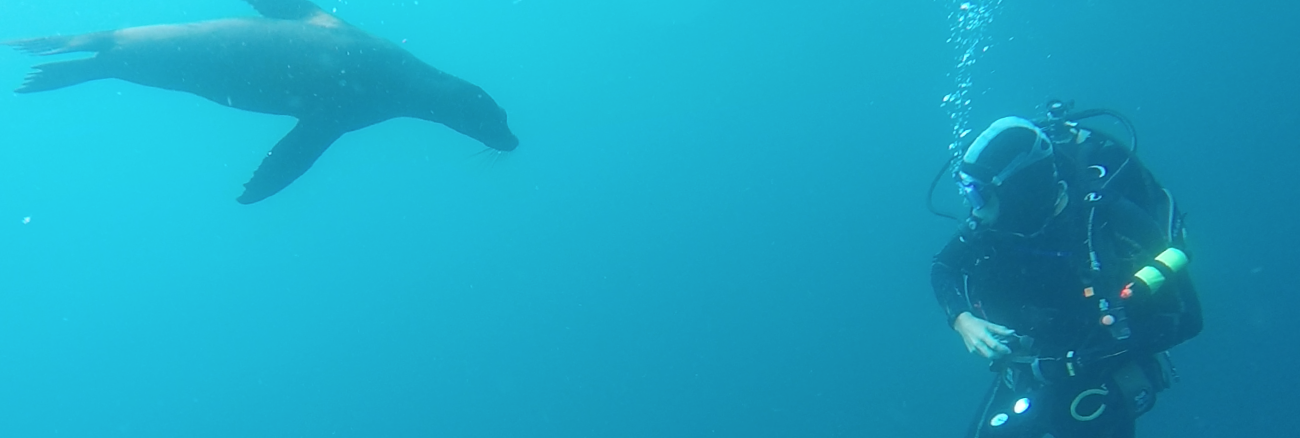
Galapagos urchins
The slate-pencil urchin Eucidaris galapagensis is an abundant member of the subtidal rock wall community of the Galapagos Marine Reserve. A diverse assemblage of encrusting organisms (e.g. corals, bryozoans, ascidians) inhabits the urchin spines. Dozens of species can be found on a single urchin. The urchins clearly play an important role in the provision of substrate, and I currently have experiments underway to examine if the urchins provide a refuge from predation for the organisms encrusting their spines.


SELECTED PUBLICATIONS

Altieri, A.H. (in press) Dead zones enhance key fisheries species by providing a predation refuge. Ecology.

Van Wesenbeeck, B.K., C.M. Crain, A.H. Altieri, and M.D. Bertness (2007) Distinct habitat types arise along a continuous hydrodynamic stress gradient due to the interplay of competition and facilitation. Marine Ecology Progress Series 349: 63-71.

Altieri, A.H., B.R. Silliman, M.D. Bertness (2007) Hierarchical organization via a facilitation cascade in intertidal cordgrass bed communities. American Naturalist 169: 195-206.

Zabin, C.J. and Altieri, A. (2007) A Hawaiian limpet facilitates recruitment of a competitively dominant invasive barnacle. Marine Ecology Progress Series 137: 175-185.

Altieri, A.H. (2006) Inducible variation in hypoxia tolerance across the intertidal-subtidal distribution of the blue mussels Mytilus edulis. Marine Ecology Progress Series 325: 295-300.

Altieri, A.H. and J.D. Witman (2006) Local extinction of a foundation species in a hypoxic estuary: integrating individuals to ecosystem. Ecology 87: 717-730.

Van de Koppel, J., A. H. Altieri, B.R. Silliman, J. F. Bruno, and M. D. Bertness (2006) Scale-dependent interactions and community structure on cobble beaches. Ecology Letters 9: 45-50.

Lindsey, E. L., A.H. Altieri, J.D. Witman (2006) Influence of biogenic habitat on the recruitment and distribution of a subtidal xanthid crab. Marine Ecology Progress Series 306: 223-231.

Altieri, A.H. (2003) Settlement cues in the locally dispersing temperate cup coral Balanophyllia elegans. Biological Bulletin 204: 241-245.

Silliman, B.R., C.A. Layman, and A.H. Altieri (2003) Symbiosis between an alpheid shrimp and a xanthoid crab in salt marshes of mid-Atlantic states, U.S.A. Journal of Crustacean Biology 23: 876-879.

top


Box G, Brown University, Providence, RI 02912
ph: 401.863.3324 | e-mail: Carol_Casper@brown.edu

Copyright © 2003 Brown University. All Rights Reserved.
Site design Academic Web Pages