Date September 21, 2026
Media Contact

Brown-affiliated physician and scholar organizes emergency care in Nepal, including for flood victims

Dr. Ramu Kharel, an emergency medicine doctor affiliated with Brown’s Warren Alpert Medical School and Center for Human Rights and Humanitarian Studies, helped to create a system that provides aid when disaster strikes.

PROVIDENCE, R.I. [Brown University] — When a devastating flash flood roared through the Himalayan valleys on the Nepal-China border in late August, Dr. Ramu Kharel was in Providence, where he works in the emergency medicine departments of Miriam, Rhode Island and Women and Infants hospitals. Yet Kharel was able to get help to flood survivors in Nepal from thousands of miles away — through his nonprofit, Health Advancement Programs to Serve All (HAPSA) Nepal, Kharel’s team organized the delivery of post-disaster sanitation kits for people who needed them.

“Our organization doesn't have any role in rescue operations — that’s the domain of the army and the government,” Kharel said. “But we know from experience and training that a flood of this magnitude will mean that hundreds of thousands of people will be displaced. And when they get displaced, usually within a week or two, they need a different kind of immediate emergency assistance.”

Kharel is an assistant professor of emergency medicine, clinician educator, at Brown University’s Warren Alpert Medical School, and an affiliated faculty member with the Center for Human Rights and Humanitarian Studies at Brown’s Watson School of International and Public Affairs. His primary research interest is advancing emergency care in Nepal. Kharel founded HAPSA Nepal in 2013 as a handwashing initiative in a rural Nepaleses village, and the organization has since grown to strengthen the chain of emergency care across the country’s health system, often collaborating with local governments during emergencies like earthquakes and floods.
We will continue to work on strengthening the entire chain of emergency care so the system is more resilient in times of disaster and ready to serve during day-to-day emergencies.

Dr. Ramu Kharel Assistant Professor of Emergency Medicine, Clinician Educator, Warren Alpert Medical School; Founder of HAPSA Nepal
 
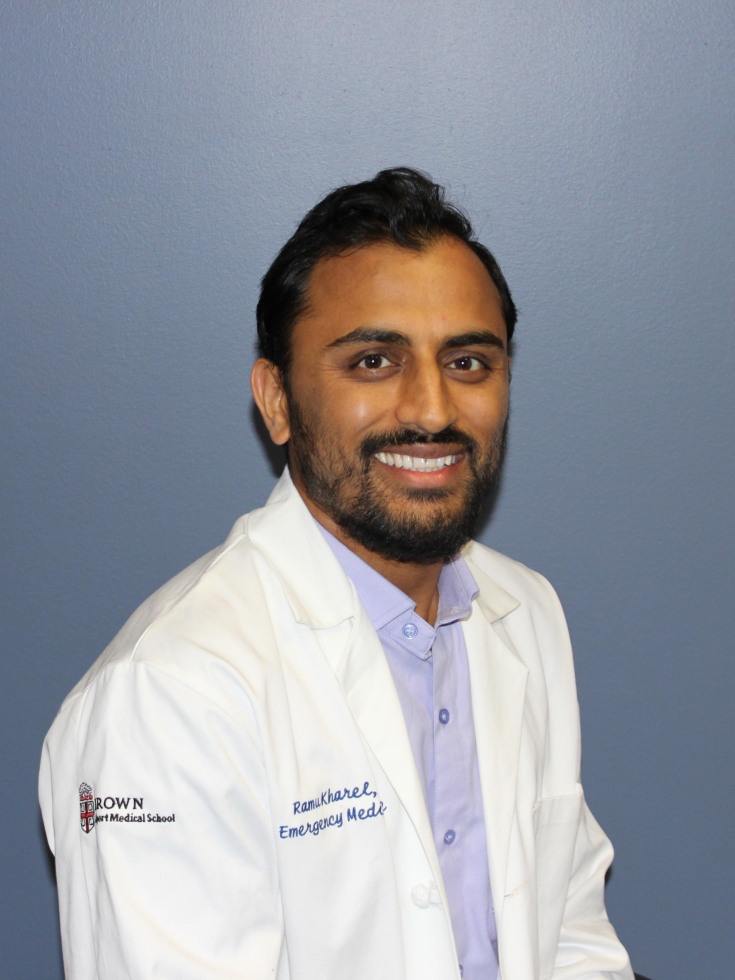
Dr. Ramu Kharel headshot

Kharel regularly visits HAPSA headquarters in Nepal to provide leadership and coordinate with Brown-affiliated medical students and emergency medicine fellows on projects. He said that having a reliably solid infrastructure in place on the ground is what allows for a nimble and effective response during an emergency.

In many parts of the country, it can take 16 or 17 hours to get to a hospital, Kharel noted. The HAPSA team builds the foundation so systems can function during a disaster: training community health workers and police officers to provide emergency care in the field, for example, or setting up training at hospitals.

“We work on strengthening the healthcare system while building community connections — that's our primary goal,” Kharel said.

When the HAPSA team heard about the floods of Aug. 26, they anticipated that there nearly 20,000 families could be displaced, likely without access to uncontaminated water and basic hygiene necessities. The flood, moving at a rapid pace, destroyed bridges, hydropower projects and entire towns. More than 1,300 people died and around 5,000 remain unaccounted for.

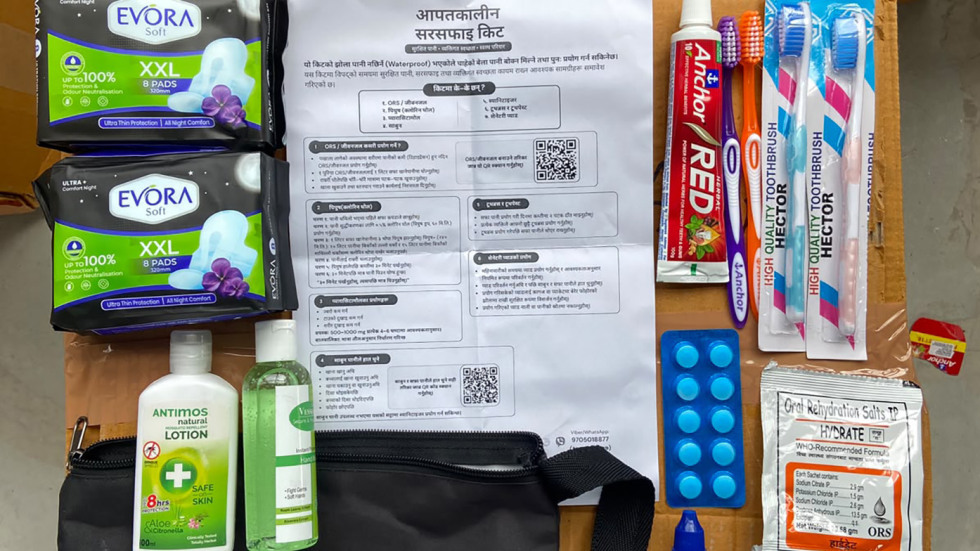
The organization created emergency kits that include a water purifying solution (enough to last a family of four for about a month), sanitary pads, soap, hand sanitizer, toothbrushes and toothpaste, and oral rehydration solution (to address diarrhea). The items are packed with an information sheet that includes a number for a hotline staffed 24/7, all in a waterproof bag that can later be used as a water bottle.

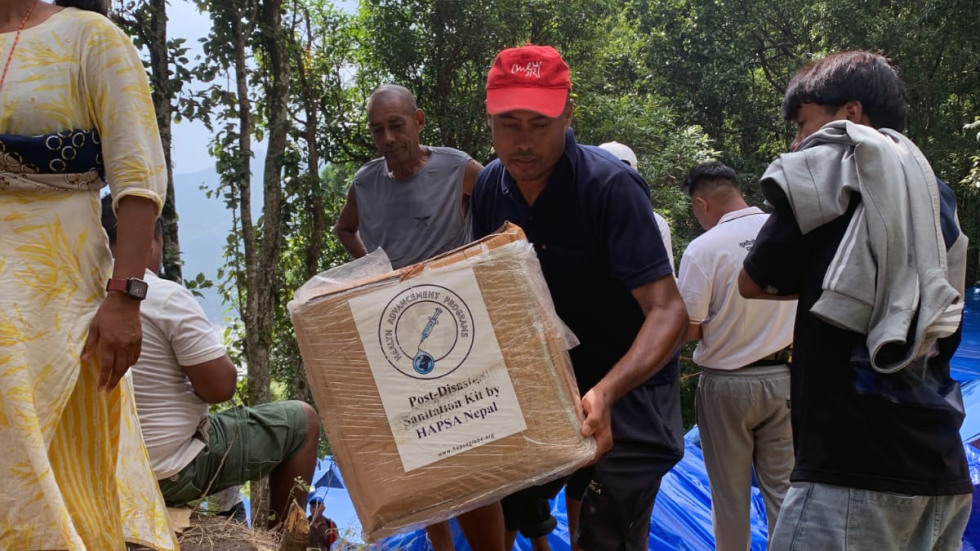
In a single day, HAPSA rounded up 300 volunteers to meet in a warehouse and put together 5,000 kits. They then set out to distribute them — to 3,200 families, to date. HAPSA Nepal also has closely coordinated with the police workers that had previously been trained through their program to provide CPR. They are now assessing next steps: whether they need to assemble and distribute more kits, or if it’s time to step back and take stock of how the kits are being used and what they need to do next time.

Over the past five years, Kharel has coordinated to send Brown University students and faculty to Nepal to work on improving rural healthcare there. Arun Acharya, a Brown University medical student who was in Nepal this summer working on a healthcare project, was able to provide some on-the-ground updates to Kharel about the flood before returning to Providence for the start of the school year.

Kharel will travel to the flood disaster zone in Nepal in October, and then will return in December with Dr. Rebecca Yang, a global emergency health fellow at the Warren Alpert Medical School who will conduct a formal assessment of the response efforts.

Deadly flash floods are sadly becoming more common in the Himalayas due to warming of the mountains, Kharel said, making his work with the Brown University volunteers and the HAPSA team even more urgent. 

“We will continue to work on strengthening the entire chain of emergency care so the system is more resilient in times of disaster and ready to serve during day-to-day emergencies,” Kharel said.