Each summer, Brown staff step into the skilled trades, and toward new career possibilities

A workforce development program in Facilities Management has trained hundreds of employees, opening pathways to careers in the building trades and campus jobs with higher pay, greater responsibility and room to advance.

PROVIDENCE, R.I. [Brown University] — When Henry Rose joined Brown University as a custodian in 1999, he told his wife the job was temporary — a way to “make ends meet” while he figured out his next move. Rose was 34 and ready for a change after years in his family’s East Providence furniture business.

But what he found at Brown became far more than a temporary job.

Today, nearly three decades later, Rose is a structural trades specialist in the University’s Facilities and Campus Operations department. He works within Facilities Management Operations — one of three offices that make up the department — alongside electricians, plumbers, locksmiths, HVAC mechanics, custodians and other workers who maintain and repair buildings across Brown’s campus.

His path from cleaning campus buildings at night to a career in the structural trades was made possible in large part by a workforce development initiative led by Facilities Management that lets Brown employees explore the trades, build skills and prepare to compete for future job openings on campus. 

For several summers, Rose stepped away from his custodian role into other areas in Facilities Management to learn on the job from mentors, gaining skills in tool use, building repair and site safety. When an entry-level equipment mechanic position opened, his summer experiences had helped prepare him to compete for the job. He passed written and bench tests demonstrating his technical knowledge and competency with tools, landed the position and eventually advanced to his current role in structural trades.

Rose said the opportunity to learn at Brown isn’t reserved just for students; employees, too, can build new skills and pursue new directions in their careers. 

“Brown is a learning institution — and they will teach you,” Rose said. “You can come in, work your way up and improve yourself.”

Rose’s experience reflects a longstanding commitment within Facilities Management to employee development. For decades, the department has invested in training and career development programs that help staff build skills, explore new fields and compete for jobs offering different schedules, higher pay and greater responsibility. Dating to the 1980s, the summer training program alone has reached hundreds of employees.

For Paul Armas, assistant vice president of facilities operations, developing talent from within reflects Brown’s role as a top employer and anchor institution — not only employing thousands of Rhode Islanders, but creating opportunities for them to learn, advance and build long-term careers at Brown.

“It’s really about creating upward mobility for our frontline staff,” Armas said. “It allows people to learn while working on-site, test out a trade and see a future here. That investment pays off in employee retention and morale, and it creates a culture where seasoned staff pass on their experience and mentor the next generation.”

New skills, new possibilities

Brown’s summer training program — known to many simply as “summer trades” — dates back nearly four decades. The program began when Facilities Management created a seasonal painting crew to refresh residence halls and campus spaces before students returned in the fall. That summer work also created an opportunity for Brown Dining Services employees, many of whom worked 10 months of the year. Facilities offered them temporary positions, where they trained alongside painters, providing an extra income while introducing them to a new line of work. 

For some, that summer job opened the door to an entirely new career. 

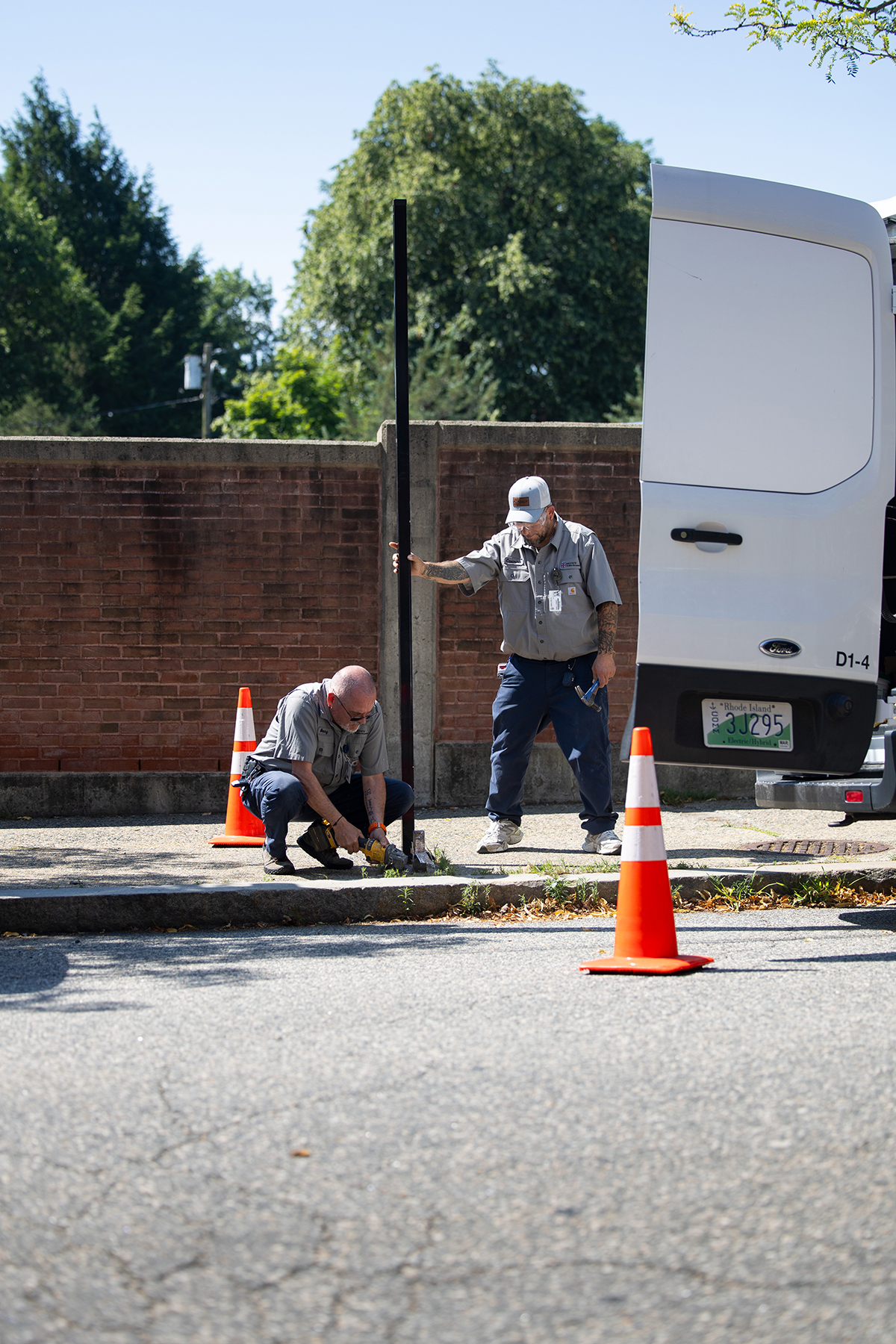
Two Brown facilities workers stand together to erect a new sign on a sidewalk on campus.
Trainees switch mentors every few weeks to gain a wide exposure to the work led by each unit in Facilities Management. 

John Colarusso joined Brown in 1983 as a cook’s helper and spent two summers working in the paint shop. When a full-time painter position opened, Colarusso landed the job. He proceeded to build a career spanning more than four decades at Brown, advancing through the facilities department to become manager of structural projects, a role he holds today.

“Going into the trades side of the house wasn’t something I was originally prepared for, but when the opportunity presented itself, I realized it offered me an entirely new path,” Colarusso said. “I saw so much opportunity and so many different avenues of work — and Brown encourages you to look forward and achieve that.”

Over time, summer trades expanded beyond painting to other units including structural trades, plumbing, grounds, operations, electrical and HVAC, among others. Today, about a dozen employees typically participate each summer, most from custodial services. After an interview and technical competency test, selected staff spend 10 weeks working alongside experienced staff as utility workers, a classification that can provide a pay increase over their regular positions.

Participants gain experience with tools, safety practices and entry-level trades work while helping Facilities complete summer projects and fill staffing gaps as employees take vacation. 

Andrew Avery, a manager in the structural trades unit, said trainees switch mentors every few weeks to gain a wide exposure to the work led by each unit. 

“It’s really about giving them broad exposure,” Avery said. “Instead of spending 10 weeks on one task, a trainee might spend a few weeks learning roof safety and patching, move to carpentry for staining and glue-ups, and then help build accessibility ramps or frame out partition walls. We want them to experience all the different things we do across campus.”

When the program ends in mid-August, trainees return to their regular positions. The experience does not guarantee a job, but it can help them compete for entry-level or semi-skilled trades positions that do not require a state license as openings become available.

For some, that exposure becomes a starting point for continued training.

Providence native Manny DaRosa joined Brown as a custodian in 1988 and spent two summers training in the carpenter shop before moving into a full-time equipment mechanic position. He continued building skills, advancing to carpenter before later training to become a master locksmith, the role he holds today.

“The summer training program helped me get into the trades,” DaRosa said. “If you have skills, you can showcase those skills. If you don’t have those skills but you’re willing to learn, somebody is willing to show you, you can develop those skills and move up.”

A path to professional licensure

While the program can provide a foothold in the skilled trades, it is not a licensing program. For employees seeking licensure, Facilities Management also leads a formal apprenticeship program, registered with the Rhode Island Department of Labor and Training, that over the past three years has provided 10 employees with the training and experience required for careers in electrical, plumbing, pipefitting and HVAC.

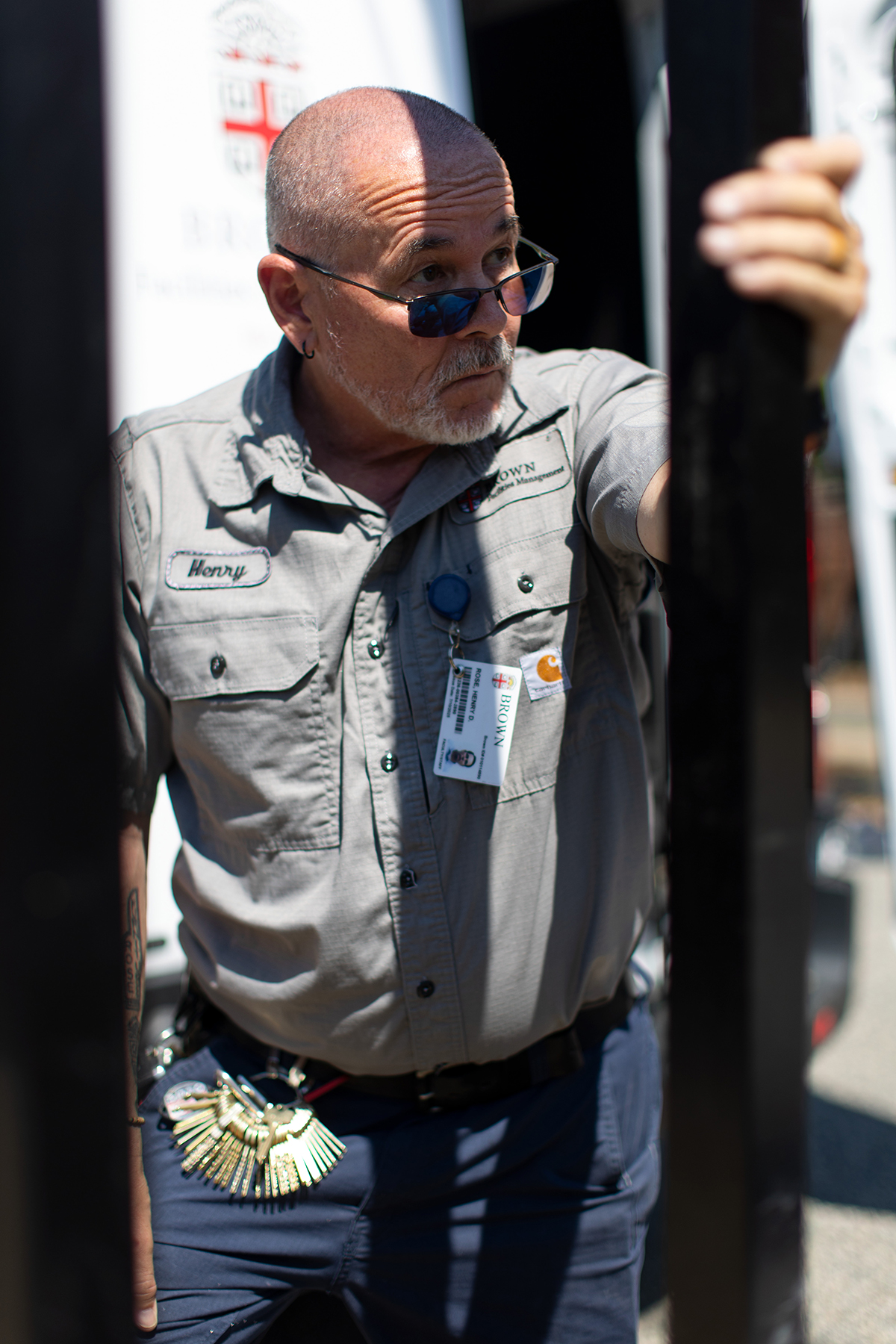
Brown staff member Henry Rose stands to hold a pole, erecting a new sidewalk sign.
“Brown is a learning institution — and they will teach you. You can come in, work your way up and improve yourself," said Henry Rose, a structural trades specialist at Brown. 

Unlike summer training, apprentices work year-round as permanent equipment mechanics. They spend roughly three years completing supervised field work under licensed Brown tradespeople while taking required classroom courses, with Facilities Management reimbursing the cost. Once they complete the required coursework and field hours, apprentices can qualify for the state licensing exam, and, if they pass, become licensed professionals in their trade. 

It’s a path Jamie Angell began in 2016.

Eight years into her work as a custodian at Brown, Angell was ready for a new challenge. When an entry-level equipment mechanic position opened in HVAC, she saw a chance to transition into the trades, build technical skills and pursue greater career advancement. Once she secured the position, Angell entered Brown’s apprenticeship program, learning on the job from experienced HVAC mechanics while taking night classes at the Rhode Island Construction Training Academy in Pawtucket.

After three years of field and classroom training, Angell passed the state licensing exam and became a licensed HVAC mechanic, a role she has held at Brown for six years. The apprenticeship, she said, changed the course of her career.

“I knew this program would help me build a better future,” she said. “It gives people a platform to know they can achieve any educational or technical goal. Outside of Brown, breaking into the trades can be a difficult road, but Brown makes the process clear and accessible. That builds real confidence within yourself.”

Within Facilities, there’s a standing joke that Senior Director of Custodial Services Donna Butler knows quite literally every person among the department’s nearly 330 frontline staff. After more than 25 years at Brown, she has watched dozens of employees move from custodial work into trades positions through the summer training and apprenticeship programs — a pipeline she actively supports.

“Jobs in custodial are really a foot in the door — a way into Brown,” Butler said. “If people love to clean, they stay. We have staff with 42 or 43 years of service in custodial. But for others, it can be a springboard to new opportunities.”

For Butler, seeing employees move from custodial work into technical roles isn’t viewed as losing a team member, but as a shared success: “I tell them all: when the time comes, go for it,” Butler said. “When we lose someone to advancement in the trades, we applaud it.”