

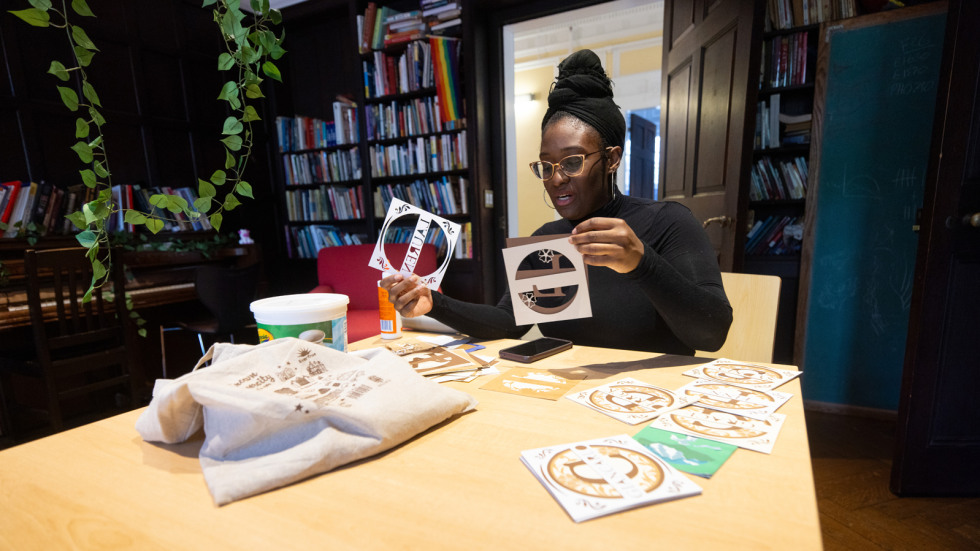
PROVIDENCE, R.I. [Brown University] — For Teniesea Russell, supporting students at Brown University means them helping them navigate new social and residential dynamics, connecting them with campus resources, or simply sitting with someone who needs to share their story.
As a residential area coordinator, Russell oversees residence halls — and lives in one — and supports students with everything from safety policies to community concerns. As part of her role, she supervises a team of as many as 20 student leaders, helping them coordinate community-building events and provide support.
Russell also serves as one of the University’s administrators on call, contributing to campus-wide safety networks and ensuring students have round-the-clock guidance when unexpected situations arise.
Russell, who has a bachelor’s degree in psychology from New York University, previously served as a college advising counselor for inner-city high schoolers before earning her master’s degree in mental health counseling from Boston College. During her master’s program, she gained experience in her field as a graduate assistant in residential life as well as a traveling counseling intern for student affinity groups.
Drawn to Brown’s commitment to students and their self-expression, Russell came to Brown in 2024, where she works to bridge residential life with departments across campus and advocates for their well-being.
“I want them to know I’m here to provide support and keep them safe,” Russell said. “Everything I do is for their benefit.”
In this Q&A, Russell reflects on her career, her strategies to sustain work-life balance while living on campus and her quest to bake the perfect chocolate chip cookie.
Q: How would you describe the role of a residential area coordinator to someone outside of Brown?
We help students bridge their academic life with their life on campus. We oversee the residence halls on campus, making sure people understand safety policies, helping with roommate conflicts or living conditions, and planning events to support the communities within the residence halls.
Rather than just enforcing policy, our work is about supporting young adults as they navigate independence. Living in a residence hall is a formative experience for many students, and our team provides the structure and guidance they need to manage conflict, build meaningful relationships, and thrive on campus. We’re also there for emotional or mental support. We see students in all different sorts of states of mind, and we’re seeing sides of them that professors don’t see.