Date December 10, 2025
Media Contact

Close encounters with Rhode Island’s plants, for education, enlightenment, environmental stewardship 

An undergraduate field seminar at Brown teaches aspiring biologists and backyard botanists alike how to identify the flora of the Ocean State and engage with the natural environment.

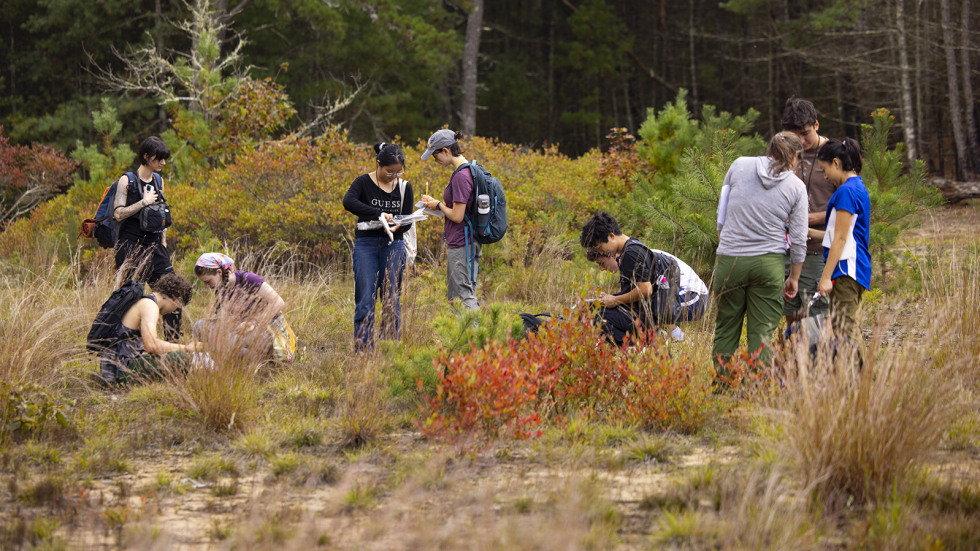
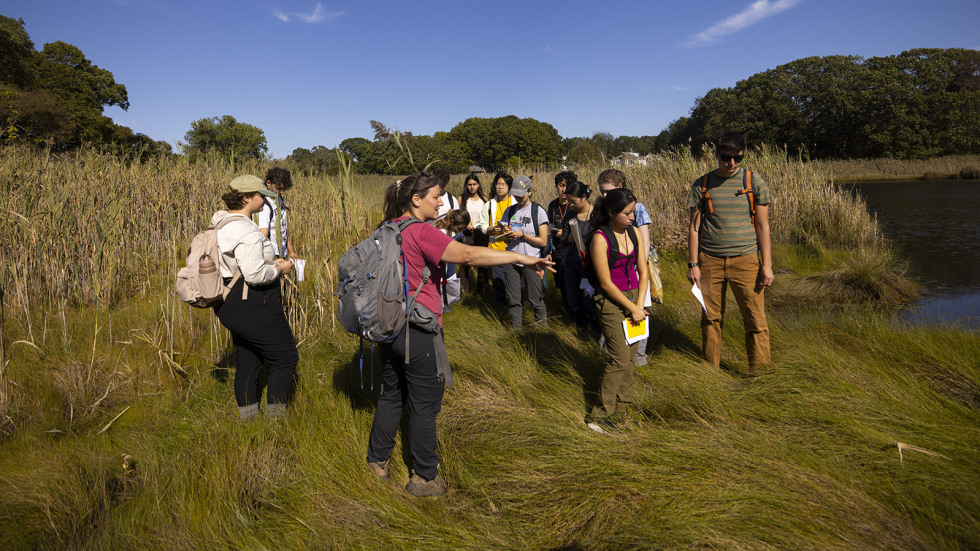
PROVIDENCE, R.I. [Brown University] — Along a nature preserve trail in Barrington, R.I., about nine miles from the Brown University campus in Providence, a group of Brown students worked through an in-the-field quiz.

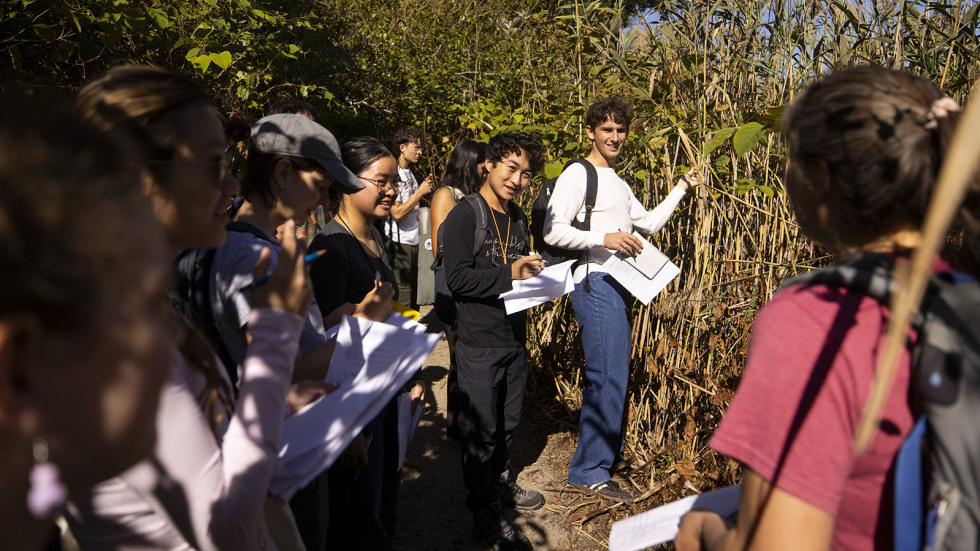
As part of a course called Rhode Island Flora: Understanding and Documenting Local Plant Diversity, they were being tested on their ability to identify poison ivy, sugar maple and camphor weed and to distinguish between sedges, grasses and rushes. The students take quizzes seriously, said instructor Rebecca Kartzinel, an assistant teaching professor of ecology, evolution and organismal biology, and not just to avoid poison ivy rash — they truly want to understand local plants.
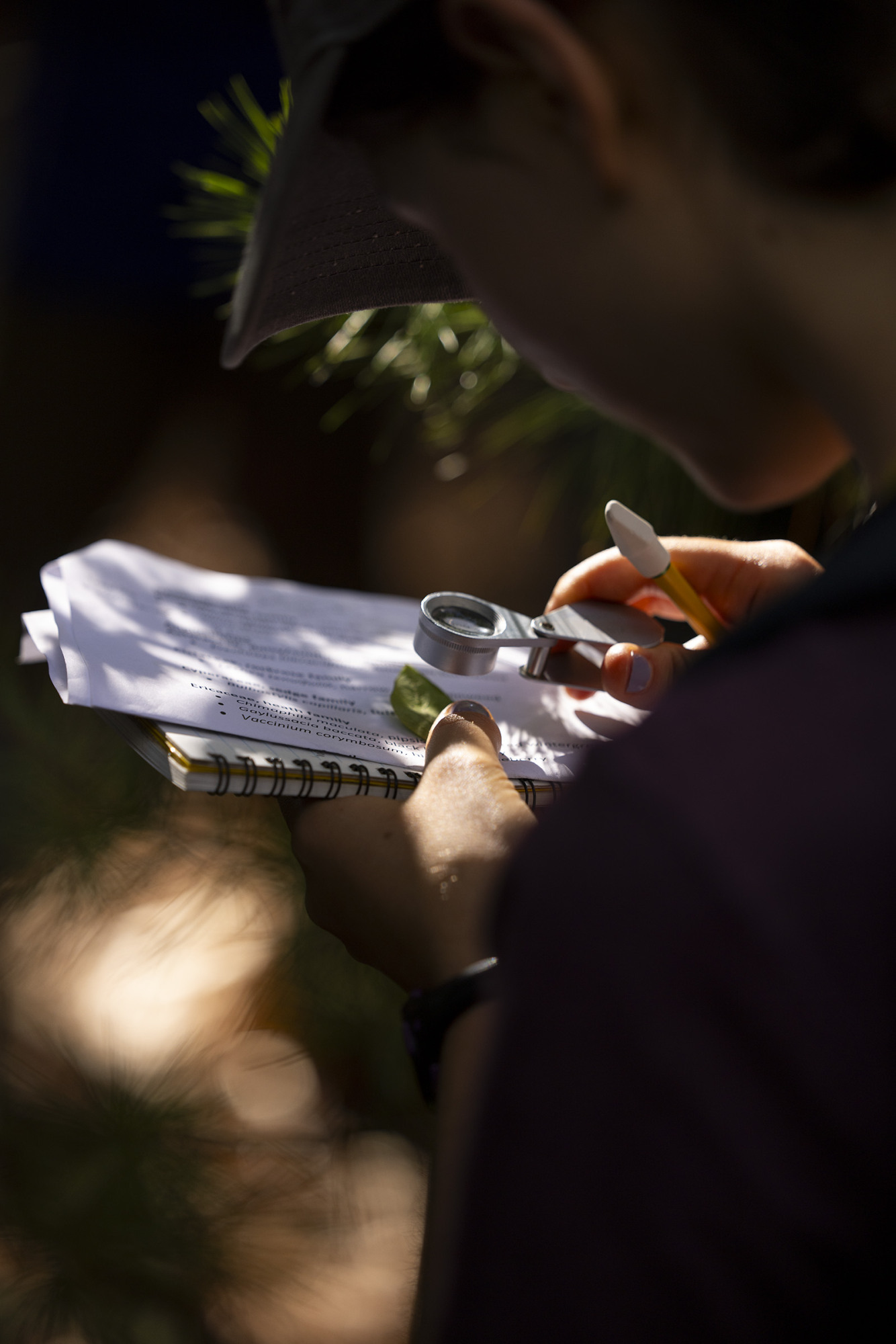
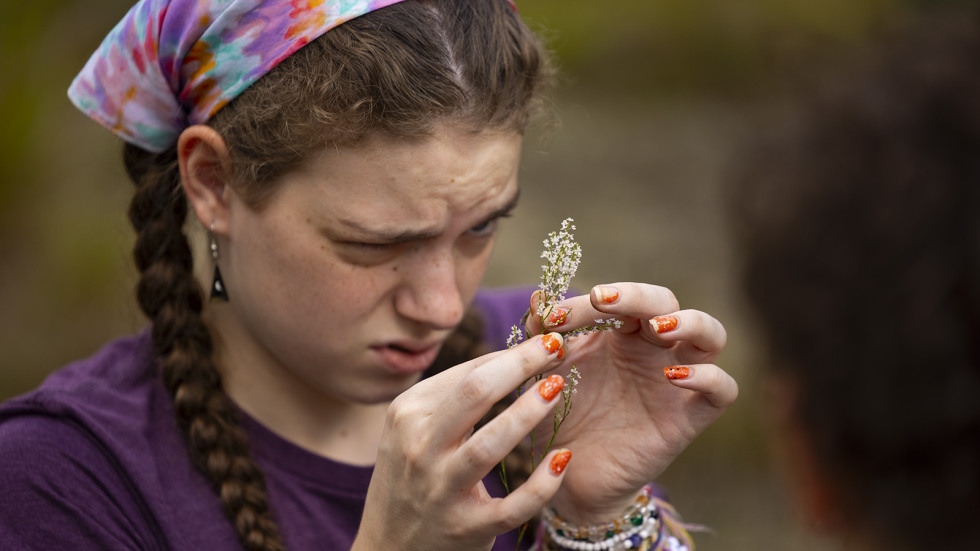
student observing plant

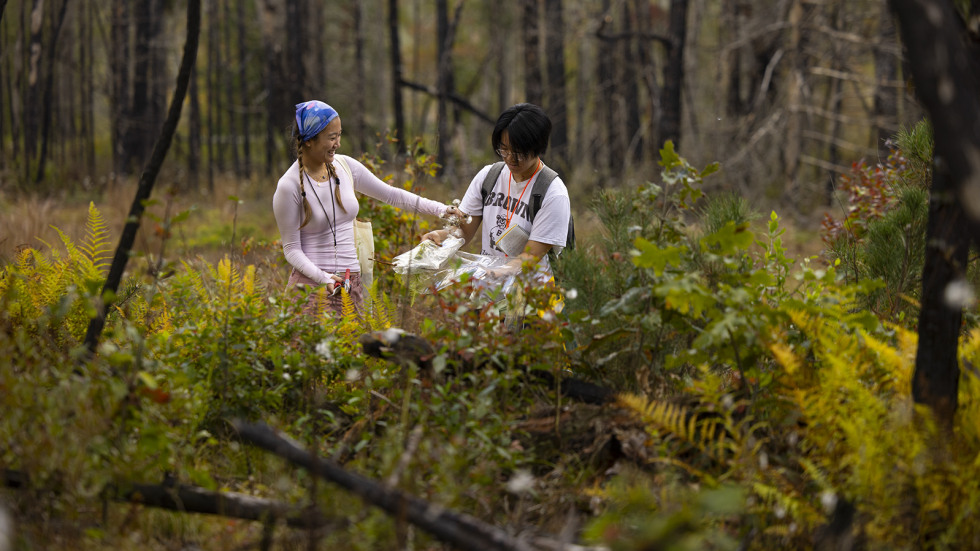
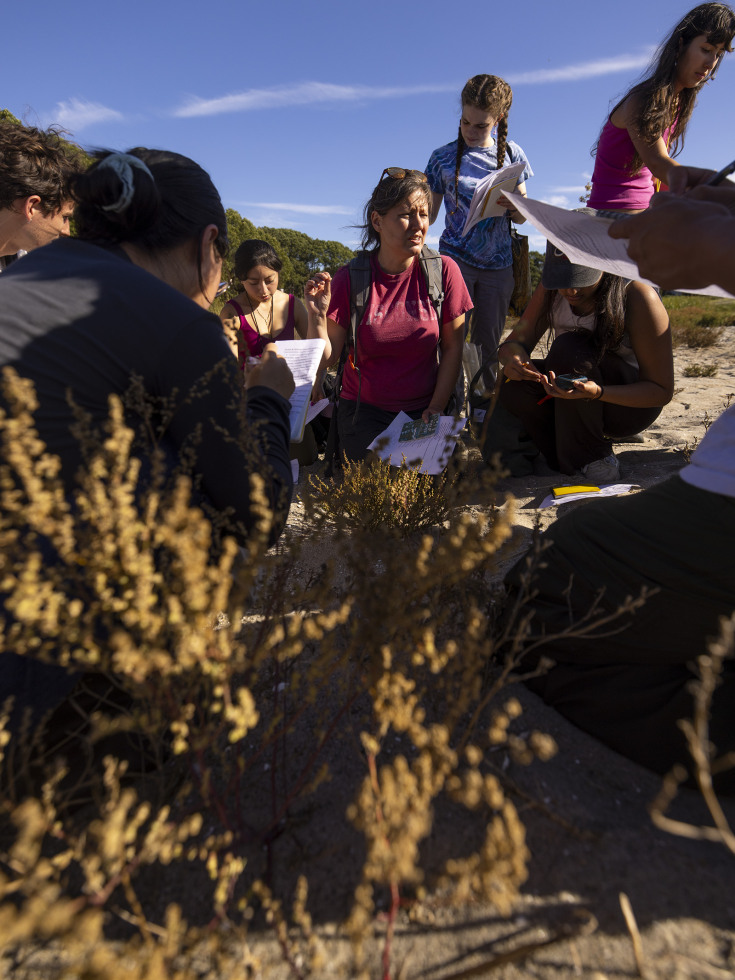
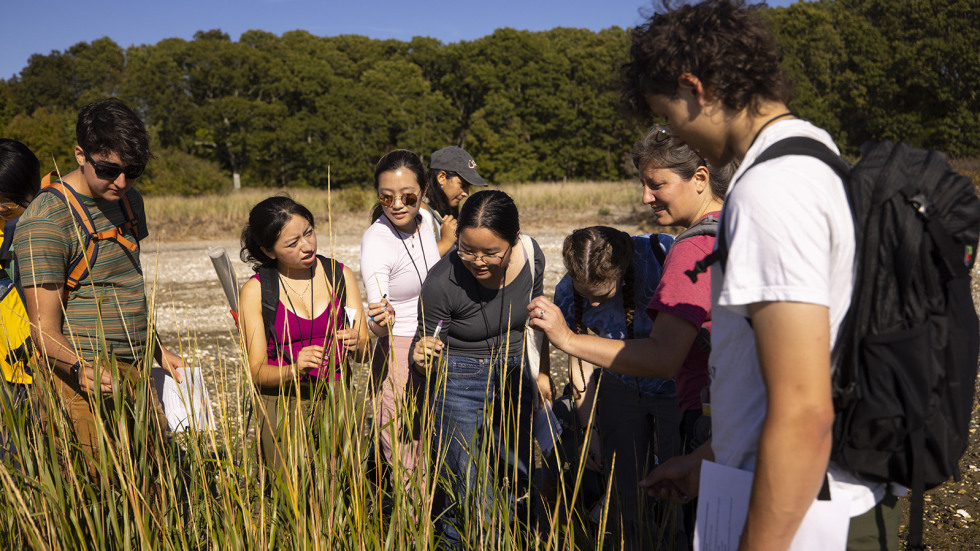
They progressed through a marsh and onto a Narragansett Bay beach, where students set out in pairs to collect plants. Kartzinel and teaching assistant Madeline JeBailey had scouted the site, and they’d found a surprise: a rare-in-Rhode Island plant, blooming on the beach. 

“You will not collect this!” Kartzinel reminded students as they pressed in for a look.

Minutes later, a student exclaimed they’d found a beach rose, but upon closer inspection, it turned out to be wild sweet william. Still, a fun find.

“Science is so much more interesting when you’re out in it — when you can pull plants out of the ground and look at their root structure,” JeBailey said.

Brown students see grass every day as they stride across the College Green. The students taking the Rhode Island Flora class, however, have learned to really see the Poaceae — and they know Poaceae is the Latin name for common grasses. In this undergraduate biology course, one of the main goals, according to Kartzinel, is to help students develop an educated appreciation for the often-overlooked species that comprise the diverse flora of the Ocean State and to see how they fit into their environment. 

“When you look at different habitats one after the other, you’re able to notice differences and start to understand the features of a particular place, which helps inform you what's going on ecologically — for example, when you’re near a saltwater marsh versus fresh water, or a broadleaf forest versus pine,” Kartzinel said. “Living in a city in a built-up world, we’re all so removed from our natural environments. Being able to go in the woods and find some aspect that’s recognizable and familiar is really important to understanding where we are.
“That's not just valuable for scientists — it's valuable for anyone who spends time outdoors.”

The course combines hands-on field work and laboratory research. For half of the Fall 2025 semester, the class took field trips to wetlands and woods around the state. Students learned to identify different species of plants in their natural habitats and how to collect and preserve specimens. By the end of the course, students are expected to document, press and identify 50 specimens. Kartzinel will keep the best collections to be added to the Brown University Herbarium, which she directs, as part of a long-term archive of botanical diversity.

In the second half of the course, students headed to the lab for lectures and gained experience classifying plants. They developed foundational science skills including close observation, data collection and recordkeeping.

This is Kartzinel’s fifth year teaching the seminar, and enrollment is capped at just 12 sophomores. While more than half intend to concentrate in biology, she reserves a few spots for students who show an interest in the environment.

Meredith Whitlock, who will concentrate in ecology and evolutionary biology, spent a semester working in the herbarium and was interested in the course’s place-based approach.

“Interacting with herbarium specimens opened my eyes to the small but significant variations in form and function of plants and lichens,” Whitlock said. “I wanted to learn about Rhode Island through the specific characteristics of species that grow here.”

Sophomore Evan Hamaoka came to Brown focused on international and public affairs. He was motivated to take the class by his love of hiking and gardening: “I’m always collecting items from the trail,” he said. He enjoyed the course so much that he’s now planning to also concentrate in Earth, environmental and planetary science.

“I feel like what we do in this course gives us a higher respect for nature, the biology of things, and how plants grow and persist despite challenges,” Hamaoka said. “It’s been great to get outside and connect with nature and the environment. But that’s not to say that this class is easy.”

Leaving a legacy; seeding ideas

Simple grasses are notoriously difficult to identify. Learning to do so takes practice, which is what the on-campus sessions provide. In a lab at 85 Waterman St., students paired up again, this time at benches with microscopes set up by Brown’s Multidisciplinary Teaching Laboratories.

They consulted a dichotomous key use by botanists to identify plant species. As Kartzinel explained, the key is like a puzzle decoder to which one answers a series of yes or no questions about plants — for example, “Does it have serrated leaves?” — to figure out exactly what they’re looking at. By the end of the course, students will have keyed out grasses, New England aster and American holly, in addition to the specimens they collected.

“Keying out” plants is an essential skill for botanists, Kartzinel said, but it’s helpful for any environmental scientist — once one gets the hang of it.

A trio of students appeared to be struggling. Perhaps they gave an off-target answer to one of the key’s questions and ended up in the wrong section of the sprawling grass family. JeBailey went to the chalkboard.

“I’ve drawn out the thought process you’ve taken so far, and it should look like this,” she said, drawing the features of grass that are invisible to the untrained eye. “But actually…”

A pause, and then, “I see it now!” a student said, with relief.

The students turned to preparing for their final presentations, which explore issues faced by the state’s flora. Their topics include an overview of hemlock swamps in Rhode Island; the hemlock woolly adelgid invasion of local forests; the impact of phragmites on local marshes; the ethics around management of invasive species; and the impact of Dutch Elm disease on Rhode Island forests and street trees.

We’re all so removed from our natural environments. Being able to go in the woods and find some aspect that’s recognizable and familiar is really important to understanding where we are.
Rebecca Kartzinel Assistant Teaching Professor of Biology and of Ecology, Evolution, and Organismal Biology
 
RI Flora class gathered around instructor on the beach

Riley Brooks, a sophomore intending to concentrate in biology, finished the assignment and went to retrieve what looked like a miniature wood pallet but was actually a plant press.

“This summer I read ‘Braiding Sweetgrass’ by Robin Wall Kimmerer, and she talks about how important it is to know the names of the things around you — it gives you a greater respect for the diversity of life and its agency,” Brooks said. “That’s what this class teaches us. It’s a part of doing ethical science. When you’re outdoors and you see something, it’s like, ‘Oh, that plant is my friend, because now I know its name.’ That familiarity makes the outdoors feel a lot more accessible and welcoming, too.’”

The course is rooted in history at Brown. Kartzinel has discovered herbarium specimens that likely came from long-ago classes: they were found around Providence and have corrections written on them. Some date back to the late 1800s.

Student-collected specimens not only expand Brown’s collection, but Kartzinel often sends duplicates to partner herbaria for scientists to use in answering their own questions about the state’s ecology.

“The work of the students in this class will contribute to biodiversity data in Rhode Island that anybody can use, for a long time into the future,” Kartzinel said. “I hope that makes them feel like they're doing something legitimate, hopeful and good.”