PROVIDENCE, R.I. [Brown University] — Far from rare exceptions to an otherwise fair criminal justice system, wrongful convictions are a pervasive and systemic problem, according to research and analysis in a new book by Brown University sociologist Nicole Gonzalez Van Cleve.
“Crime Fictions” is the culmination of years of archival research, interviews and individual case studies that illuminate law e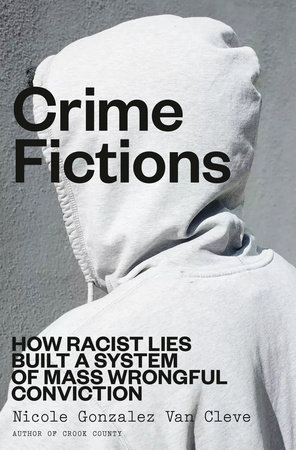 nforcement tactics, including eliciting false confessions, used in wrongful conviction cases.
“The most important cost of wrongful conviction is safety,” said Gonzalez Van Cleve, an associate professor of sociology at Brown. “For every wrongful conviction, there is a real perpetrator who is allowed to strike again. This is a betrayal to victims, their families and the public.”
“Crime Fictions: How Racist Lies Built a System of Mass Wrongful Conviction,” published by Penguin Random House in May 2026, focuses on criminal cases in Chicago’s Cook County, which Gonzalez Van Cleve describes as “the wrongful conviction capital of the nation.” It builds on her 2016 book, “Crook County: Racism and Injustice in America’s Largest Criminal Court.”
Her research team, which included students at Brown, found evidence that Black teenagers and young adults are most often wrongfully convicted. In one case she examines, teenager Daniel Taylor was convicted and sentenced to life for a double murder despite having an airtight alibi: At the time of the killings, he was already in police custody for an unrelated disorderly conduct charge.
In this Q&A, Gonzalez Van Cleve discussed her research, the factors that contribute to wrongful convictions and the importance of advancing justice, ethics and public safety.
Q: What inspired you to write “Crime Fictions?”
“Crime Fictions” is the first book to examine wrongful conviction as more than a set of misfires or accidents in our criminal justice system but a patterned way that police can weaponize accusations to serve their own ends. This book examines wrongful conviction in the United States, looking at Chicago, the wrongful conviction capital of the nation, and showing how wrongful conviction techniques are weaponized across history, precinct and even jurisdiction.
I originally aspired to be an attorney and served as a law clerk in Chicago, which gave me a front-row seat to violations of due process: prosecutors pushing plea bargains or sometimes barely opening their case files, sloppy compliance with the law, and open-court abuse of defendants. The prosecutors I shadowed were expected to look away from egregious violations of law and prosecute with blinders on — never questioning the veracity of police officers and their cases. I came to a frightening conclusion that wasn’t taught in my law, criminology or policing classes: Some police intentionally fabricated criminal cases against Black defendants from poorer areas of the city, and those lies were embedded throughout the legal process.
Just like in a court of law where we hold a trial for the accused perpetrators of a crime, do a deep investigation and put forth the evidence, “Crime Fictions” puts our criminal justice system on trial with a focus on the clandestine practices that insiders know through experience and socialization.
Q: How do false confessions contribute to wrongful convictions?
The evidence I’ve found suggests that some police investigations are not about fact-finding but about persuasion. Where there is no physical evidence linking a person to a crime, police can extract a confession and place their words in the suspect’s mouth; they can ignore or bury exonerating evidence and threaten witnesses with arrest in order to convince them to offer the “right” details. Then, they call the testimony of these supposed witnesses “corroboration.”
All of these tactics — in varying doses — create the illusion of a spontaneous eruption of guilt instead of the product of the fiction that it is. Police know that courts give significant weight to officers’ testimony over the suspect’s word, which allows this system to remain unseen and unchecked. I think one of the most shocking things in this book is that police are able to interrogate children and even deceive them. Some states are trying to stop these practices.
Q: Has your research highlighted possible solutions to preventing wrongful convictions?
Conviction integrity units, known as CIUs, are showing promise in some counties. These are divisions within a prosecutor’s office that work to prevent and identify false convictions. However, many offices are underfunded, and some offices are hesitant to review cases in good faith because they view a wrongful conviction as a political liability that could shame the office and the police. The evidence is still emerging on whether this movement will be a form of substantive accountability.
Q: Your book focuses on Cook County, but is wrongful conviction a more widespread problem?
My research has found that wrongful conviction is a persistent error built into the criminal justice system on a scale that is mostly unknown. What we know is that nationwide, nearly 3,800 people have been exonerated since 1989. When you add it up, those exonerated people have spent over 35,000 years in prison for crimes they did not commit. Right now, according to the New England Innocence Project, there are 102 active investigations into wrongful convictions in New England alone. The most concerning thing is that most people who are wrongfully convicted and serving prison time never get their case reviewed.
Q: What is the impact of wrongful convictions on public safety?
One of the most important things is that we don’t think about wrongful conviction as a problem with public safety. In all these cases, when there was a wrongful conviction, the killer was free, the rapist was free. These were violent people who could continue perpetrating. So we need to start thinking of wrongful conviction as an issue of public safety because every time the police got it wrong, there was a perpetrator still out there, victimizing other people.
Q: How did your students at Brown contribute to the book?
The book is based on hundreds of cases and took about five years of data collection. Students at Brown played an important role in gathering and analyzing the data. Over the years, more than 20 undergraduate students served as research assistants. I still communicate with many of the students who were involved. Some of them work at the Innocence Project now, and some are in law school, planning to be exoneration attorneys or work in civil rights, so they’re doing amazing things.
Students who took my sociology department courses — Criminal Courts and the Law in an Era of Mass Incarceration, and Race and Wrongful Conviction in the United States — also got involved with the research. We used media archives and worked closely with the Brown University Library to track cases, and in some instances, we had to negotiate our way in with civil and criminal attorneys to get old case files, records and policy reports. It’s a journalistic approach to the social sciences, because a good investigative journalist is going to keep digging for data.
Q: What do you hope readers will take away from the book?
I hope the book will compel readers to analyze intuitions, law and legal practice in a critical manner that forwards important dialogues about ethics and legality. I invite readers to confront larger questions about the promise of justice, the morality and even the legitimacy of our nation’s institutions — institutions protected by law, precedent and a court record — and to ask ourselves why we, as Americans, have such blind faith in police and the cases they create. What is it about our culture that so readily believes that innocent young people — even 7-year-olds — are capable of monstrous acts? Why is a police officer’s word enough for us to take away the liberty and lives of so many young people? And why have Black children, teens and young adults been the most vulnerable targets of wrongful conviction? Readers are presented with data and findings, written in narrative form, to come to their own possible answers to the questions raised in the work.