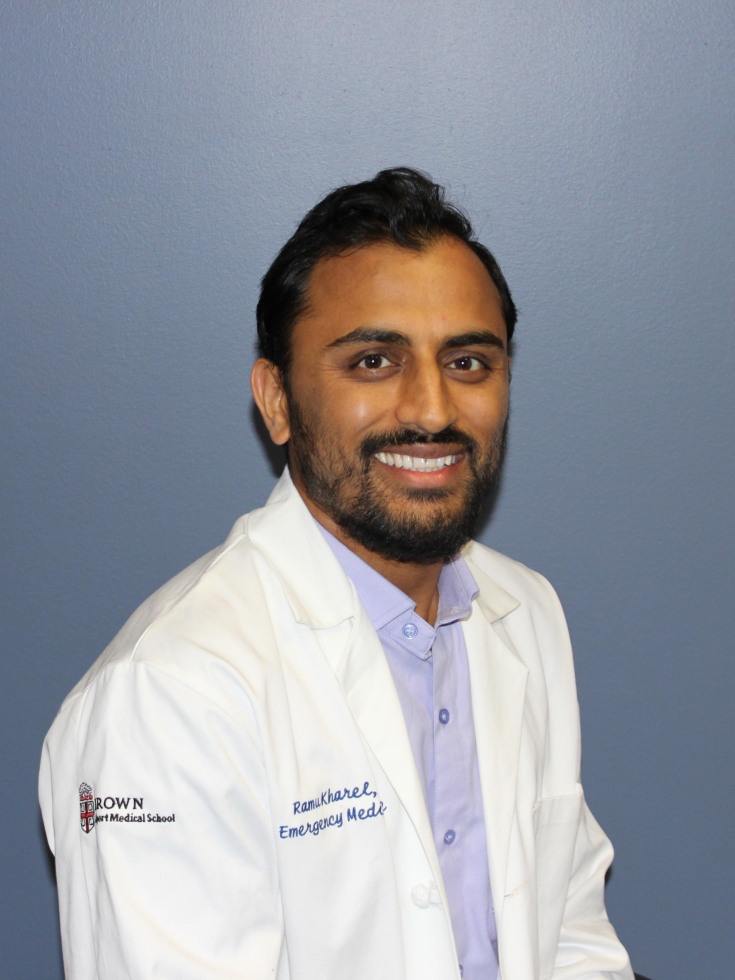
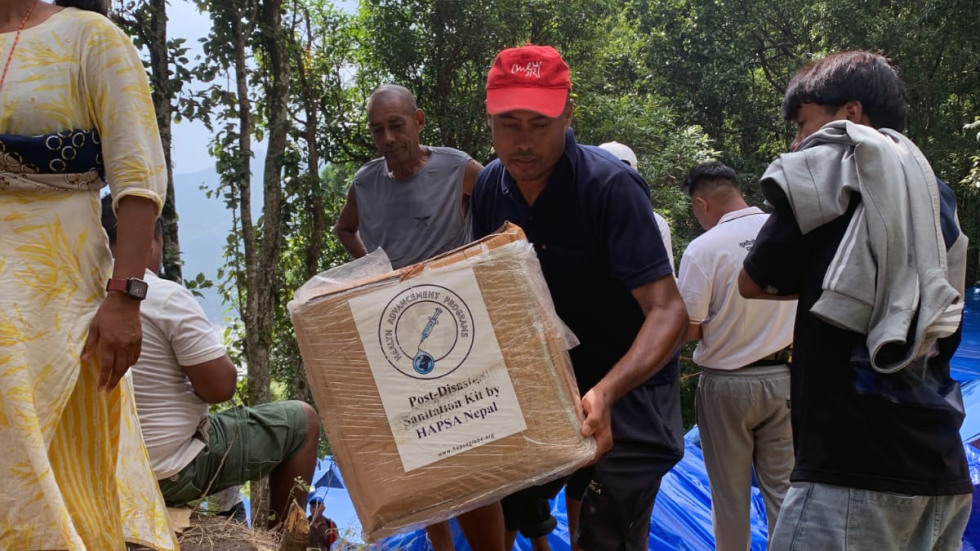
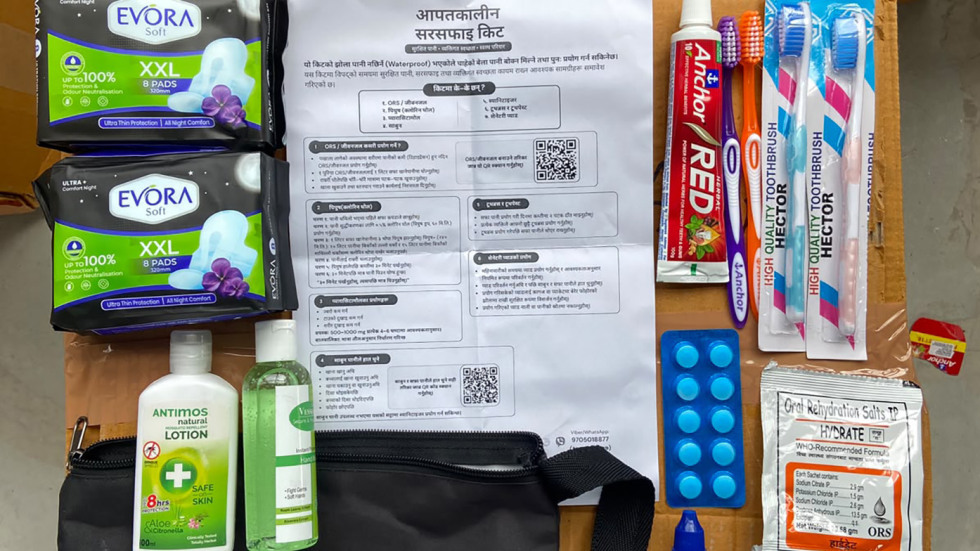
PROVIDENCE, R.I. [Brown University] — When a devastating flash flood roared through the Himalayan valleys on the Nepal-China border in late August, Dr. Ramu Kharel was in Providence, where he works in the emergency medicine departments of Miriam, Rhode Island and Women and Infants hospitals. Yet Kharel was able to get help to flood survivors in Nepal from thousands of miles away — through his nonprofit, Health Advancement Programs to Serve All (HAPSA) Nepal, Kharel’s team organized the delivery of post-disaster sanitation kits for people who needed them.
“Our organization doesn't have any role in rescue operations — that’s the domain of the army and the government,” Kharel said. “But we know from experience and training that a flood of this magnitude will mean that hundreds of thousands of people will be displaced. And when they get displaced, usually within a week or two, they need a different kind of immediate emergency assistance.”
Kharel is an assistant professor of emergency medicine, clinician educator, at Brown University’s Warren Alpert Medical School, and an affiliated faculty member with the Center for Human Rights and Humanitarian Studies at Brown’s Watson School of International and Public Affairs. His primary research interest is advancing emergency care in Nepal. Kharel founded HAPSA Nepal in 2013 as a handwashing initiative in a rural Nepaleses village, and the organization has since grown to strengthen the chain of emergency care across the country’s health system, often collaborating with local governments during emergencies like earthquakes and floods.