Topics
Date August 20, 2026
Media Contact

Coleton Hast: Bridging technology and community to help preserve Taiwan’s endangered languages

Supported by a U.S. Department of State scholarship, the Brown University doctoral student is spending the summer in Taiwan, sharpening his Mandarin skills to advance research on Indigenous language revitalization.

PROVIDENCE, R.I. [Brown University] — Every morning in New Taipei City, Taiwan, Brown University doctoral student Coleton Hast boards the subway, riding into another day of total language immersion. 

Ahead lies a grueling schedule of intensive Mandarin Chinese study, one-on-one sessions, conversational practice with local language partners, hours of homework and countless chances to put it all into use. 

This summer, Hast is spending eight weeks at Tamkang University in Taiwan as a recipient of the competitive Critical Language Scholarship, a fully funded initiative sponsored by the U.S. Department of State. The program provides rigorous, immersive instruction in languages considered critical to U.S. engagement across the globe. 
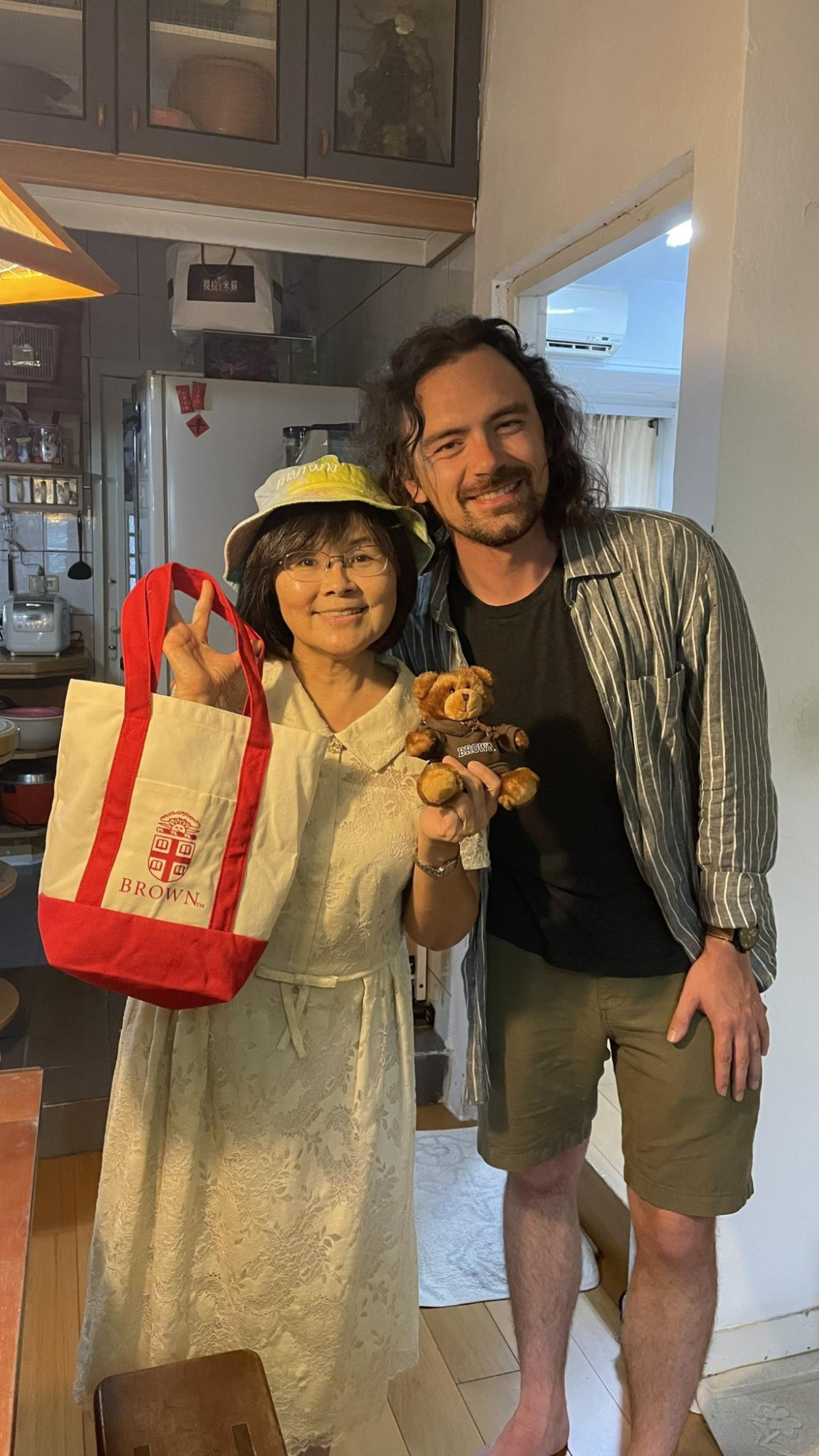
As a thank you for welcoming him into her home, Coleton Hast gifted his host mother a care package that included Brown merch.

It also offers the opportunity for Hast to strengthen the linguistic and cultural fluency that underpins his anthropology research at Brown, which focuses on revitalizing endangered languages within Indigenous communities in Taiwan and exploring how emerging technologies support those efforts. 

It’s a homecoming of sorts for Hast, who earned his master’s degree in ethnic relations and cultures from National Dong Hwa University’s College of Indigenous Studies in Taiwan. 

“I just really fell in love with the place, and being back in Taiwan again is grounding for me,” he said. “You can get a bit of tunnel vision when you’re just reading and writing about things. But being here reminds me of the stakes — that this is a real place, with real communities facing real challenges. It energizes me and reminds me why I do what I do.” 

Hast began his path to linguistic anthropology as a high schooler in Indianapolis, where he nurtured competing interests in English and theater.

“I put together that the common link was language in general — I love language, and I love how people use it to express themselves,” he said. “So I knew I wanted to go into a scientific study of language, but I also wanted to have a cause behind it.” 

During his undergraduate studies at Indiana University Bloomington, Hast studied Chinese and developed a scholarly interest in language revitalization and reclamation, supporting communities whose languages have become endangered due to colonialism, assimilation and education policies. 

“I combined my own personal interest in language and culture with wanting to do something with it,” he said. “What’s kept me interested and going for this long is that love of language, and the right and privilege to be able to speak your own.”

Partnering with communities to preserve endangered languages

Mandarin is the most widely spoken language in Taiwan, and the one through which Hast builds relationships with research partners. But the island is the ancestral homeland of all Austronesian languages — a vast language family that includes Hawaiian, Samoan and Indigenous languages of the Philippines — making it a uniquely rich setting for studying linguistic diversity.  

Hast works primarily with the Amis language, also known as Pangcah, investigating how communities navigate language education and revitalization, particularly through technologies like artificial intelligence and open-source digital tools. 

Language study is something we cannot take for granted. It deserves our support and it deserves our funding, because experiences like this are how we become better scholars and better citizens of the world.

Coleton Hast Brown University graduate student studying anthropology and linguistics
 
Coleton Hast delivers presentation in class

His past work examined initiatives like the Amis Wikipedia and the Amis Ministry of Education Dictionary, an online dictionary created through partnerships with language activists and open-source civic hackers. Through that research, Hast illuminated vital conversations around Indigenous data sovereignty, ensuring that local communities retain control over how their language and data are preserved and shared. 

“When I look at the intersection of language and technology, it’s about how they come together to support community,” Hast said. “As a linguistic anthropologist, language exists between people and in community, not just in a textbook or app or AI model.” 

At Brown, Hast explores those intersections under the guidance of Associate Professor of Anthropology and Linguistics Paja Faudree and Assistant Professor of Anthropology Joshua Babcock. He has also expanded his work through the University's Center for Digital Scholarship, incorporating digital humanities approaches into his anthropological research.

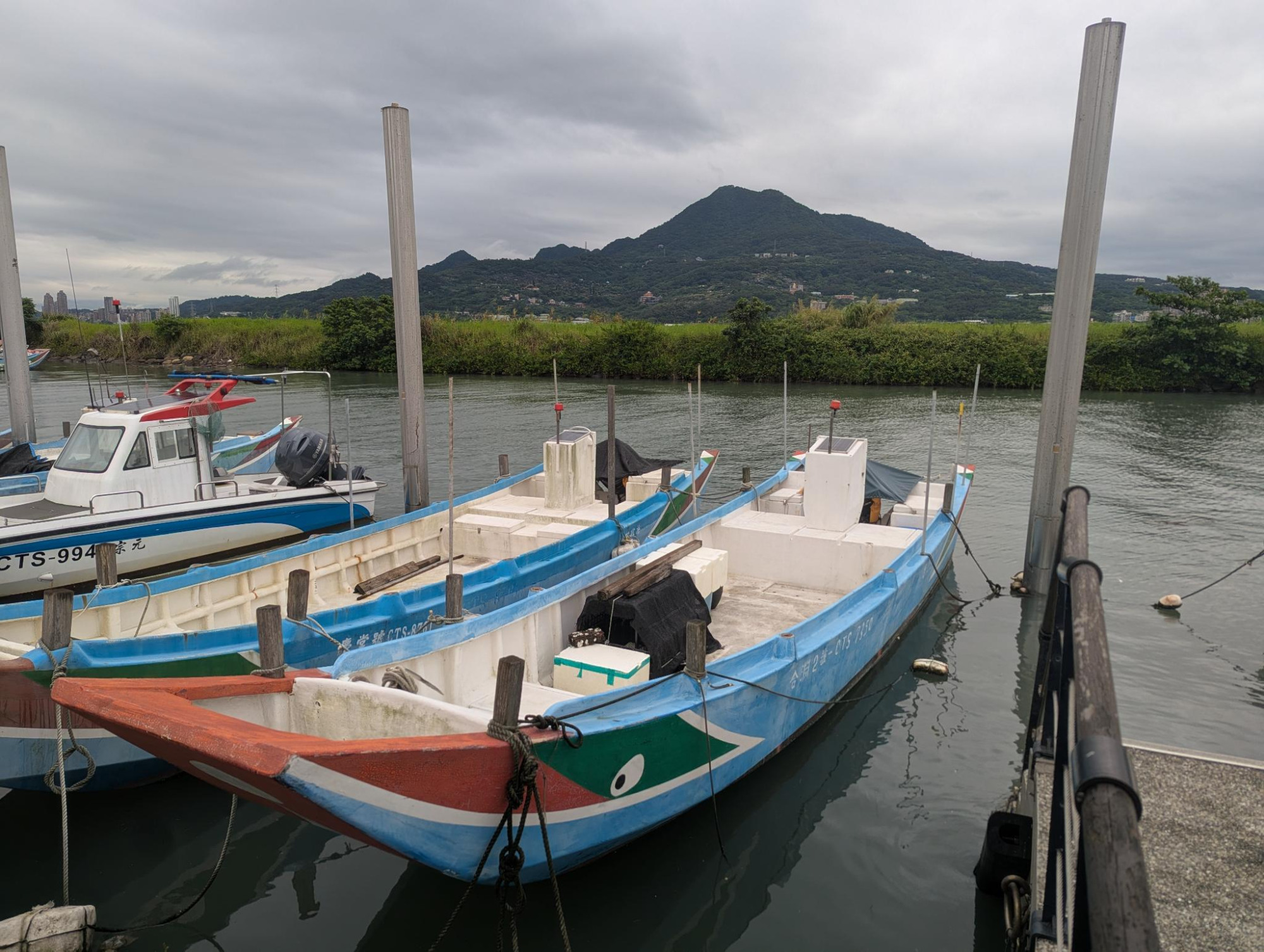
Fishing boats seen under Guanyin Mountain
During his daily commute to class, Coleton Hast passes by fishing boats docked near Guanyin Mountain, which rises from the banks of Taiwan’s Tamsui River. 

Hast’s summer in Taiwan is helping prepare him for the years of fieldwork and dissertation research ahead. While strengthening his Chinese fluency is an obvious benefit, Hast said he believes the greatest value comes from being immersed in the places that shape his scholarship.

Outside the classroom, that means reconnecting with the rhythms of life in New Taipei City. Hast spends free moments getting to know his host family, exploring the island by train, browsing independent bookstores and art shops, seeking out neighborhood coffee shops and sampling favorite dishes like beef noodles and three-cup chicken. 

“One of the amazing things about Taiwan is the food,” he said. “I spend a lot of time eating food, thinking about food, going to find food … I’m definitely a foodie, so it’s all very fun for me.”

When Hast earns his Ph.D. in a few years, he hopes to continue researching and teaching, building a career that keeps him connected to both Taiwan and the United States. 

“I’ve made connections here,” Hast said. “I feel at home here. The U.S. is my home, too, and I don’t really see a future where I’m just in one or the other.”

He also hopes more students will have opportunities like the one he’s experiencing this summer. Language immersion, he said, remains one of the most transformative forms of education. 

“This experience is vital, and it’s lived,” Hast said. “Language study is something we cannot take for granted. It deserves our support and it deserves our funding, because experiences like this are how we become better scholars and better citizens of the world.”