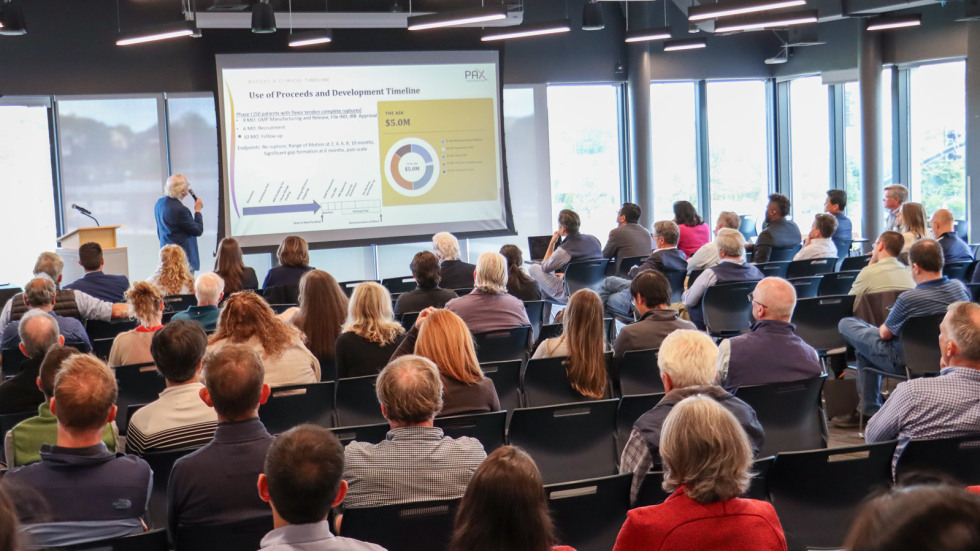
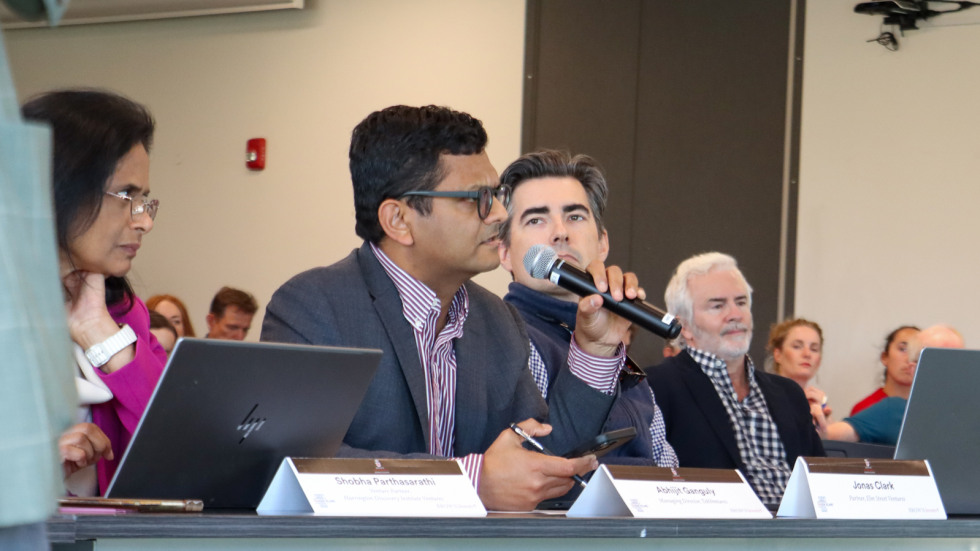
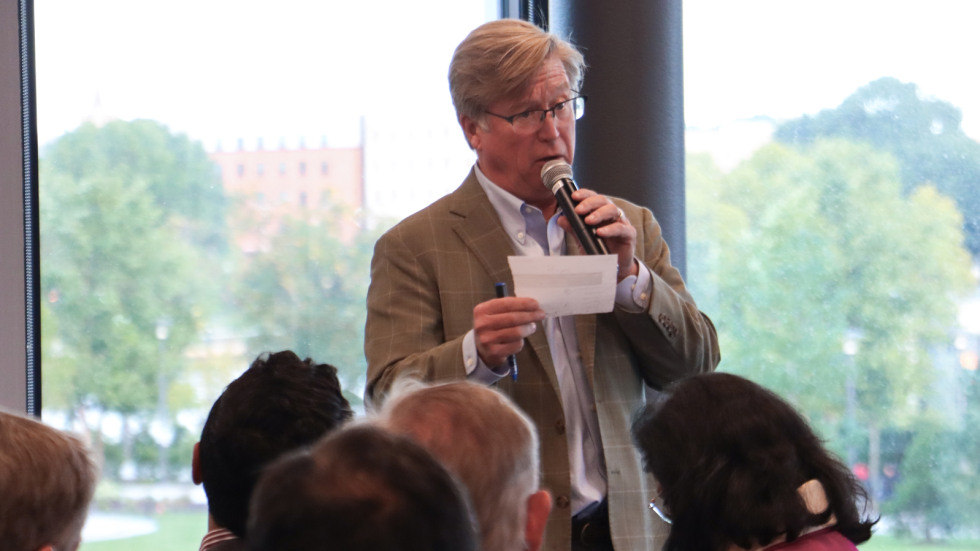
The startup challenge was hosted by Brown Technology Innovations, the University’s technology transfer office, at Providence’s Point 225 building on Wednesday, Sept. 23. Here’s a brief look at the ventures that participated in the challenge.
Acre Therapeutics
Dr. Alvin Huang, assistant professor of molecular, cell biology and biochemistry
Ryan O’Rourke, postdoctoral research associate in molecular biology, cell biology and biochemistry
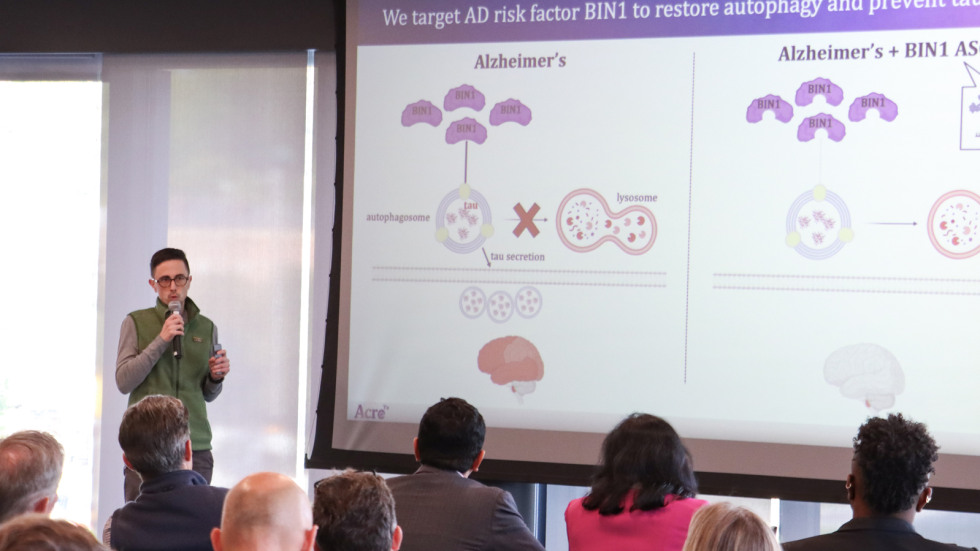
Acre Therapeutics is harnessing antisense oligonucleotide technology to target the Alzheimer’s disease risk factor, BIN1. This represents a novel precision medicine approach to Alzheimer’s disease treatment which intervenes in a critical cellular pathway gone awry in this disease to limit the accumulation of pathogenic tau proteins, a key driver of Alzheimer’s disease dementia.
Kallithea Biotherapeutics
Dr. Jack Elias, professor of translational science, professor of molecular biology, cell biology and biochemistry, professor of medicine
Dr. Jonathan Kurtis, professor of pathology and laboratory medicine, chair of pathology and laboratory medicine
Kallithea Biotherapeutics is developing an oncology platform based on targeting chitinase 3-like-1, a master regulator of cell growth and oncogenesis. The company’s first preclinical candidate, a novel monoclonal antibody targeting CHI3L1, has been shown to inhibit tumor growth, decrease cancer metastasis and kill cancer cells. The company plans to advance their therapeutic to the clinic in non-small cell lung cancer.
Naiad Technologies
Malia Chavinson, Class of 2027
Environmental sciences
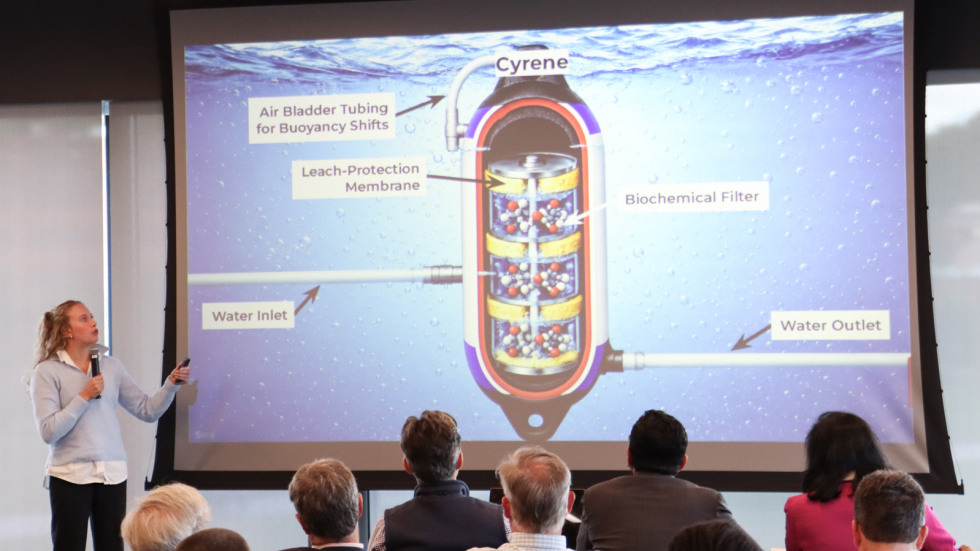
Naiad Technologies makes a scalable buoy system for lakes that permanently removes polluting nutrients to mitigate toxic algae blooms, protect ecosystems and minimize economic losses. Phosphorus-laden water enters the buoy, phosphorus is extracted and stored in the internal filter system, and clean, phosphate-depleted water is sent out. A single buoy can filter an area of 30 acres. When the internal filter package becomes saturated with phosphates after about six months of use, it is swapped out for a new one.
Nereus Systems
Monica Martinez Wilhelmus, assistant professor of engineering
Nils Tack, senior research associate at Brown’s School of Engineering
Nereus Systems builds compact, propeller-free underwater robots that can safely inspect confined maritime environments traditional remotely operated vehicles and divers cannot easily access. Inspired by bio-locomotion, the autonomous vehicles are designed for shipboard tanks, voids, pipes and other constrained underwater spaces where safer, faster and more adaptable inspection is needed.
PAX Therapeutics
Xiaotian Wang, assistant professor of surgery (research)
PAX Therapeutics has developed a regenerative medicine injectable treatment for faster, stronger and optimized healing of tendon and ligament tears. The treatment completed the studies required by the Food and Drug Administration and is on the cusp of moving into humans for a Phase 1 clinical trials. PAX Therapeutics is based at Ocean State Labs and is a grantee of Rhode Island Life Sciences Hub.
Red Maple LifeSciences, Inc.
William Ash
Master of science, biomedical engineering, 2026
Alec McCall
Ph.D. in biomedical engineering, 2026
Anita Shukla, professor of engineering
Chronic wound infections are a major driver of patient suffering, amputations and healthcare spending. Red Maple LifeSciences is developing EnzyLock, a smart wound-care platform that can both detect and respond to infection in real time through bacteria-triggered technology. The goal is to enable earlier intervention, improve healing outcomes and reduce the burden of wound care on patients and providers.
TEEM Therapeutics
Kareen Coulombe, associate professor of engineering
Biopharmaceutical company TEEM Therapeutics is a discovery engine for new drugs and a platform for drug optimization and selection. The company leverages proprietary 3D human heart Tissue EnginEered Models (TEEMs) using human induced pluripotent stem cells (hiPSCs). TEEM Therapeutics captures the genetics of heart disease patients and employs cutting-edge analytics and screening to identify new targets and drug candidates for cardiac disorders like atrial fibrillation, while reducing undesirable side effects of drugs through iterative compound development.