Topics
Date January 23, 2026
Media Contact

Brown to elevate golf and squash teams to varsity status in 2026

Growth in team resources, coaching expertise, athletic facilities and fundraising opportunities have bolstered four teams that have secured national championships, top rankings and outstanding win/loss records at the club level.

PROVIDENCE, R.I. [Brown University] — Brown University will transition four club athletics teams to varsity status as of July 1, 2026, reflecting the teams’ significant growth in team achievements, coaching expertise and athletic facilities, all backed by philanthropy to support the teams’ long-term financial sustainability.

Competing at the club level since 2020, the teams — women’s golf, men’s golf, women’s squash and men’s squash — have secured national championships, top rankings and outstanding win/loss records. Those results, as well as the fact that many NCAA Division I programs are reducing investments in sports like golf and squash, position the four well-resourced Brown teams to grow into highly competitive varsity sports.

A key component of the teams’ transition is a new financial model that will ensure the long-term sustainability of Brown’s golf and squash programs, with the move to varsity enabling each team to operate as a fully donor-funded program.

“Our goal is to provide a championship-caliber experience for our varsity student-athletes,” said M. Grace Calhoun, Brown’s vice president for athletics and recreation. “From world-class facilities and coaches to new partnerships, these teams now have the necessary elements to compete successfully at the highest level of intercollegiate athletics, supported by generous donors willing to invest in a varsity program.”

The decision is based on a comprehensive review of the teams’ competitive success and designed to enable standout varsity programs in golf and squash, particularly as the programs have been recognized by commensurate growth in fundraising resources. The decision also follows Brown’s extensive efforts over many years to provide gender-equitable athletic opportunities in accordance with federal law.

Investments in coaching and facilities

In 2020, Brown transitioned multiple teams from varsity to club status (and others from club to varsity) with a goal to improve the competitiveness of both varsity and club sports. At the time, Brown’s golf and squash teams were not well positioned to compete at the varsity level. In the five years before 2020, none of the four completed any season higher than sixth out of eight teams in the Ivy League, and the vast majority of finishes across the four teams over five years were last in the league.

Following the move to club status — and with major changes to facilities, resources, coaching staffs, partnerships and more — the teams have excelled. The men’s squash team won the club national championship in each of the last three seasons. The women’s squash team won the club national championship in two of those three years and finished as the runner-up in the third season. The club golf teams have qualified for nationals each of the last five years and earned two Top 10 finishes. The women’s golf team has been ranked as the top club team in the country twice during this period, and there are currently four Brown club golfers ranked in the national Top 20.

Calhoun said the factors supporting the success of Brown’s golf and squash programs have changed significantly and played a major role in the successes of the last five years. Two outstanding coaches have revitalized the leadership and architecture of the programs and among other accomplishments have led efforts to gain access to state-of-the-art facilities.

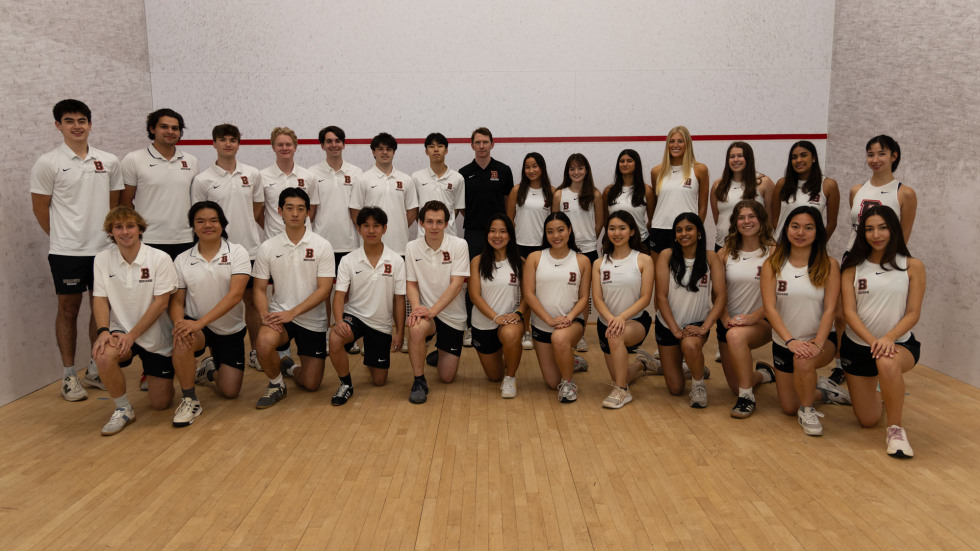
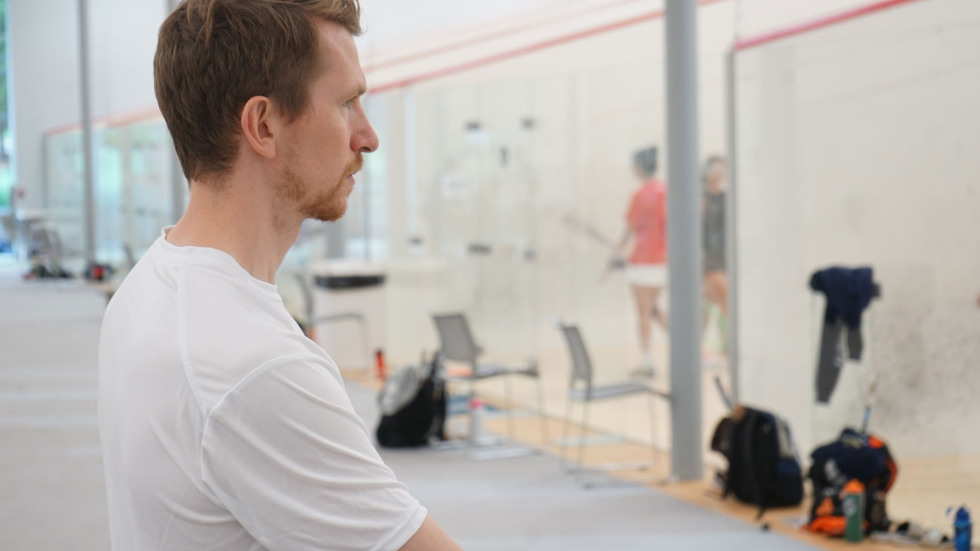
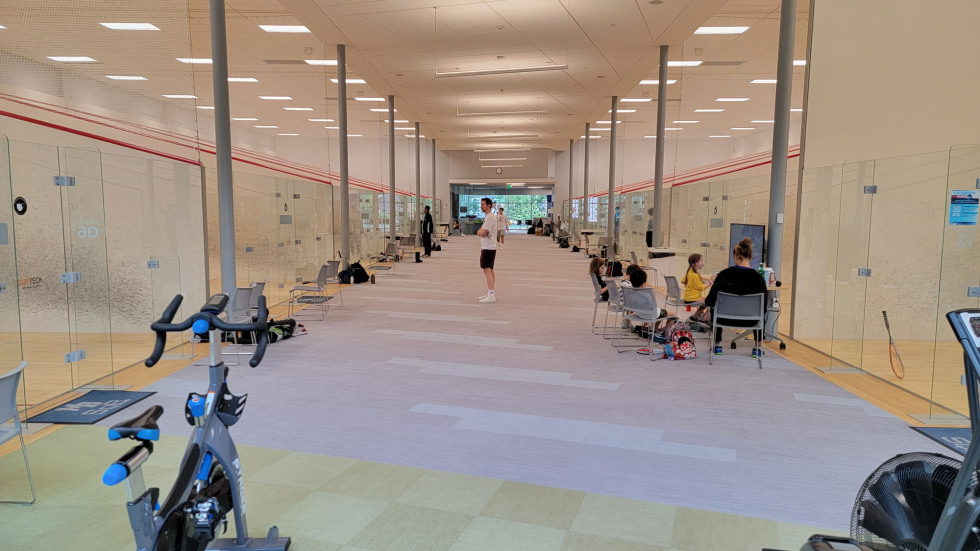
Arthur Gaskin, the men’s and women’s squash programs director appointed in 2021, is an eight-time national champion in his native Ireland and was recently named head coach of the Irish National Team. The training and competition venue for both squash teams is now the Gorgi Family Squash and Education Center at the nearby Moses Brown School.

“This has been an exciting time for Brown Athletics as a whole, with investments in infrastructure and resources to help maximize both the student-athlete experience and potential, and I’m proud of our teams' championship achievements over these last few years,” Gaskin said. “The division's growth, recognized by the generosity of our alumni community, will now position our programs to challenge for national championships at the varsity level.”

Director of Golf Jason Calhoun, appointed in 2022, is an accomplished PGA professional with three decades of collegiate coaching experience, including head coaching tenures at two of Brown’s Ivy League peers. Updated training and competition venues for both golf teams include an on-campus indoor training center (featuring a putting platform, six Foresight Sports golf simulators, a short game area and lockers) and Ledgemont Country Club in nearby Seekonk, Mass.

“As a golf program, we are extremely excited about this opportunity, which gives our student-athletes the chance to compete against our league peers for Ivy championships and the opportunity to qualify for NCAA championships,” Jason Calhoun said. “We are grateful to our incredibly generous alumni and parents for helping to make this impactful transition possible for our students-athletes, and we’re all ready to take this program to the next level.”

With the transition of the golf teams to varsity status, Brown has implemented a new, unified conflict of interest management plan given family relationships involving the vice president for athletics and recreation (Grace Calhoun) and director of golf (Jason Calhoun), who are married. The director of golf will report to Brown’s executive vice president for planning and policy, who will serve as athletic director for the golf program and hold responsibility for all decisions on golf-related employment, recruiting and allocation of resources. A similar arrangement is in place for women’s basketball. Both of these extend previous conflict of interest management plans that were first instituted in 2022-23 to ensure compliance with the Brown’s Conflict of Interest and Commitment and Employment of Relatives policies. The University remains committed to managing any actual, potential or perceived conflicts of interest as part of its focus on sustaining the integrity of all Brown programs.

An opportunity for competitive success

Support services within the Division of Athletics and Recreation at Brown also have been reimagined since 2020, including the dedication of fundamental resources to the holistic development and support of student-athletes in many areas including performance, wellness and life after Brown.

“The student-athlete experience across each of these four teams has been elevated to a level competitive with our Ivy League peers,” Grace Calhoun said. “We’re excited to see what they continue to accomplish in the years ahead.”
“From world-class facilities and coaches to new partnerships, these teams now have the necessary elements to compete successfully at the highest level of intercollegiate athletics, supported by generous donors willing to invest in a varsity program.”

M. Grace Calhoun Vice President for Athletics and Recreation
 
M. Grace Calhoun

In addition to the improvements made at Brown, Calhoun noted that the external landscape of intercollegiate athletics has continued to shift markedly in ways that position the teams for success at the varsity level. As NCAA schools move increasingly toward commercial, revenue-generating financial models, many are devoting more funding to flagship sports and focusing resources on high-revenue teams at the expense of funding for “non-revenue” or “Olympic” sports. Golf and squash typically fall into these latter categories across schools with intercollegiate athletics programs.

“This shifting national landscape positions a university like Brown, which continues to invest in these important sports with the full support of its generous donors, for competitive success,” Grace Calhoun said. “These teams have outperformed expectations at the club level, and we’re confident they will compete successfully with varsity programs nationally.”

With donors stepping up to invest in the teams at the varsity level, it will require no University funds for them to operate — unlike at club level, where they are funded primarily through Brown’s operating budget. Beginning in 2026, the teams will be funded exclusively through endowed fund contributions and soliciting new current-use gifts on an ongoing basis, with no unrestricted University funds budgeted moving forward. Brown leaders are confident that donor support will continue to bolster the future growth and evolution of the programs, as the University is fortunate to have a vast and dedicated community of donors. 

“The generosity of donors enabling the transition will in turn allow Brown Athletics to invest those savings in its broader set of athletics and recreation offerings,” Grace Calhoun said. “In addition to the opportunities for the four teams, the transition to varsity status will ultimately benefit the more than 6,000 students who participate in athletics and recreation activities across our campus.”