Date February 7, 2026
Media Contact

Brown University students, faculty and staff unite to remember, grieve and heal as a community

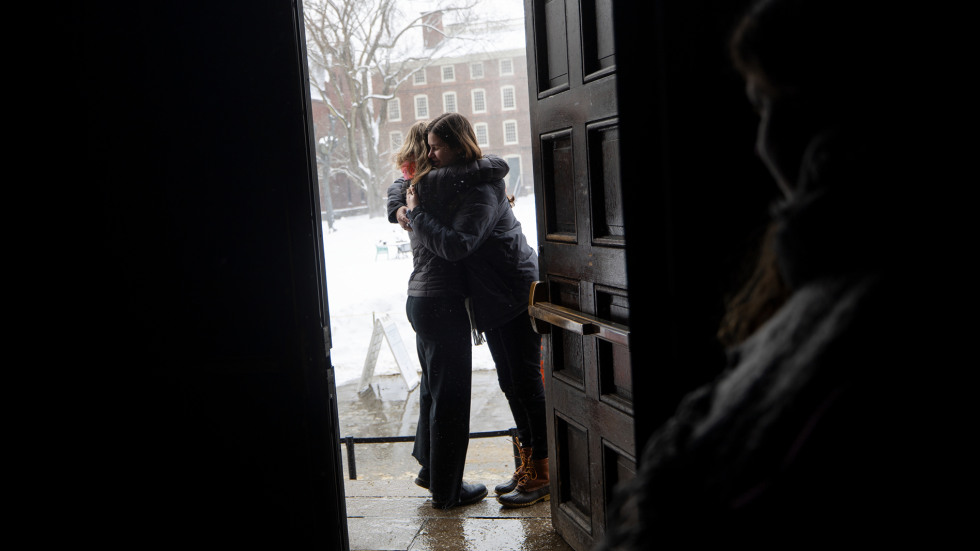
As community members continue on a path toward recovery, a campus-wide memorial service honored the lives of Ella Cook and MukhammadAziz Umurzokov, whose lives were lost in December.

PROVIDENCE, R.I. [Brown University] — First-year Brown University student Vanessa Finder met classmate MukhammadAziz Umurzokov during Brown move-in on Aug. 27, 2025. In the 108 days between that joyful arrival on Keeney Quad and the December afternoon when a tragic act of violence cut short the lives of Umurzokov and fellow Brown undergraduate Ella Cook, Finder and Umurzokov became fast friends. 

Umurzokov made Finder laugh until she cried and taught her that she should live on her own terms. He taught her that part of the meaning of life is to find happiness in the midst of chaos. 

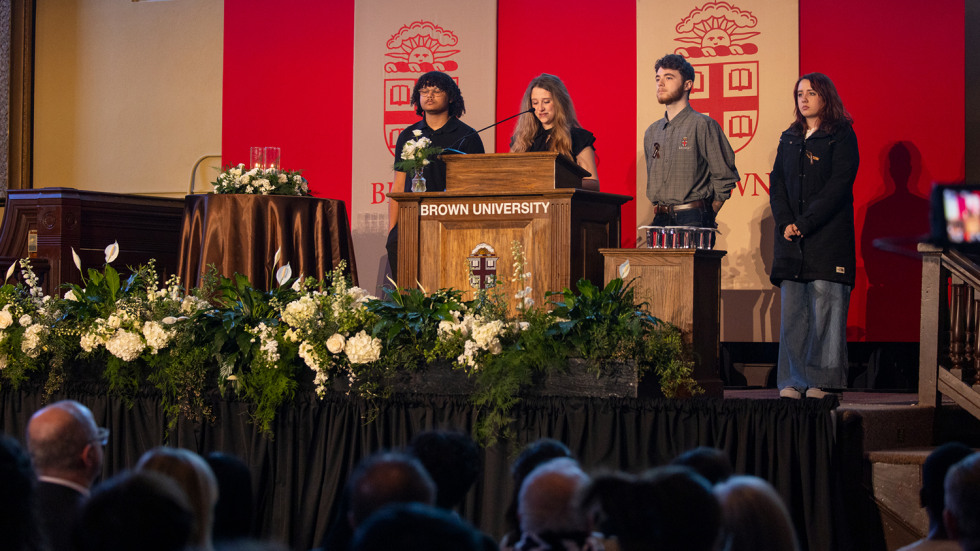
“And he taught me that it is OK to laugh during painful times such as now,” Finder said in remarks at a Saturday, Feb. 7, memorial service on Brown’s campus. “The world lost a bright light who made others feel seen. A future neurosurgeon who wanted to save lives. Someone irreplaceable.”

As thousands of students, faculty and staff gathered for a campus-wide service honoring Cook and Umurzokov, whose lives were lost in an unimaginable shooting on Dec. 13, 2025, it was clear from all who spoke that the world lost two people who are truly irreplaceable.

Cook, too, was remembered as a devoted friend whose infectious laugh, brilliant smile and eternal optimism lifted up everyone around her. 

“If you are feeling pain, you are not alone,” Vice President for Campus Life Patricia Poitevien said, recognizing the hurt on campus in the wake of the profound tragedy. “For those who are not yet ready to be here, or who are finding their way through this in other ways, that is OK, too. Whenever you are ready, this community will be here.” 

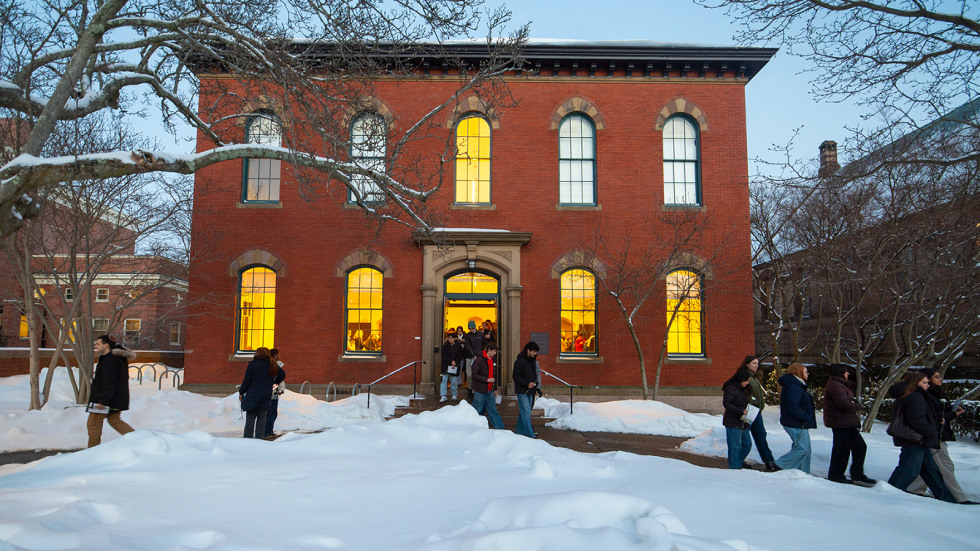
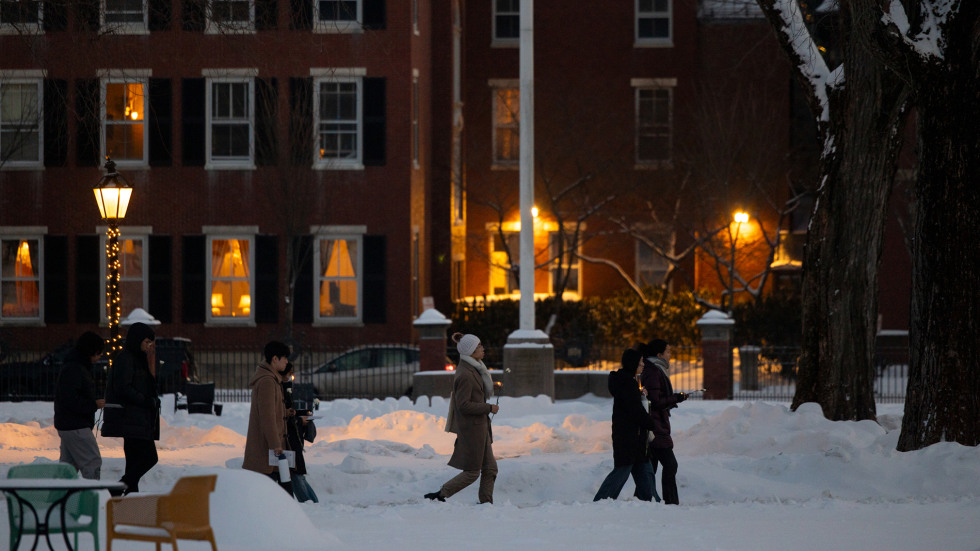
The memorial took place in Sayles Hall and multiple satellite locations across campus to ensure the ability for participation by the entire Brown community. More than 6,000 people joined via a livestream, allowing families, friends, alumni and others to join from anywhere across the world.

“Though we may be separated by distance, we are united in grief and in love for this community,” Poitevien said. “We also hold in our hearts the nine students who were injured and are now recovering. We are here for you.”

Rooted in a shared sense of care and belonging, the service turned toward the Catholic and Muslim spiritual traditions that sustained Cook and Umurzokov, respectively, reflected in prayers offered by the Rev. Justin Bolger and Imam Amir Toft. And Brown President Christina H. Paxson offered poignant insights from her own faith tradition.

“When someone dies, we say, ‘May their memory be a blessing,’” Paxson said. “But we know when we are grieving, memories don’t always feel like blessings. At first, they bring sorrow. They bring a heartache that never truly leaves us.”

But over time, she said, memories change.

“They become sources of comfort,” Paxson said. “They become hope for the future. Eventually, tears and smiles co-exist.”

Indeed, both tears and smiles were abundant during the service, where those close to Cook and Umurzokov recalled their favorite memories and reflected on the qualities that define their legacies.

Ella Cook: Faith and hope

Brown sophomore Elina Coutlakis-Hixson described Cook as a model of friendship, devotion and faith whose irrepressible cheerfulness lit up every room she entered.

“It took me 18 years to meet a true friend like Ella,” said Coutlakis-Hixson. “And the heartbreak of losing her so soon has created a deep hole in my life. But her unique devotion to our friendship and undying love has raised the bar in my understanding of what it means to be a friend.”

Coutlakis-Hixson said that despite Cook’s prodigious talents in music, math and languages, she “never bragged or boasted” and was always willing to help a friend in need.

“Ella wanted the best for everyone around her,” Coutlakis-Hixson said. “She would walk with you, in step, in the face of any challenge or hurdle, without a single air of competition, jealousy or malice. She pushed you to be better, to be more courageous and to reach beyond what you thought was possible.”

Graham Oliver, Cook’s academic adviser and a professor of classics and of history, remembered Cook as a thoughtful student driven to make positive change in the world through her interest in politics and Republicanism. She was not someone who sought the spotlight, Oliver recalled, so she had ambitions to make change behind the scenes, perhaps at a political think tank. 

“By being part of our community here on College Hill, Ella was already part of a think tank of sorts,” Oliver said. “Ella was a shining light in maintaining conversations on campus around different political views. Let us remember… Ella in our future conversations where we are mindful of differences of views, especially political ones.”

Paxson pointed out that Cook was aware that her political convictions might put her in a minority at Brown, but that she had the courage to see that as an opportunity. 

“She came here because she knew that it would help her grow,” Paxson said. “Listening to, building connections with people with different beliefs… sometimes strengthened her convictions — and at other times prompted her to change her views or to learn even more. That openness, that generosity of spirit, in turn inspired others to connect with, to learn from, to listen to Ella.”

Oliver said that Cook’s deep capacity for hope will long resonate. 

“Hope is enshrined in our culture at Brown,” Oliver said. “May Ella’s memory embody that hope for all, like me, who had the pleasure of speaking with her, and for all others who are coming to learn, in sorrow, about this remarkable young woman.”

MukhammadAziz Umurzokov: Loyalty and light

In her remembrance of Umurzokov, Vanessa Finder described a friend who was as brilliant as he was humble — a “genius” whose dry humor and loyalty helped her embrace life at the University.

“‘I’d like to think I’m a positive influence on the world’ — these words from Mukhammad fully summarize the type of person he was,” Finder said.

Having met on move-in day in August, the two quickly became inseparable neighbors and study partners who shared a passion for brain science and medicine. Separated only by a residence hall wall, Umurzokov would text Finder to ask if she was making popcorn when he smelled butter, or playfully joke about her passionate renditions of “Hamilton” songs he could hear through the walls, she recalled.

Beyond the laughter, they shared a personal connection to medicine; both had faced health conditions that fueled their dreams of becoming physicians.

“He was the embodiment of care,” Finder said. Whether it was a spontaneous walk for a cup of coffee or late-night conversations about profound life experiences, Umurzokov was a constant, reassuring presence to his friends. He also contributed to the larger campus community through his participation in many clubs and activities.

“He didn’t just influence the world,” Finder said. “He made it kinder, more accepting and genuine.”

Professor of Ecology, Evolution and Organismal Biology James Kellner remembered Umurzokov as a first-year student of rare confidence and clarity. While many undergraduates hesitate when asked about their future, Umurzokov was unwavering: he wanted to be a neurosurgeon.

“To share your dreams is to make yourself vulnerable,” Kellner said. “But here was a person who had found his purpose.” 

Umurzokov told Kellner of his journey from Uzbekistan to Virginia and of the life-changing medical care he received as a child that awakened a commitment to serving others. 

“Mukhammad didn’t allow the past to constrain his future... his future was informed by his past,” Kellner said. “All of us honor Mukhammad by committing our agency to defining purpose and meaning in service of others.”

Paxson highlighted Umurzokov’s unique ability to integrate different worlds. He was a student who found beauty in calculus and joy in building computers, all while balancing his Uzbek values and devotion to family and friends.

“To him, ‘integration’ wasn’t just a math term, not just a capitalist term — it was how he lived,” Paxson said. “He integrated the ‘we’ of his family with the ‘I’ of the American Dream.” 

Kellner noted that Umurzokov’s legacy is an example of how to live with curiosity and intention.

“Mukhammad was full of youth when he walked through our gates,” Kellner said, paraphrasing poet Robert Frost. “Like nature’s first green, he was gold. We will never forget him, and his memory is an honor to us all.”

‘Holding tightly to hope’ as campus heals

While the absence of Cook and Umurzokov leaves a void that can never be filled, the commitment on campus to honor their memories reinforces what Brown senior and Undergraduate Council of Students President Talib Reddick said he has long known about the Brown community: It cares.

“We are a community of people who continue to show up despite fear, grief, uncertainty or change,” Reddick said. “That willingness to face the uncomfortable — rather than retreat from it — is what defines Brown, and it is what will continue to carry us forward.”

Reddick shared myriad expressions of care through which he and other Brown students have found comfort — from resources provided through the Brown Ever True campus recovery initiative to acts of kindness from friends and strangers alike.

“That support matters deeply,” Reddick said. “It has helped and will continue to help many of us who have felt helpless.”


In times of helplessness, the most powerful antidote can be hope.

“Hope is central to who we are as Brunonians,” Paxson said during her remarks. “It is embedded in our history and geography. It is written in our motto. Let us hold tightly to that hope. The hope that while we have lost so much, we may have a better future.”

Looking toward that future, Vice President for Community Engagement Mary Jo Callan offered a closing intention, calling on community members to choose restoration and love, just like Cook and Umurzokov.

“Let us commit to continuing to embrace one another in the days and months ahead, continuing to connect, to receive the support we need to heal, and to offer support to others,” Callan said. “Let us lean into the company and care of this loving community and restore our sense of safety, of well-being, of belonging, and of hope.”

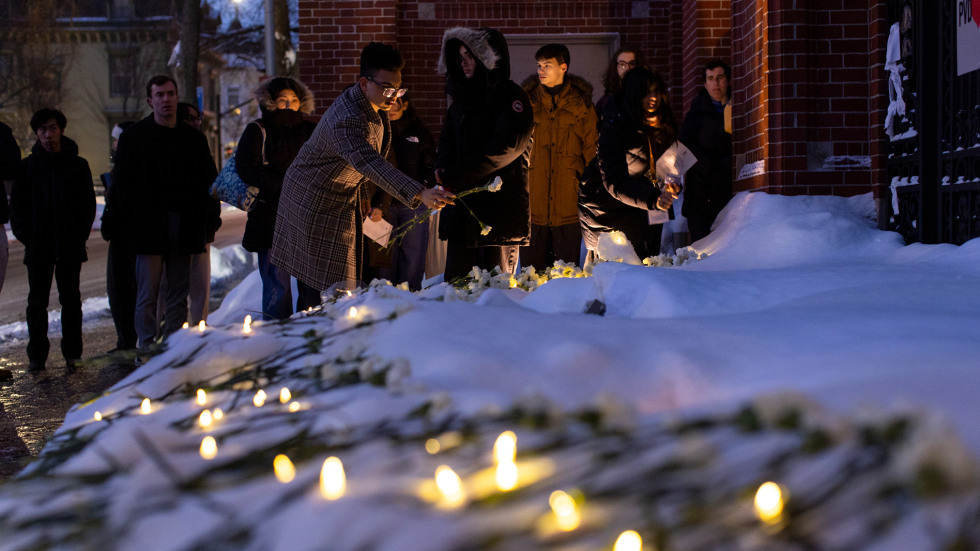
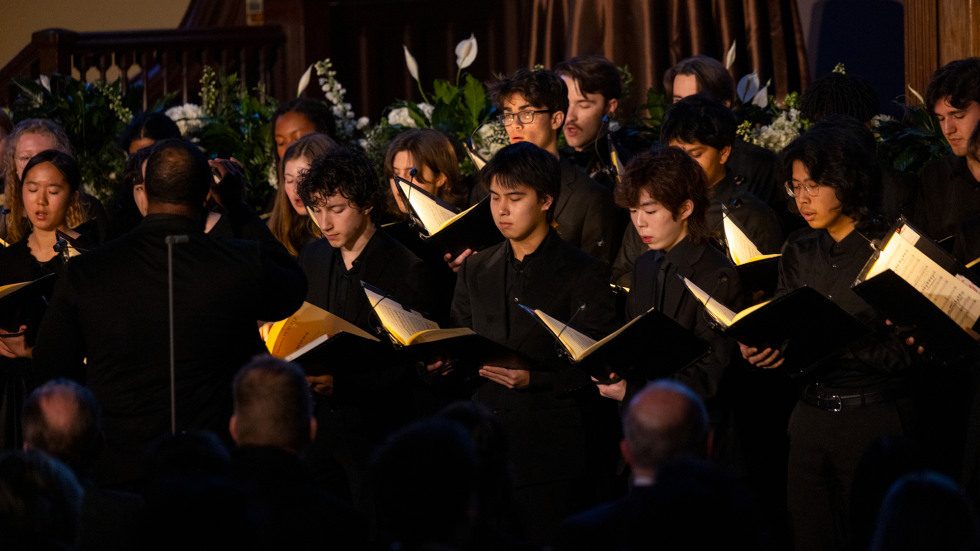
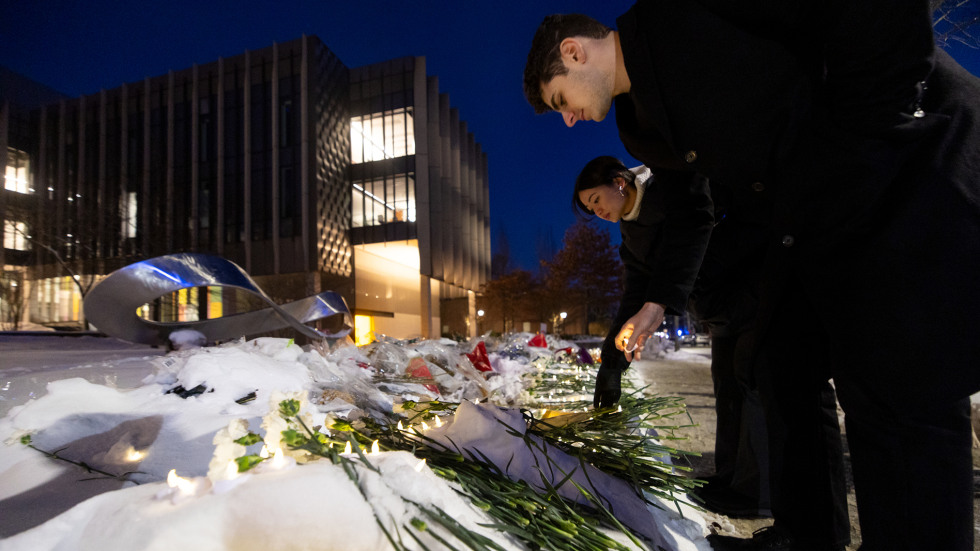
As the Brown University Chorus performed the moving “Introit” from French composer Maurice Duruflé, the lights of Sayles Hall and locations across campus dimmed, and audience members switched on individual electric candles. Those candles, many of which would soon be placed alongside flowers and other displays of love at memorial sites on campus, represented the everlasting light of those lost.

“Let Ella’s courage to listen and Mukhammad’s drive to serve motivate us to reach higher, to do better and to be better,” Paxson said. “We will carry them with us. Not as a weight of sorrow, but as a light to guide our way.”