Date March 5, 2026
Media Contact

Brown Brain Fair invites Rhode Islanders to explore the science of the brain

The free, family-friendly event on March 15 welcomes visitors for a day of fun and exploration, featuring games, art projects, lightning talks and demonstrations that highlight the wonders of the human brain.

PROVIDENCE, R.I. [Brown University] — Is “brain food” real? What does a preserved human brain feel like? What happens in our minds while we sleep? And can your brain really play tricks on you?

Rhode Islanders can explore these questions and step inside the science behind them at the 2026 Brown Brain Fair. The free, family-friendly event on Sunday, March 15, at Brown University, will offer local residents a chance to learn about neuroscience and brain health through interactive demonstrations, games and hands-on exhibits.

The fair is organized by University students, including the Brown Brain Bee student group, with support from Brown’s Carney Institute for Brain Science. It will bring together scientists and volunteers from more than 25 Brown laboratories and centers, along with local health care and community organizations, for a day of exploration. It will take place from 10 a.m. to 2 p.m. at Brown’s Sayles Hall at 81 Waterman St. in Providence. The event is free and open to the public, and advance registration is required.

Student organizers, including Lexi-Amber Hassell, a second-year neuroscience graduate student at Brown, designed the event to connect the Brown and Providence communities for learning and fun while showcasing some of the latest discoveries in brain research happening across the state.

“The research being conducted here in Rhode Island is incredibly diverse,” Hassell said. “From genetics and physics to physiology and psychology, I hope the public can see that neuroscience isn’t just one thing — it has so many facets. My goal is to help people discover the part of neuroscience that fascinates them most.”
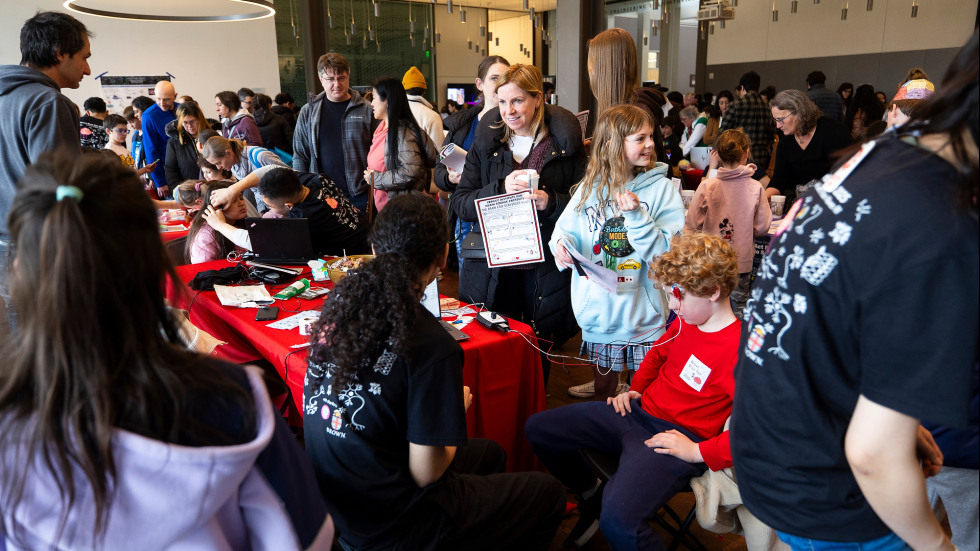
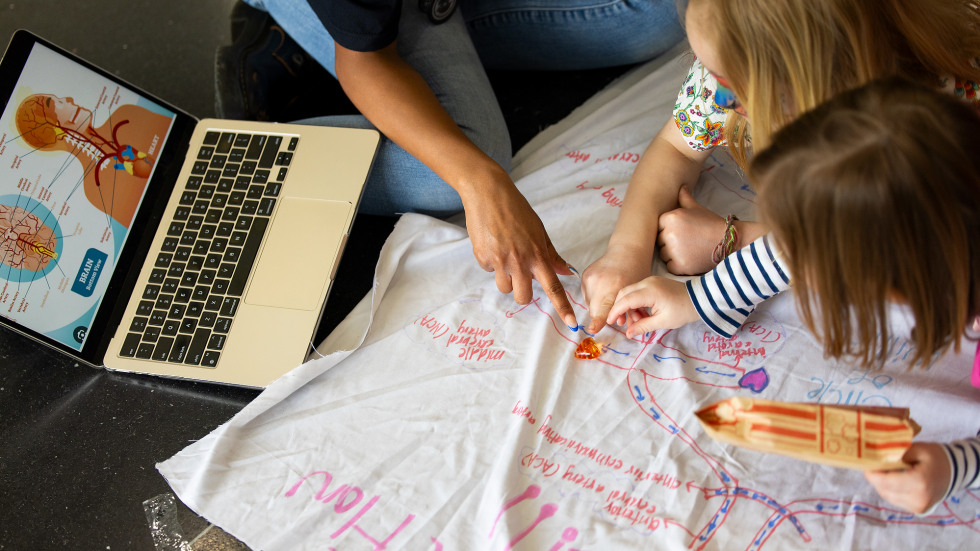
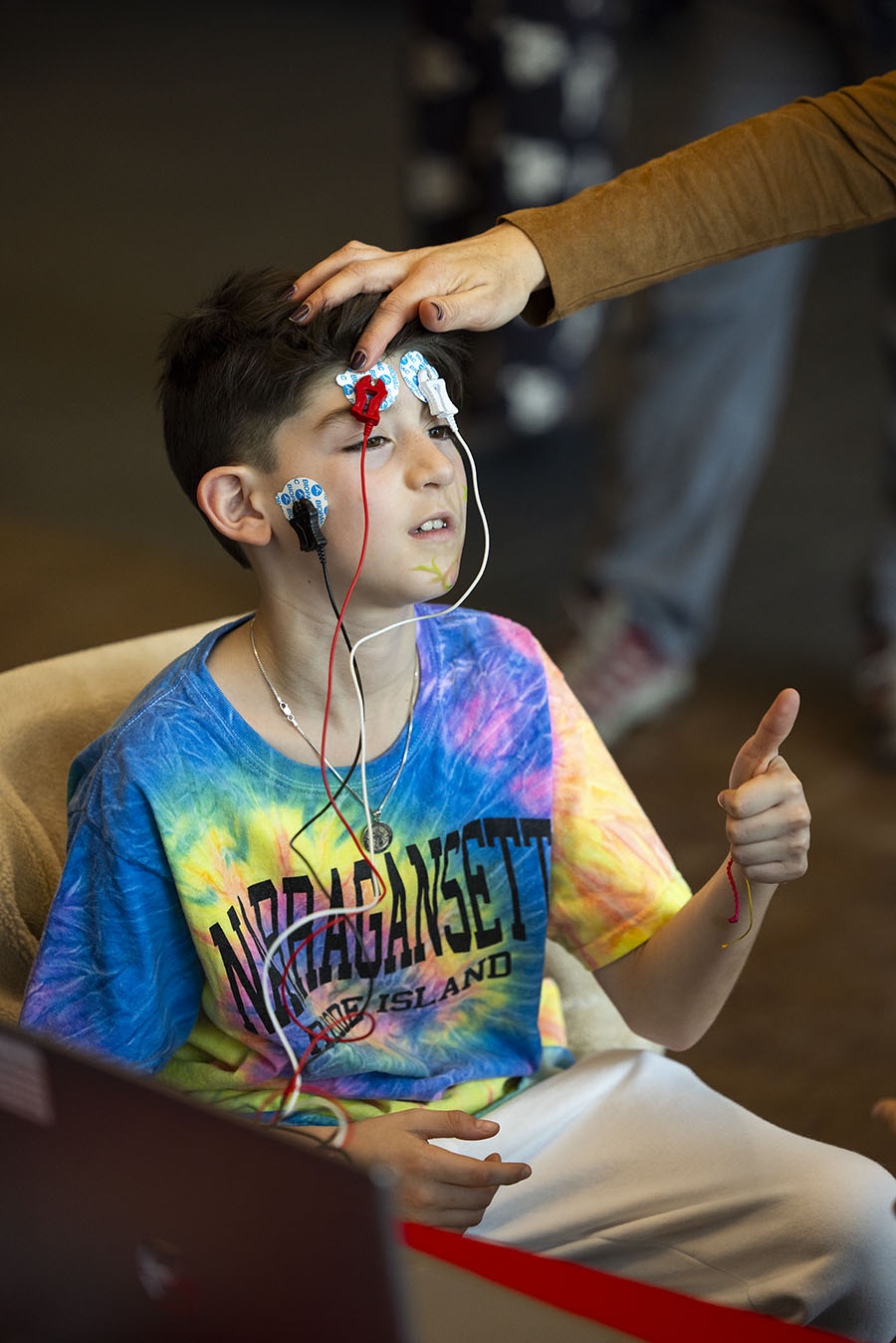
Visitors will be able to test their neuroanatomy knowledge, debunk common brain myths, touch a preserved human brain, meet scientists, create brain-themed art and explore dozens of hands-on stations — where they can control a state-of-the-art robotic arm, experience optical illusions and measure their brain’s electrical activity. Brown faculty and students will also lead “lightning talks” on aging and memory, the cells that support brain function and the tools scientists use to study the brain, including MRI and other imaging technology. 

Kids sit in chair with wires connected to their head to see their brain waves in real-time on a monitor.
Visitors can measure their brain’s electrical activity, among many other hands-on demonstrations. 

Hassell hopes the event will give both kids and adults a sense not only of how the brain works, but also what a career in research looks like.

“I’m a first-generation college student and growing up, I didn’t know that a research job was even possible,” she said. “Being a scientist felt like something from a movie. That’s part of why we organize community events like this: to introduce young people, and even adults, to what research actually looks like, what we do in the lab every day, and why that work is important today.”

Since 2016, Brown students have organized the event each March in collaboration with Brain Waves Rhode Island. The fair is one of three flagship events to be held this month to increase public awareness of the advances and benefits of brain research.

Dr. Victoria Heimer-McGinn, co-chair and president of Brain Waves Rhode Island, launched the program in 2016 when she was a postdoctoral neuroscience researcher at Brown. She said the events spark public interest in the brain while highlighting the importance of basic brain research.

“I co-founded the Brown Brain Fair because I knew people would be drawn to learning about how our brains make us human,” Heimer-McGinn said. “There is so much to explore, like how we learn languages, how we form bonds with others or why we get sick. We also wanted to show people just how essential basic brain research is to human health. Many of the researchers featured at the fair are working on life-saving science and now more than ever it’s important to highlight their work.”