


PROVIDENCE, R.I. [Brown University] — Immediately after tragedy struck Brown University on Dec. 13, 2025, community members started leaving flowers, candles, photos, notes and other items at Brown’s Van Wickle Gates and near the Barus & Holley building where the devastating shooting took place.
In the weeks that followed, the memorials expanded, taking root in the snow. And when students resumed classes after winter break in late January, many made a point of adding their own bouquets to the growing memorials in honor of undergraduates Ella Cook and MukhammadAziz Umurzokov, whose lives were lost.
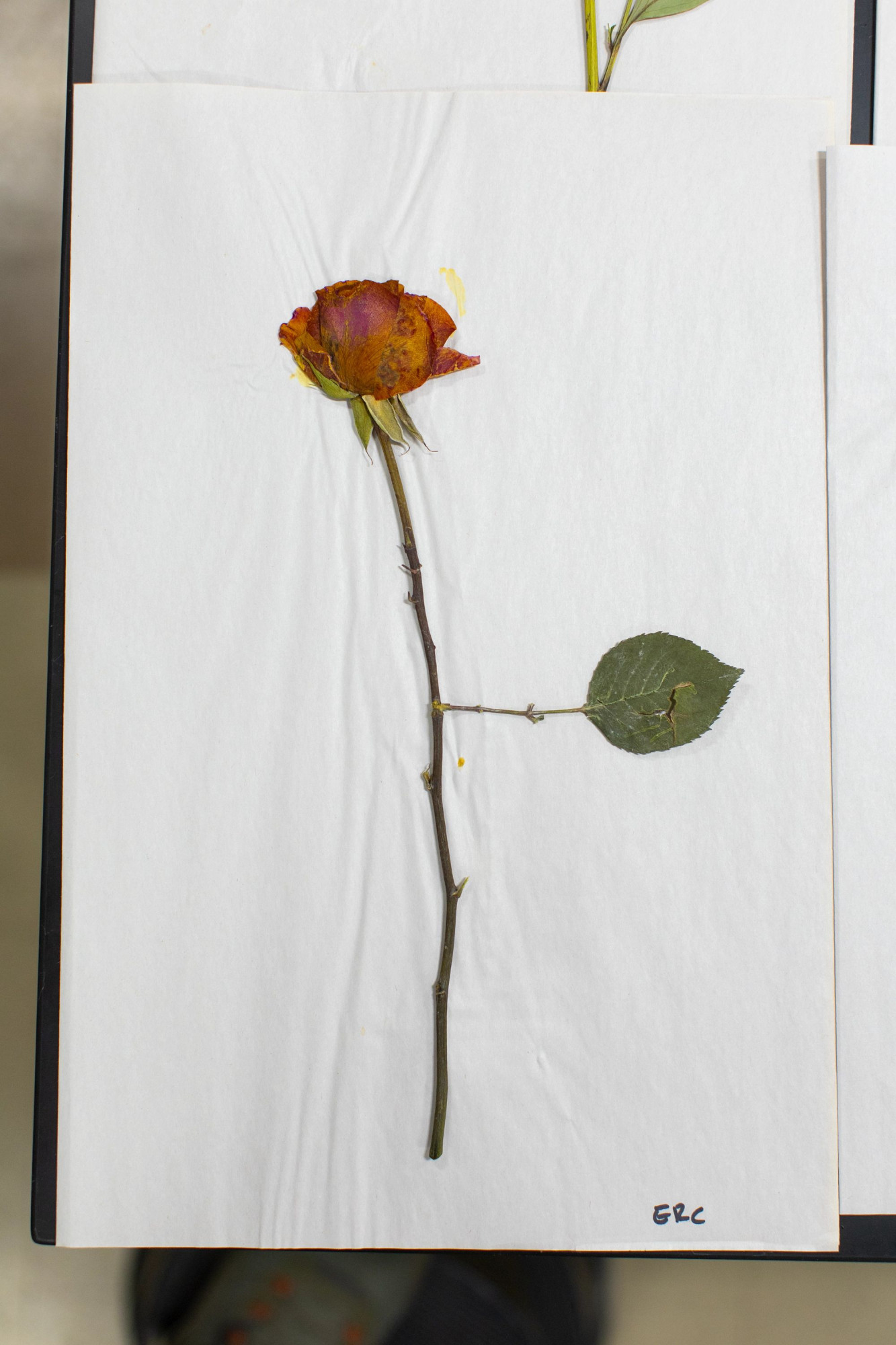
Flowers are ephemeral by nature, but as part of an ongoing effort to care for the memorials, University leaders are collecting and saving samples with the goal of preserving some in perpetuity. Many are being stored at the Brown University Herbarium, an on-campus natural history museum for preserved plants.
The effort is part of the Brown Ever True healing and recovery initiative, a campus-wide project focused on bringing together resources, programming and services focused on mental health, psychological wellness and ensuring a strong sense of community for faculty, staff and students in the aftermath of Dec. 13.
In the coming weeks, University leaders will share with the community a formal process to consider how best to memorialize the lives lost and impacted on Dec. 13 for generations to come, said Vice President for Diversity and Inclusion Matthew Guterl, who is coordinating the Brown Ever True operational team. As conversations move forward for engaging the community in planning for permanent memorialization, preserving flowers from the more fleeting memorials is a way to respectfully document a difficult moment in Brown’s history.
“This was an event that will change Brown in many ways, some of which we can't comprehend right now,” Guterl said. “Photographing these ephemeral acts of memorialization, collecting the flowers, documenting the entire process: this is all a part of the effort to help current and future generations make sense of the impacts this had on our community.”
The flower preservation project is one of what is likely to become multiple efforts across campus to add items to Brown’s historical record, in addition to the more formal and permanent memorialization effort yet to come. In developing Brown Ever True, leaders of the initiative’s operational team sought guidance from colleagues on other campuses that have experienced similar incidents of mass violence. Guterl said they were inspired by an effort at Michigan State University to archive memorial objects following a school shooting there in 2023.
Guterl connected with Rebecca Kartzinel, an assistant teaching professor of biology who directs the Brown University Herbarium and has deep experience with plant identification, preservation and archiving.
On the morning of Friday, Dec. 26, in frigid, 16-degree weather, the two met on a nearly empty campus. First at the Van Wickle Gates and then on Brook Street near Barus & Holley, they solemnly yet determinedly pried delicate stems from the snow. The act was both deeply emotional and technically challenging, as many of the plants had already frozen solid.


