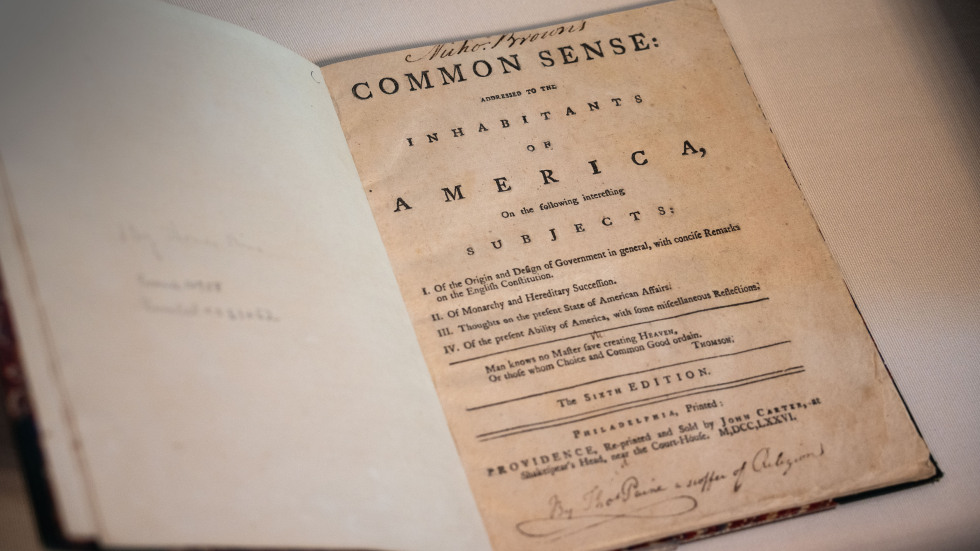
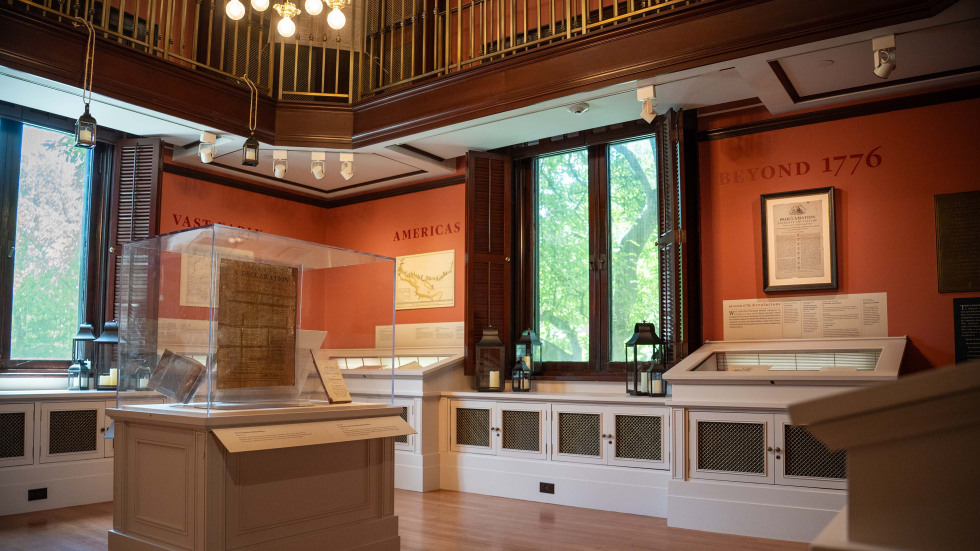
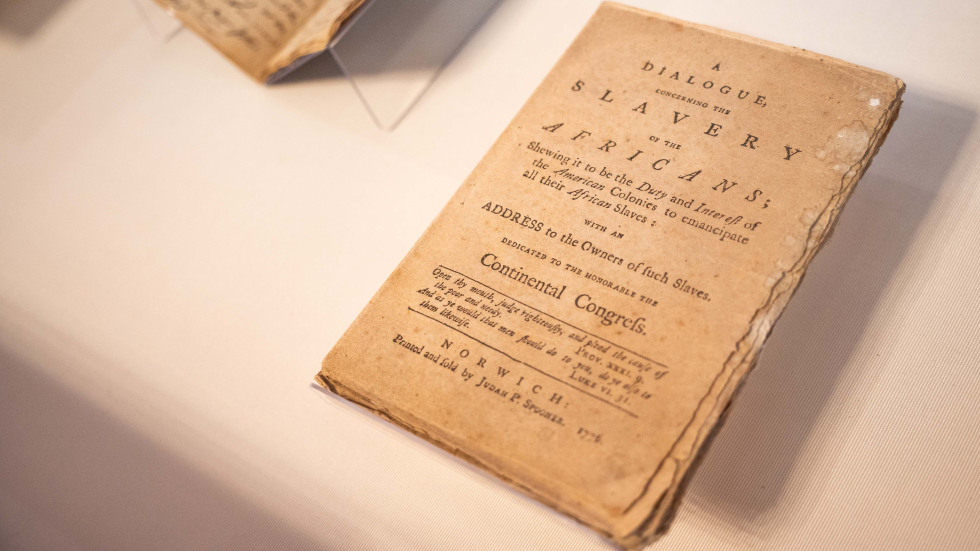
PROVIDENCE, R.I. [Brown University] — The Continental Congress’s confirmation of the Declaration of Independence in Philadelphia in July of 1776 happened in the context of events and milestones across the Americas in that consequential year — a theme explored through books, documents, maps and artifacts in an exhibition at Brown University.
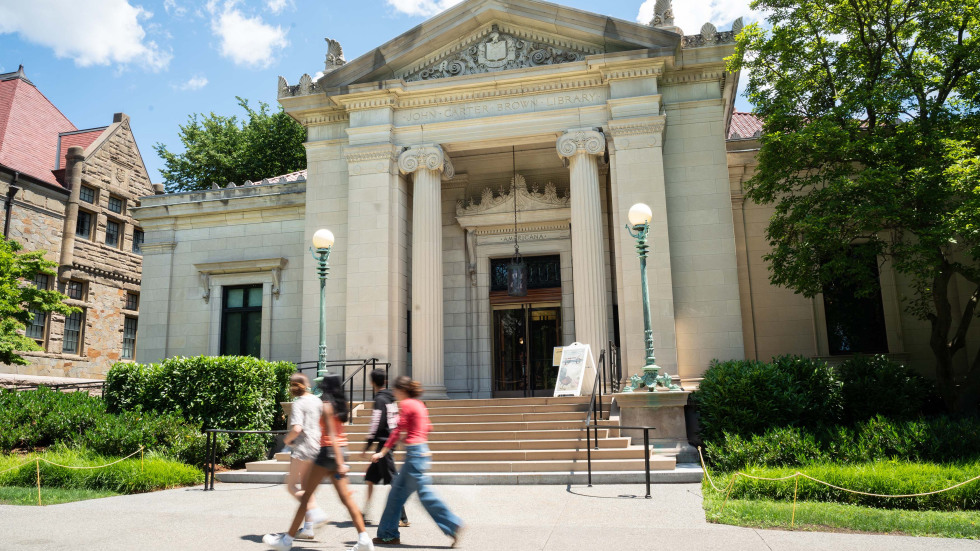
On view through the end of 2026 at the John Carter Brown Library, “1776 Across the Americas: A Hemispheric History from the Collection of the John Carter Brown Library” takes a dynamic and wide-ranging view of the year of the American Revolution and its influence across the Western Hemisphere.
“We wanted to put the year 1776 into a broader context,” said Karin Wulf, director and librarian of the John Carter Brown Library and co-director of Brown 2026, a campus-wide initiative to demonstrate the role of research and teaching universities in fostering open and democratic societies. “The American Revolution had an impact beyond the East Coast of North America and beyond the British colonies. But we also wanted to show that in some ways, 1776 was just a year and there were a lot of other things going on.”
The exhibition, which Wulf curated with the library’s 2026 postdoctoral fellow Kathleen Telling, explores the significance of events in North America, Central America, South America and the Caribbean in 1776. The Caribbean sugar colonies, for example, held greater wealth and significance for the British Empire than the American colonies did at the time, Wulf said.
The items on view illustrate the influence of printed materials produced in 1776 and how they reflected diverse experiences. Throughout the exhibition, items of intimate and local consequence are juxtaposed with those of imperial, national and international significance to tell the story of the year.
One display case, for example, places an early copy of the Declaration of Independence in conversation with the first map of San Francisco Bay, drafted in 1776 by a Franciscan priest exploring Mexico's northern frontier.
The copy of the Declaration of Independence on view was owned and annotated by a Revolutionary War soldier named Daniel Gould. On this copy, printed in Boston, Gould individually numbered along the margin every grievance listed against King George III. At the bottom, beneath the printed signatures of John Hancock and Charles Thomson, president and secretary of the Continental Congress, respectively, Gould wrote: “Agreed to by Daniel Gould.”
In 1776, copies of the declaration were not treated as sacred relics, Wulf said, but more like daily newspapers, printed on broadsides to be folded up, stuffed into pockets, read from and posted on tavern walls.