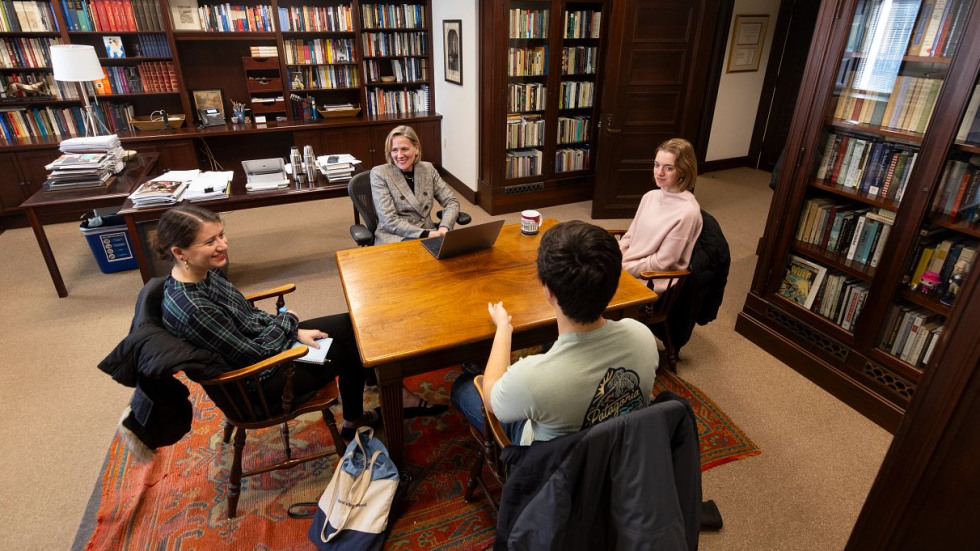
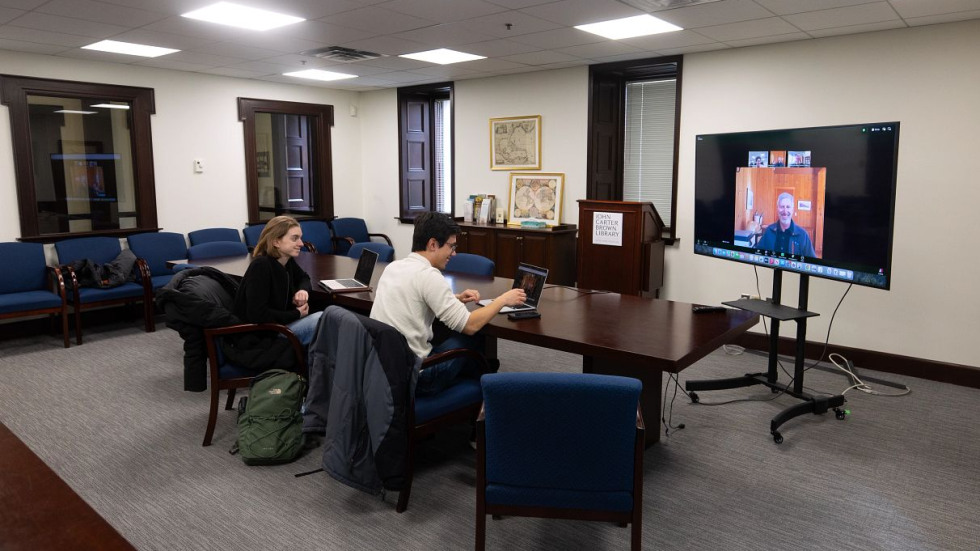
PROVIDENCE, R.I. [Brown University] — When Jill Grigsby was a Brown University student in the 1970s, headlines included the landmark Roe v. Wade case, the Watergate scandal and the end of the Vietnam War. She and her classmates felt the impacts of those historic events reverberate throughout campus.
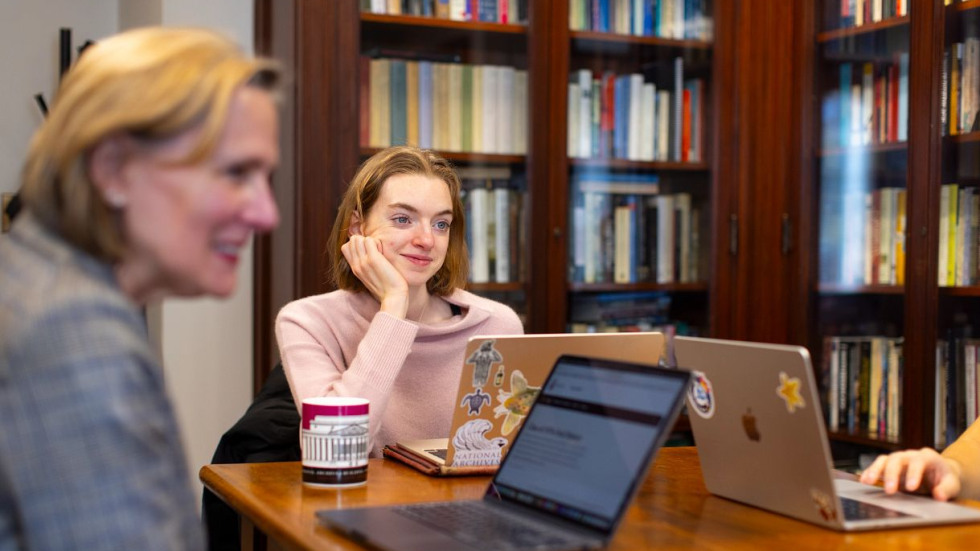
Fifty years later, Grigsby sat down to share her reflections and memories from that era with two current Brown students for a Class of 1976 oral history project. The effort came as part of Brown 2026, a campus-wide initiative to demonstrate the role of research and teaching universities in fostering open and democratic societies.
The starting point for the oral history project was a simple question: What was Brown like at the U.S. bicentennial?
“The Class of 1976 probably experienced more unique political, social and economic events than any other class,” Grigsby said. “Most of these were national, but some happened at Brown. Understanding these events through the eyes of our class is important.”
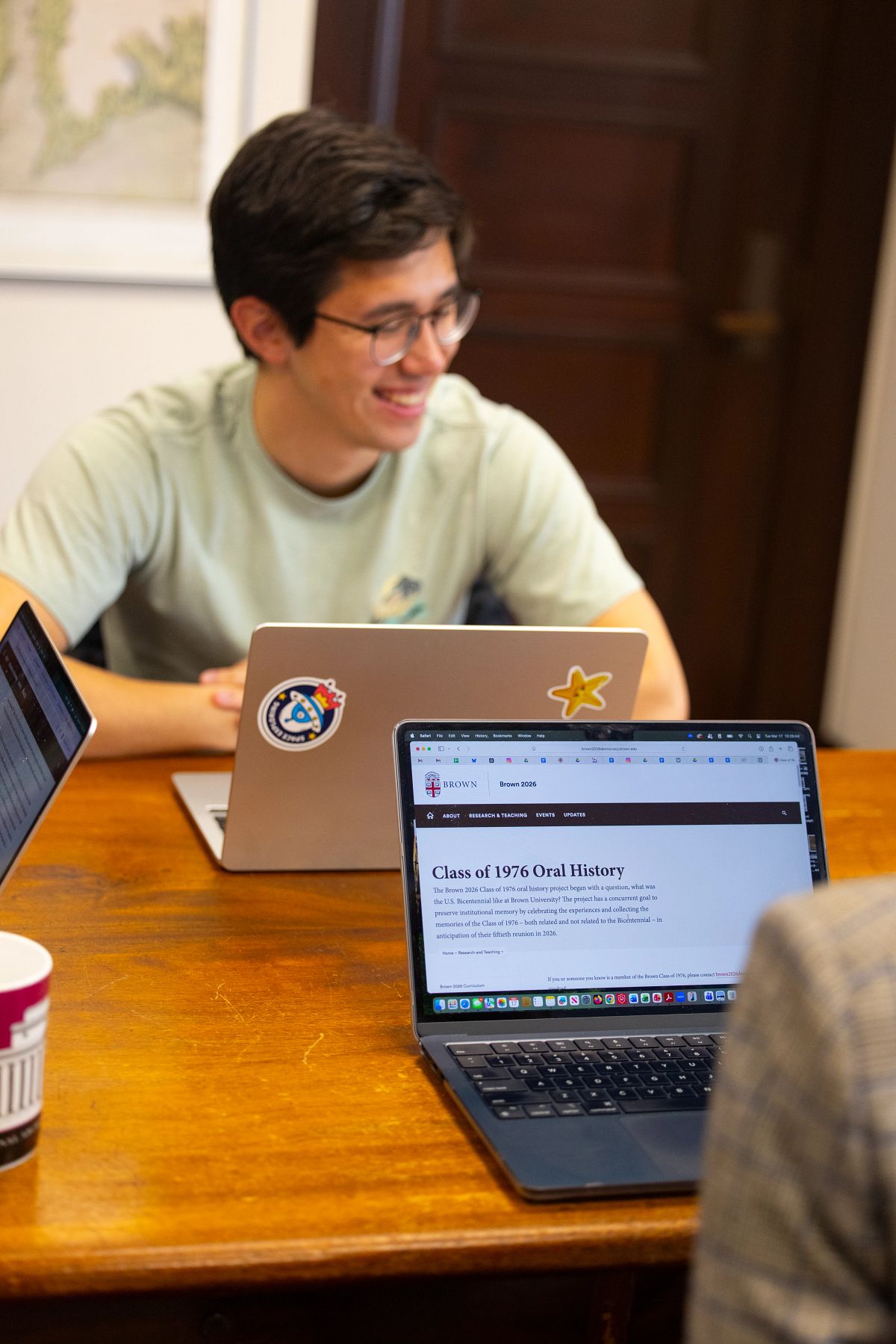
To coincide with the upcoming semiquincentennial of the United States on July 4, 2026 — the 250th anniversary of the adoption of the Declaration of Independence — and the 50th reunion year of Brown’s Class of 1976, Grigsby and about two dozen other alumni have engaged in interviews with current students about what they, Brown, the country and the world were like during their time on campus. Participating alumni also shared how the political and social climate during their college years affected their worldview and future decisions.
Their reflections will be preserved in Brown’s archives to share with students and researchers. More immediately, during Commencement and Reunion Weekend 2026, project participants will lead a Commencement forum titled “1976 in 2026: A Brown 2026 Oral History.”
During the Spring 2026 semester, first-year student Mary Lynch and sophomore Ian Cressman conducted most of the project’s 24 interviews backed by an Undergraduate Teaching and Research Award, which supports collaborative research among students and faculty. Senior Michael Zhu inaugurated the research in Fall 2025, and new student research teams are expected to continue the effort this summer and in Fall 2026, conducting additional interviews and developing transcriptions.
Karin Wulf, a professor of history, co-chair of Brown 2026 and director of the John Carter Brown Library, and Rebecca Brenner Graham, a postdoctoral research associate and coordinator for Brown 2026, are overseeing the project. They lauded it as an opportunity to document history and a chance for current students to connect with and learn from the wisdom of alumni.
“What strikes me in listening to and reading the interviews, and hearing from Mary and Ian in particular, is what a phenomenal, unique and meaningful experience this has been to connect across the generations,” Wulf said.
Connecting generations, preserving history
Lynch said she was drawn to the opportunity to participate after taking a first-year seminar taught by Graham that focused on the American Revolution and popular culture.
“I was acquainted with the bicentennial and its effect on American culture, and it was something that interested me, so I was eager to learn more,” Lynch said. “Oral history was also something I wanted to learn more about.”
Cressman, who is studying political science and history, said he didn’t know much about the bicentennial before joining the project but had previously interacted with alumni through his involvement with the Brown Band and wanted to hear more stories about what the University was like in the past.
“The 1960s and ’70s is such an interesting political time period,” Cressman said. “We’ve heard a lot of interesting stories about how students at Brown placed themselves within the broader political environment and the kind of community that was built around that.”
Some of the topics that came up in the interviews to date are the impact of Brown’s Open Curriculum, which was implemented in 1969 (originally as the New Curriculum); Title IX and how it affected women’s sports; and attitudes among college students about abortion rights in the wake of the 1973 Roe v. Wade decision. The interview team also sought to understand the experiences of underrepresented students on campus and the impact of civil rights protests, including the 1975 student occupation of University Hall.