PROVIDENCE, R.I. [Brown University] — For more than three decades, Mark Steinbach has been the official curator, steward and performer of the historic Hutchings-Votey pipe organ that commands Sayles Hall in the heart of Brown University’s campus.
Now, following the completion of an extensive, multiyear renovation of the organ, Steinbach has recorded a new album that both honors the instrument’s revival and captures a beloved campus tradition — the annual Midnight Halloween Organ Recital, during which he plays as an “undead organist.”
Titled “Midnight Organ,” the album includes 18 tracks that Steinbach has played at Halloween recitals. The festive Oct. 31 event typically draws a capacity crowd of Brown students who line up in advance to secure a coveted spot inside the darkened hall.
The 75-minute album opens with Bach’s “Toccata and Fugue in D Minor” and includes other classics, like Chopin’s “Marche Funèbre,” alongside newer pieces like John Williams’ “Hedwig’s Theme” from “Harry Potter.”
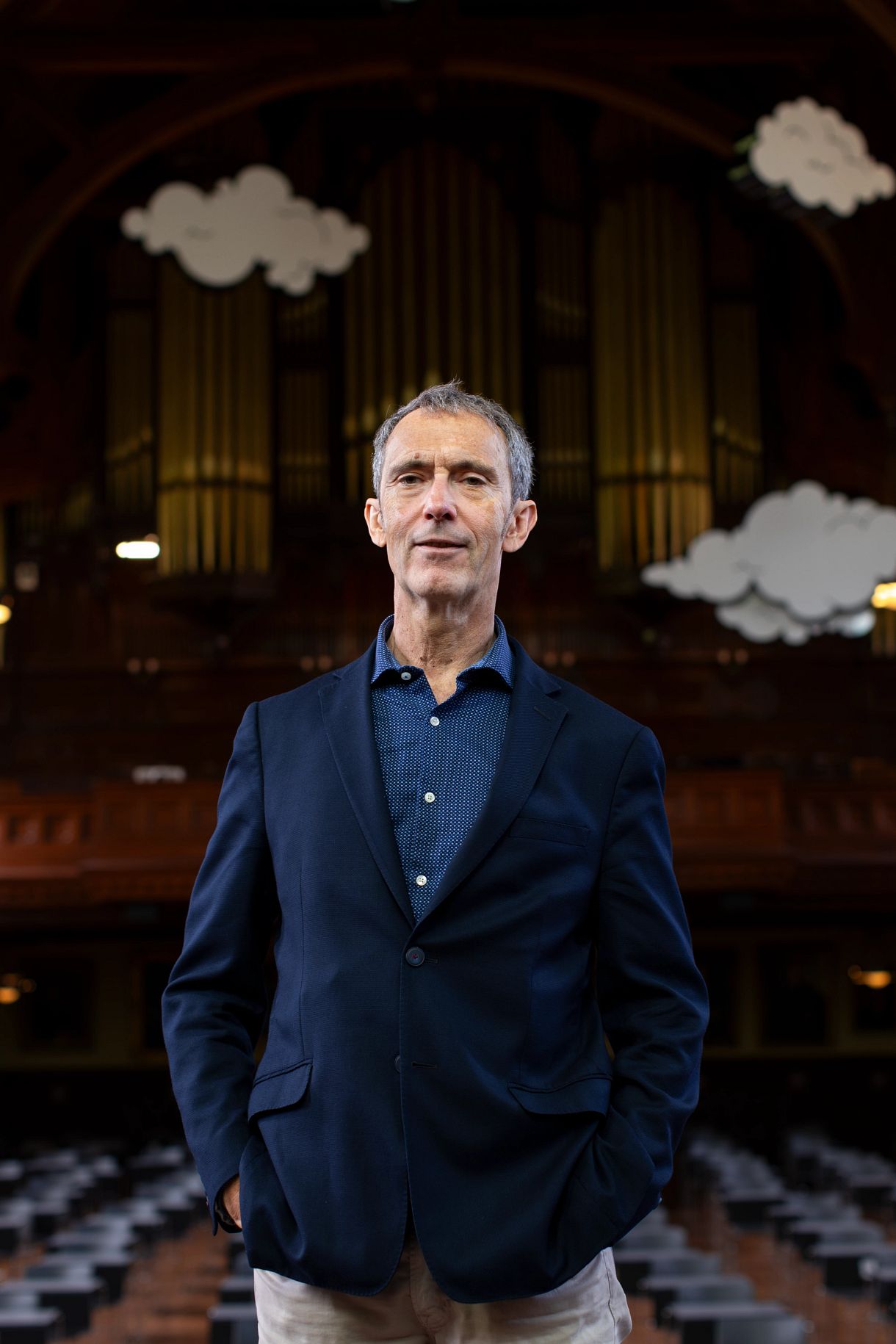
When Steinbach arrived at Brown in 1993, he learned of an old late-night Halloween recital tradition that had lapsed decades prior and decided to revive it during his first semester. Over the decades, it has grown into a beloved campus tradition.
“It just took on this cult following and a life of its own,” Steinbach said. “Every year, we let in the maximum capacity of 475 students, and they love it. Who would guess that a pipe organ would be so popular?”
Steinbach traces his love of playing late-night organ music for friends back to his high school years in Kansas, when he first learned how to play the instrument.
He said that “Midnight Organ” is the first professional recording ever made on Brown’s organ, which was built in 1903. The grand instrument was donated to Brown by Class of 1893 alumnus Lucian Sharpe in memory of his parents.
“I’ve made recordings on important historic organs in Europe," Steinbach said. "I wouldn’t have felt great about making a recording on [this instrument] before. But after the renovation, I thought, it sounds wonderful, and it’s time to do that here.”
The multiyear renovation process involved removing, cleaning, tuning and regulating the pipes of the massive organ, which has more than 3,000 pipes, 100 miles of wiring and countless moving parts.
Steinbach recorded the album over several days in June 2025 with assistance from James Moses, a senior lecturer and technical director in Brown’s Department of Music who served as the recording engineer for the project.
Recording a century-old pipe organ presented some challenges. Because pipe pitch fluctuates with room temperature, recording sessions required careful monitoring of the temperature in Sayles Hall. They also recorded at night to avoid picking up the sounds of activity on campus and had to turn off the building’s ventilation fans due to their noise.
“We were balancing playing ‘beat the clock’ against rising temperatures in the room,” Steinbach said. “If the room gets too hot, the pipes go out of tune. One night we even had to cancel because a sudden heat wave made it impossible to stabilize the temperature.”
Over the course of about six months, Moses and Steinbach worked on editing six hours of raw takes into a polished album.
The album, available through Supertrain Records on all major digital platforms and as a CD that comes with a 12-page booklet, includes Steinbach’s original transcriptions for the organ of Chopin, Gounod, Grieg and John Williams.
“I call this my fun album,” Steinbach said. “It’s meant to be accessible, atmospheric and celebratory.”