Date March 26, 2026
Media Contact

From spaghettification to liquid nitrogen ice cream, local high schoolers get a taste of science at Brown

Each year, the Department of Chemistry invites high school students to campus for STEM Day, where they learn from Brown University students and faculty about life in science, technology, engineering and math fields.

PROVIDENCE, R.I. [Brown University] — High school sophomore Breanna Badessa knew she was coming to Brown University on Thursday, March 26, for a taste of what a career in the sciences might be like. She just didn’t know that meant a literal taste.

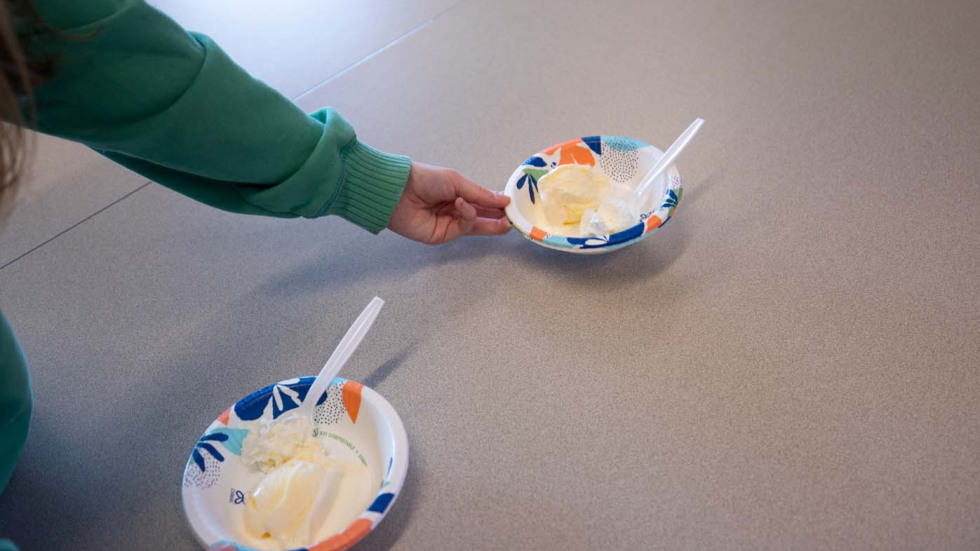
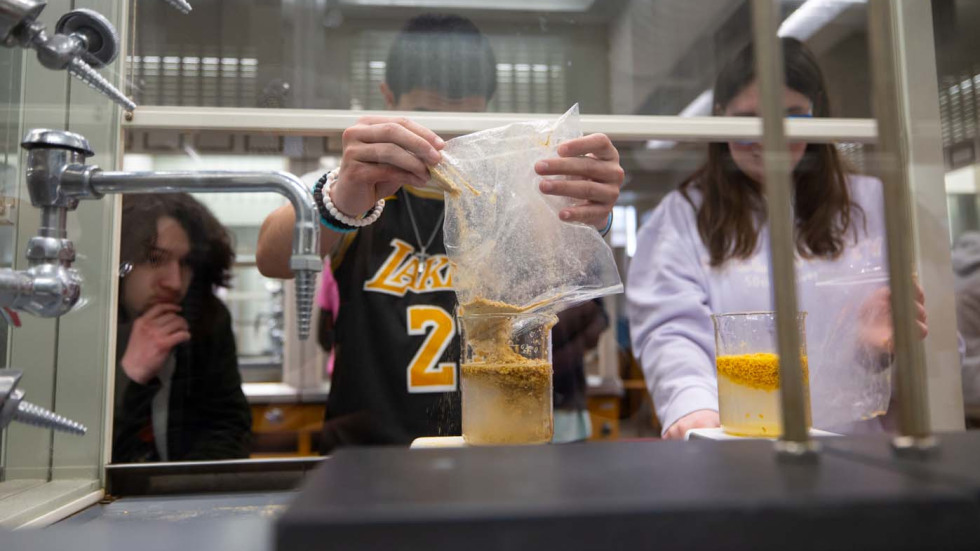
But in one laboratory breakout session during STEM Day, an annual science education event hosted by Brown’s Department of Chemistry, Badessa and her classmates learned how super-cooled liquid nitrogen can be used to make ice cream. They got to taste a little of it, too, and compare it to more conventionally made ice cream.

“We learned how liquid nitrogen can affect the process of making ice cream — for example, how you could use it to make the texture more crunchy,” said Badessa, a 10th grader at Central High School in Providence. “I actually liked the liquid nitrogen one more. It was really interesting as well.”

Badessa was one of about 150 students from local high schools who came to Brown for STEM Day, which is now in its ninth year. The event aims to give high schoolers a chance to see how professional scientists and students in STEM disciplines use science to solve problems. Along the way, they get a firsthand view of what pursuing a career in science, technology, engineering or mathematics might look like in college and beyond.
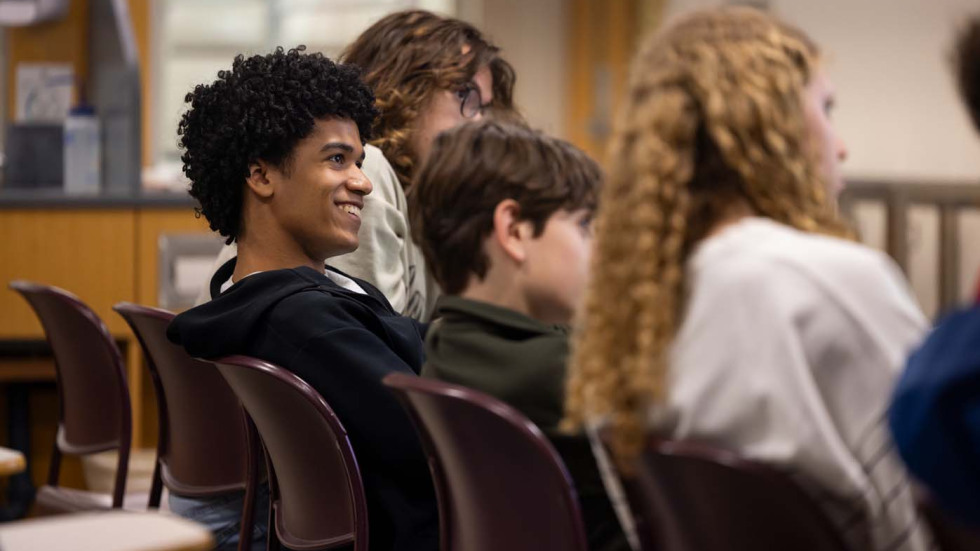
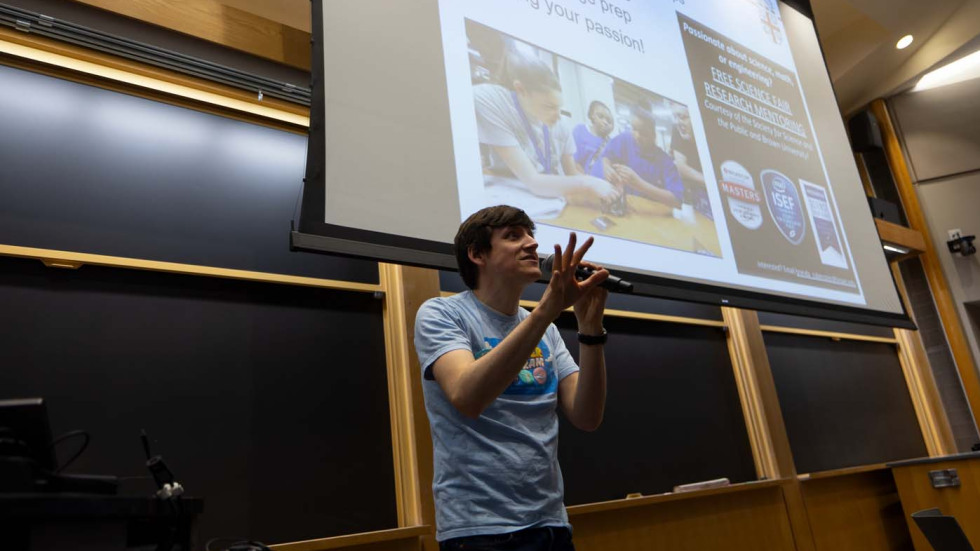
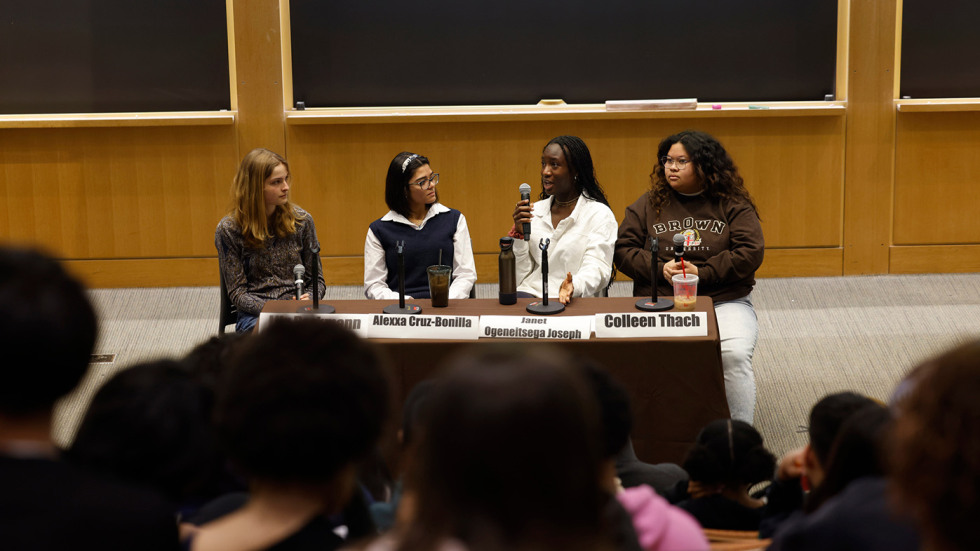
The students arrived by bus in the morning and filed into MacMillan Hall where they were welcomed by Jerome Robinson, an associate professor of chemistry and one of STEM Day’s lead organizers. After warming up the crowd with a few jokes (“How often should you tell a chemistry joke? Periodically.”), Robinson introduced a panel of Brown students at various stages of their STEM education paths to share their experiences.

The three Brown graduate students and one undergraduate discussed how they turned an interest in science into burgeoning scientific careers. Janet Joseph, a fourth-year Ph.D. candidate in pathobiology, said that her experience in community college was crucial to finding her eventual path.

“I feel like going to community college kind of gave me a chance to explore more and take a mixed bag of classes,” Joseph said. “I ended up really enjoying my biology [classes], to my own surprise and shock. It was an interesting experience that developed into me loving science, and I never knew that existed inside of me.”

One high schooler in the audience asked the panelists about imposter syndrome — a feeling of self-doubt or being undeserving of one’s achievements. Panelist Lily Borkman, a first-year Brown undergraduate, said she has definitely had to work her way through those feelings.

“One thing you learn by getting a chance to really do research is that if you're willing to think critically about what you're doing and to work carefully in the lab, you are a valuable member,” Borkman said. “You can contribute to the work that's being done.”

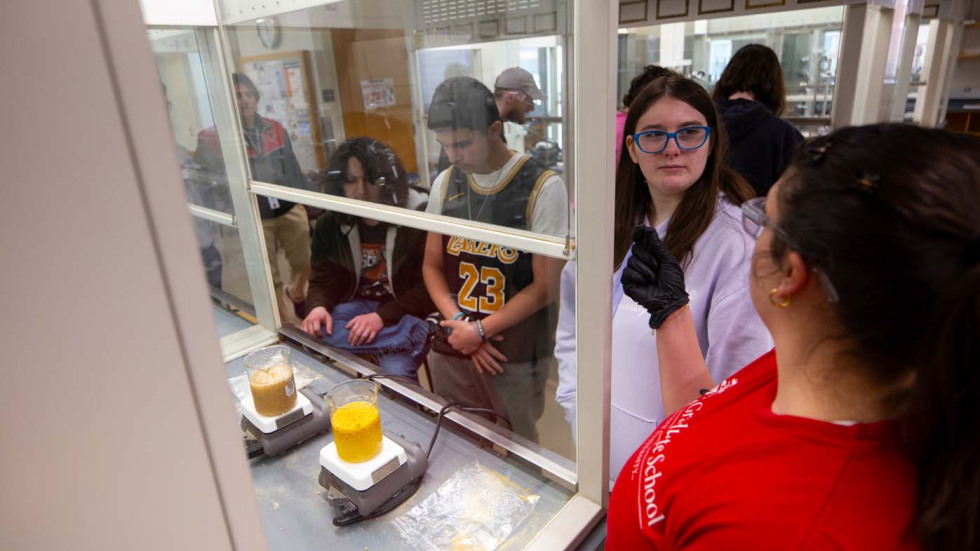
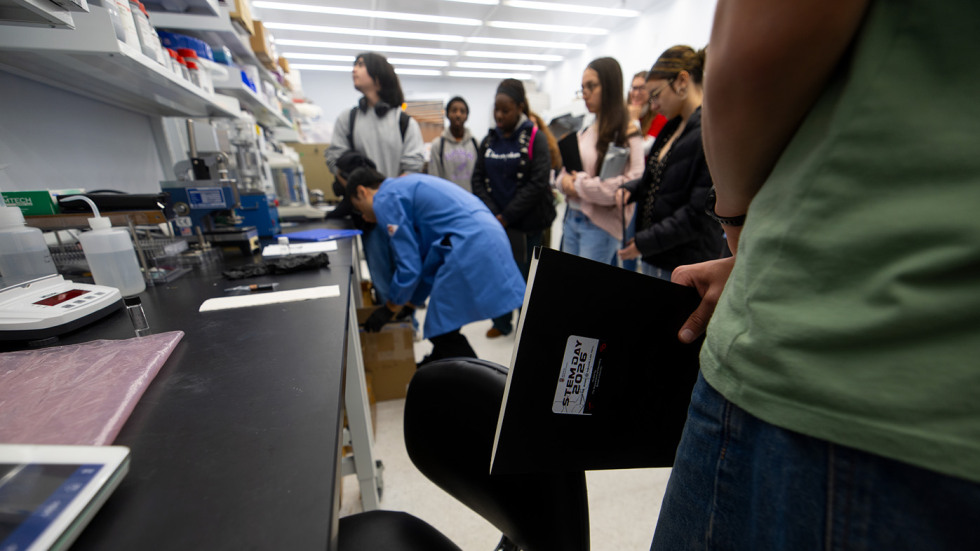
After the panel discussion, the visiting students split into small groups to visit labs and classrooms across Brown’s campus — taking in talks and demonstrations on everything from how batteries are made to how folding proteins guide the development of life on Earth.

Tyler Collins, a sophomore at Pilgrim High School in Warwick, Rhode Island, said he was particularly drawn to the physics-themed sessions.

“My favorite part was learning about black holes,” Collins said. “We learned what would happen if you actually went into a black hole, and it was really fascinating. It’s called spaghettification.”

Mina Aqaie, a ninth grader at Pilgrim High School who recently moved to the U.S. from Afghanistan, said that her interest in science is just beginning. She was comforted to learn that she didn’t have to have everything figured out at this point in her life.

“I really liked that the students here told us about how they didn’t know exactly what they were going to do [when they started out],” Aqaie said. “They were just interested, and they wanted to learn, so that's how they continued… until they found what they were really interested in.”

Aqaie said she also enjoyed a session on the genetics of fruit flies, which taught her that there are lots of open questions in science, and that each one is a potential career path.

“The teacher told us that some of the female insects are more likely to die faster than the males, and that we just don't know why,” Aqaie said. “I was like, ‘We can find out! We can just do more investigating!’”

And that’s what science, and STEM Day, are all about.