Providence high schoolers find connection, guidance, confidence through dedicated mentors at Brown

As part of the Brown Collegiate Scholars Program, Brown faculty and staff mentor local high schoolers, supporting their academic and personal growth as they navigate high school, college admissions and more.

PROVIDENCE, R.I. [Brown University] — More than a decade later, Ernest Lilavois Jr. still reflects on choices he made as a teenager at Providence’s Mount Pleasant High School — and how differently things might have gone if he’d had a mentor.

“If I’d had someone guiding me earlier, I think I would have made better decisions much sooner,” said Lilavois, now a senior information technology support specialist at Brown University.

That realization inspired Lilavois to become a mentor through Brown’s new college access initiative for cohorts of Providence public school students. Today, he mentors Adrian Leonardo, a sophomore at Providence Career and Technical Academy, guiding the teen through some of the same challenges he once faced.

Lilavois is one of 55 Brown faculty and staff members who volunteer as mentors as part of the Brown Collegiate Scholars Program. Launched in 2023, the free, University-based, multi-year college prep program supports groups of Providence public school students by offering year-round programming to strengthen academic performance, explore interests and prepare students for college and beyond.

While the program’s advisers and tutors focus on academic and college goals, mentors offer something different: an hour each month dedicated to reflection and perspective. The sessions are geared toward helping students build self-awareness, confidence, communication and leadership skills, according to program leaders.

Aleida Benitez, manager of community partnerships at Brown’s Swearer Center and a mentor to Lesley Hernandez, a ninth-grader at Juanita Sanchez Educational Complex, said mentors occupy a unique role because they can build trust without the expectations that often come with parents or teachers.

“It’s not about telling students what they should or shouldn’t do,” Benitez said. “It’s about listening, validating their experiences and reflecting back what you notice about them: ‘I can see you’re really good at this,’ or ‘You seem confident when you talk about that.’ It comes from a place of observation, not judgment.”
Brown Collegiate Scholars Program Director Nick Figueroa said that kind of support can shape how students see themselves.

“I know firsthand how powerful mentorship can be,” Figueroa said. “If we can give young people someone to talk to, someone to exchange ideas with — someone who believes in them before they believe in themselves — that changes everything.”

Making a match

To encourage early connection, matches are based on factors including interests, hobbies, personality traits and communication styles. Mentors are often paired with students who share similar academic or career aspirations. Both mentors and mentees complete questionnaires, and mentors are interviewed by program leaders as part of the selection process.

Olivia Chaves, curriculum and student support manager for the Brown Collegiate Scholars Program, said the goal is to create relationships that boost students’ interests and growth.

“Matching isn’t just about what students say they want in a mentor,” Chaves said. “It’s also about what they may need. A student who struggles with organization, for example, might benefit from someone with a more structured approach. We try to balance all of those factors when making matches.”

MENTOR Rhode Island partners with the Brown Collegiate Scholars Program to train Brown faculty and staff members in evidence-based mentoring practices, including communication, relationship-building and boundary-setting. Mentors also follow a monthly curriculum focused on social-emotional learning topics such as decision-making, overcoming obstacles and goal-setting.

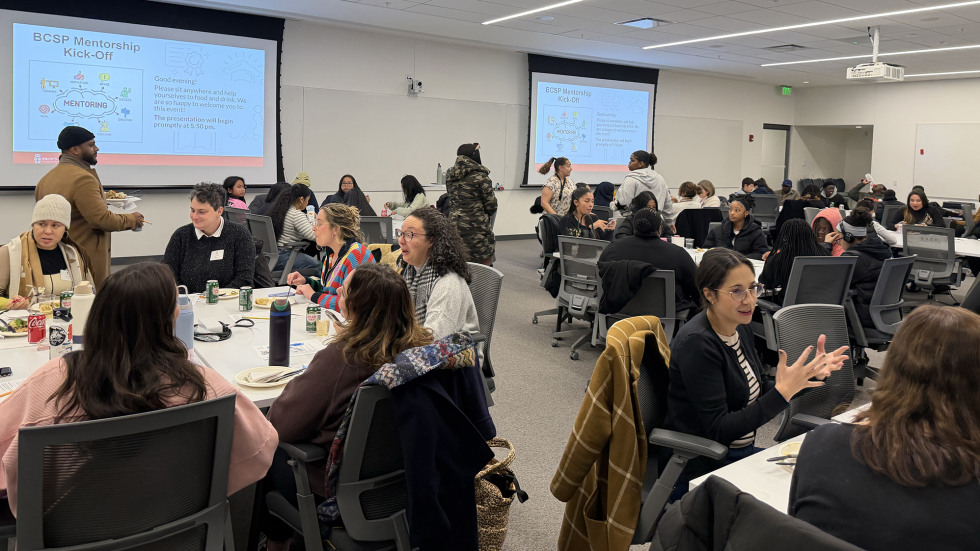
Pairings are revealed during Mentor Match Day, a kickoff event that brings together students, families and mentors to share a meal, learn about the program and begin getting to know one another. 

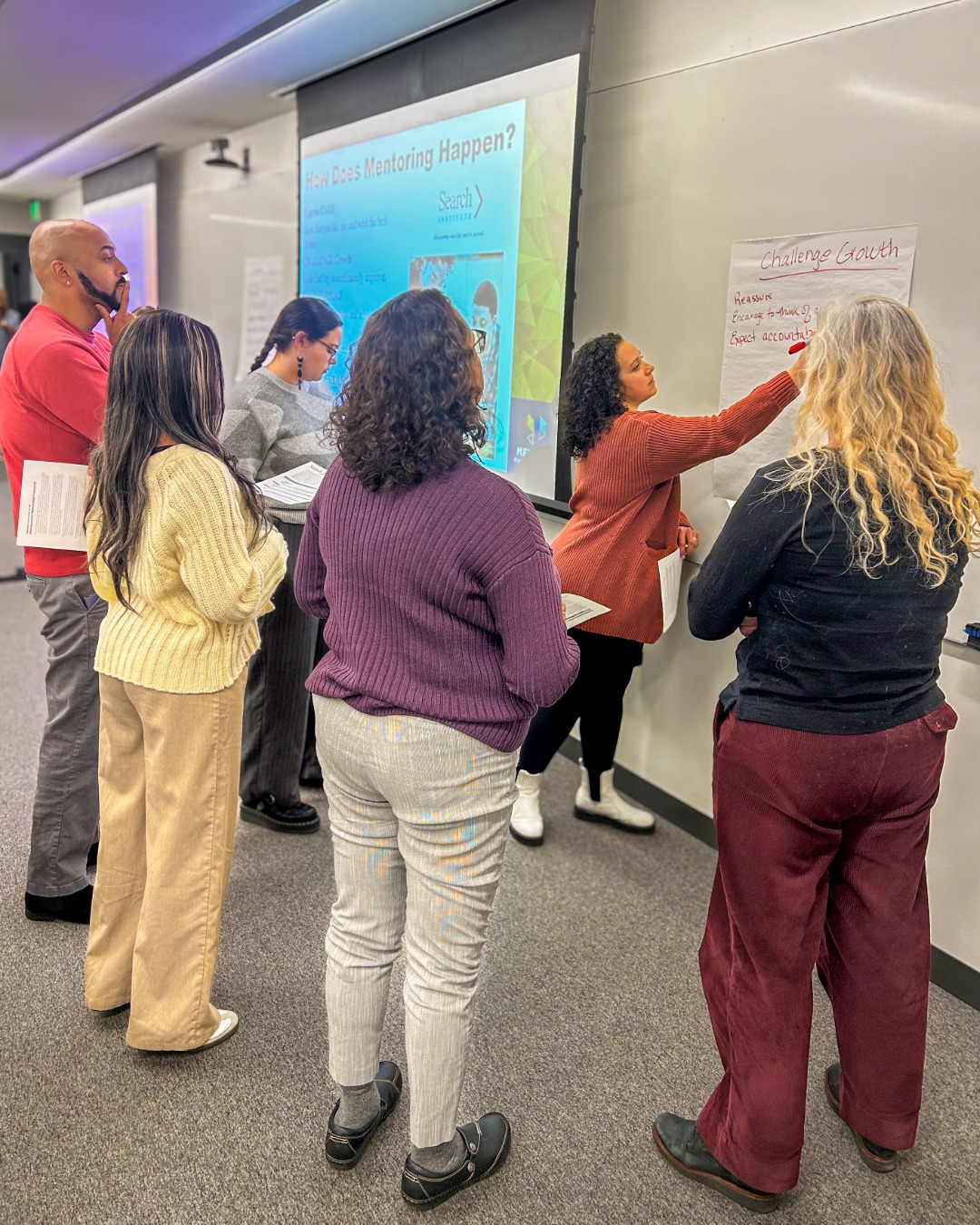
Brown staff work together in a exercise to strengthen mentorship skills.
Roughly 55 Brown faculty and staff volunteer as mentors. Courtesy Brown Collegiate Scholars Program. 

Upon meeting, Lilavois said he and Leonardo first bonded over the comic book character Batman.

“We started talking about why we both like Batman,” Lilavois said. “As we broke the character down, I started to see the values Adrian connected with, and from there, the conversations grew naturally.”

More than a year later, the pair still connect over music, movies and books. Leonardo said he appreciates having another trusted adult in his life.

“What really strengthened our connection was when I started asking him about situations I was dealing with and what he would do,” Leonardo said. “If something came up at school, I’d ask how he would handle it. That helped us build a bond and now, I look forward to meeting every month.”

Conversations with his mentor have helped Leonardo recognize leadership qualities he hadn’t seen in himself,  including after he successfully managed a difficult group project at school.

“He told his classmate, ‘If we do it this way, we could be the first team to finish and maybe even come in first place,’” Lilavois said. “What stood out was how thoughtfully he handled it. I told him, ‘That’s leadership.’ He was surprised, but I pointed out that what he did in that situation was exactly what a leader does.” 

Other mentor-mentee pairs bond over shared interests, spending time together making art, reading poetry or playing computer games. Benitez and her mentee, Hernandez, connect through puzzles, their shared cultural heritage and conversations about everyday life. Now nearing the end of her first year of high school, Hernandez has spent time with Benitez building confidence and learning to advocate for herself — skills recently tested when she felt too anxious to approach her track coach after arriving late to practice.

“She was worried the coach would immediately yell at her,” Benitez said. “We talked about how fears can grow in our heads before anything has even happened. I told her, ‘You won’t know how the conversation will go until you try.’ Through this program, she’s finding supportive people who are helping her work through those fears.”

This summer, the Brown Collegiate Scholars Program will welcome its third cohort. With each new cohort, additional mentors will be recruited and trained. Nearly 100 Brown community members from across campus — from Brown’s Department of Athletics and Recreation to the Watson School of International and Public Affairs — have expressed interest in volunteering. Some are alumni of Providence public schools, while others are seeking meaningful ways to support local students.

As the mentorship program grows alongside each Brown Collegiate Scholars cohort, Benitez said its success could offer a proven model for other colleges and universities.

“It’s a powerful way for institutions to connect more deeply with their communities,” Benitez said. “Young people in Providence can gain trusted mentors and new opportunities, while Brown staff form meaningful connections and become more connected to the Providence community.”