Five Brown University students and a recent alumna earn prestigious fellowships

Four Brown University undergraduates, a medical student and a Class of 2025 graduate were named among this year’s classes of Goldwater, Oxford-Cambridge and Knight-Hennessy scholars.

PROVIDENCE, R.I. [Brown University] — In recognition of their own academic achievements and Brown University’s commitment to developing exceptional scholars, four undergraduate students, a medical student and a recent alumna were awarded coveted scholarships to support their pursuit of graduate degrees in a variety of disciplines.

Brown juniors Erin Kim and HaiTian (HT) Wu, sophomore Simon Nirenberg, and Everest Yang, a member of the Class of 2026.5, were awarded the prestigious Goldwater Scholarship for their achievements in mathematics, engineering and natural sciences.

This year, the program awarded scholarships to 454 second- and third-year students, selected from a pool of more than 5,000 nominees representing 482 academic institutions from across the country. Winners are awarded up to $7,500 per full academic year to help cover costs of tuition, mandatory fees, books and room and board.

Clara Tandar, a first-year medical student at the Warren Alpert Medical School who earned her bachelor’s degree from Brown in 2025, earned acceptance to the National Institutes of Health Oxford-Cambridge Scholars Program. The highly competitive program, which accepts roughly 20 applicants each year, enables accelerated doctoral study and collaborative research between the National Institutes of Health and the universities of Oxford or Cambridge. Scholars receive a generous funding package that covers living expenses, all tuition and fees, health insurance and international travel allowances for the approximately four years it takes to earn their doctoral degree.

Class of 2025 graduate Alexandra Mork was named to the 2026 Class of Knight-Hennessy Scholars. The program enables three years of fully funded graduate study at Stanford University, where Mork will pursue a law degree. This year, the program awarded scholarships to 87 scholars, selected from a pool of more than 9,200 applicants representing 31 countries across the globe. In addition to covering all costs of tuition and mandatory fees, Knight-Hennessy Scholars are awarded a living stipend, a one-time relocation stipend and an annual travel grant.

Each of the six scholarship recipients leveraged Brown’s distinctive academic environment, marked by the Open Curriculum, close faculty mentorship and a culture of collaborative exploration, to tackle bold research questions and drive positive change in their respective disciplines.

Below, the newest Goldwater Scholars share their research interests, how Brown supported them in focusing their academic paths, and what they hope to achieve after completing their graduate studies. 
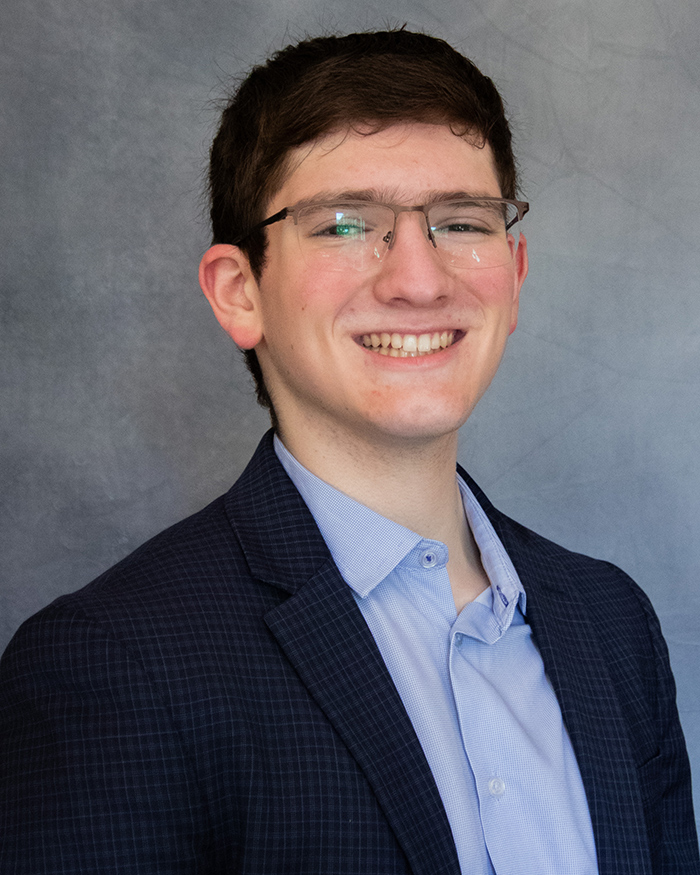
Erin Kim, Class of 2027

Headshot of Erin KimConcentration: Computer science and applied mathematics
Hometown: New York City

For Erin Kim, the complexity of the immune system is less a mystery than a puzzle waiting to be understood.

Her research in systems immunology applies mathematical modeling and computation to understand how diseases like cancer emerge from dynamic interactions between immune cells and their surroundings. By mapping these interactions, Kim hopes to one day predict how patients respond to therapies — and why some treatments fail.

“The precision math brings to biology feels like what the immune system’s complexity calls for,” Kim said.

As a Goldwater Scholar, Kim said she is eager to connect with peers tackling similarly complex problems and to deepen the research that inspired her to apply for the award.

Kim was drawn to the collaborative research enabled by the Goldwater Scholarship, viewing it as a natural extension of her studies at Brown, where she’s enrolled in the Program in Liberal Medical Education, an eight-year program leading to both a bachelor's degree and an M.D. from Brown's Warren Alpert Medical School.

“My Brown education has given me room to fully explore my academic and research interests while preparing me to become a physician,” said Kim, who is a head teaching assistant in the Department of Computer Science, spends time making art at the RISD Nature Lab, and co-directs Hack@Brown, a software, hardware and design competition.

Kim will pursue both a doctoral and medical degree with the goal of becoming a physician-scholar who develops computational frameworks for immune dysregulation.

“What draws me to the physician-scholar path specifically is being at the intersection of innovation and direct patient care,” she said. “Physicians get to make a tangible difference in patients' lives, and I want to do that work in close collaboration with patients themselves, to ground computational models in clinical reality.”

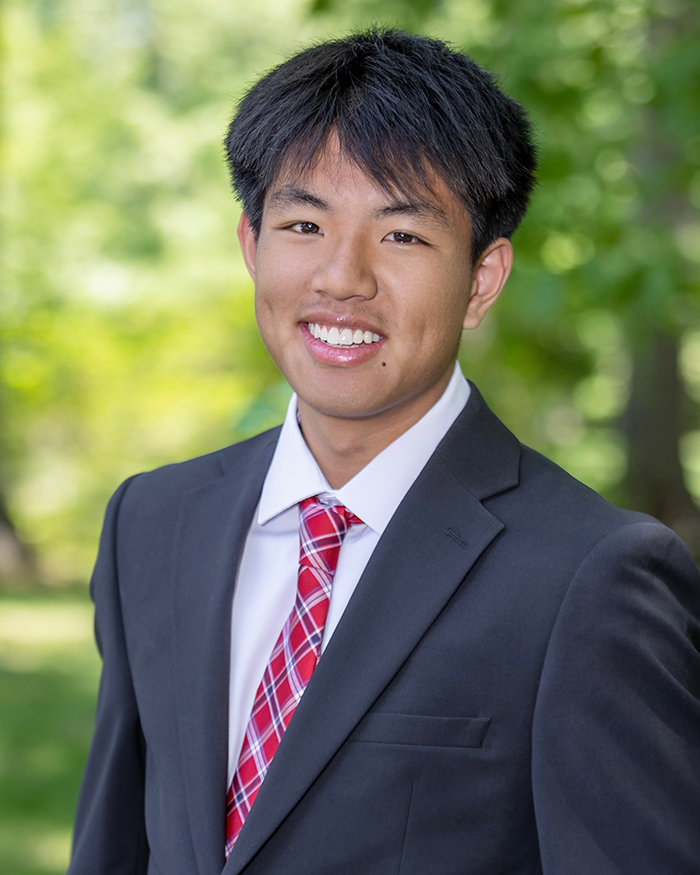
HaiTian (HT) Wu, Class of 2027

Headshot of HT WuConcentration: Physics and mathematics
Hometown: Houston, Texas

HaiTian (HT) Wu dives into the microscopic world to help build the next generation of quantum technologies.

His studies center primarily on condensed matter physics, using electrical transport measurements at cryogenic temperatures to probe phenomena like unconventional superconductivity and magnetism in graphene.

“My work seeks to uncover new phases of matter and to characterize the mechanisms underlying these exotic phases,” Wu said.

Wu said his path to the Goldwater Scholarship was shaped by years of research at Brown, where he has worked since his first year alongside faculty mentor Jia Leo Li, a visiting associate professor of physics.

The experience has reinforced his commitment to a career in scientific research. As he prepares to apply to Ph.D. programs in physics, Wu said he’s especially eager to engage with the broader Goldwater community, drawing on its mentorship and collaboration opportunities.

“Being named a Goldwater scholar confirms that I am taking the right steps towards achieving my goals, and it inspires me to continue to work hard in pursuit of impactful research contributions,” Wu said.

Ultimately, Wu hopes to become a professor leading research in condensed matter physics.

“Quantum technologies are developing at a rapid pace and have tremendous potential,” he said. “I seek to spearhead breakthroughs in this field that will have profound impacts on society.”

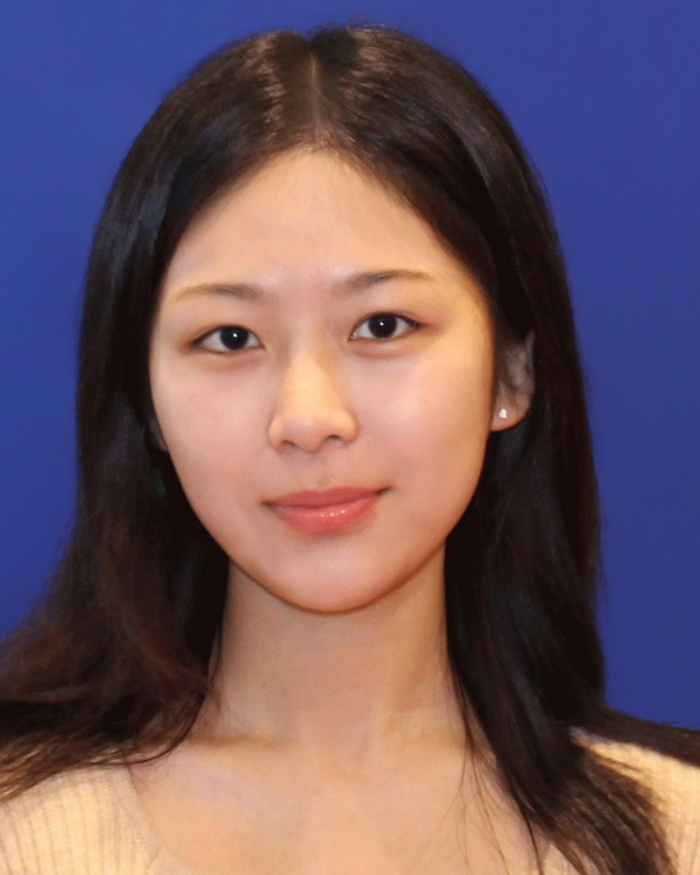
Simon Nirenberg, Class of 2028

Headshot of Simon NirenbergConcentration: Chemical physics
Hometown: Munster, Indiana

Simon Nirenberg is fascinated by how the smallest interactions give rise to the structures and reactions that shape the world.

At Brown, Nirenberg studies systems where electrons interact strongly — some of the most challenging problems in modeling physical and chemical behavior. His research uses machine learning to lower the computational costs of simulating rare events in chemical reactions.

“By improving how reliably we can simulate these systems, I hope to contribute to advances in catalysis, materials science and medicine,” he said.

Encouraged by mentors and peers, Nirenberg applied for the Goldwater Scholarship in part for the opportunity to reflect on his development as a researcher. He said the process helped him better understand his academic direction and long-term goals, building on the intellectual independence he’s found at Brown. 

“I am especially grateful for how accessible courses and professors are at Brown,” Nirenberg said. “Being able to take graduate-level classes and engage closely with experts as an early undergraduate has been an invaluable experience.”

Through the scholarship, he is particularly excited to join a broader community of scholars who share similar interests and ambitions.

“Research can sometimes feel solitary, but interacting with the other scholars really puts in perspective how small of a world it is and how much we all share in common,” he said.

Looking ahead, Nirenberg hopes to pursue a career that blends discovery with mentorship, with the goal of becoming a professor.

“I would love to make a discovery that connects fundamental quantum physics to the macroscopic world in a way that has a meaningful positive impact on people’s lives, whether in materials, medicine or beyond,” he said. “I also look forward to mentoring students and supporting their own discoveries.”

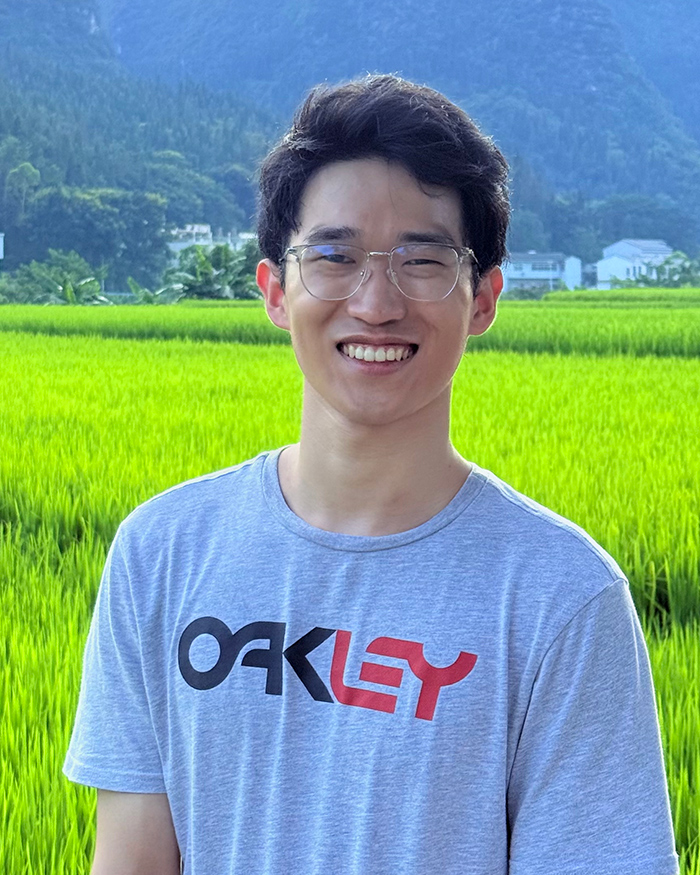
Everest Yang, Class of 2026.5

Headshot of Everest YangConcentration: Computer science
Hometown: Lexington, Massachusetts

Everest Yang is driven by a simple question: How can machines better support people in high-pressure environments?

In Brown’s Intelligent Robot Lab, he develops models that allow robots to perceive and interact with their surroundings, while his work as a research intern in computational oncology at the at Columbia University Irving Medical Center examines how chemotherapy affects cancer progression.

“What ties these two threads together for me is a fascination with building robots that can reason and adapt in high-stakes environments,” Yang said. “Whether that’s a robot handing a nurse the proper instrument mid-procedure or autonomously restocking a supply cart at 3 a.m., my goal is to make intelligent systems more reliable.”

Since transferring to Brown as sophomore, Yang has embraced the University’s Open Curriculum, which he credits for enabling him to build a strong technical foundation while pursuing other interests.

“More than any specific course, it’s the culture [at Brown] — one that genuinely encourages you to take intellectual risks and follow your curiosity across fields — that has shaped how I think as a researcher,” he said.

As a Goldwater Scholar, Yang will pursue a Ph.D. in computer science with a focus on developing general-purpose robot policies to assist in hospitals and broader healthcare settings.

“Ultimately, I hope to become a research scientist and teach at the university level, sharing my passion for the impact and potential of robotics with students,” he said.