PROVIDENCE, R.I. [Brown University] — Ten artists selected to create works using wood from a beloved elm tree that once stood on Brown University’s College Green all used the same material — kiln-dried lumber from the tree — but had vastly different visions for it.
Their artwork is on display at Brown through May 27 in “Point of Entry,” an exhibition at the Lindemann Performing Arts Center organized by the Brown Arts Institute. Public viewing hours will be held on Thursday, May 21, from 5 to 8 p.m.
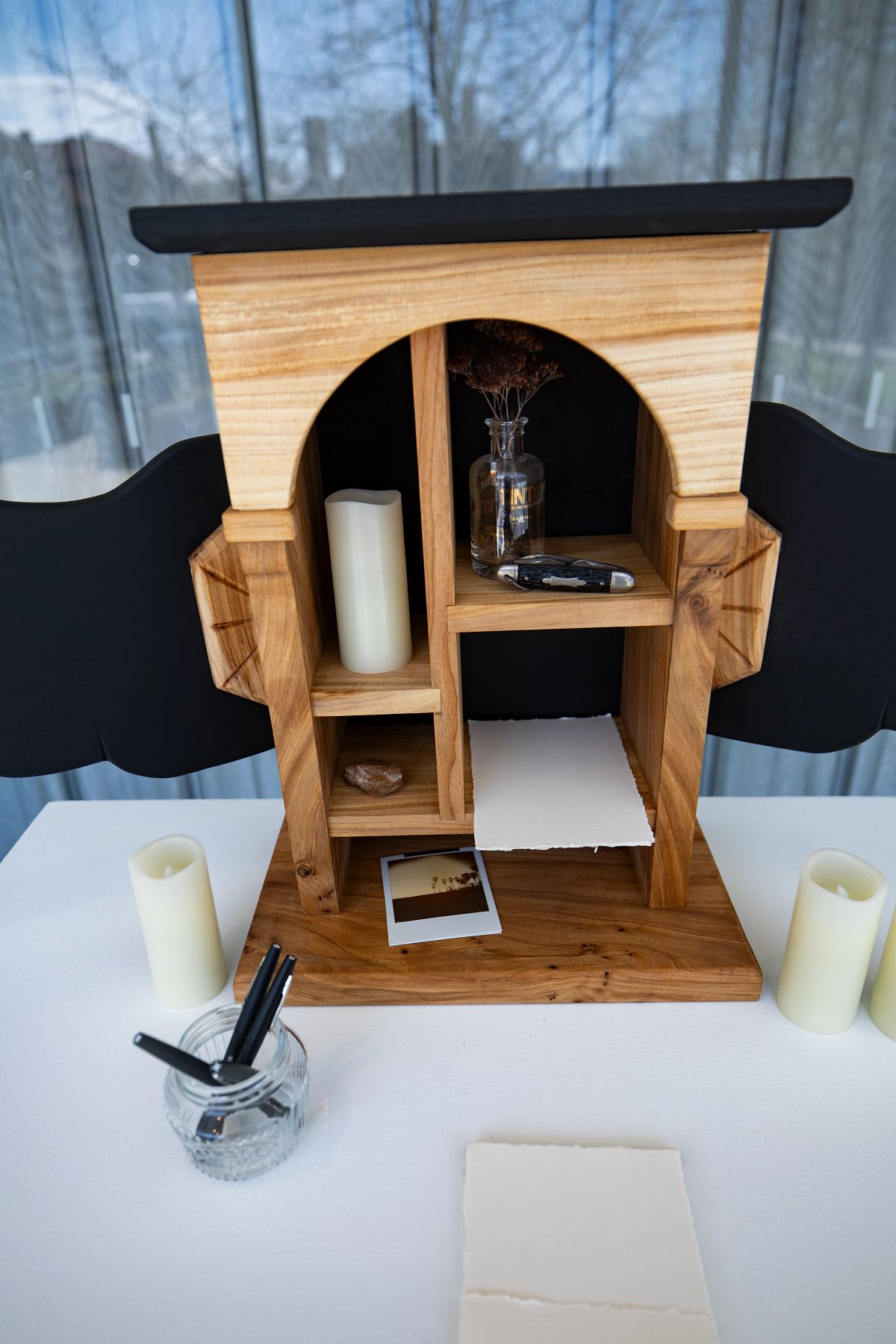
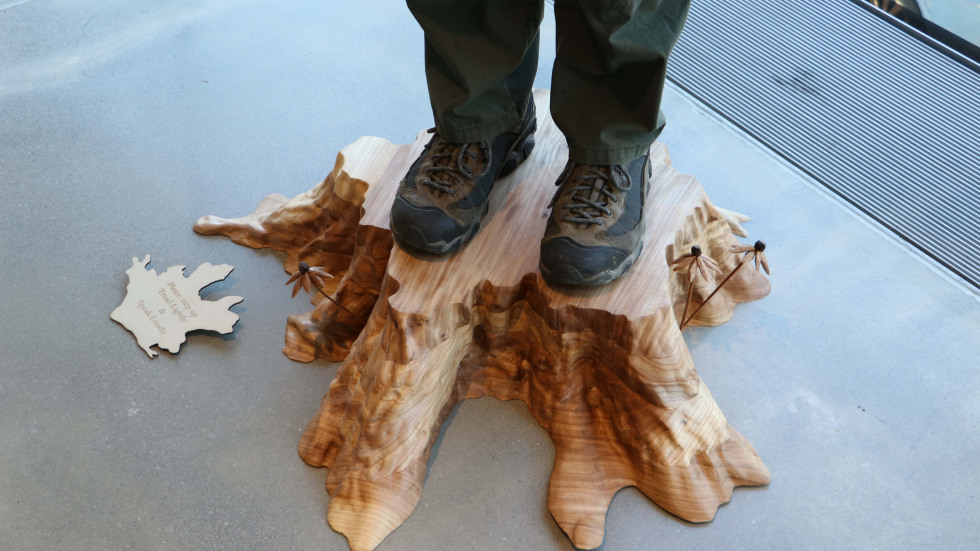
Works on display include candlesticks for Shabbat; a memorial altar; a sculpture inspired by the Hasbro toy Mr. Potato Head; and hand-carved lasts, the three-dimensional forms around which shoes and boots are built. The wood was from an American elm that shaded campus for more than a hundred years before it was cut down in 2024 after an extensive but ultimately unsuccessful preservation effort.
The 10 artists, who include Brown University alumni, staff members and a student as well as members of the external community, were selected through a jurying process conducted by Eiden Spilker, the exhibition’s curator and “maker in residence” at the Brown Design Workshop, and Holly Case, a professor of history and humanities at Brown.
“There was so much interest in the tree that I wanted to find a way to draw on that collective energy to honor it,” said Spilker, who presented a solo exhibition with wood from the tree in Fall 2025 and has been its primary steward. “As a woodworker, I thought that to make some new objects would honor the life that it had and give it a second life.”
The artists were invited to create pieces that considered the American elm as a “point of mediation between public and private” and “to reflect on its significance and relevance to this moment.”
While they vary in scope, theme and narrative, the artworks are united by their intentionality and specificity, Spilker said.
“Our call for submissions was unique, because it was going to be for a group show, but the pieces hadn’t been made yet,” said Spilker, a member of Brown’s Class of 2024 who is a technical specialist and community engagement instructor at the University. “So we were really looking at how the artists were considering the material and if they were considering the broader context around it.”
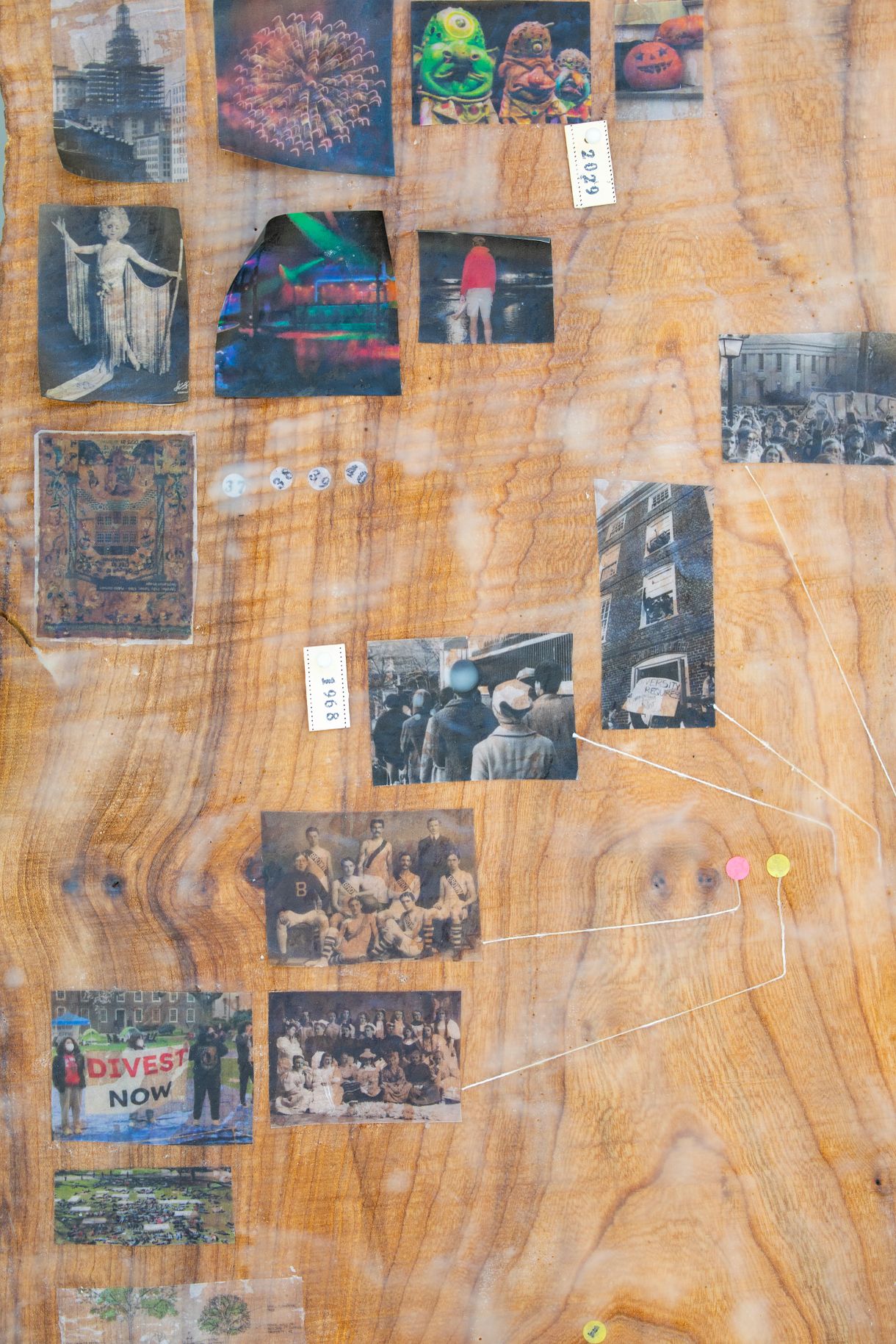
The selected artists worked with the wood for nearly three months before installing their sculptures and other creations at the exhibition site at the end of April. Some of the works reference local history and politics, while others are more environmental in focus. For example, one artist used pulp from the elm tree as part of a biomaterial from which she crafted seedling pots for new trees.
“It was especially inspiring to think with Eiden about the myriad creative ways artists link ideas to material,” Case said. “I learned a great deal from the process and was deeply impressed by the artworks themselves.”
The artists whose work is represented in the show are Sarah Madeleine T. Guerin, Yasmine Hassan, David Karoff, Alyssa Keil, Zachary Vieira Legat, Talia LeVine, Alison Orellana Malouf, Roger Murff, Joseph Smolinski and Walker Fuchs, and Charlie Usadi.