Date May 20, 2026
Media Contact

Student-led tape art mural offers a space for healing, reflection

In partnership with the Brown Arts Institute and renowned Tape Art artists, a team of Brown students led the creation of a temporary mural in the University’s Barus and Holley building.

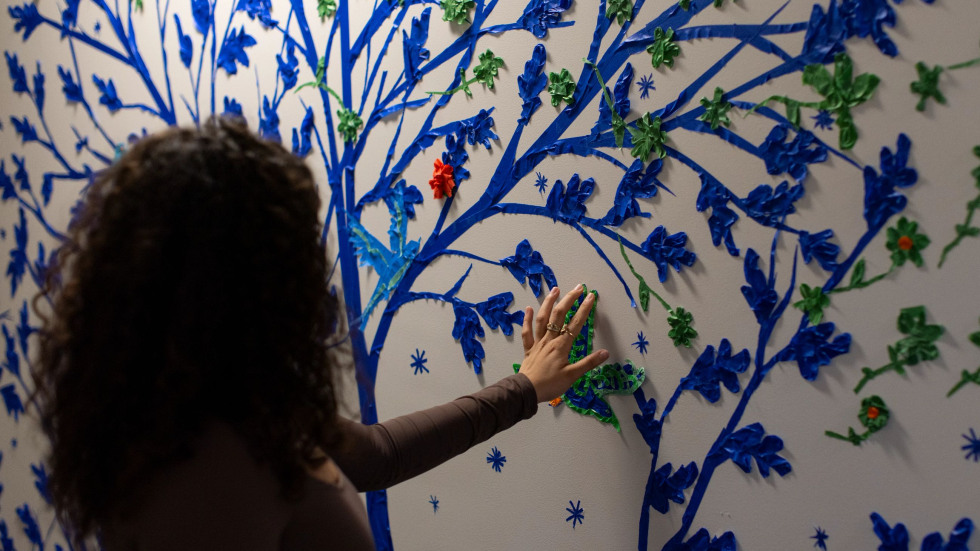
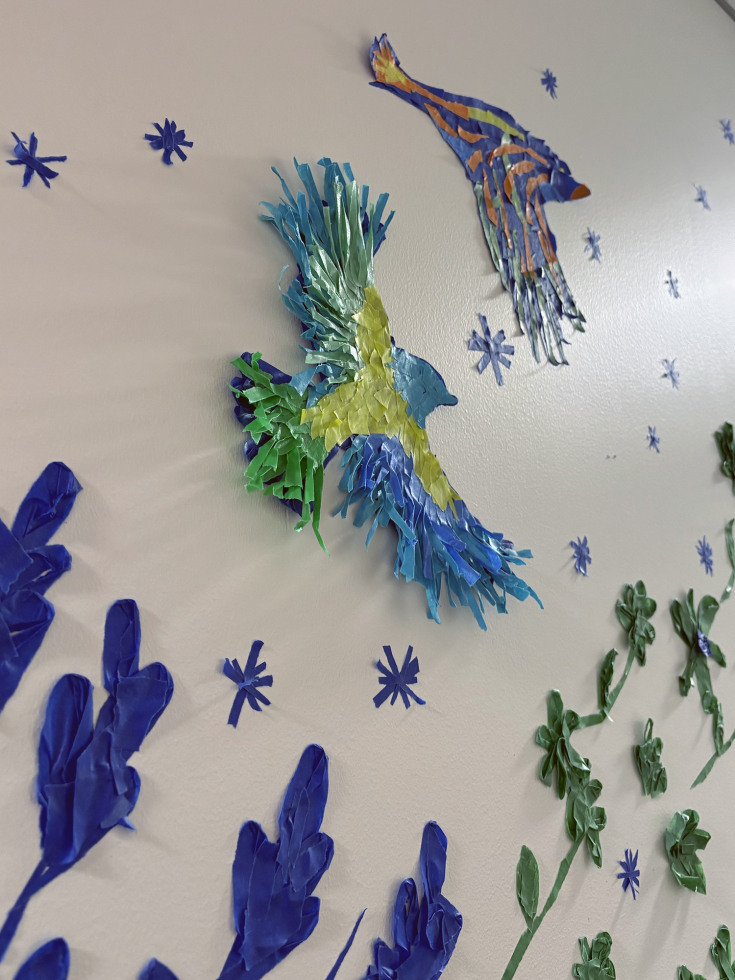
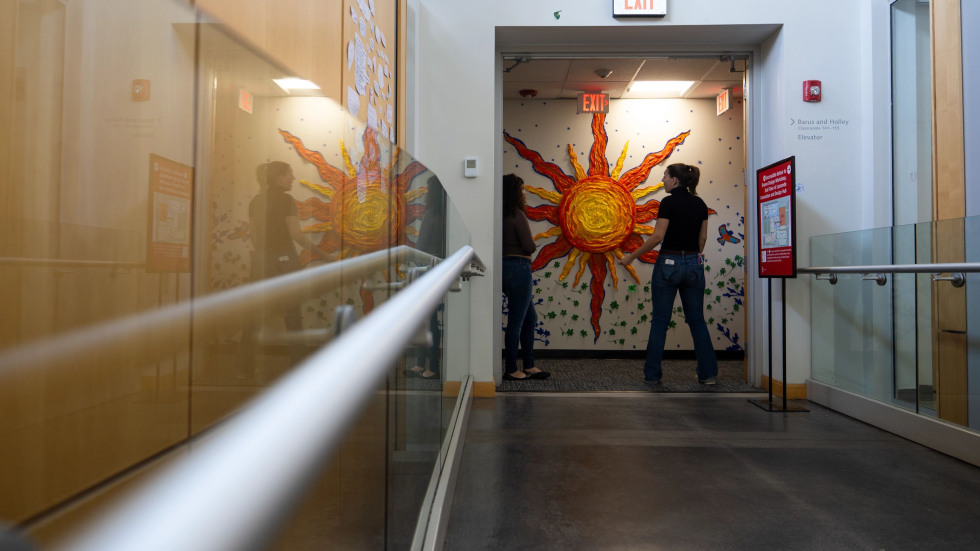
PROVIDENCE, R.I. [Brown University] — Birds fly, snowflakes fall, leaves blow, flowers flutter and trees reach outward and upward — all anchored by the sun, emanating its rays in a warm embrace.

These elements comprise a temporary mural created by members of the Brown University community in the Barus and Holley building on campus, where a tragic shooting took place on Dec. 13, 2025.

Through a student-led effort underpinned by both grief and catharsis, the temporary mural — made with blue, green, yellow and orange artists tape — offers a space for healing, reflection and recovery for those who work, study, research, teach and move through the building.

Conceived of by a group of student ambassadors in Brown’s School of Engineering, including senior Emilia Pantigoso and sophomore Yeidy Salmeron, the mural materialized in mid-spring on temporary walls that were constructed around the location where the shooting occurred.

“We all deeply care about this building and everyone here, and it is not cliché when I say it is like our home,” said Pantigoso, who will earn her bachelor’s degree in biomedical engineering and a certificate in entrepreneurship with the Class of 2026 in May. “I just felt grateful to have the opportunity to be able to do something to bring the community together during this time.”

Pantigoso and Salmeron were among dozens of students, faculty and staff who contributed to the intensive, three-day mural installation, which was guided by Providence-based artists Michael Townsend and Leah Smith, leaders of the Tape Art team that helps communities create temporary memorials during times of communal tragedy. In the months leading up to the installation, engineering school leaders and staff members at the Brown Arts Institute helped students crystallize their vision for the project and enabled the mural creation by facilitating the partnership with Tape Art and coordinating permissions and conversations with campus leaders.
“It started as a way for the students to reconsider their relationship to the space, and it ended up as a gift to the Barus and Holley community,” said Sophia LaCava-Bohanan, who helped facilitate the project in her role as associate director for partnerships and engagement at the Brown Arts Institute. “This wouldn’t have been possible without the students, faculty and staff who are so deeply devoted to the community.”

More than 50 students and a dozen faculty and staff contributed to the creation of the mural.

“We were creating something without the idea of permanence or perfection, but through an iterative, malleable process while being together,” said LaCava-Bohanan. “While we were creating the mural, so many people stopped by. Some participated, and some weren’t quite ready to participate, but they were so appreciative that it was happening and kept coming by.”

The mural is one of many ways that University community members are respectfully remembering and documenting a difficult moment in Brown’s history. Other actions include planning for a permanent campus memorial honoring the lives of Ella Cook and MukhammadAziz Umurzokov, the two Brown students whose lives were lost; saving samples of flowers placed at temporary memorials with the goal of preserving some in perpetuity; collecting and preserving artistic expressions by Brown students, faculty and staff; and planting a memorial garden near the Engineering Research Center.

It has helped change a place of deep anxiety and stress and fear to a space where we’ve taken ownership back again. That really matters.

Louise Manfredi Director, Brown Design Workshop
 
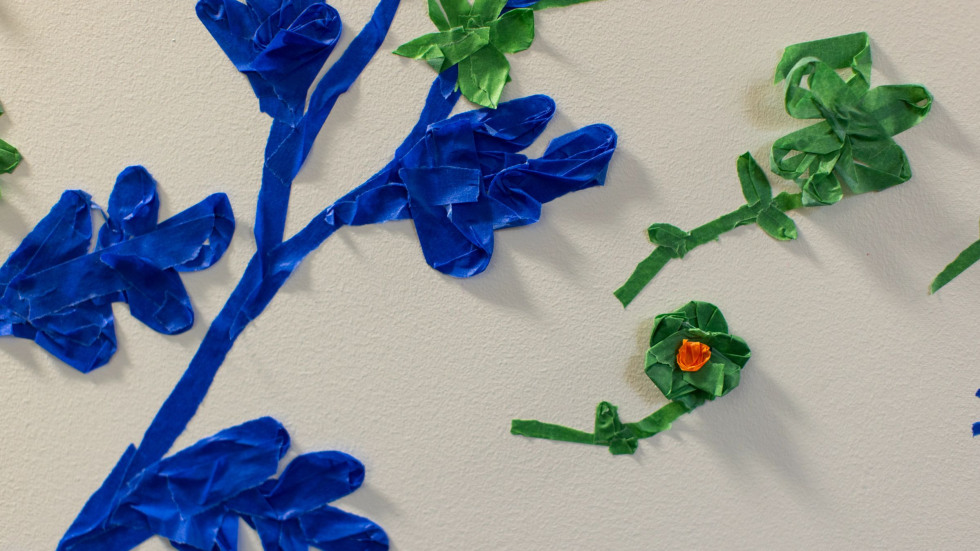
birds, flowers and snowflakes made with tape

“The actual act of making this mural was a really healing process,” Salmeron said. “People have been really grateful and expressed how beautiful it is and told us, ‘We needed this.’”

Healing and remembrance through community art

As classes resumed in January for the start of Brown’s spring semester, people began to place notes of remembrance and grief on the temporary walls in Barus and Holley. Salmeron recalled that right away, the student ambassadors began leading weekly meetings to offer support to peers.

“We began thinking about what we were going to do to be able to reclaim this space,” said Salmeron, who is studying mechanical engineering.

The mural was the culmination of a months-long series of conversations and planning, including with Brown Design Workshop Director Louise Manfredi. She said the mural offers people a “catalyst for contributing something small” and the use of tape provided an accessible medium.

“Anybody could come by and contribute something, and they were part of transforming this space,” said Manfredi, an associate professor of the practice of engineering. “It has helped change a place of deep anxiety and stress and fear to a space where we’ve taken ownership back again. That really matters.”

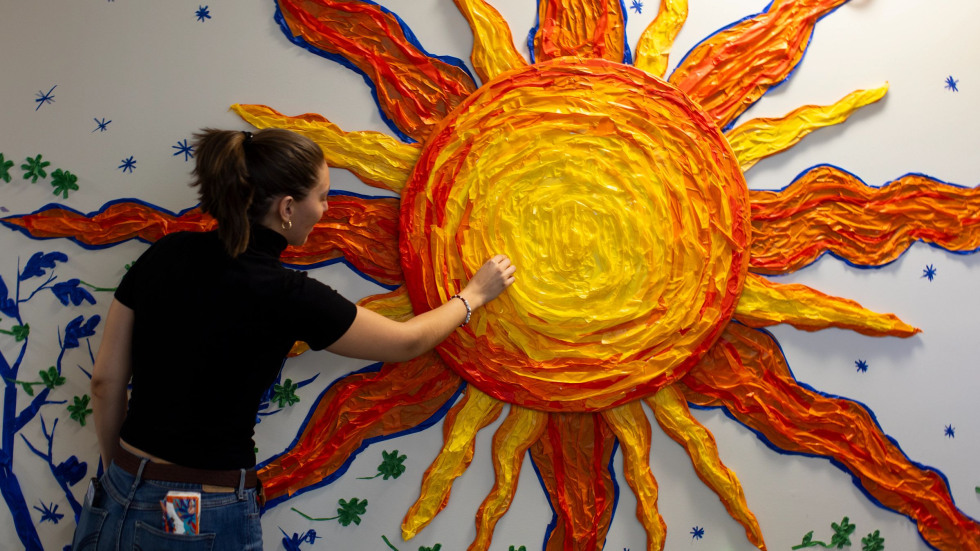
When designing the mural, the students positioned the sun at its center, which is immediately visible when one enters the complex through Hazeltine Commons and the café area in the adjoining Engineering Research Center.

“The sun is a source of light and energy, but it’s also an icon of Brown given our coat of arms,” Pantigoso said.

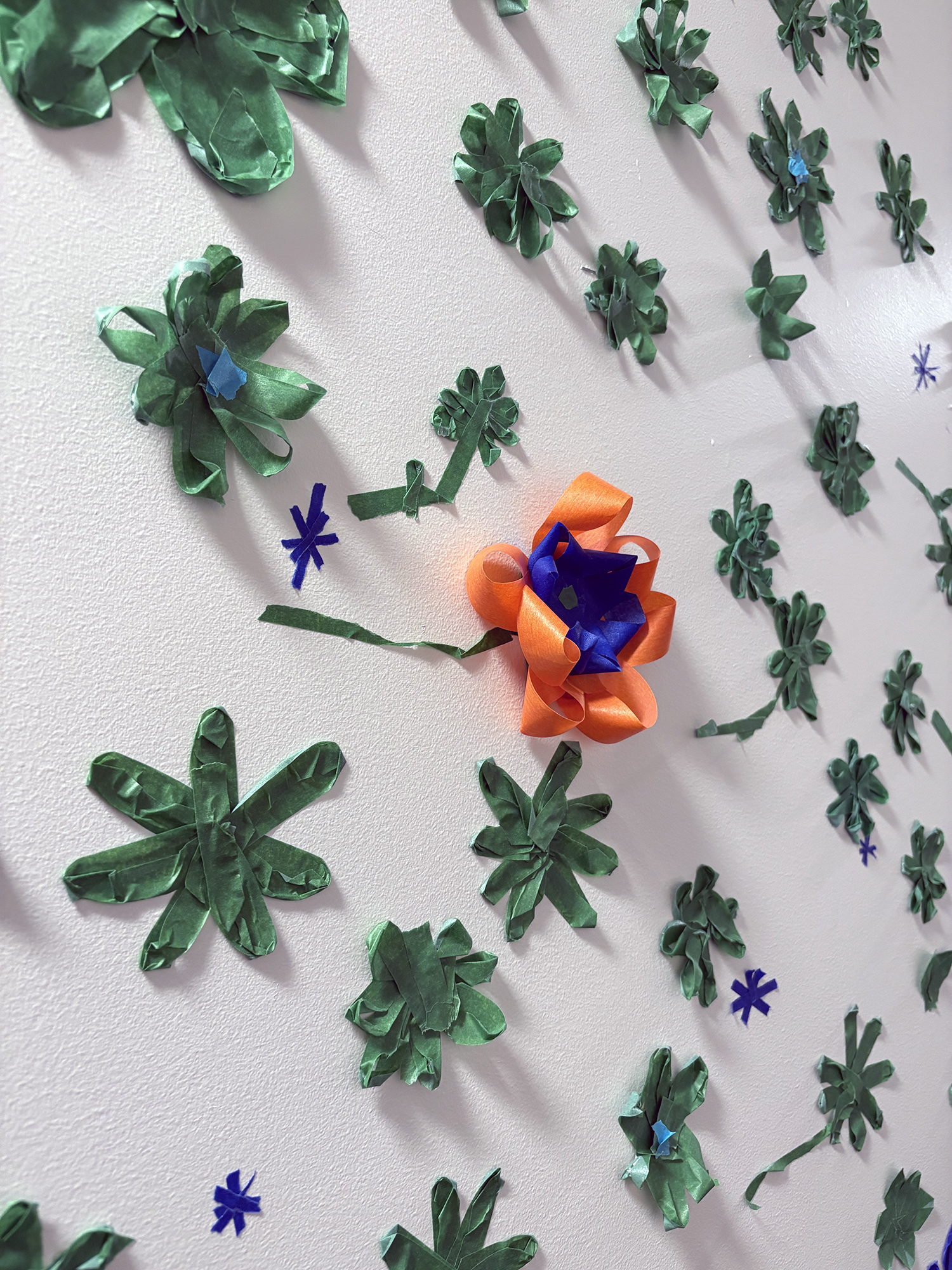
flowers and snowflakes made with tape

Other elements of the mural are also symbolic. It snowed the night of the shooting, again when many students returned to campus in January, and yet again on the day of Brown’s early-February campus-wide memorial service — and the snowfall inspired the students to incorporate snowflakes. It also felt important to feature flowers in the mural, as an ode to flowers that community members placed at ephemeral memorials across campus.

“I’m awestruck by our students’ resilience, but also their love for each other and wanting to create something beautiful here,” Manfredi said. “Brown really is a remarkable place.”

The mural will remain on view until the University begins a full, transformational renovation of the Barus and Holley classrooms that have been closed this semester, with the goal of having the rooms available for use in the middle of the 2026-27 academic year.

In the meantime, the temporary mural has played a role in healing and recovery for many community members.

“I never expected to feel joy being in this space again, but when I think about all the people who did this with us, I do,” Pantigoso said.